
Yijing / I Ching: Divination, Philosophy, or a Map of Change?
When we open the Yijing, often written as I Ching in the West, the first thing we encounter is both simple and unusual: six lines, each either unbroken or broken.
Read articleShorter entry points into the questions explored across THY-REALITY. Browse by field or search directly by title and description.
When we open the Yijing, often written as I Ching in the West, the first thing we encounter is both simple and unusual: six lines, each either unbroken or broken.
Read article
Imagine a serpent coiling into a circle and grasping its tail between its teeth. Its body has no visible beginning or end. Its head meets its tail, and what it devours is also part of itself.
Read article
The Great Work links furnaces, metals, colour stages, the philosopher’s stone, spiritual alchemy and Jungian individuation. What is historical and what is later psychological interpretation?
Read article
The classical Buddhist map of nine mental abidings leads from wandering attention to effortless stability and śamatha while distinguishing the older textual system from the later elephant, monkey, and rabbit iconography.
Read article
The familiar line about different lamps opens into a wider passage in Book III of the Masnavi: Moses and Pharaoh within the human being, the lamp and one light, differing viewpoints, and the elephant in the dark. The article centers Rumi’s original passage and its meaning.
Read article
Queen Madālasā in the Mārkaṇḍeya Purāṇa soothes her son with a teaching that name, body, and relationships are not his deepest self. What does chapter 25 actually say, and what did the later “Madalasa lullaby” tradition add?
Read article
Three famous lines from the Bṛhadāraṇyaka Upaniṣad are now a universal prayer for truth, light, and immortality. What do they actually mean in their original Pavamāna ritual context?
Read article
A kōan is not merely a paradoxical riddle. From the Chinese gōng’àn as a public case to Mu, Dahui’s huatou, and Hakuin’s Rinzai system, its role changed over centuries.
Read article
Hinduism recognizes many deities, but also Brahman, one supreme Lord, and non-dual reality. What do polytheism, monotheism, and monism actually mean across different Hindu traditions?
Read article
From the Watchers of Enoch to the modern occult theory of a collective psychic formation: how the meaning of the egregore gradually changed through the nineteenth and twentieth centuries.
Read article
In La Légende des siècles, Victor Hugo built a poetic mosaic of humanity from history, legend, war, conscience, mercy and visions of the future, tracing a difficult movement from darkness toward liberty and light.
Read article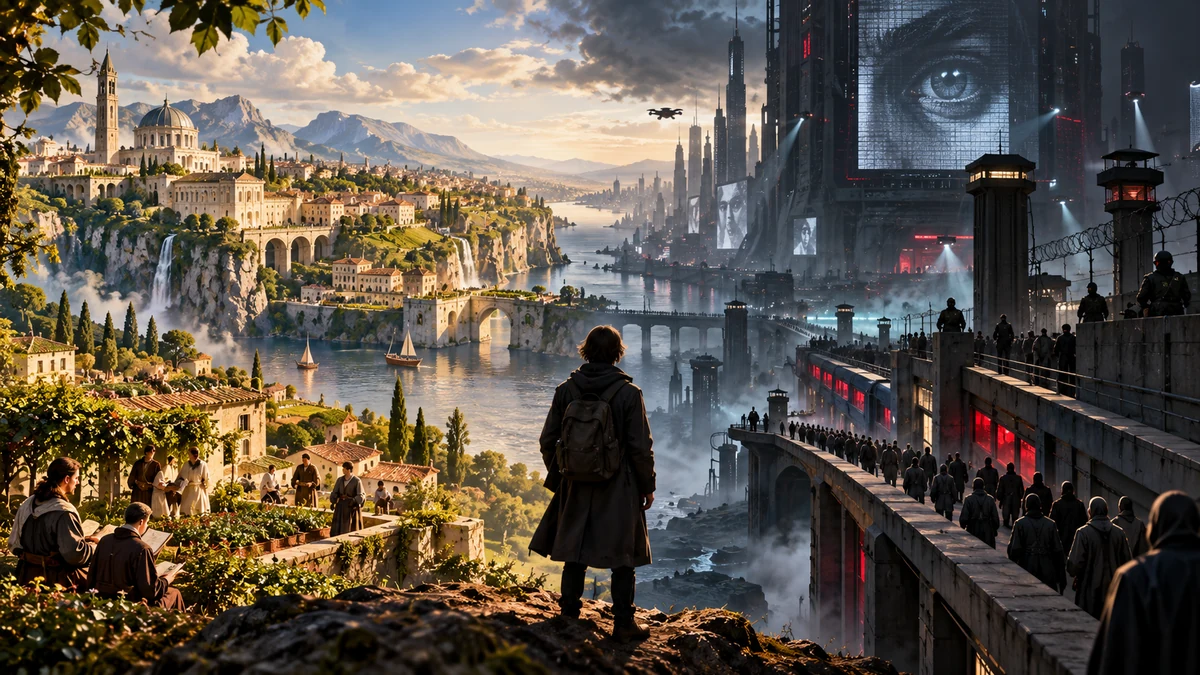
From More’s Utopia to Black Mirror: how literature, film and television invent alternative societies to test the ideals, power structures, technologies and fears of their own time.
Read article
Universe 25 under historical review: what John B. Calhoun actually observed in a closed mouse colony, how he interpreted the breakdown of social organisation, and how later culture turned the experiment into a universal story about a “mouse utopia.”
Read article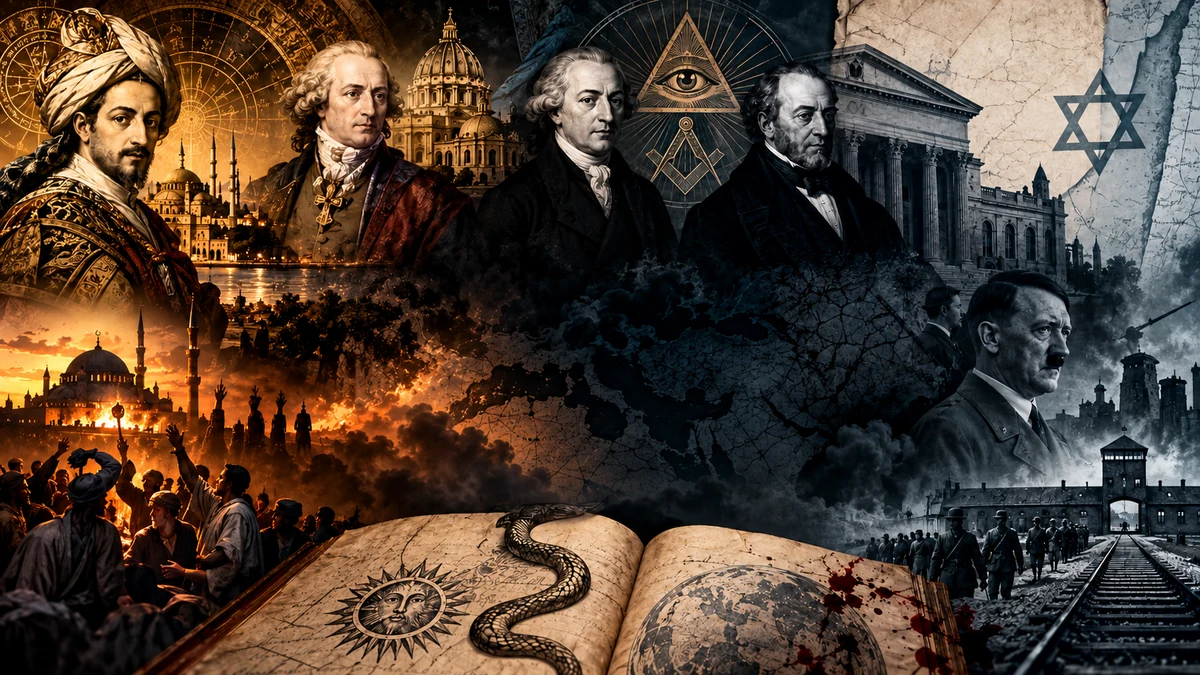
A presentation of *1666: Redemption Through Sin*: Sabbatai Zevi, Jacob Frank, antinomianism, secret societies, the Illuminati, the Rothschilds, Zionism, and Sepehr’s theory of historical continuity.
Read article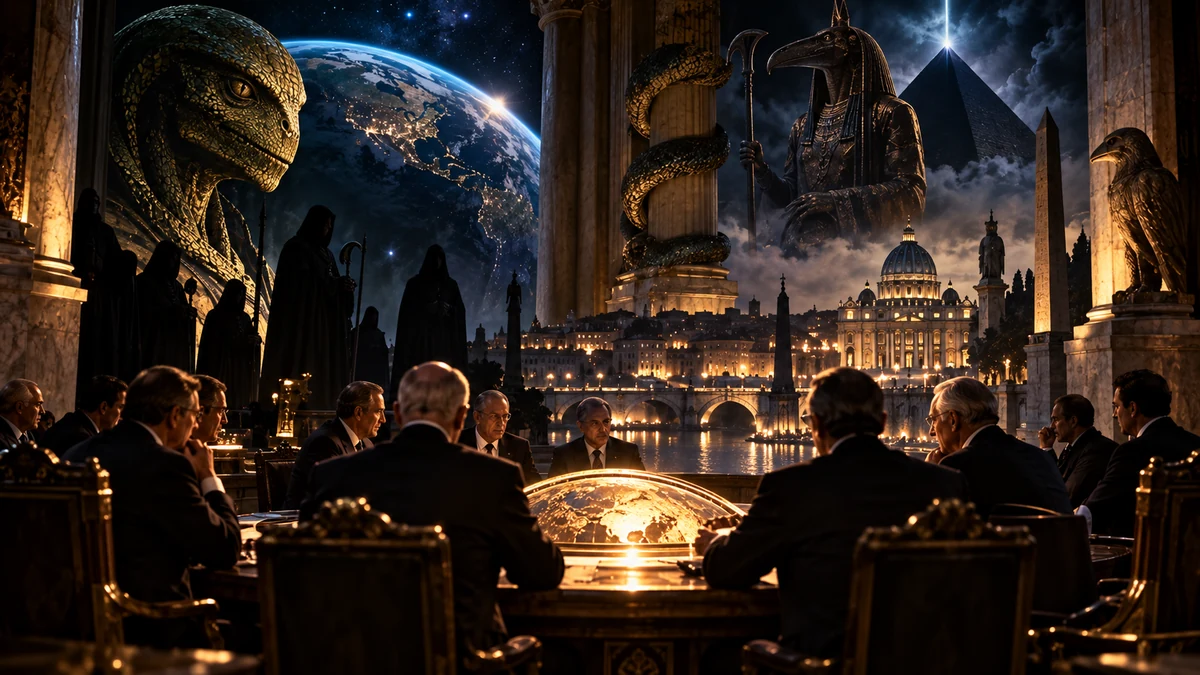
A presentation of *The Biggest Secret*: Anunnaki, reptilian bloodlines, elite genealogy, the Babylonian Brotherhood, ritual, the Rothschilds, and Icke’s model of hidden power.
Read article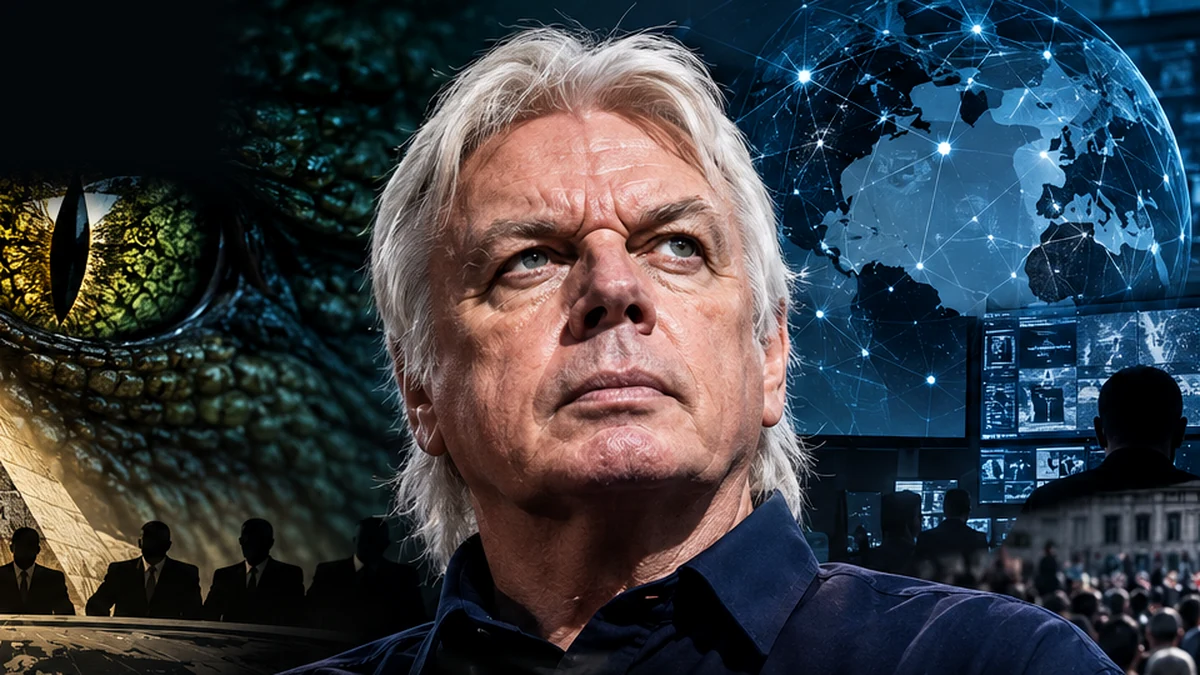
A presentation of *The David Icke Guide to the Global Conspiracy*: elite networks, central banks, covert programs, 9/11, symbols, reptilian bloodlines, and a metaphysics of consciousness.
Read article
A presentation of Robertson’s *The New World Order*: the UN, CFR, Trilateral Commission, Federal Reserve, Illuminati, Freemasonry, and a Christian interpretation of global order.
Read article
A presentation of Epperson’s *The New World Order*: the Great Seal, the Illuminati, Freemasonry, Marx, the Thule Society, humanist manifestos, and the author’s model of a new world order.
Read article
Ring of Power links 9/11, symbolism, genealogy, banking, and elite networks. The article tests individual claims against documents and history.
Read article
Near the end of the forest exile, Yudhishthira finds his four brothers motionless beside a lake and accepts an unseen Yaksha's condition: questions first, water second.
Read article
Tartary is genuinely present on old maps, but a map label is not yet proof of one state.
Read article
The seven rainbow chakras are not one unchanged ancient system; today’s standard image combines several traditions and later Western reinterpretations.
Read article
Kalava or mauli is a simple ritual thread with a long history of protection, blessing and binding. The sources reveal older Vedic antecedents, regional variation, the King Bali mantra, and an important distinction between kalava and rakhi.
Read article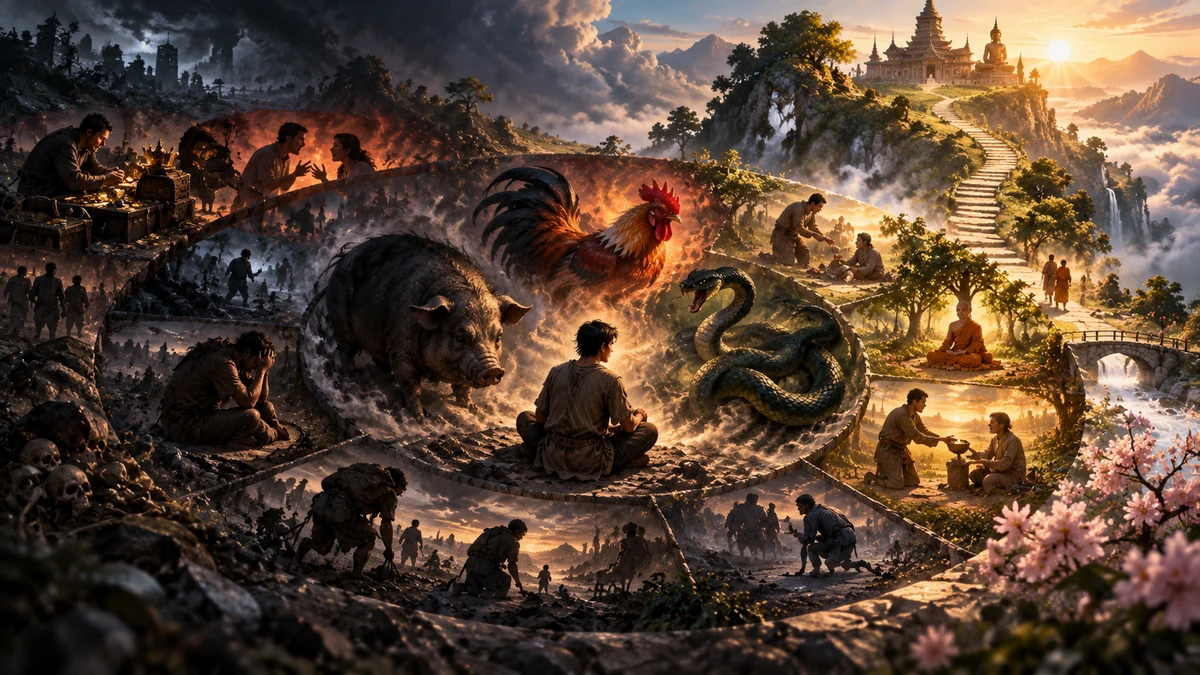
A pig, bird, and snake at the center of the Buddhist Wheel of Becoming represent ignorance, attachment, and aversion. What do these three “poisons” actually mean, how do they reinforce one another, and how does practice seek to transform them?
Read article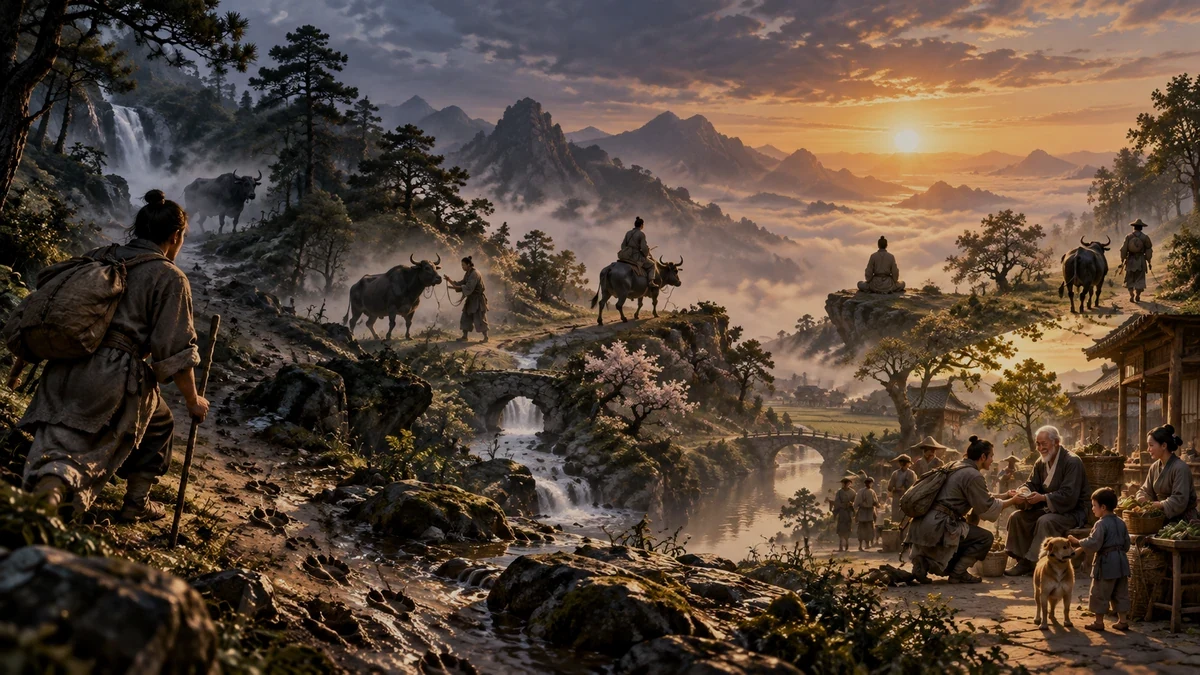
The Ten Oxherding Pictures trace a Zen path from restlessness and searching through discipline and direct insight to emptiness and return among people. What do we know about Kuoan's series, and why does the final image end in the marketplace?
Read article
Across Indian traditions, karma is not one formula but several models of action, intention, consequence, rebirth and freedom.
Read article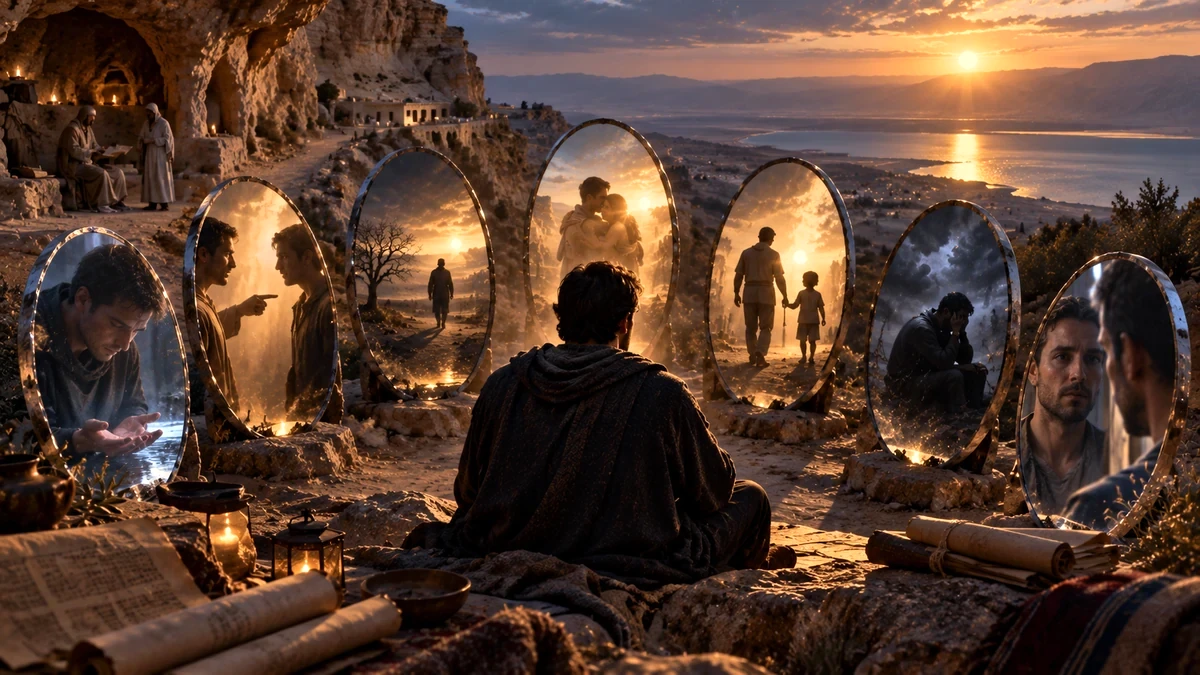
From the historical Essenes and the Qumran manuscripts to Gregg Braden: where the Seven Mirrors teaching comes from, what each mirror means, and where the spiritual metaphor meets modern relationship psychology.
Read article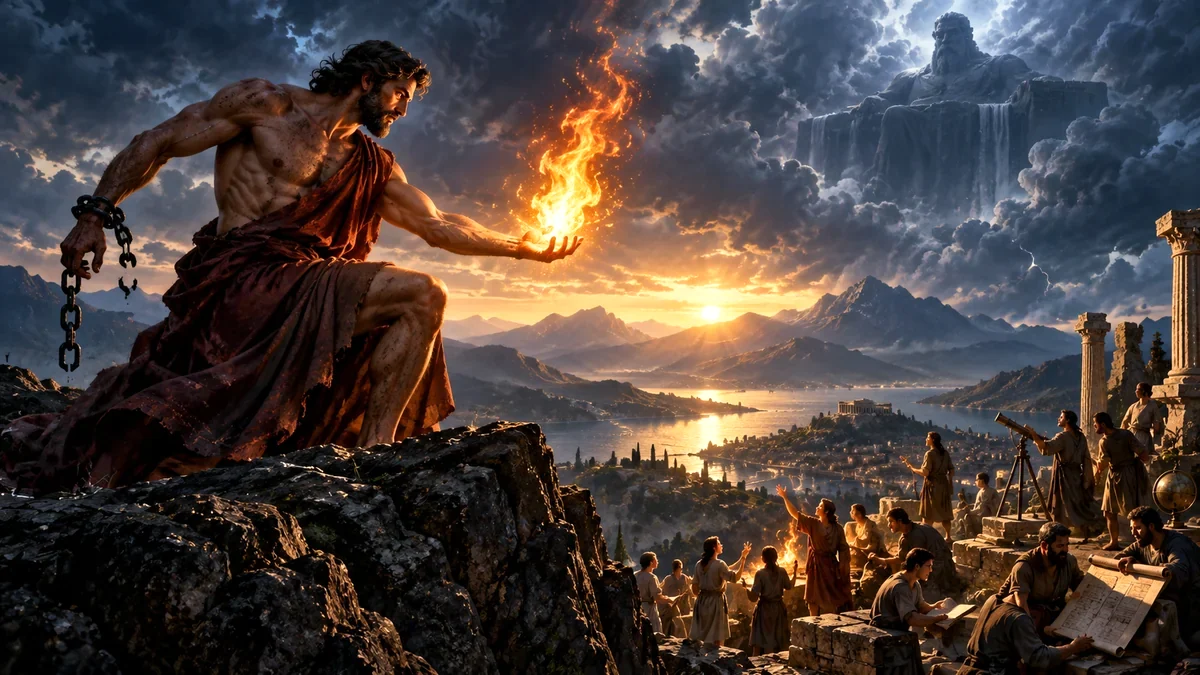
Prometheus as the giver of fire, knowledge and humanity’s creative capacity — and as a symbol of the person who places conscience, responsibility and freedom before authority’s bare demand for obedience.
Read article
The article separates the Protocols’ content and documented origins from modern parallels that do not by themselves prove a common hidden plan.
Read article
Does a system that rewards fear, division and callousness arise on its own, get deliberately exploited, or include a deeper unseen layer? A source-based review of psychopathy, power and the open metaphysical hypothesis.
Read article
What actually happens when thousands of people sing, move and feel together — and where does measurable crowd psychology end and the open esoteric account of egregores and “energy harvesting” begin?
Read article
Castaneda’s “predator’s mind”: Don Juan, the Yaqui frame, *Magical Passes*, “Mud Shadows,” the “foreign installation,” neo-shamanism, Archons, and psychological and social parallels.
Read article
What is actually documented in the links among Saturn, the hexagon, the cube, sevenfold symbolism, the Sabbath, the Kaaba, tefillin and the hexagram — and where does historical evidence become esoteric interpretation or an open hypothesis?
Read article
How did Saturnian symbolism develop from Rome to modern esotericism — and why should links among the Sabbath, sevenfold symbolism, the cube, Kaaba, tefillin and Saturn be treated as an open hypothesis rather than either proven fact or a closed case?
Read article
What did Jung actually claim about astrology and synchronicity — and where does symbolic meaning end and an empirical claim begin?
Read article
How did Mesopotamian celestial divination, the Babylonian zodiac and Egyptian timekeeping traditions develop into the Hellenistic natal horoscope?
Read article
How did a northern Italian Renaissance trump game become an occult and psychological symbolic system through Court de Gébelin, Etteilla, Éliphas Lévi, the Golden Dawn and Rider-Waite-Smith?
Read article
Where do the seven Hermetic principles actually come from, which of their themes appear in the ancient Corpus Hermeticum, and what in The Kybalion is a modern synthesis?
Read article
What did Horkheimer, Adorno and Marcuse actually argue, how did their ideas influence the New Left, and where does documented history end and the later “Cultural Marxism” narrative begin?
Read article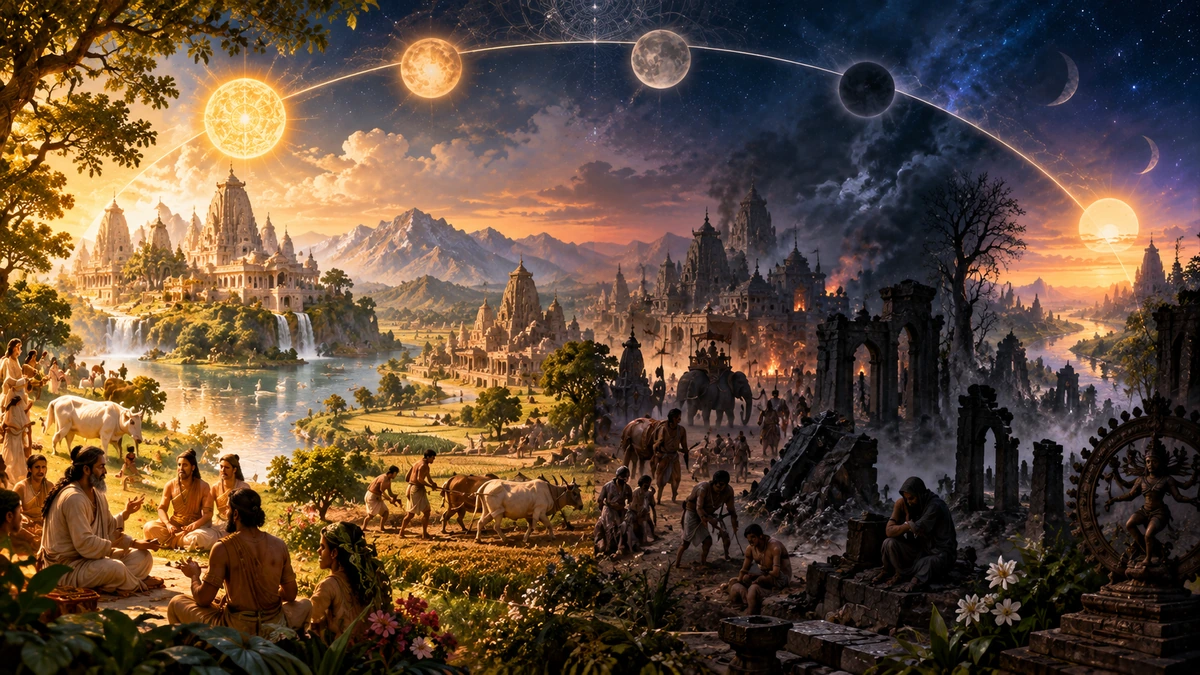
Kali Yuga is not named after the goddess Kālī. This article traces the four yugas from early metaphors and the Mahābhārata to the Purāṇic 432,000-year chronology, the 3102 BCE epoch, Kalki, and modern shorter reinterpretations.
Read article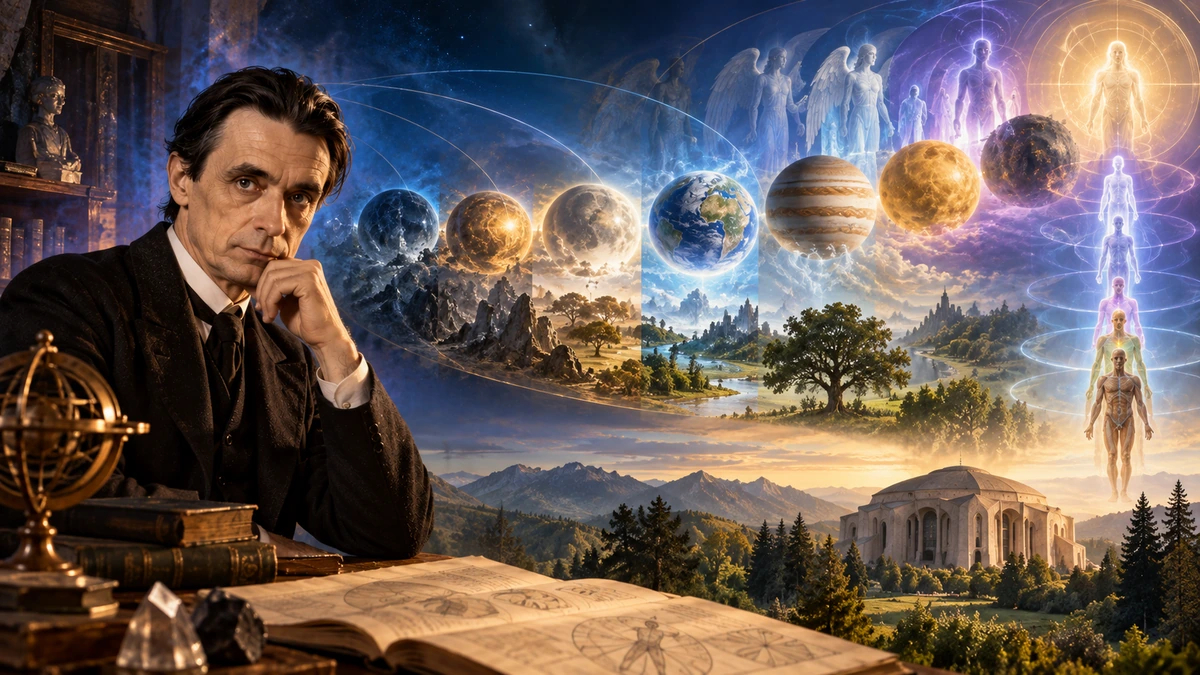
Steiner’s cosmos links physical, etheric, astral, and spiritual levels with planetary incarnations, Lemuria and Atlantis, karma, spiritual hierarchies, and Christ, Lucifer, and Ahriman.
Read article
From a philosophy of freedom to anthroposophy: Steiner’s path through the Goetheanum, Waldorf education, biodynamics, medicine, and cultural reform.
Read article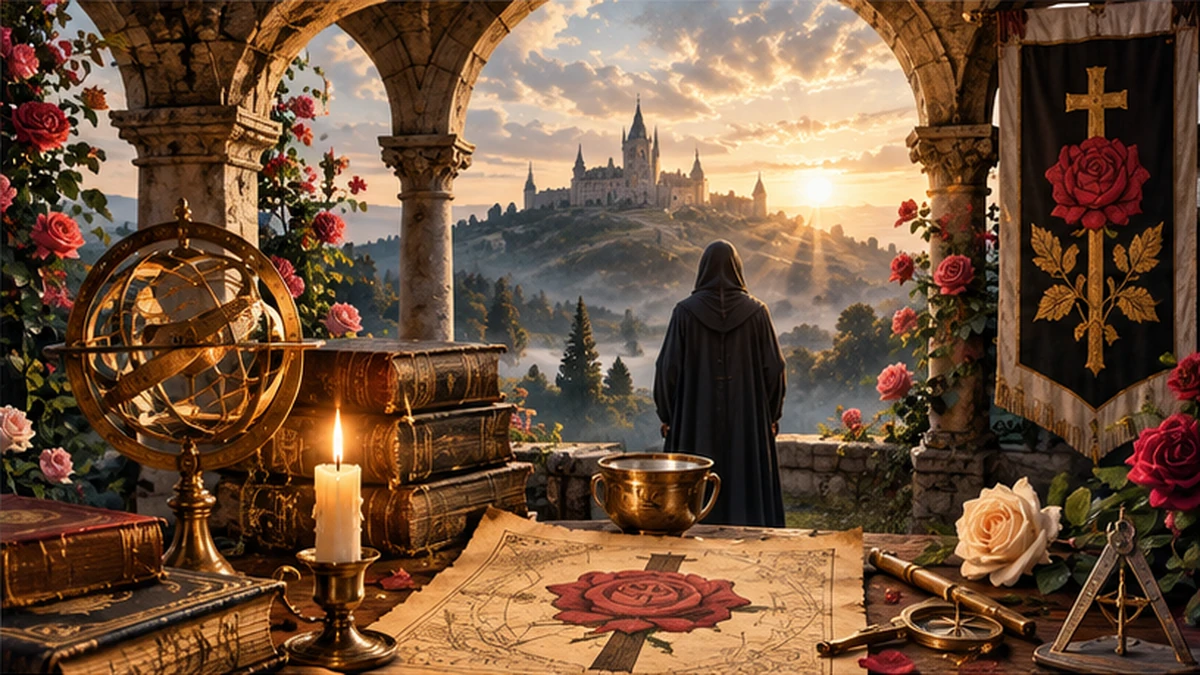
Three anonymous texts from 1614–1616 triggered a European Rosicrucian ‘furore’. What in the story of Christian Rosenkreuz is documented history, what is literary programme, and when did real organisations emerge from the myth?
Read article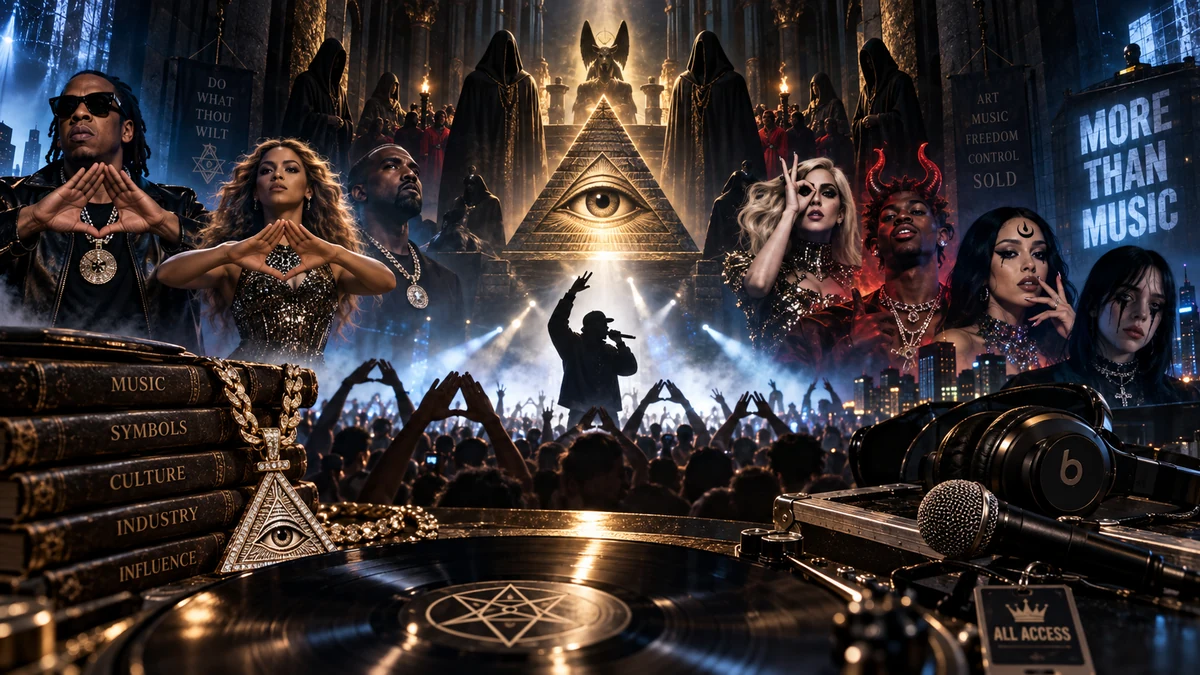
From Crowley on Sgt. Pepper and Jimmy Page to JAY-Z, Beyoncé, Kanye West, Lady Gaga, Doja Cat and Playboi Carti: where is an occult link documented, where is symbolic aesthetics deliberate, and where must the question remain open?
Read article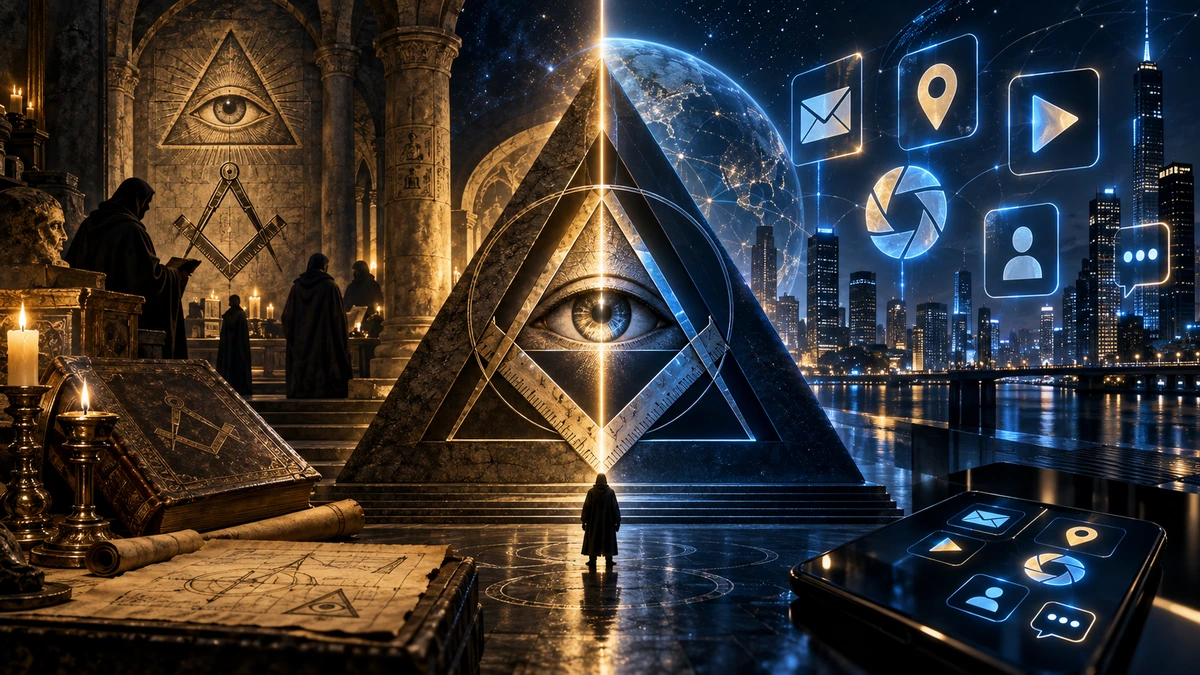
Some modern logos and older ritual emblems are not merely vaguely similar: they share strikingly close silhouettes or internal geometry.
Read article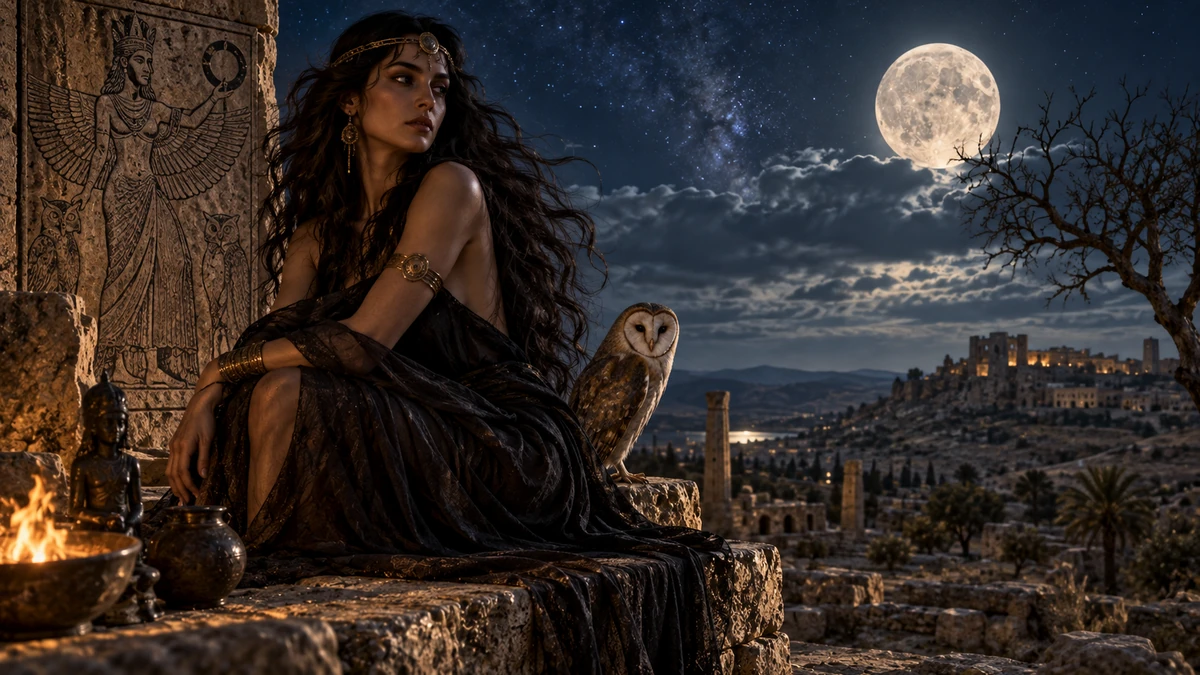
Lilith is not one unchanged figure. From Mesopotamian lilu/lilītu, Isaiah, and Qumran through Talmudic and magical demonology to the medieval first-wife legend and modern feminist icon, her story is repeatedly transformed.
Read article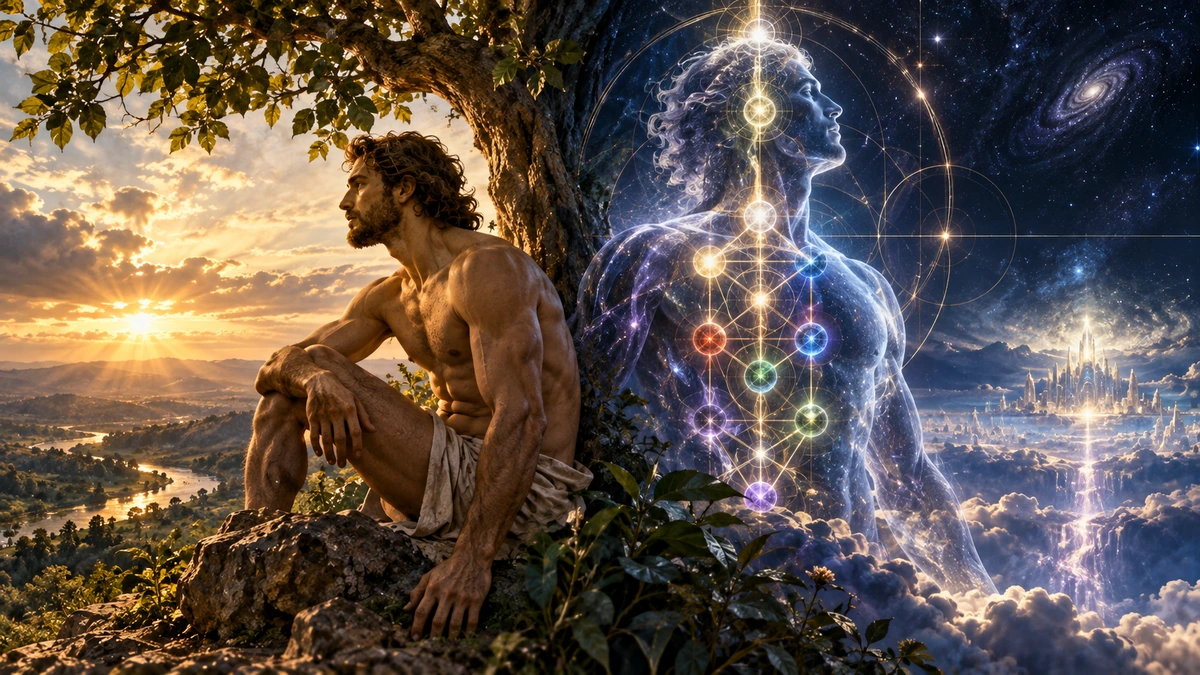
Adam ha-Rishon and Adam Kadmon are often presented as though Jewish tradition taught two primordial humans. The sources reveal a more complex development—from Genesis and the rabbinic cosmic Adam through Philo and Paul to the Zohar and Lurianic Kabbalah.
Read article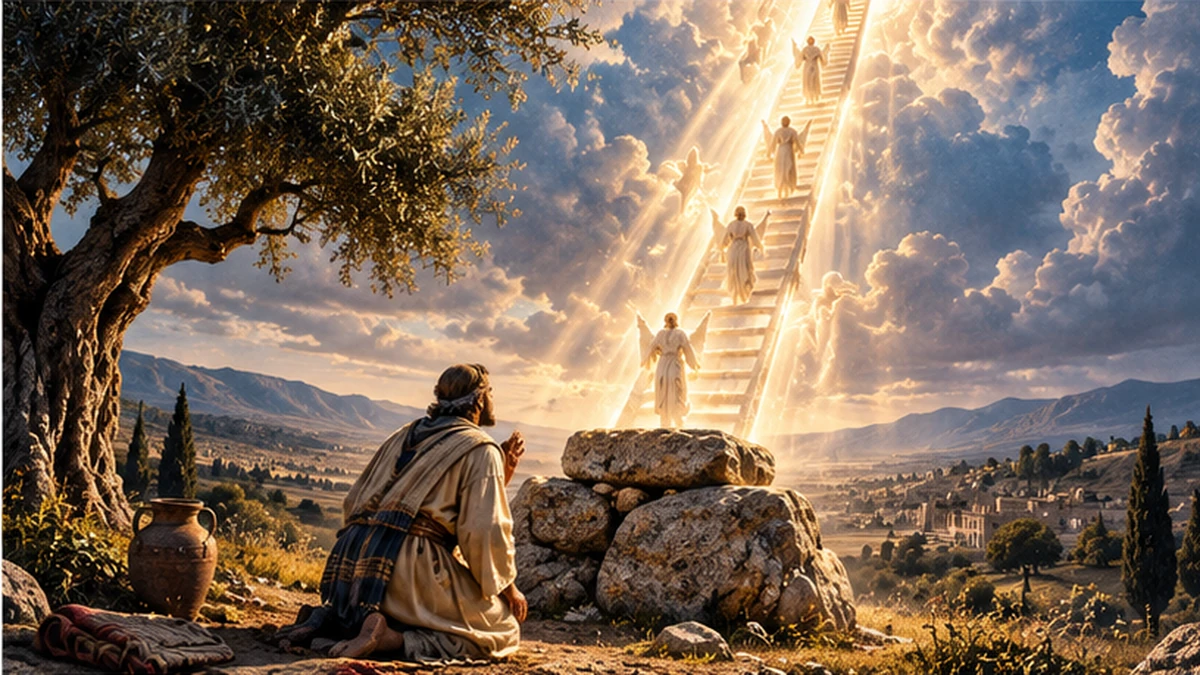
What does Genesis actually say about Jacob’s stone at Bethel? From the maṣṣēbāh and the northern Israelite sanctuary to archaeology, the prophets, Jubilees, and the later Stone of Scone legend, we separate text, cultic memory, and later mythology.
Read article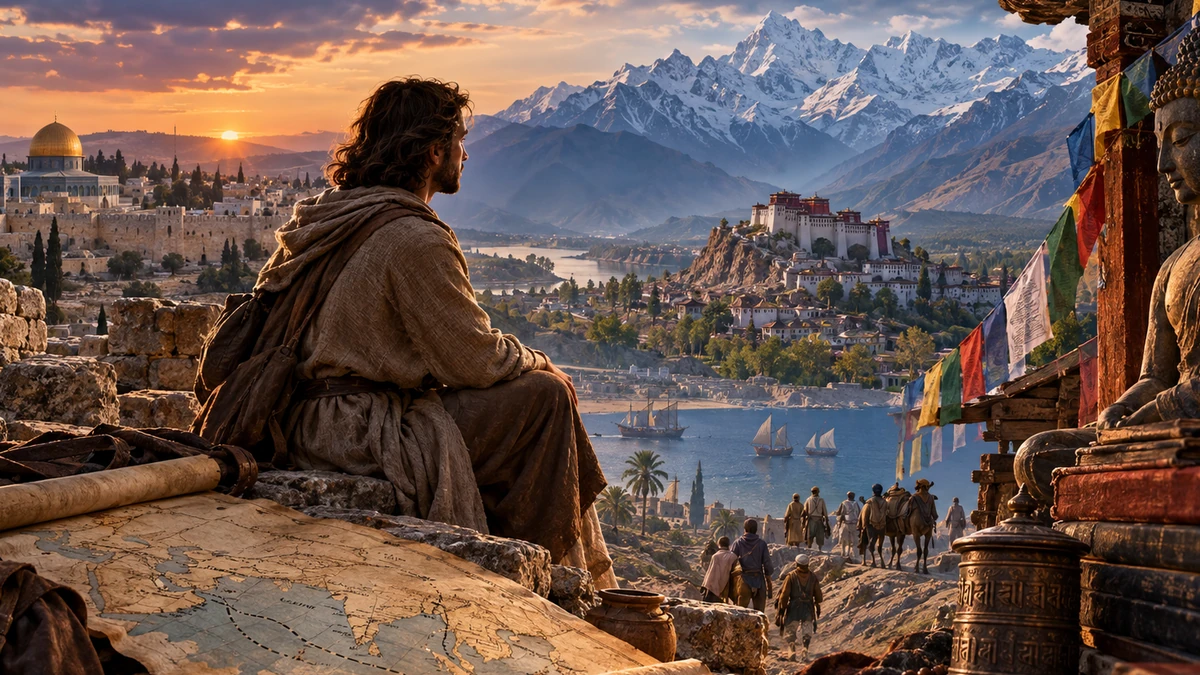
Does the Gospel silence really point to Jesus studying in India? We examine Notovitch’s Issa manuscript claim, later Himalayan confirmations, Ahmad’s Kashmir thesis, and the history of Roza Bal.
Read article
What does Matthew’s strange scene of opened tombs and raised saints mean, why is it absent from the other Gospels, and how should we read the different accounts of Judas’s death in Matthew and Acts?
Read article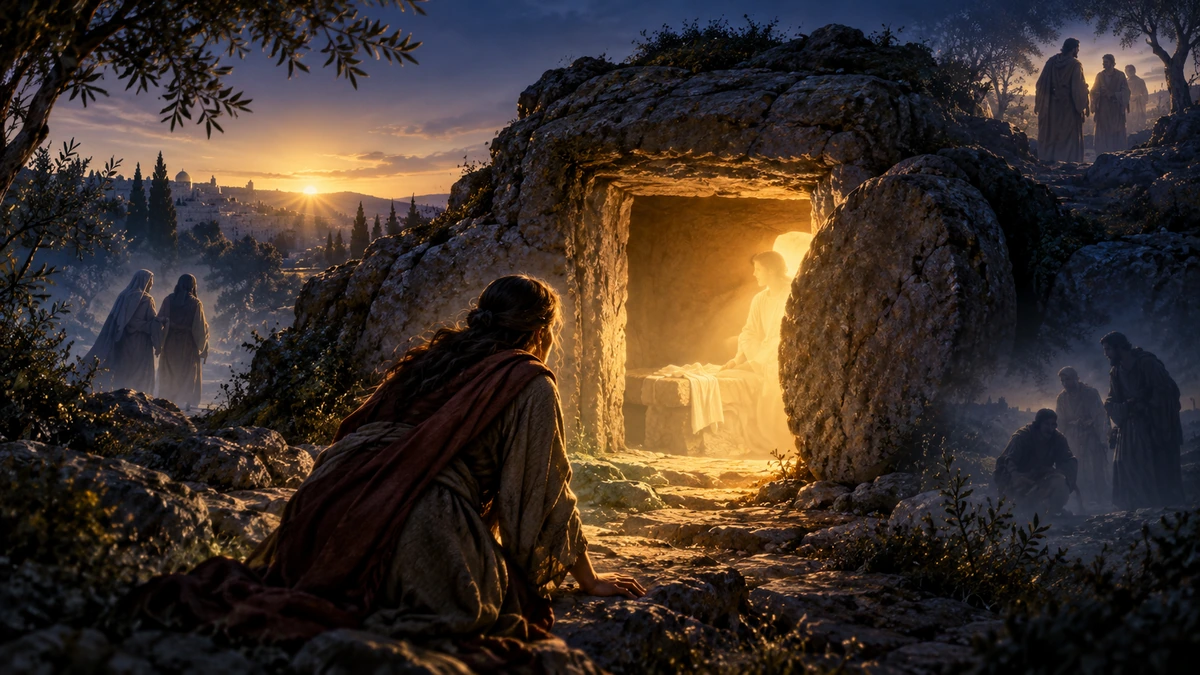
All four Gospels know an empty-tomb tradition, yet they differ over the women, timing, messengers, reactions, Galilee, and Jerusalem. What belongs to the common core, and what reflects each evangelist’s literary shaping?
Read article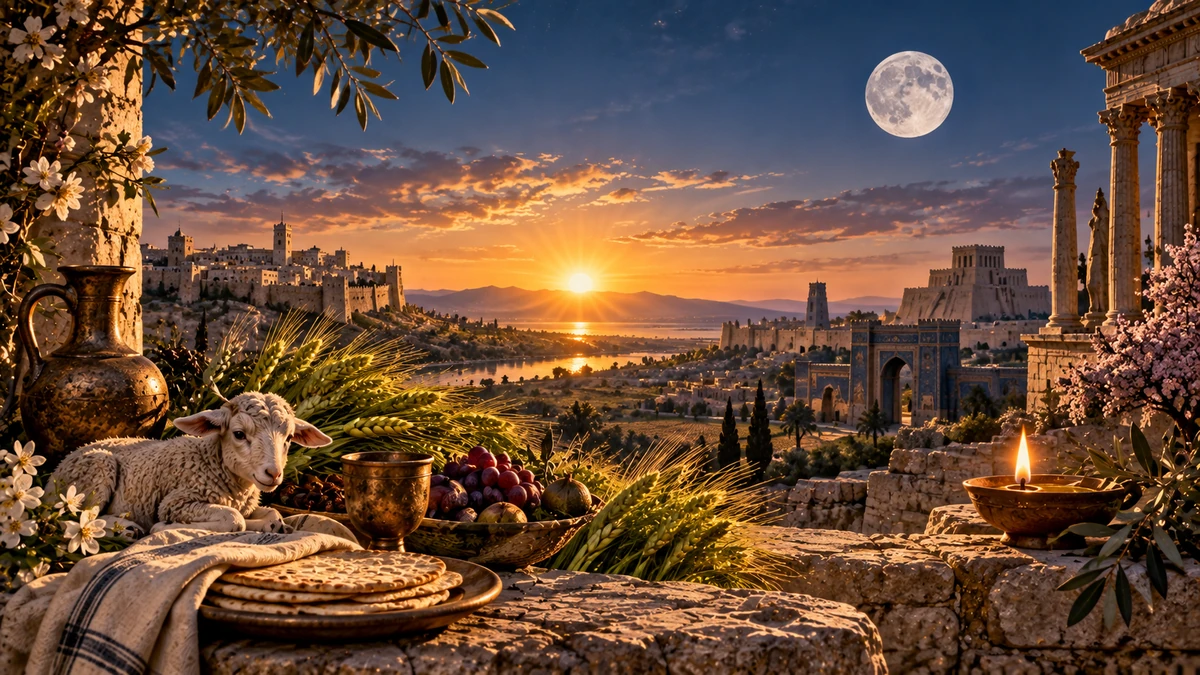
Why do Passover and Easter remain in the spring season, how does 14 Nisan relate to the full moon and equinox, and what do comparable spring festivals from Babylon and Iran to late Rome actually tell us?
Read article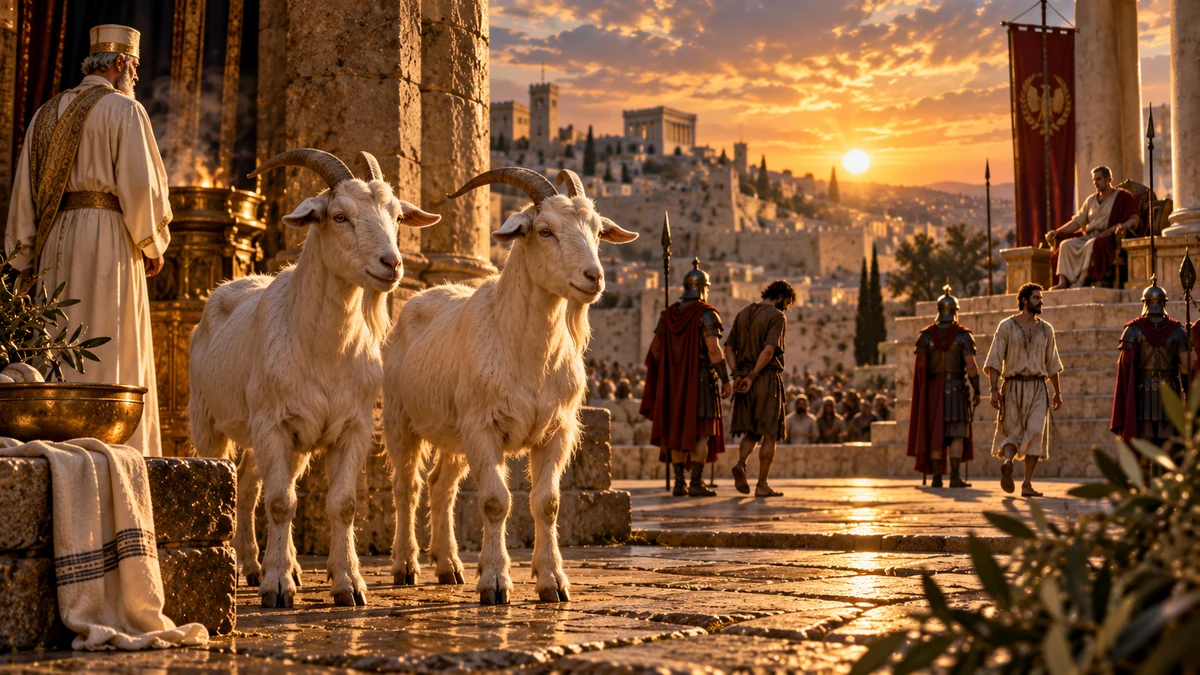
The Barabbas scene may be more than a historical episode: does Matthew reshape the older two-goat rite of Leviticus 16 into a new Passion narrative that preserves the core pattern of two figures and two opposite fates?
Read article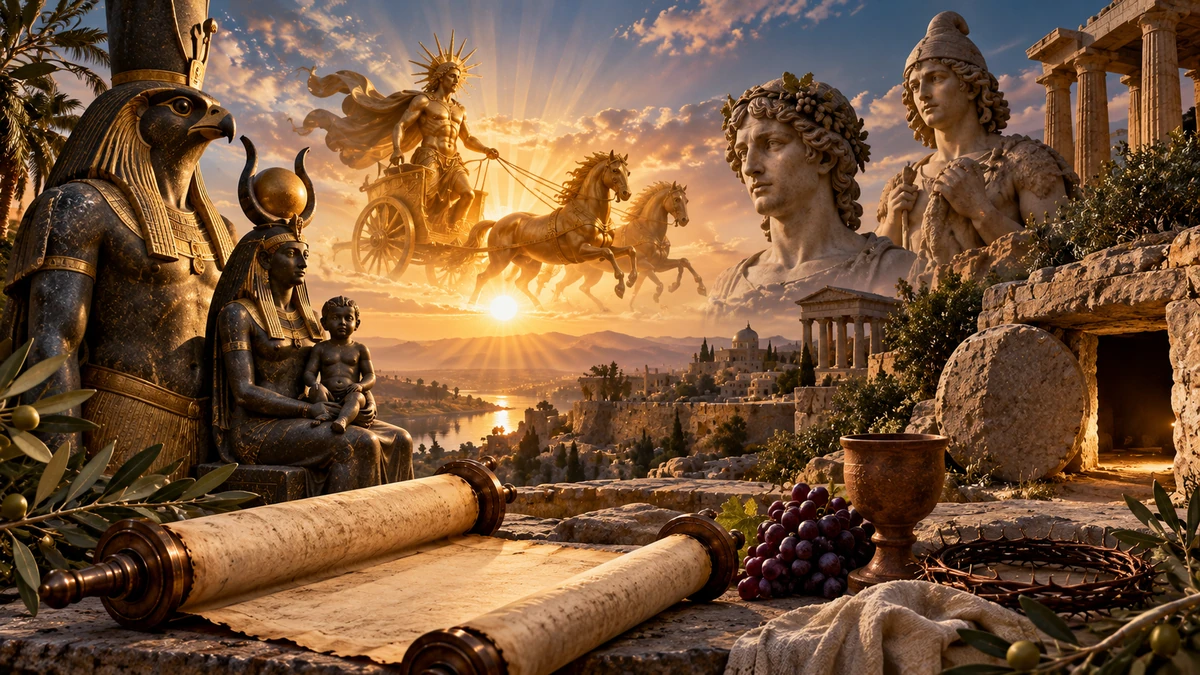
Horus, Osiris, Mithras, Dionysus, Attis, and Jesus are often placed on one checklist: virgin birth, December 25, twelve followers, death, and resurrection. Which parallels are actually documented, and which arise only after retrospective pattern-making?
Read article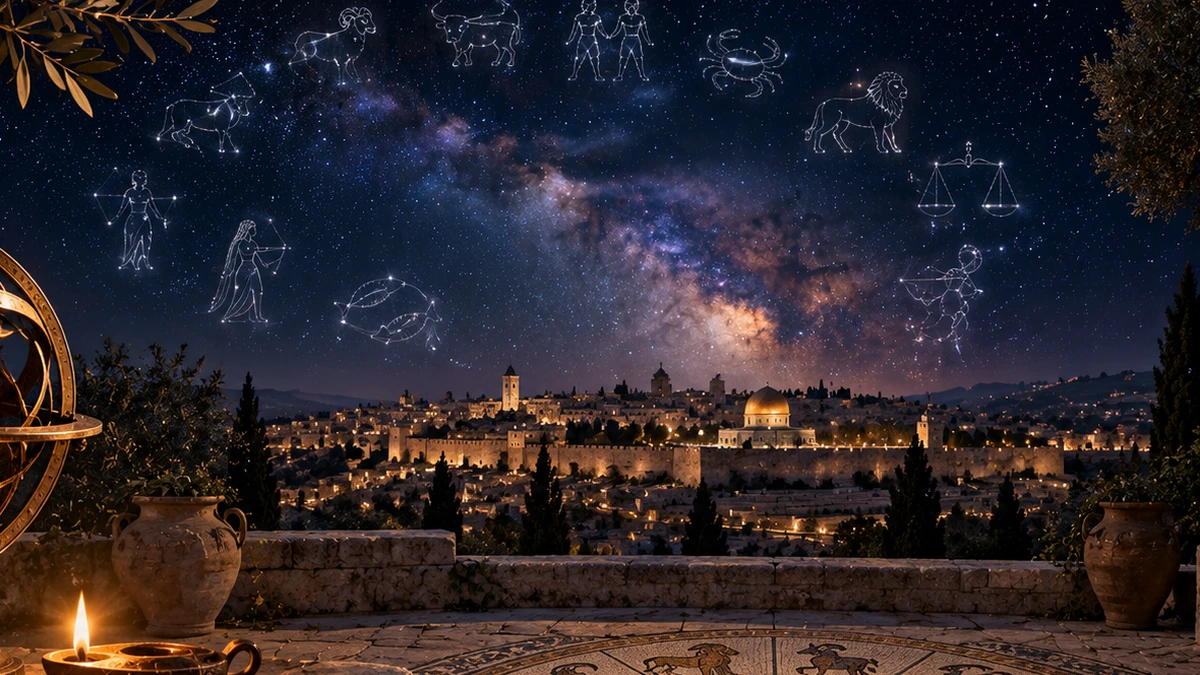
Job names the Pleiades, Orion, and the enigmatic Mazzaroth; 2 Kings 23 mentions mazzalot; Isaiah knows star-gazers. How much zodiac is actually in the Bible — and where do later astro-theological reconstructions begin?
Read article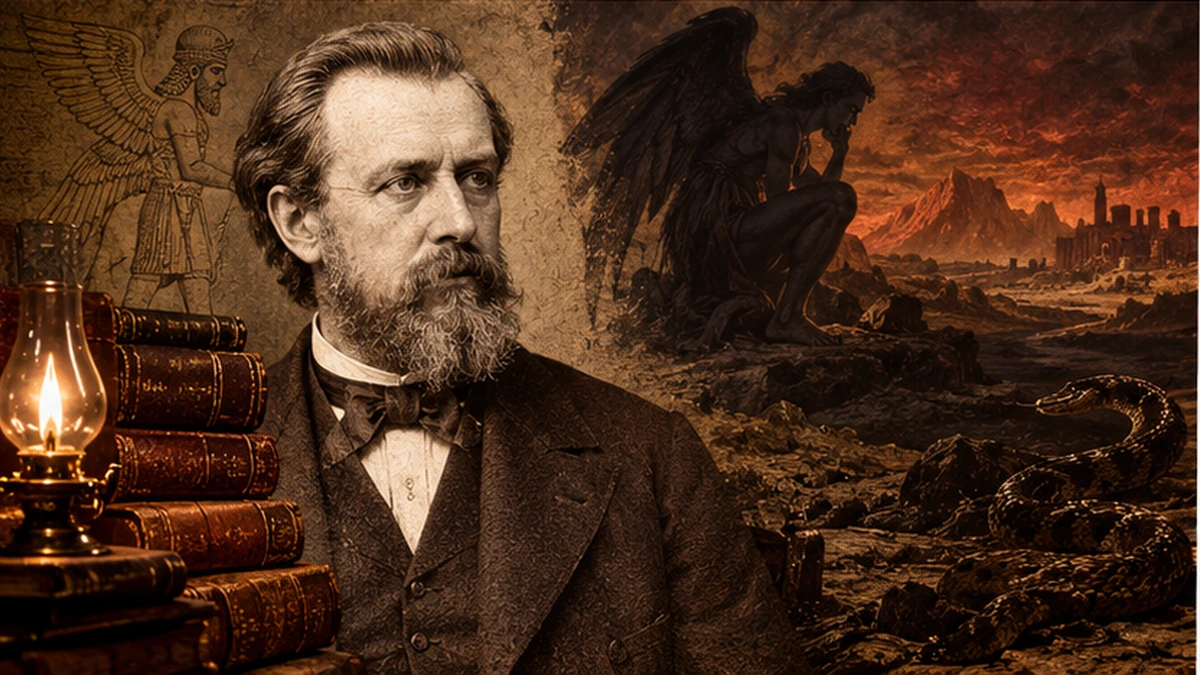
A detailed presentation of Graves’s *The Biography of Satan*: the development of Satan, Sheol and Gehenna, Lucifer, Persian and astral motifs, and the author’s comparative history of the Christian Devil.
Read article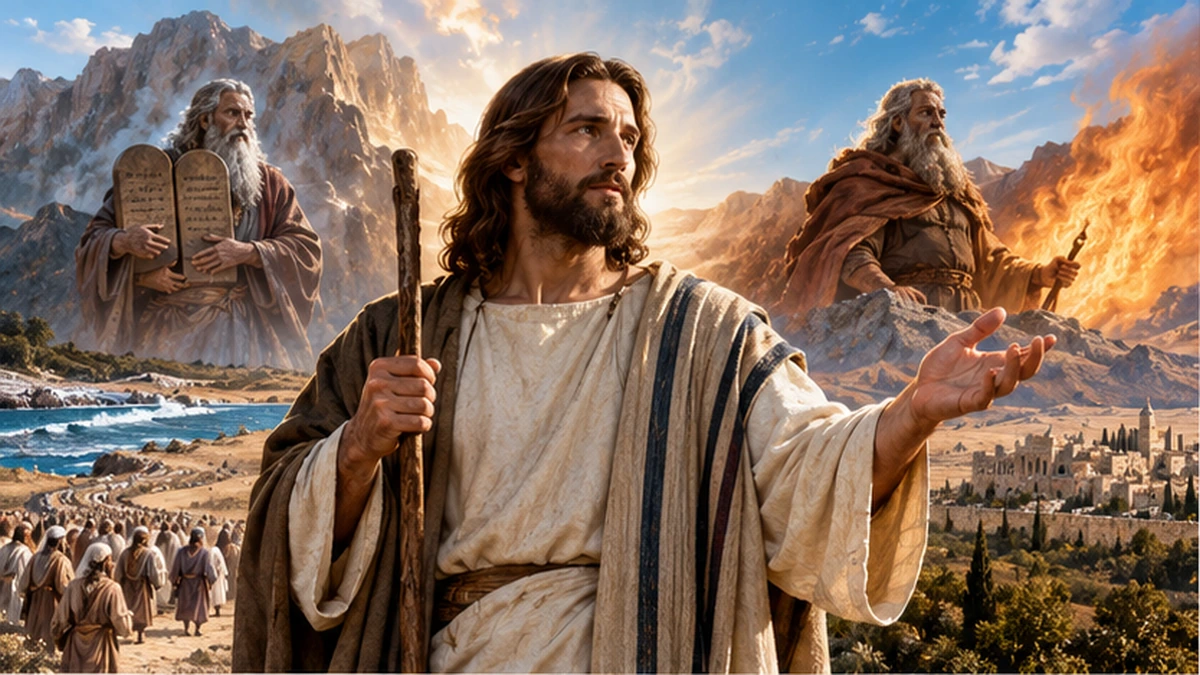
The Gospels narrate Jesus through older scriptural patterns: Matthew draws especially densely on Moses, exodus, and Israel, while Luke develops Elijah and Elisha motifs. Typology, however, is neither historical proof nor proof of invention.
Read article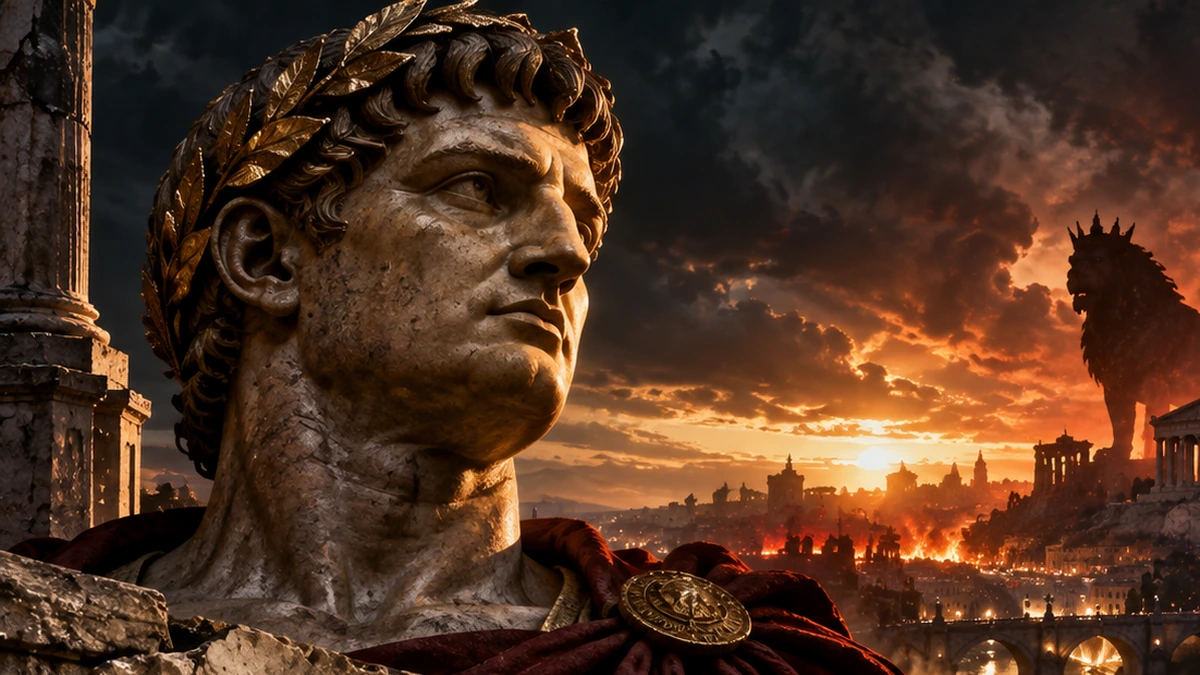
Revelation asks the reader to calculate the beast’s number. Why do most manuscripts read 666 while some early witnesses read 616—and why does that difference strongly support, but not finally prove, a connection with Nero?
Read article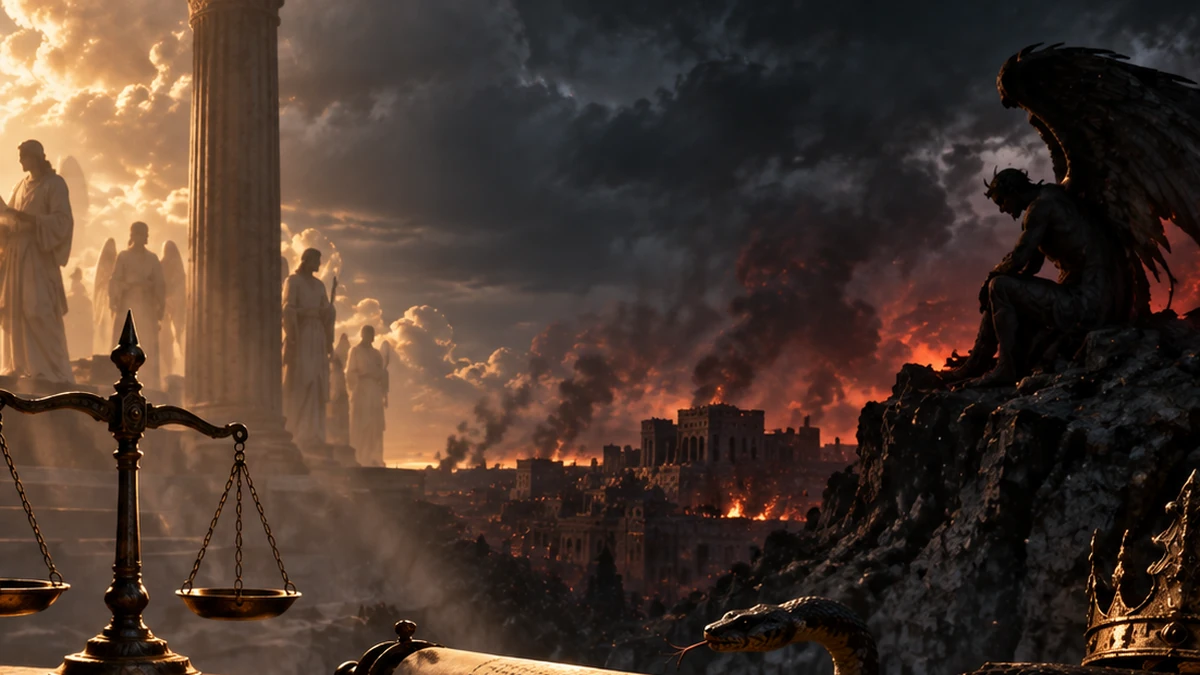
Satan is not the same figure from the first page of the Bible onward. The early word means an adversary or accuser; later Jewish and Christian texts gradually connect the heavenly accuser, demons, the serpent, Lucifer, and a cosmic enemy.
Read article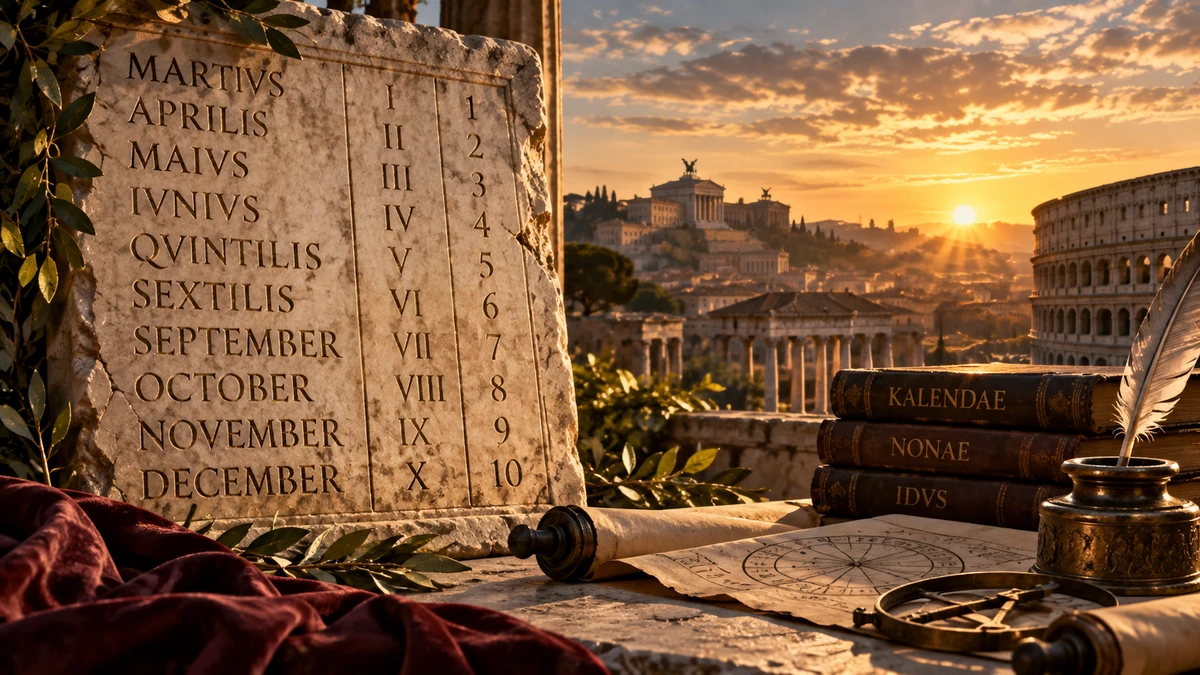
September means seventh, yet it is the ninth month. Is that an error, a trace of an older Roman calendar, or something more? A review of month names, the Numa tradition, Republican fasti, and Caesar’s reform.
Read article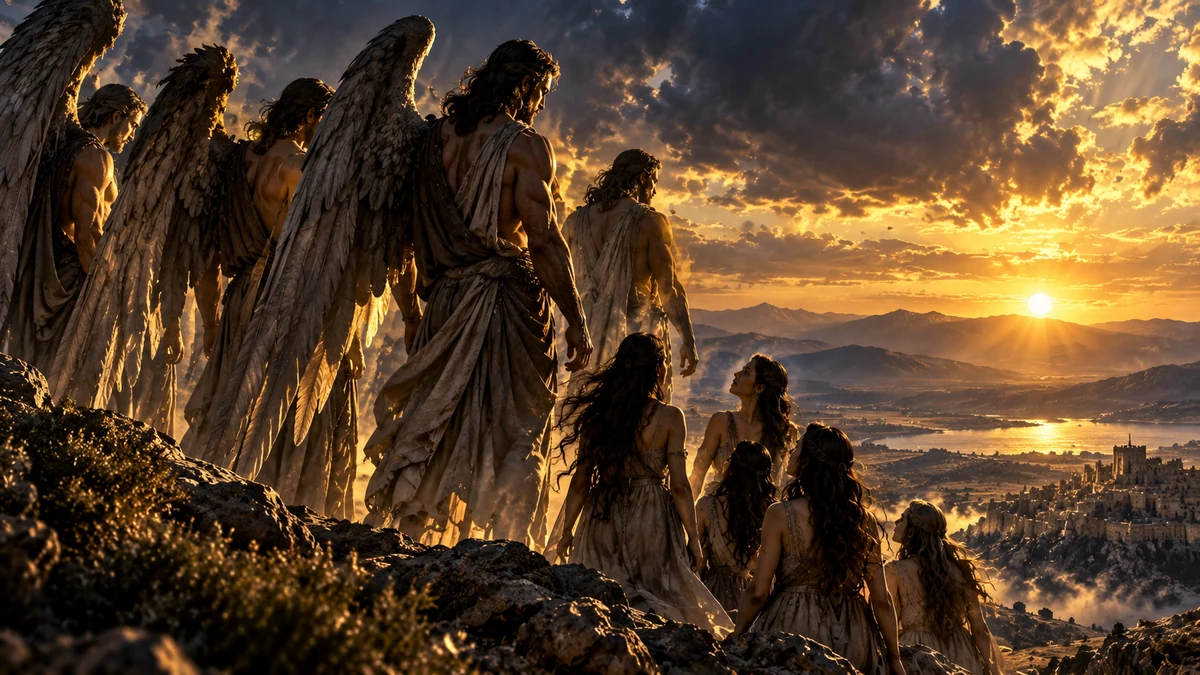
Genesis 6 gives only four enigmatic verses. 1 Enoch expands them into a story of Watchers, giants, and forbidden knowledge. What belongs to the original text and what to later interpretation?
Read article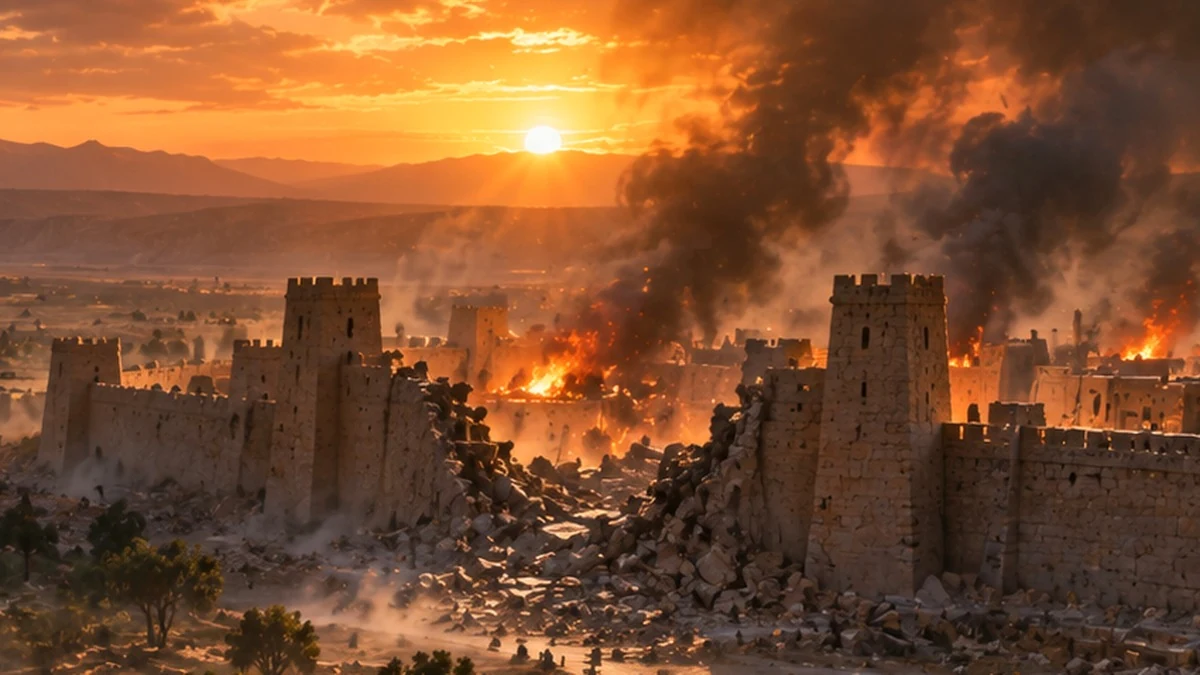
Jericho, Ai and Hazor became tests of the historicity of Joshua’s conquest. What do destruction layers, ruins and the emergence of early Israel actually show?
Read article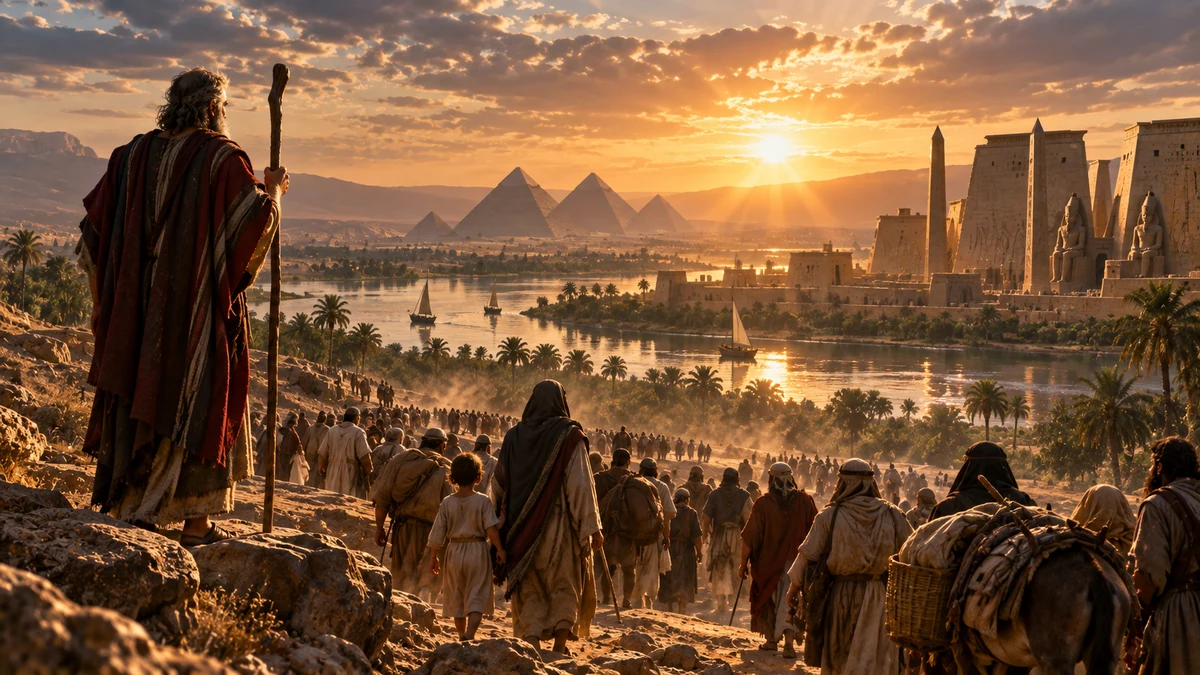
Archaeology does not confirm a mass Exodus on the scale implied by a literal reading of the text.
Read article
The stories of Sargon and Moses share a strikingly precise motif: an infant in a sealed basket on a river. But the historical Sargon is not the same thing as the much later surviving Sargon legend, and similarity alone does not prove direct copying.
Read article
Genesis, Atrahasis, and Gilgamesh share striking flood motifs. What does that reveal about common tradition, adaptation, and possible historical memory?
Read article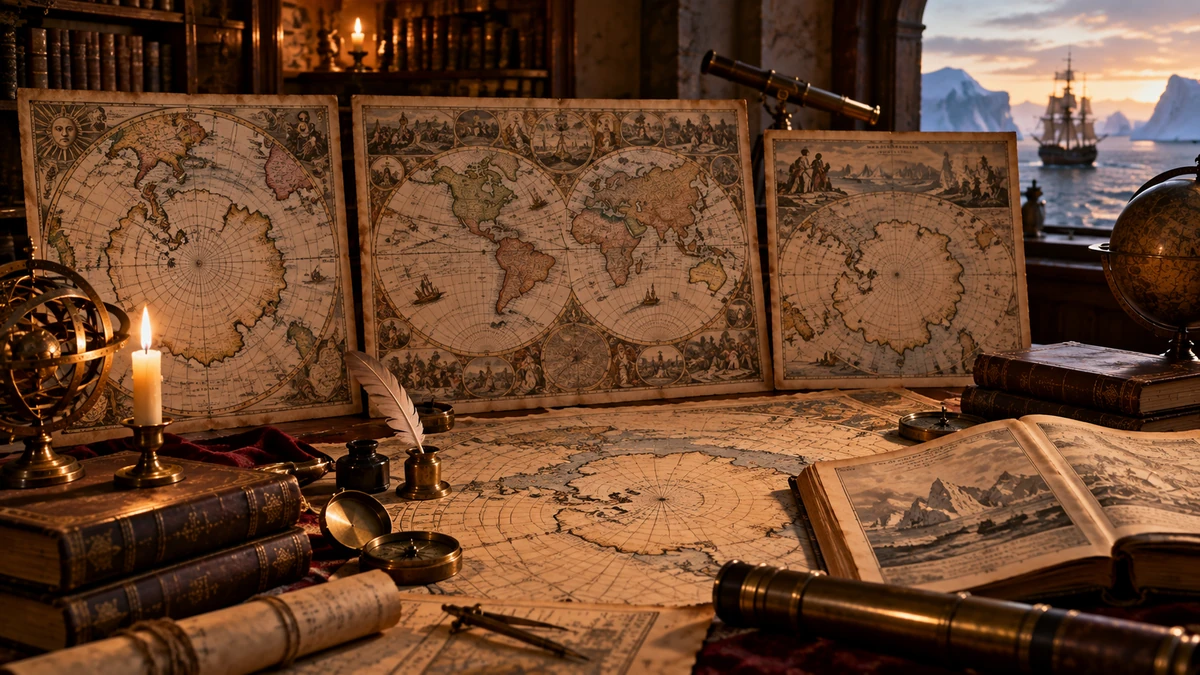
Oronce Fine, Mercator and Buache placed vast southern lands on maps before Antarctica was discovered. Do they preserve lost ancient knowledge, or the evolving history of the Terra Australis hypothesis across three centuries of cartography?
Read article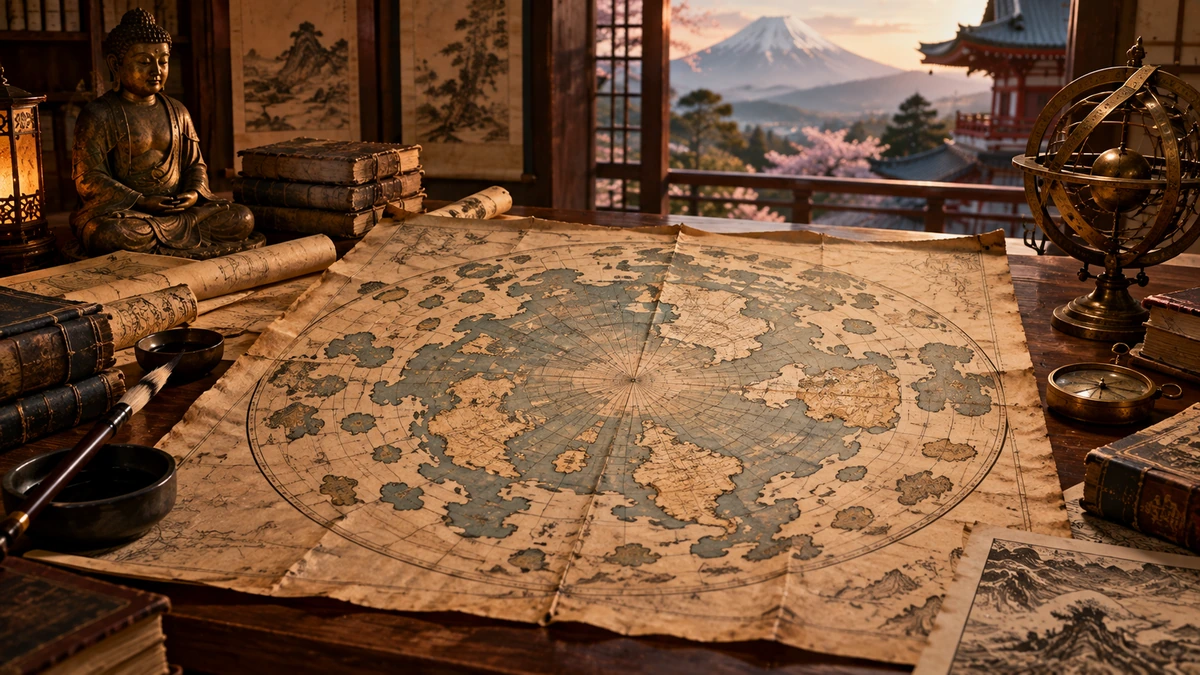
In 1907 a Hawaiian newspaper printed a mysterious circular map now circulated as a 'map of 33 continents'. Yet the primary source never states the number 33. What does the image show, where did it come from, and how does genuine Buddhist cosmography fit into the story?
Read article
The same reality can require multiple maps and models. Explore the difference between territory and representation, the role of purpose and idealization, and why model plurality is not relativism.
Read article
A constellation is not a three-dimensional group of stars. Explore sky projection, real stellar distances, proper motion, and the difference between constellations and asterisms.
Read article
The same stars do not necessarily create the same cultural sky. Matariki, Chinese asterisms, and the Emu in the Sky show how traditions organize a shared physical world.
Read article
The recurring sky was among humanity’s earliest references for time and direction. From Sopdet and Maya cycles to Polaris and Pacific wayfinding, people learned to turn celestial patterns into calendar and compass.
Read article
Today's 88 constellations are not a natural list but the result of historical development and IAU standardization, from Ptolemy and al-Sufi to southern atlases and Delporte’s boundaries.
Read article
A myth is not reliable history merely because it is old, and it is not worthless merely because it is not a literal report. It can function as a map of values, relationships and a community’s way of understanding the world.
Read article
Stars are physical objects; star lore is a cultural system connecting the sky with memory, seasons, direction, kinship and story.
Read article
Zodiacs, planets and solar motifs appear in very different religious and cultural settings. Their presence is historical evidence; claims about their meaning require context and independent support.
Read article
Day, lunation, year and precession are measurable cycles. Calendar rounds and cosmological recurrences are ways societies organize, interpret and embed rhythms within larger models of the world.
Read article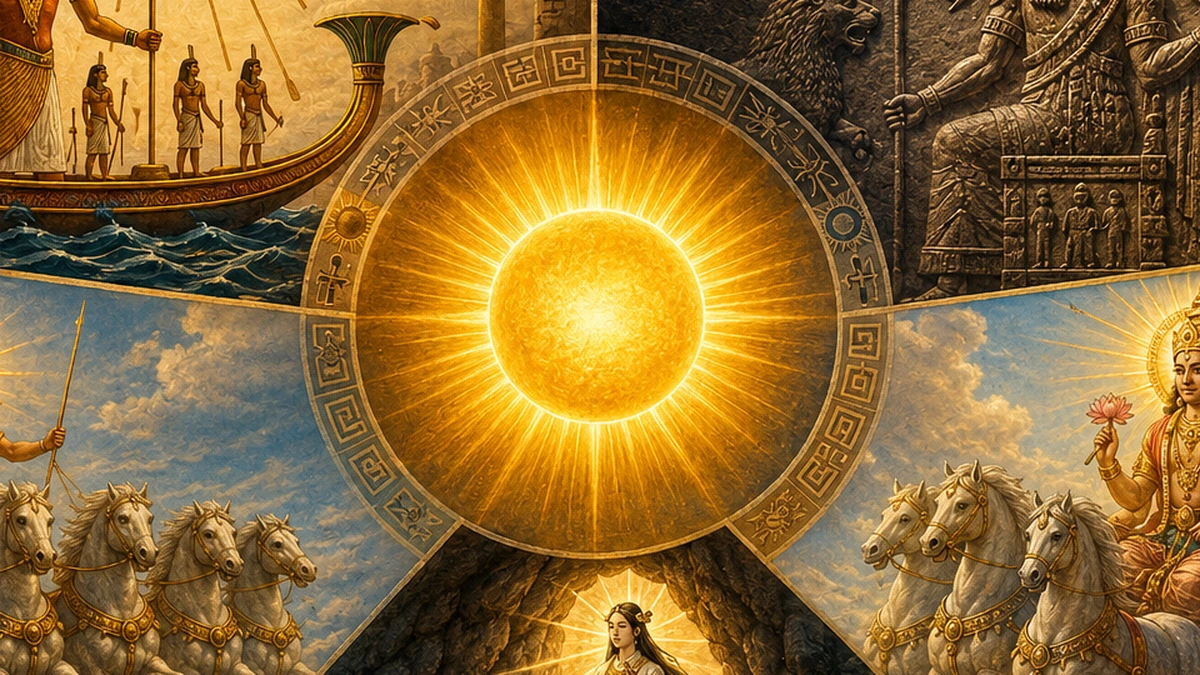
Ra, Shamash, Helios, Surya, and Amaterasu are linked to the same Sun yet belong to very different traditions. What do their similarities actually demonstrate?
Read article
Stars do not draw heroes, animals, or deities by themselves. People connect points, name patterns, and assign meaning, allowing one sky to become calendar, compass, memory, and story.
Read article
A circle, cross, tree, star, or color does not necessarily have one eternal meaning. A symbol works when people recognize it and use it within a shared system.
Read articleNo article matches your search.