Psychopathy, Hidden Power and the System of Fear: Who Benefits from Imbalance?
Does a system that rewards fear, division and callousness arise on its own, get deliberately exploited, or include a deeper unseen layer? A source-audited review of psychopathy, power and the open metaphysical hypothesis.

This article begins with a question rather than an answer: when a social system repeatedly produces fear, division, competition and alienation, are we seeing only the effects of complex incentives, deliberate human exploitation of those mechanisms, or an additional unseen layer?
Psychology can measure psychopathic traits, different forms of empathy, effects of power, perceived threat, polarization and organizational incentives with considerable precision. These findings are an important control layer because they prevent every cold or harmful act from being automatically labelled psychopathy.
A second layer is deliberately human: individuals and organizations can exploit fear, conflict or crisis for money, influence or control. Such claims are testable only case by case and should not be generalized to the whole world without direct evidence.
A third layer is metaphysical: the possibility of an unseen or nonhuman intelligence that may maintain imbalance through especially suitable intermediaries and feed on negative emotional states. The article neither presents this as established nor reduces it to mere metaphor; it marks clearly where evidence ends and open interpretation begins.
What if imbalance is not merely a system error?
War, constant competition, political and social polarization, economic insecurity, sensationalism, hostile information flows and the repeated feeling that another threat is always approaching can be understood as disconnected consequences of a complex world. Another interpretation is also possible: an environment saturated with fear, division and alienation may be useful to some structures of power and therefore may not always be corrected even when its damage is obvious.
This article does not present that second possibility as fact. It presents it as a question. When a system repeatedly rewards control, short-term power, conflict and indifference to consequences for others, it is reasonable to ask whether we are seeing only a collection of bad decisions or also a selection mechanism that pushes certain kinds of behaviour upward. A more distant metaphysical interpretation asks whether a hidden layer may exist behind visible human hierarchies and derive its own benefit from such imbalance.
Visible authority and the hypothesis of an unseen apex
In ordinary analysis, power is exercised through identifiable institutions: states, corporations, financial systems, media, militaries, religions and many other organizations. Decisions are distributed across people, interests, rules and historical circumstances; a damaging system does not require a single secret centre. Complex systems can generate outcomes no individual planned.
The Archonic or predatory interpretation adds another layer. Visible decision-makers are not necessarily the final apex of the pyramid. Some are described as intermediaries, hosts or agents of a deeper intelligence or invisible structure that benefits from human imbalance. Related motifs appear in modern esoteric readings of Gnosticism, the predator-mind model and other narratives of unseen control. This article does not claim that this layer is established; it presents the model in the form its proponents actually intend.

Why would a person without conscience fit such a system?
If we temporarily imagine a system whose stability depends on fear, domination and exploitation, an obvious question follows: what kind of human profile would function most easily inside it? A person who strongly feels the suffering of others carries an additional brake on harmful decisions. A person with markedly reduced affective empathy, guilt and moral inhibition may more easily treat people as numbers, resources or obstacles. This is why esoteric versions of the model sometimes describe psychopathic traits as a possible “interface” for a predatory system.
Psychology supplies an important but limited parallel. Psychopathy is multidimensional, and affective-interpersonal features such as callousness, shallow emotional response, reduced guilt and manipulation are central to several models. Meta-analytic evidence indicates that impairment is generally stronger for affective than cognitive empathy. A person may therefore understand what another person thinks or fears without strongly sharing that distress. This may facilitate manipulation, but it does not demonstrate a nonhuman presence.
Fear, division and hatred as a functional environment
Fear is not merely an individual emotion. When groups perceive another group as threatening, negative attitudes toward the outgroup tend to increase; meta-analytic research on intergroup threat consistently finds this relationship. Other meta-analytic work shows that perceived threat can increase support for restricting civil liberties, especially against outgroups. Fear and loss of control can therefore alter social behaviour in measurable ways.
None of this proves that someone necessarily manufactures fear in order to “feed” on it. It does show why persistent fear can be politically, economically or organizationally useful: divided groups focus on one another, threat can make control more acceptable, and high-arousal communication captures attention. In the open Archonic model, those same effects have an additional function: negative emotion is said to generate not only obedience and conflict but also energy that another layer of the system can use as a resource.
What does “feeding on negative energy” mean?
Within this model, “feeding” is not intended merely as a metaphor for media attention or financial profit. The claim is stronger: fear, anger, hatred, despair and collective trauma are said to generate a subtle energy or state of consciousness useful to parasitic or nonhuman intelligences. Human systems would therefore tend to reproduce conditions in which those states recur—conflict, helplessness, insecurity, permanent enemies and fragmented communities.
The psychological studies cited here do not contain an instrument for measuring that ontological claim. They can measure stress, attention, empathy, aggression, polarization, behaviour and physiological arousal, but not an external recipient of subtle energy. Two disciplines are therefore required at once: failure to measure such a recipient is not evidence that it exists, while a psychological description of fear is not by itself a logical proof that no additional metaphysical layer can exist.
What psychology actually says about power and dark traits
Research does not support the simple formula “power equals psychopathy.” A leadership meta-analysis found only a weak association between psychopathic tendencies and leadership emergence, together with poorer effectiveness and transformational leadership. A large workplace meta-analysis linked psychopathy with poorer task performance, lower organizational citizenship behaviour and more counterproductive work behaviour. Prevalence estimates are also highly measurement-dependent: one general meta-analysis produced an overall estimate around 4.5%, while PCL-R studies were around 1.2%.
More relevant is the environment. Research on the Dark Triad and moral disengagement indicates that organizational context matters: political climates, abusive supervision, weak accountability, highly competitive systems and particular incentives can enable or amplify self-serving, manipulative and unethical behaviour. That raises a more important question than “how many psychopaths are at the top?”: what traits does a system reward, and what restraints disappear as people move higher in a hierarchy?
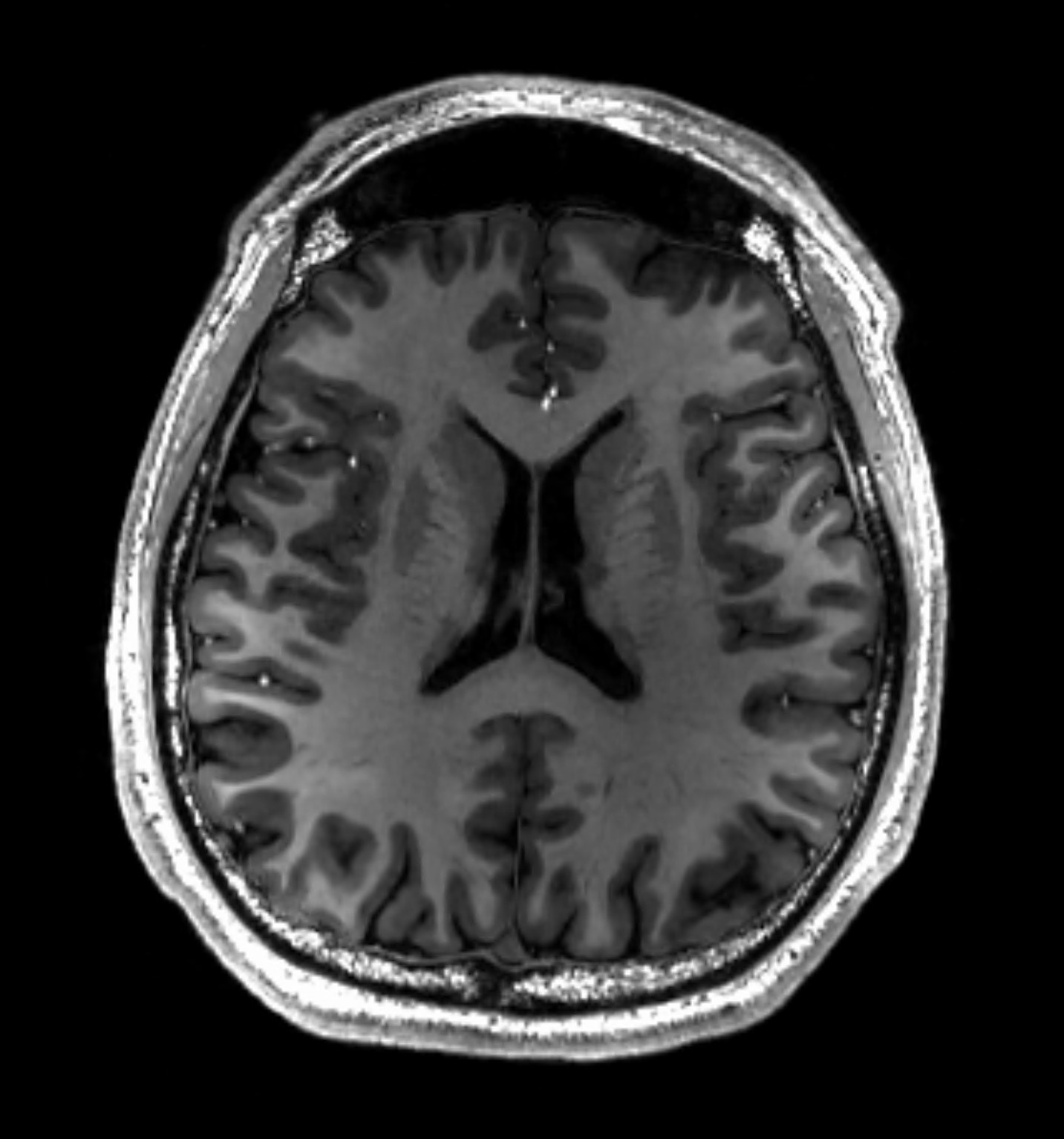
Three possible explanations for the same pattern
When we see a system that repeatedly produces fear and rewards callousness, at least three explanations can coexist. The first is systemic: there is no hidden director; incentives, competition, institutional inertia and selection generate harmful outcomes. The second is deliberately human: some actors intentionally exploit fear, division and crisis because doing so increases money, influence or control. The third is metaphysical: visible human structures are part of a broader predatory system in which certain people function as useful intermediaries and negative collective emotion serves as a resource.
These explanations are not automatically equal in evidential support. The first two contain many mechanisms that can be directly observed; the third remains ontologically open and would require a different kind of evidence. But the article does not erase it merely because current laboratory measures do not test it. Its job is to show honestly where data end and interpretation begins.
The purpose is not belief, but inquiry
This article therefore does not ask readers to believe in a psychopathic elite, invisible rulers or Archons. Nor does it ask them to believe these possibilities are impossible. Its purpose is to cultivate observation: What does the system actually reward? Who benefits from fear? When does division weaken us? Why do some harmful structures reproduce even when their consequences are widely understood? Who makes decisions, and who bears their costs?
The healthiest response to such a topic is not belief but greater attention. If the explanation is purely systemic, close observation helps reveal incentives and improve institutions. If deliberate human manipulation exists, it helps identify techniques of control and conflicts of interest. If there is also an unseen layer, discernment remains equally important. In all three cases, the first step is the same: accept neither official nor alternative stories automatically, but examine what kind of world is actually being produced around us and what kind of consciousness that world encourages.
Sources and further reading
- Hare & Neumann (2008), Psychopathy as a clinical and empirical construct — PubMed
- Patrick, Fowles & Krueger (2009), Triarchic conceptualization of psychopathy — PubMed
- Sanz-García et al. (2021), prevalence meta-analysis — PMC
- Campos et al. (2022), psychopathy and empathy meta-analysis — PubMed
- Campos et al. (2023), cognitive vs affective empathy — PubMed
- Landay, Harms & Credé (2019), psychopathy and leadership meta-analysis — PubMed
- Roth & Klehe (2025), workplace psychopathy meta-analysis — APA
- Smith & Lilienfeld (2013), Psychopathy in the workplace: knowns and unknowns — ScienceDirect
- LeBreton, Shiverdecker & Grimaldi (2018), Dark Triad and workplace behavior — Annual Reviews
- Bueno-de la Fuente et al. (2025), Dark Triad and leadership systematic review — PMC
- Czopek (2026), moderators and mediators between Dark Triad and organizational outcomes — Frontiers
- Ogunfowora et al. (2022), moral disengagement at work meta-analysis — PubMed
- Schmid Mast et al. (2019), power and social information processing — PubMed
- Galinsky et al. (2006), Power and perspectives not taken — PubMed
- Guinote (2017), How Power Affects People — PubMed
- Riek, Mania & Gaertner (2006), intergroup threat meta-analysis — PubMed
- Carriere, Hallahan & Moghaddam (2022), perceived threat and human rights meta-analysis — SAGE
- Fritsche, Jonas & Kessler (2011), collective reactions to threat — Wiley
- Jost, Baldassarri & Druckman (2022), political polarization mechanisms — Nature Reviews Psychology
- Viding & McCrory (2018), development of psychopathy — PubMed
- Moore/Viding et al. (2019), genetic underpinnings of callous-unemotional traits — PMC
- Nielsen et al. (2013), left/right brain personality hypothesis — PLOS ONE