Knowledge library

Articles for independent inquiry.

Shorter entry points into the questions explored across THY-REALITY. Browse by field or search directly by title and description.

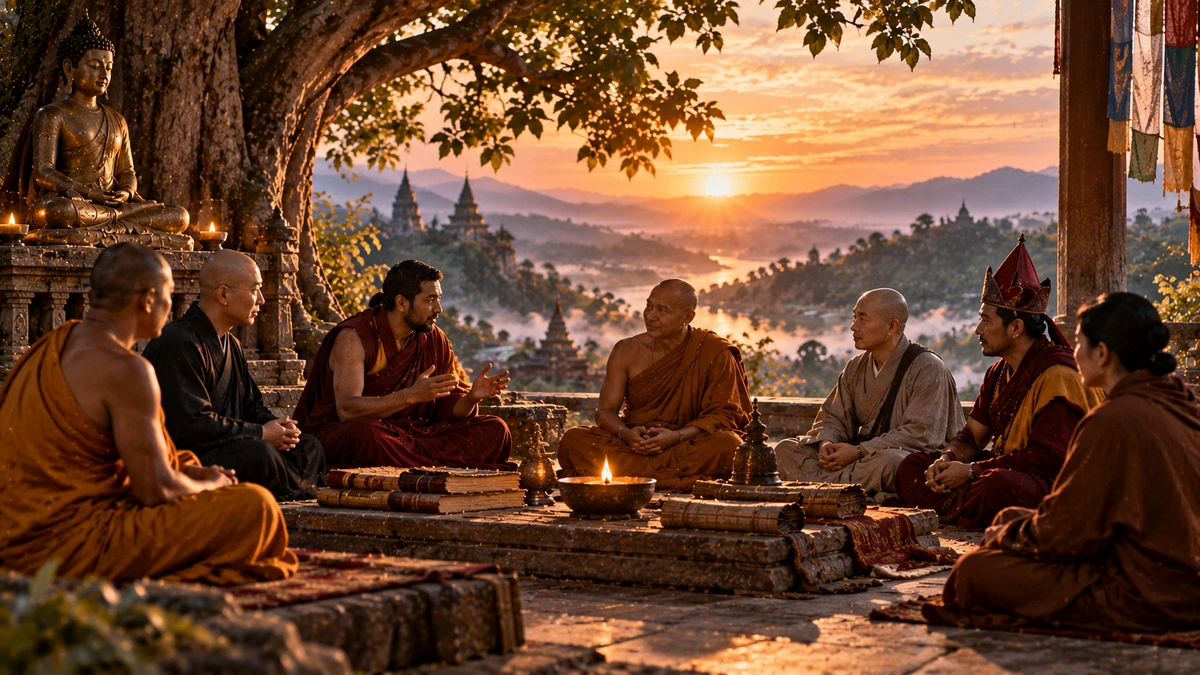
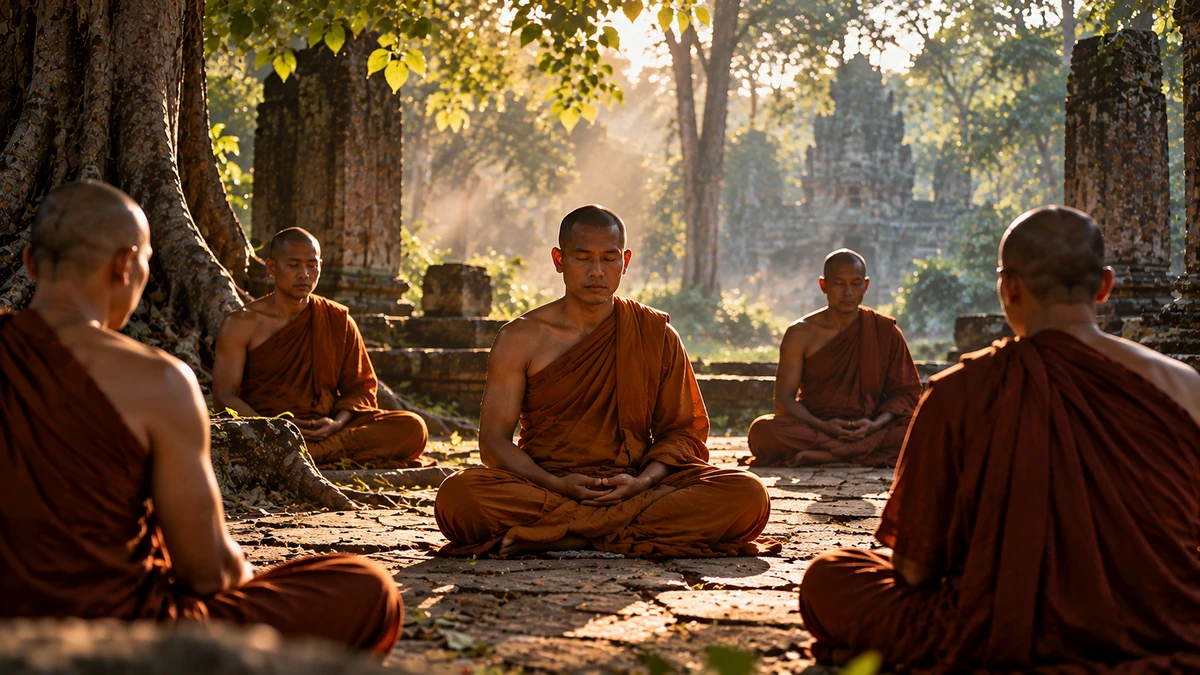
Seven monks sit in a circle beneath a large tree among old stone ruins.

The Oldest Core — What Remains When We Compare the Earliest Buddhist Traditions?

After all the preceding articles, we can finally ask the question that has hung over the whole series from the beginning: **What is the oldest recognizable core of Buddhist teaching?** We are not asking which present-day school is the most original, which sutra was certainly first, or which words the historical Buddha uttered exactly as we read them today.

Read article
A wide view of a monastic complex with multiple connected paths, gardens, and a solitary monk.

Saṁyutta Nikāya — How Early Buddhism Organized Thousands of Short Discourses into a Thematic Network

If the Dīgha Nikāya is a collection of long discourses and the Majjhima Nikāya a collection of middle-length dialogues, the *Saṁyutta Nikāya* is organized according to a different principle. Not primarily by length, but by **connections**. The Pāli word **saṁyutta** means something like connected, joined, or bound together.

Read article
A monk reads an ancient text at sunset with a Buddha statue and temple landscape behind him.

Dhammapada — 423 Verses on Mind, Ethics, and the Path

If we had to choose one Buddhist book that has become almost synonymous around the world with “sayings of the Buddha,” the *Dhammapada* would be among the first candidates. Its short verses and vivid moral images speak about mind, anger, violence, craving, death, wisdom, the path, and nibbāna.

Read article
A monk sits above a broad landscape of monasteries, pilgrims and diverging mountain paths at sunset.

Is Buddhism a Single Teaching?

When someone says “Buddhism,” they may mean very different things: Theravāda in Sri Lanka or Thailand, Zen in Japan, Pure Land in China, Tibetan Buddhism, vipassanā, Mahāyāna philosophy of emptiness, recitation of Amitābha’s name, tantric visualizations, monastic discipline, meditation, ritual, or philosophy.

Read article
A group of monks sits in a circle inside an open wooden monastic space lit by natural light.
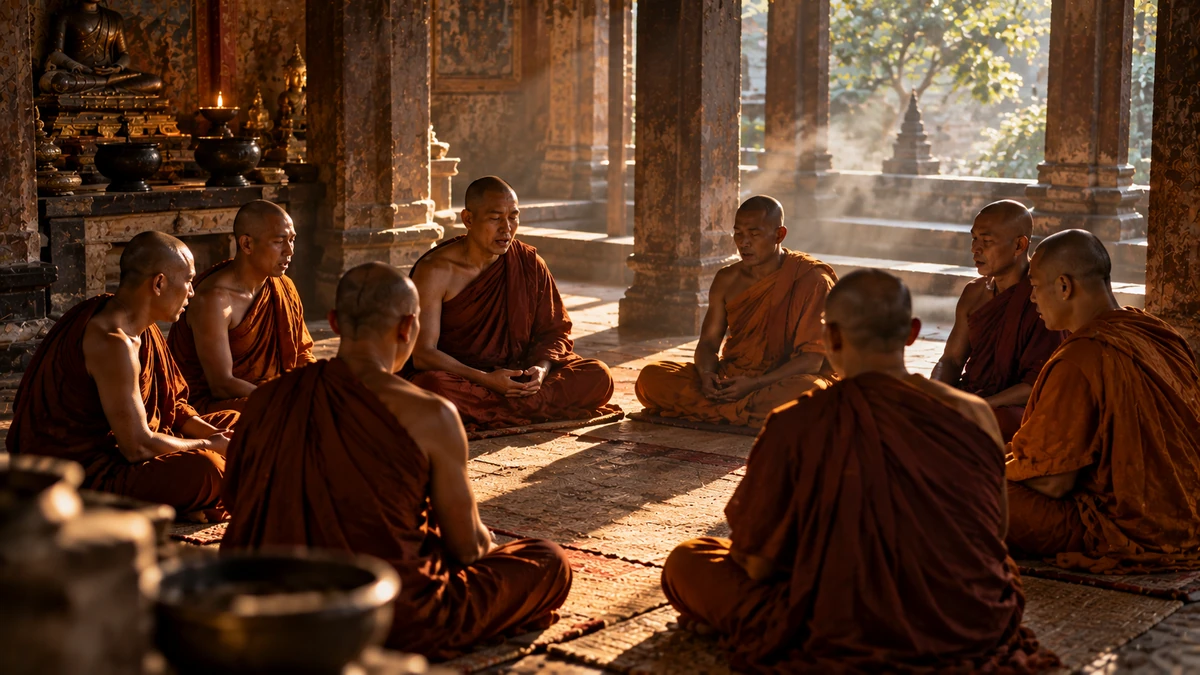
How Were the Buddha’s Discourses Preserved?

When we open a Buddhist sutra today, we read words on a screen or on paper. In the time of the historical Buddha, no such book existed. The Buddha left no manuscript of his teachings, and his disciples did not sit beside him with pens, writing down every sentence.

Read article