

SeriesPath to the Abyss
Third Step: Isolate Them
A person without strong bonds stands alone before the system
Read articleShorter entry points into the questions explored across THY-REALITY. Browse by field or search directly by title and description.
A person without strong bonds stands alone before the system
Read article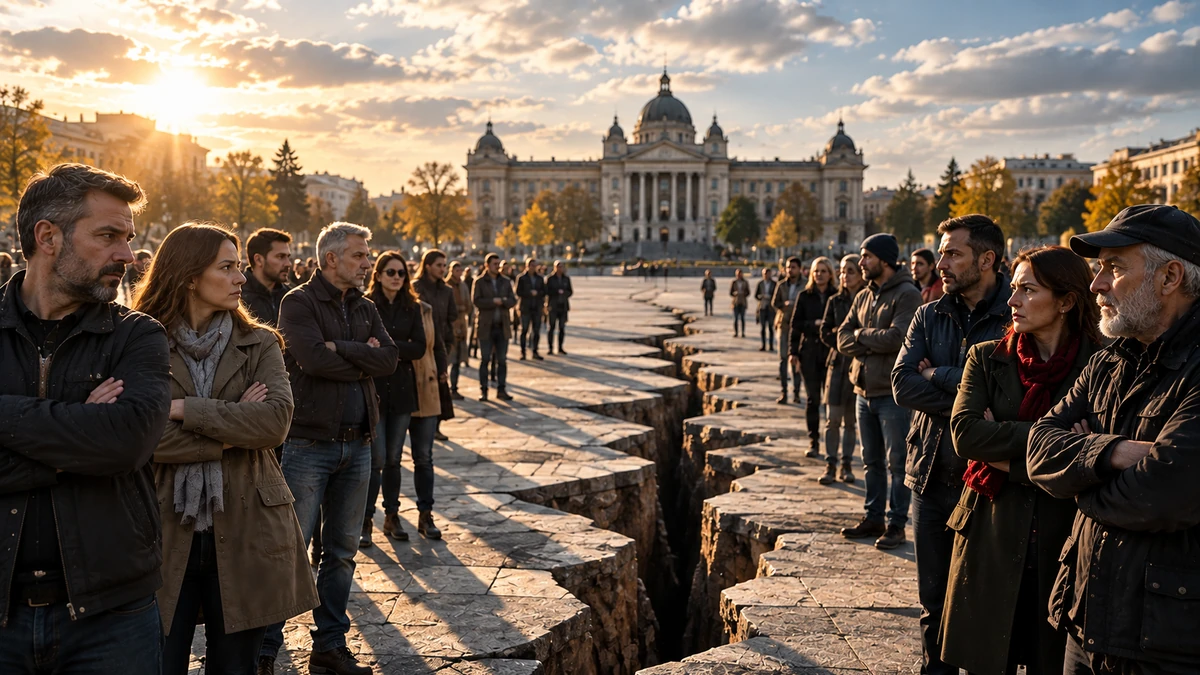
A person who hates the neighbour no longer looks upward
Read article
How can new local capabilities be built without destroying existing ones first? This article develops a function-by-function transition: pilot, parallel running, thresholds, redundancy, fallback and only then reduced dependence on the old route.
Read article
How can one concrete local need and a few reliable people become a first cooperative core without creating a new hierarchy? This article provides a minimal 30-day process for purpose, roles, decisions, membership, dissent, traceability and a first pilot.
Read article
This article turns locality into a practical tool: map people, skills, spaces, equipment, food, water, energy, organisations and connections, then verify capacity, access, operator, failure points and alternatives for every important resource.
Read article
When subsidiarity shows that several communities need a shared level, they do not have to create one new master.
Read article
Subsidiarity is not the slogan that local is always better. It is a method: keep decisions at the lowest level capable of carrying them effectively, while a higher level must show why scale, effects or capacity genuinely require it.
Read article
This article closes the local-material-resilience arc with its necessary boundary: air, water, biodiversity, waste and climate effects cross local borders, so sovereignty requires responsibility for externalities and future generations.
Read article
A practical local-preparedness framework: which essential functions must survive disruption and which fallback pathways a community needs.
Read article
This article shows how a large city can operate as a multi-level network of neighbourhoods, districts and shared metropolitan functions — with more local influence without romanticising isolation or rural life.
Read article
This article separates ownership from operational responsibility and shows how roads, transport, waste, logistics and communications require clear stewardship, life-cycle planning, financing and fallback arrangements.
Read article
How does direct help become durable protection? This article separates aid, savings, community funds and insurance, then shows why small voluntary pools need wider networks for large risks.
Read article
Reciprocity protects cooperation from exploitation, but it must not become a measure of human worth. This article separates inability from free riding and tests the limits of care, justice, and positive obligations.
Read article
This article develops an education model that does not primarily teach a child what to think, but how to verify, discern, connect knowledge, create, cooperate, and gradually govern themselves — through plural paths with a clear common floor of quality.
Read articleNo article matches your search.