Solar Myths and Universal Archetypes
Ra, Shamash, Helios, Surya, and Amaterasu are linked to the same Sun yet belong to very different traditions. What do their similarities actually demonstrate?
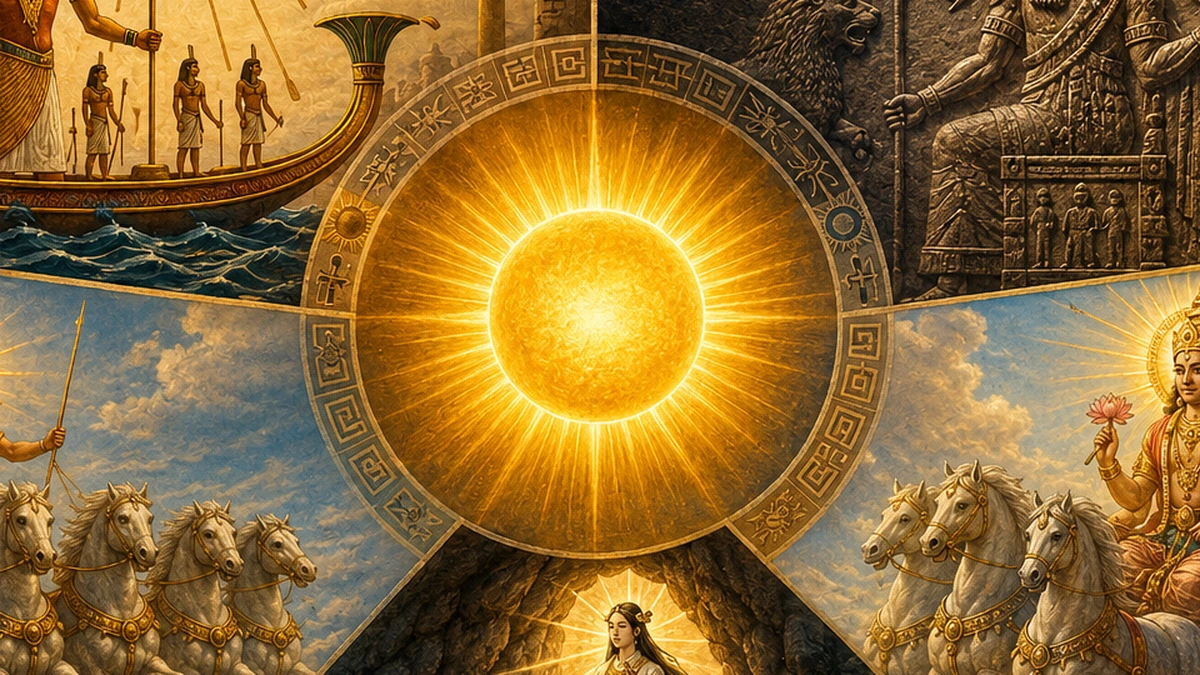
The Sun was impossible for almost any historical society to ignore. It appears at the horizon each morning, provides light and warmth, its apparent motion helps mark direction and time, and its radiation ultimately sustains nearly all food obtained from plants and animals. It is therefore unsurprising that such a prominent natural phenomenon entered mythology.
Across cultures we encounter solar gods and goddesses, boats, chariots, discs, eyes, crowns, animals, heroes, and stories about the disappearance and return of light. Placed side by side, these motifs raise an important question: are they versions of one universal story, or different cultural responses to a shared natural experience?
Similarity between symbols is a reason to compare them. By itself, it is not proof of common origin, direct influence, or a universal archetype.
Begin with the Shared Point: the Same Sun
Egyptians, Greeks, Mesopotamians, Indians, and Japanese observers were not looking at five different Suns. They experienced the same kind of prominent natural phenomenon: sunrise, the daily path, sunset, night, return, light, shadow, warmth, and seasonal change. That alone provides shared material from which different cultures can independently develop similar metaphors.
No direct cultural contact is required to connect light with visibility or sunrise with a new beginning. Yet a common external referent does not imply a common religion or an identical meaning.
Re and Shamash: Two Solar Traditions
Egyptian solar symbolism is exceptionally elaborate. Re is linked with the Sun’s daytime journey and its nocturnal passage through the Duat, a process connected with renewal at dawn. Egyptian material embeds this cycle in a broader system of cosmic order, funerary ideas, and relationships involving Re, Osiris, and maat.
Comparatively, we may describe a pattern of passage through darkness and renewal. That does not by itself establish a universal myth of a “dying and rising solar hero”; the specific Egyptian function remains historically more important than a later generalization.
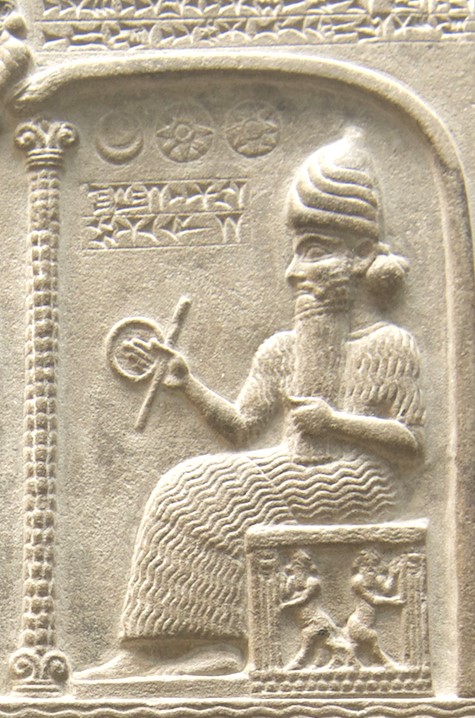
Sumerian Utu and Akkadian Shamash are solar deities strongly linked with justice, judgment, and truth. ORACC notes that Shamash’s all-seeing quality follows naturally from daylight revealing human activity, which helps explain associations with oaths, contracts, and the exposure of deceit.
This creates a powerful symbolic chain—light, visibility, truth, just judgment—but also shows why solar deities should not be collapsed into a single type. The judicial dimension is especially pronounced in Shamash’s tradition.

Helios, Surya, and Amaterasu
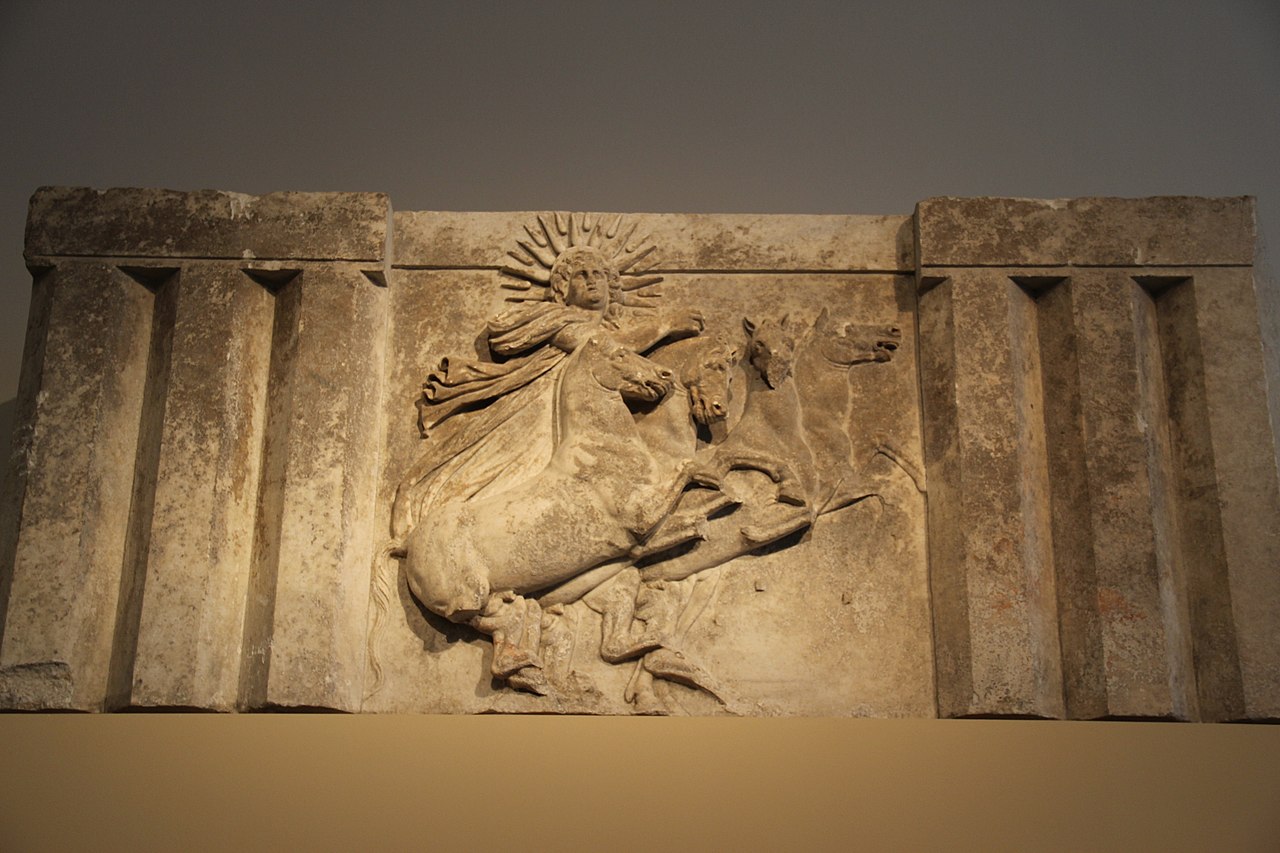
In Greek tradition, Helios is the most direct personification of the Sun. The Homeric Hymn presents him as a radiant god crossing the sky in a chariot, while other sources develop his role as one who sees what happens below.
Apollo is more complicated. Helios and Apollo were not simply identical figures in every period of Greek religion, yet Tomislav Bilić’s reassessment argues that identifications of Apollo with the physical Sun cannot be reduced to a very late philosophical reinterpretation. The case illustrates a general rule: symbolic associations have histories and must be dated and contextualized.
Surya has ancient roots in South Asian traditions and is already associated with the Rigveda. The Metropolitan Museum also notes West Asian or Iranian features in some historical representations and wider links within solar iconography.
This case is useful because it displays two possible mechanisms at once: independent symbolism of the same Sun and genuine historical movement of motifs between cultures. Similarity therefore does not license us to select a single explanation automatically.
In Japanese tradition, Amaterasu is a solar goddess. Her withdrawal into the heavenly rock cave and subsequent emergence are linked with the loss and restoration of daylight, and the British Museum preserves multiple depictions of precisely this episode.
We again recognize a broad pattern—absence of light, darkness and disruption, return of light—but the genealogy, religious function, and cultural setting are distinctly Japanese. Amaterasu is not simply a Japanese version of Re; she belongs to a different tradition that organizes meaning around the same celestial body in a different way.
What Really Repeats—and What Could Falsify the Explanation?
Broad comparative patterns are real: sunrise can become a metaphor for beginning or renewal, sunset for transition, light for knowledge and revelation, the Sun above the world for sight or witness, warmth for life, and the daily cycle for order or stability. These connections are understandable because they arise from observable properties of the phenomenon itself.
A comparative pattern is not yet proof of one prehistoric myth, still less proof that every story about light, circles, or rebirth is secretly a story about the Sun.
If the category is defined broadly enough, almost any story can be solarized. A hero defeats darkness and becomes the Sun; a hero dies and returns and becomes sunset and sunrise; gold becomes solar evidence; twelve companions become the zodiac. The problem begins when the same interpretation can absorb almost any possible observation.
A good explanation must not merely accept matches. It must leave open the possibility that something is not solar.
Four Possible Reasons for Similar Myths
- Independent development: different societies can interpret the same natural phenomenon in similar ways.
- Cultural contact and diffusion: symbols can travel through trade, migration, empires, translation, and religious exchange.
- Shared older inheritance: two traditions may preserve different descendants of an older common tradition.
- General features of human psychology: similar bodies, emotions, and cognitive capacities may make some metaphors more likely to recur.
These mechanisms are not mutually exclusive. In a concrete case, historical, linguistic, archaeological, and textual evidence is needed to assess which explanation is better supported.
What Does “Universal Archetype” Mean?
The word archetype is used loosely today. In ordinary speech it may simply mean a very old and frequently recurring type of image or story. In Jungian analytical psychology, however, the concept is more demanding because it is linked with the collective unconscious and universal structures of the psyche.
Christian Roesler’s review argues that there is no firm scientific basis for claiming that complex symbolic patterns, such as a full hero myth, are biologically transmitted so that every individual has direct access to them independently of culture. We should therefore distinguish the observation that motifs recur from the much stronger claim that complex symbolic contents are innate.
Even a widespread symbol does not have to mean the same thing everywhere. The Sun can be male or female, royal, judicial, protective, creative, or dangerous; it can be an eye, a chariot driver, a traveler in a boat, or a divine ancestor. The differences often reveal more about a culture than the broad similarity does.
If we see only “the same archetype” in all these forms, we may erase the very historical specificity that needs explanation.
Different Levels of Solar Evidence
- Strong solar connection: text or iconography directly identifies the figure with the Sun, as with Re, Helios, Shamash, Surya, or Amaterasu.
- Well-documented solar association: historical sources show a connection with the Sun or solar cult, but time, place, and evidence must be specified.
- Comparative solar interpretation: a researcher notices a motif that can be compared with a solar cycle, but the claim remains interpretive.
- Speculative solarization: broad similarities such as gold, circles, death, or the number twelve are treated as sufficient proof of solar meaning.
This scale does not prohibit interpretation. It clarifies when we are describing direct historical evidence and when we are offering a comparative possibility.
Archetype as a Question, Not a Shortcut
Solar myths give us something unusually clear: a shared external referent. We know that these cultures actually observed the Sun, so we can examine how one physical reality generates different cultural models. Re’s nocturnal journey, Shamash’s justice, Helios’s chariot, Surya’s traditions, and Amaterasu’s withdrawal are not one story, but all respond to a celestial body shared by everyone.
The physical phenomenon is shared. The cultural meaning is not.
It is therefore most useful to treat “archetypal” as a research question rather than an automatic answer. We can ask why light, darkness, circles, ascent, descent, eyes, and return so often become tools for thinking about human life and the world without deciding in advance that every case has the same origin.
That question leaves room for psychology, anthropology, history, and astronomy while preserving the possibility that different cultures require different answers. Similarity is the beginning of inquiry, not its conclusion.
Comparative mythology is most interesting when it does not turn every story into one story, but shows how humanity can create many different worlds beneath the same sky.
Sources and further reading
- The Metropolitan Museum of Art. Divine Egypt / solar cycle of Re and cosmic order Source
- The Metropolitan Museum of Art. “Amduat” Papyrus of Djedmutesankh — nocturnal solar journey through the Duat Source
- ORACC / University of Pennsylvania. Ancient Mesopotamian Gods and Goddesses — Utu/Šamaš Source
- Homeric Hymn 31 to Helios. Perseus Digital Library Source
- Bilić, T. (2021). Early Identifications of Apollo with the Physical Sun in Ancient Greece: Tradition and Interpretation. Mnemosyne, 74(5), 709–736. DOI: 10.1163/1568525X-BJA10004 Source
- The Metropolitan Museum of Art. Surya, the Hindu Solar Deity Source
- British Museum. Ama no iwato (Heavenly Rock Cave) — Amaterasu emerging from the cave Source
- Roesler, C. (2012). Are archetypes transmitted more by culture than biology? Journal of Analytical Psychology, 57(2), 223–246. DOI: 10.1111/j.1468-5922.2011.01963.x Source
- Witzel, M. E. J. (2013). The Origins of the World’s Mythologies. Oxford University Press Source