Rudolf Steiner: Between Philosophy, Anthroposophy, and Cultural Renewal
Rudolf Steiner began as an editor of Goethe’s scientific writings and a philosopher of freedom, then developed anthroposophy into a broad cultural project. This article traces his intellectual path, the Goetheanum, eurythmy, social threefolding, Waldorf education, biodynamics, anthroposophic medicine, and debates over race and human development.

Rudolf Steiner (1861–1925) began his public intellectual career as an editor of Goethe’s scientific writings, a publicist, and a philosopher. From the 1880s he worked on editions of Goethe’s scientific texts, and in Weimar he served at the Goethe and Schiller Archive. In 1893/94 he published The Philosophy of Freedom, linking freedom with individual thinking and “ethical individualism.”
Around 1902 his path turned more explicitly toward esotericism. He became general secretary of the German Section of the Theosophical Society and publicly developed teachings on reincarnation, karma, supersensible worlds, and spiritual development. After the break with the Theosophical leadership, the Anthroposophical Society emerged in 1912–1913, within which Steiner developed his approach as “spiritual science.”
Anthroposophy produced not only lectures and books but concrete cultural forms: the Goetheanum, eurythmy, the first Waldorf school, social threefolding, the agricultural course from which biodynamics developed, and Steiner’s medical collaboration with Ita Wegman. In his work, philosophy, spiritual teaching, art, and institutions are closely intertwined.
This article therefore follows his path from Goethe and the philosophy of freedom to anthroposophy and cultural renewal. Its purpose is to explain how his ideas developed, how he connected them, and how they took institutional form in education, architecture, art, social thought, agriculture, and medicine.
Before anthroposophy: Goethe, freedom and Berlin
Steiner was born in 1861 in the Hungarian part of the Habsburg Monarchy, in what is now Donji Kraljevec in Croatia. In Vienna he studied subjects in natural science, mathematics, technology, and philosophy. His editorial work was especially important for his early intellectual profile: on the recommendation of Karl Julius Schröer, he began working on editions of Goethe’s scientific writings in 1882, and in 1890 moved to Weimar to work at the Goethe and Schiller Archive.
Goethe’s way of observing nature strongly influenced Steiner. He became interested in how living forms are known, what role thinking plays, and how an organism might be understood as a developing whole. These questions later carried into both his philosophy and anthroposophy.
The Philosophy of Freedom appeared with the date 1894 and stands at the center of Steiner’s early philosophical phase. Its main question is whether a human being can be free in thinking and action. Steiner develops the idea of “ethical individualism”: a moral act should not be mere obedience to an external rule but an action consciously realized from an apprehended intuition.
The book places strong emphasis on the individual as a unique being who cannot be fully explained through generic group categories. Later anthroposophy added a broader cosmology, reincarnation, and developmental schemes, but the question of free individuality remained one of the recurring themes of Steiner’s work.
After Weimar, Steiner moved to Berlin in 1897, edited literary journals, and entered the broader cultural life of the capital. Between 1899 and 1904 he taught at a workers’ education school connected with the milieu shaped by Social Democrat Wilhelm Liebknecht, lecturing on history, rhetoric, and later natural science.
This phase matters for understanding his later social thought. Steiner encountered questions of adult education, the labor movement, and social organization that would reappear after the First World War in his proposals for social threefolding.
Theosophy, the break and the birth of anthroposophy
In July 1902 the leadership of the Theosophical Society approved the formation of a German Section and appointed Rudolf Steiner its provisional general secretary. In the following years he published Theosophy, Knowledge of the Higher Worlds, and other works in which reincarnation, karma, spiritual worlds, and higher forms of cognition became central themes.
The Theosophical period is an important transition between the early philosopher and the later founder of anthroposophy. Steiner adopted part of the esoteric vocabulary and subject matter but gradually developed his own distinctly Christian and Central European interpretation of spiritual development.
The conflict with the leadership of the Theosophical Society intensified around the movement surrounding Jiddu Krishnamurti and the Order of the Star, but the divergence also concerned the broader direction of the movement. In 1912–1913 a new organizational form emerged, the Anthroposophical Society; documents from 1913 refer to its first general meeting, while the 1923 statutes connect the renewed General Anthroposophical Society with the society founded in 1912.
With organizational independence, Steiner gained room to develop a system emphasizing Christianity, Central European cultural traditions, art, and his own method of spiritual cognition. Anthroposophy thus acquired an institutional form that survived its founder.

Spiritual science, reincarnation and the Akashic record
Steiner did not present anthroposophy merely as faith or symbolic mythology. He held that inner training could develop capacities for perceiving spiritual levels of reality. His writings often describe three stages of such cognition: imagination, inspiration, and intuition, intended to lead from formed inner images toward a deeper perception of spiritual beings and processes.
For Steiner, the term “spiritual science” therefore meant a systematic investigation of the human being and the world that, alongside sensory observation, included trained inner perception. On this basis he developed accounts of reincarnation, karma, spiritual hierarchies, and cosmic evolution.
Previous earthly lives, karma, and the so-called Akashic record are central concepts in the anthroposophical corpus for understanding human biography and history. Reincarnation refers to repeated earthly lives, while karma links actions and experiences across successive incarnations.
Steiner described the Akashic record as a spiritual memory or chronicle of the world that could be approached through supersensible cognition. Through this concept he interpreted remote epochs of humanity, the spiritual background of historical events, and connections between individual incarnations.
The Goetheanum, eurythmy and the artistic project
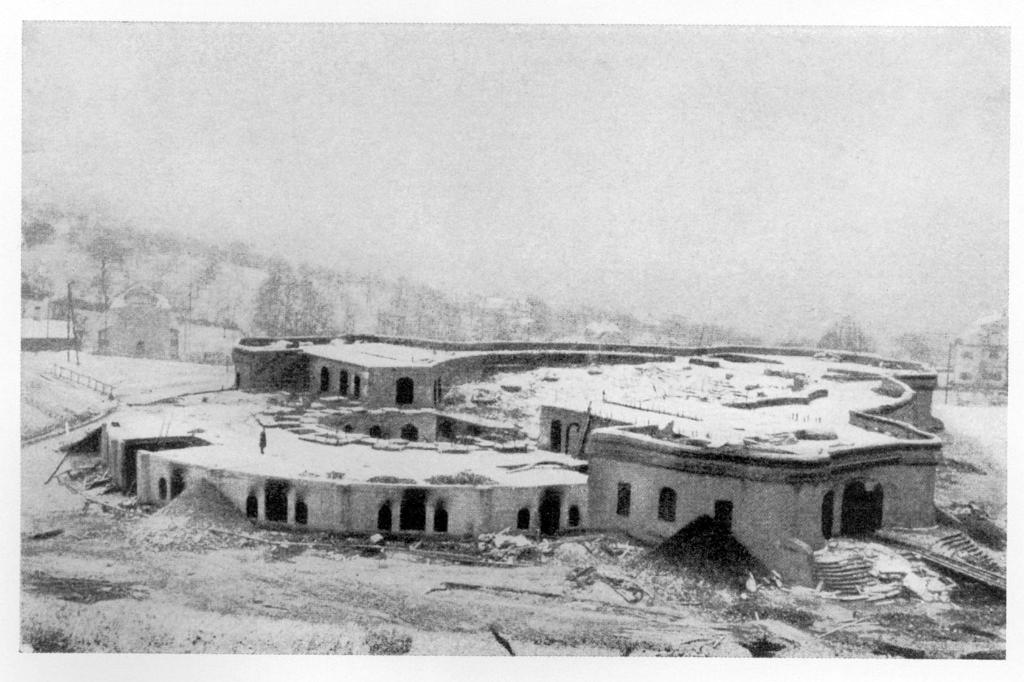
After the formation of the anthroposophical movement, its center shifted to Dornach near Basel. The foundation stone of the first Goetheanum was laid in 1913; the building, with two wooden domes, was conceived as a space for theater, lectures, art, and anthroposophical work. Steiner wanted form, material, color, and function to develop as parts of a living whole.
The first Goetheanum burned on New Year’s Eve 1922/23. In 1924 Steiner made the model for a second Goetheanum, this time a monumental reinforced-concrete structure, which was built after his death. Both projects became central architectural expressions of the anthroposophical movement.
Around 1912 Steiner, together with Lory Maier-Smits, began developing eurythmy, a movement art intended to express the formative qualities of speech and music through bodily movement. Within anthroposophical circles it became connected with stage art, education, and later therapeutic approaches.
Eurythmy belongs to Steiner’s broader understanding of art. Speech, music, color, architecture, and movement were not merely aesthetic forms for him, but ways through which spiritual patterns could be expressed and experienced in the sensory world.

Social threefolding and Waldorf: the year 1919
After the First World War Steiner campaigned intensively for the idea of a “threefold social organism.” Cultural and spiritual life was to be as free as possible, the legal-political sphere organized around equality of citizens, and economic life shaped through associations and cooperation among producers, distributors, and consumers.
In 1919 he wrote and lectured on the proposal and took part in discussions with workers’ councils in Württemberg. Social threefolding was his attempt to relate three principles—freedom, equality, and cooperation or fraternity—to different spheres of social life.
The first Waldorf school opened in Stuttgart in September 1919 on the initiative of Emil Molt of the Waldorf-Astoria factory. It was initially intended largely for workers’ children, while Steiner prepared an intensive seminar for the teachers and assumed pedagogical leadership.
Waldorf education emphasizes art, storytelling, handwork, rhythm, a long-term relationship between class teacher and class, and adapting subjects to developmental stages. Its historical anthropology was also linked to Steiner’s concepts of the etheric and astral human being, reincarnation, and developmental periods; later schools have implemented these emphases in differing ways.
Biodynamics and anthroposophic medicine
In June 1924 Steiner gave an eight-part agricultural course at the Koberwitz estate. He spoke about the farm as an organism or individuality, compost, livestock, fertility, planetary and cosmic rhythms, and special preparations. This became the historical starting point of the movement later known as biodynamic agriculture.
A central idea is that the farm should function as an integrated unit in which soil, plants, animals, compost, and human work are interrelated. Biodynamic tradition has preserved both practical methods of husbandry and Steiner’s special preparations and calendar or cosmic emphases.
In the final years of his life Steiner worked closely with the physician Ita Wegman. Their book Fundamentals of Therapy was prepared shortly before his death and published in 1925. Wegman emphasized that their intention was not to reject conventional medicine but to “extend” it through an anthroposophical understanding of the human being, illness, and healing.
Anthroposophic medicine views the human being through bodily, life, soul, and individual dimensions and developed its own pharmaceutical, artistic, nursing, and eurythmy-based approaches. As in Steiner’s other initiatives, his cosmology was translated here into professional practice and institutions.
Race, peoples, individuality and developmental schemes
Steiner’s corpus also contains statements about races, peoples, and stages of human development. Historian Peter Staudenmaier has argued that racial and ethnic distinctions are incorporated into hierarchical historical schemes in parts of anthroposophical cosmology; Sven Ove Hansson has similarly emphasized the persistence of racial thinking in parts of the corpus.
A commission appointed by the Dutch Anthroposophical Society reviewed 245 relevant passages and rejected an interpretation of Steiner’s system as a unified doctrine of racial supremacy, while judging 16 passages discriminatory by contemporary standards. The Rudolf Steiner Archive likewise now places editorial warnings around such material. The issue therefore remains an important part of the modern reception of his legacy.
In The Philosophy of Freedom, Steiner emphasizes the human being as an individual and resists reducing a person entirely to a general group category. This individualistic emphasis is one of the most characteristic features of his early philosophy.
In later anthroposophical writings, however, he also places the human being within broader cultural, ethnic, and evolutionary processes. His work thus combines two themes: the development of a unique individuality and a view of humanity as part of a long spiritual-historical evolution.
From worldview to institutions: conclusion
Steiner’s influence did not remain confined to books or lectures. Within little more than a decade there emerged an architectural center, stage and movement arts, a school, medical projects, a social movement, and an agricultural program. Anthroposophy thereby acquired forms that could be taught, built, practiced, and organizationally continued.
This movement from worldview to institutions explains much of his long-term cultural presence. The Goetheanum, Waldorf schools, biodynamic farms, anthroposophic medicine, and eurythmy are different branches of the same project: thinking, art, social life, and the human relationship to nature were to form a connected whole.
Steiner’s path runs from Goethean natural science and the question of freedom through Theosophy to an independent anthroposophy. At its center stand reincarnation, karma, spiritual development, and a layered picture of the human being, but his legacy did not end with cosmology: it took architectural, artistic, educational, social, agricultural, and medical form.
Steiner is therefore most readily understood as the author of a broad cultural project. His philosophical and spiritual ideas, the institutions that grew from them, and later debates over his legacy belong to the same historical story, while each illuminates a different side of his attempt to connect knowledge, art, and practical life.
Sources and further reading
- Rudolf Steiner Archive. *Introductions to Goethe’s Scientific Writings* (GA 1): editorial background and Schröer/Kürschner context.
- Rudolf Steiner Archive. *Goethe’s Worldview* (GA 6): Steiner’s editorship of Goethe’s scientific writings and work at the Goethe and Schiller Archive.
- Rudolf Steiner Archive. *Editorial Epilogues to Goethe’s Scientific Writings in the Weimar Edition* (GA 1f), including archival documents.
- Rudolf Steiner Archive. *The Philosophy of Spiritual Activity / The Philosophy of Freedom* (GA 4): publication history and contents.
- Rudolf Steiner. “The Idea of Free Spiritual Activity,” *The Philosophy of Spiritual Activity*, ch. 9: ethical individualism.
- Rudolf Steiner. “Individuality and Genus,” *The Philosophy of Freedom*, ch. 14.
- Rudolf Steiner Archive. *Philosophy, History and Literature: Presentation at the Workers’ Educational School and the Free University in Berlin 1901–1905* (GA 51).
- *The Theosophist*, Supplement, August 1902: executive notice authorizing the German Section and appointing Rudolf Steiner General Secretary pro tem.
- Rudolf Steiner Archive. *Theosophy* (GA 9), first published 1904.
- Rudolf Steiner Archive. *How to Gain Knowledge of the Higher Worlds* (GA 10), 1904–1905.
- Rudolf Steiner. *Occult Science — An Outline* (GA 13), preface to the first edition, 1909.
- Arthur Versluis, “Rudolf Steiner and Anthroposophy,” in *The Cambridge Handbook of Western Mysticism and Esotericism* (Cambridge University Press).
- Anthroposophical Society in America. “Rudolf Steiner and the Cultural Impulse of Anthroposophy”: movement-side institutional chronology, used for self-description.
- Goetheanum. Foundation Statute of 1923: continuity claim, organization, and founding Vorstand.
- Rudolf Steiner Archive. *The History of the Anthroposophical Society 1913–1922* (GA 251), first General Assembly documentation.
- Goetheanum. *Anthroposophy and the Goetheanum: An Introduction*: chronology of the first and second Goetheanum.
- David Adams. “Rudolf Steiner’s First Goetheanum as an Illustration of Organic Functionalism,” *Journal of the Society of Architectural Historians* 51(2), 1992.
- Rudolf Steiner Archive. *The Origin and Development of Eurythmy 1912–1918* (GA 277a), notes on Lory Maier-Smits and early eurythmy.
- Rudolf Steiner. *Basic Issues of the Social Question* / *The Threefold Social Order* (GA 23), 1919.
- Rudolf Steiner Archive. *Workers’ Councils and Socialization in the Sense of the Threefold Social Order* (GA 331a), 1919.
- German History in Documents and Images. “Opening of the First Waldorf School (September 1919)”: archival opening programme and historical context.
- Rudolf Steiner Archive. *General Human Studies as the Basis of Education* (GA 293), opening address and teacher course, August 1919.
- Rudolf Steiner Archive. *The Concept and Practice of Waldorf Schools* (GA 297), 1919 onward.
- Rudolf Steiner Archive. *The Agricultural Course* (GA 327), Koberwitz, June 1924.
- John Paull. “Attending the first organic Agriculture Course: Rudolf Steiner’s Agriculture Course at Koberwitz, 1924,” Oxford University Research Archive.
- Maike Krauss et al. “Enhanced soil quality with reduced tillage and solid manures in organic farming – a synthesis of 15 years,” *Scientific Reports* 10, 4403 (2020).
- Margherita Santoni et al. “A review of scientific research on biodynamic agriculture,” *Organic Agriculture* (2022).
- Rudolf Steiner and Ita Wegman. *Fundamentals for Expanding the Art of Healing* (GA 27), preface by Wegman.
- Peter Heusser et al. “Anthroposophic medicine: an integrative medical system originating in Europe,” PubMed record and review context.
- Peter Staudenmaier. “Race and Redemption: Racial and Ethnic Evolution in Rudolf Steiner’s Anthroposophy,” *Nova Religio* 11(3), 2008.
- Sven Ove Hansson. “Anthroposophy and Racism,” *Aura: Journal for the Study of New Religions* (2025).
- Anthroposophical Society in the Netherlands. Summary of the 2000 commission *Anthroposophy and the Question of Races*, including the finding of 16 passages judged discriminatory by contemporary standards.
- Rudolf Steiner Archive. “Special Note on Statements about ‘Races’ in the Rudolf Steiner Complete Edition”: editorial notice and reference to the Dutch commission.
- Rudolf Steiner Archive. *The Course of My Life* (GA 28): autobiographical source and record of Steiner’s death on 30 March 1925.