Noah’s Flood, Gilgamesh, and Atrahasis: Testing the Kinship of the Narratives
The similarities between Genesis, Atrahasis, and Gilgamesh are too specific for mere coincidence, yet they prove neither simple copying nor one global event. Comparison reveals an older Mesopotamian tradition, creative biblical transformation, and a much more complicated question of historical memory.
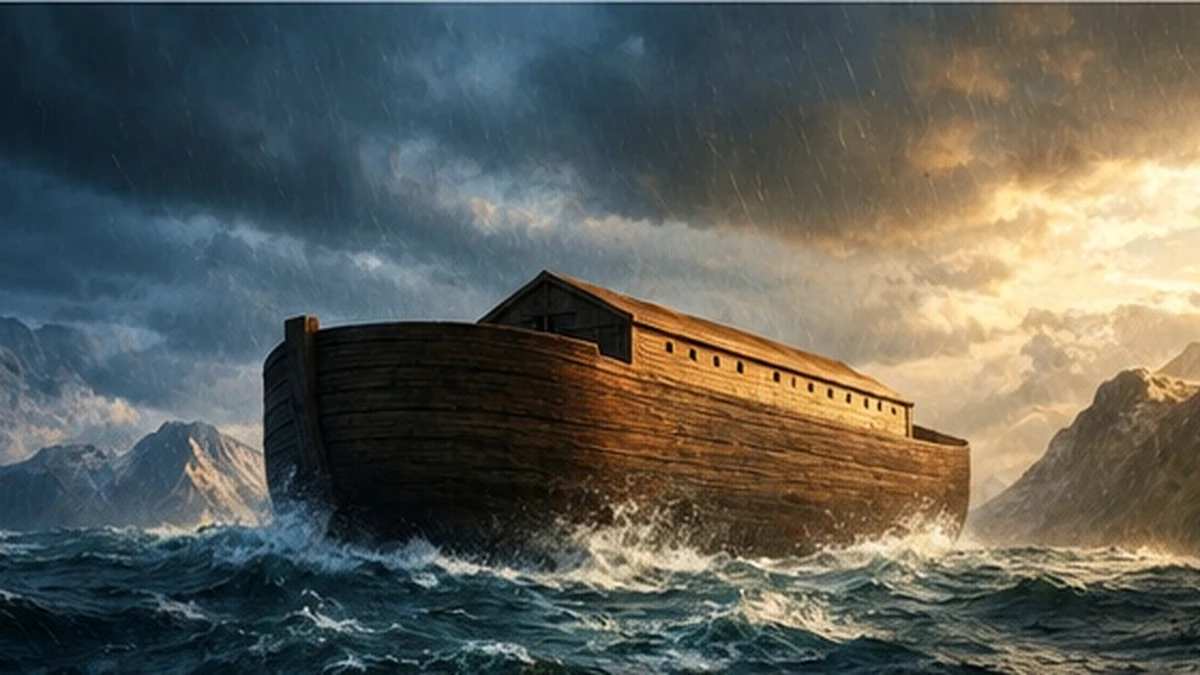
When George Smith presented the Babylonian flood narrative from Tablet XI of the Epic of Gilgamesh to the public in 1872, the surprise was not merely that Mesopotamia also knew a great deluge. What was striking was the sequence of motifs: the gods decide to destroy humanity, a chosen survivor is warned in advance, he builds a vessel, takes people and animals aboard, survives the catastrophe, releases birds after the waters recede, and then offers a sacrifice. The resemblance to Genesis 6–9 is too specific to dismiss sensibly as coincidence.
Yet this does not yield the simple formula “the Bible copied Gilgamesh.” Mesopotamian flood narratives exist in several versions and changed over centuries. Old Babylonian Atrahasis is physically attested in the seventeenth century BCE; the Sumerian story of Ziusudra belongs to the same broader tradition; the Standard Babylonian Gilgamesh known from Tablet XI survives in later Neo-Assyrian manuscripts. Genesis, meanwhile, combines its own compositional layers and reframes the flood within a different theological system.
At least three questions must therefore be separated. First: are the narratives literarily related? Here the evidence is strong. Second: can we reconstruct the exact route from one particular Mesopotamian text to one particular Judean writer? Here certainty is much lower. Third: does narrative similarity prove one historical flood, especially a global one? That is a completely different claim and requires independent archaeological and geological evidence.
The most defensible conclusion is neither “it is all only myth” nor “archaeology has proved Noah’s Flood.” The textual kinship with Mesopotamian tradition is substantial and testable; the precise direction and route of transmission are only partly reconstructable; flooding in alluvial Mesopotamia is historically and archaeologically unsurprising, but the known flood deposits are not one synchronous event. Genesis is therefore best read as an Israelite-Judean reworking of an older Near Eastern narrative world, not as an isolated story without a prehistory.
Start with chronology: which story is actually older?
The firmest chronological anchors are clay tablets. The British Museum preserves Old Babylonian Atrahasis fragments from Sippar, including a major tablet dated to 1635 BCE in the reign of Ammisaduqa. That does not mean the story was invented in that year; it means that by then we possess a physical manuscript of a narrative in which the gods, after earlier attempts to reduce humankind, resort to a flood, while Enki/Ea warns his devotee and makes survival possible.
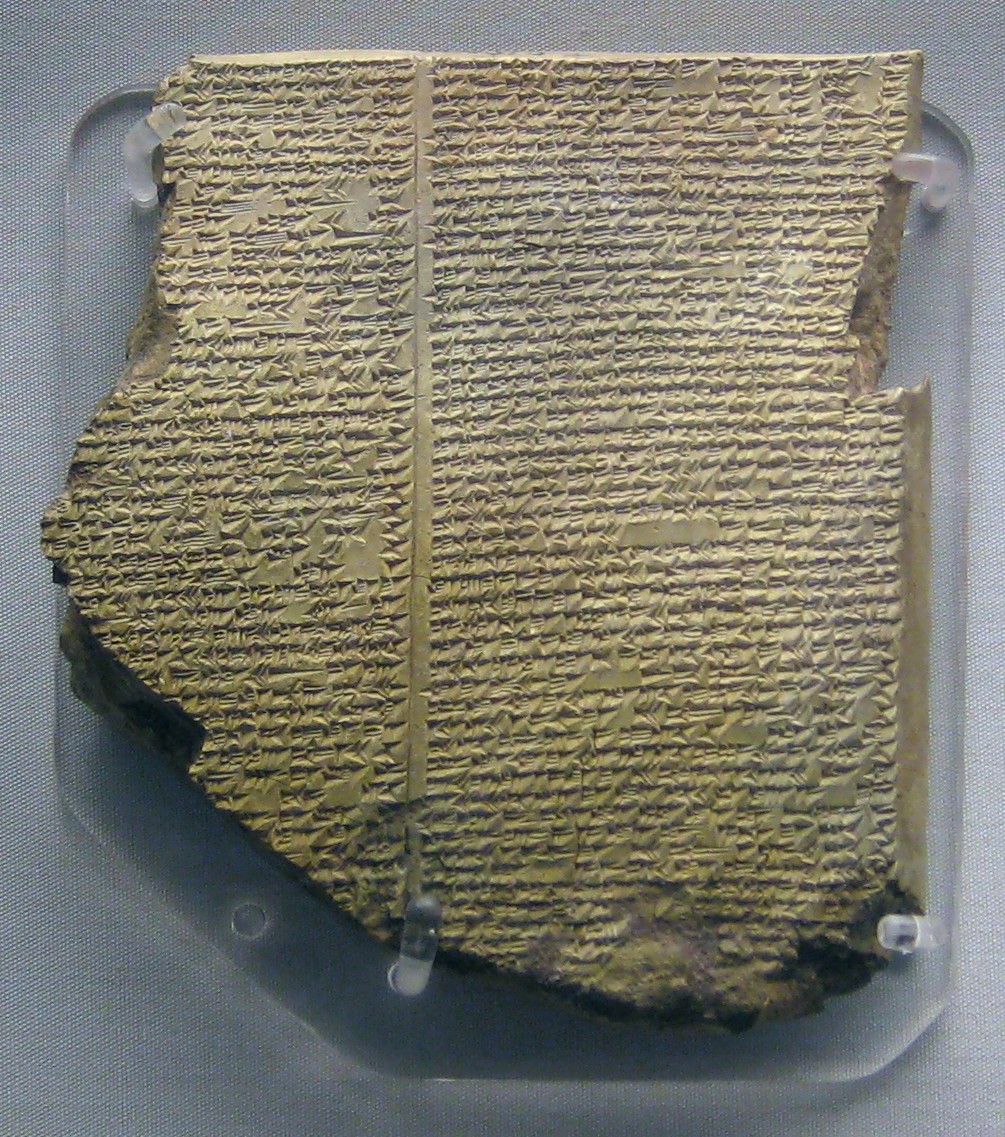
The famous Gilgamesh Tablet XI from Ashurbanipal’s library is a much later object: the surviving K.3375 manuscript is seventh century BCE. But a younger tablet does not mean a younger flood motif. Studies of the epic’s development show that the flood tale was incorporated into the Standard Babylonian Gilgamesh from an older Mesopotamian tradition associated with Atrahasis. The Sumerian Ziusudra flood story, preserved in Old Babylonian copies, likewise shows that the motif was not confined to a single composition.
Genesis presents a different problem: there is no authorial autograph, but a long history of composition, editing, and copying. Precise dating of its strata remains disputed. It is therefore safer to say that Mesopotamian flood traditions are textually attested many centuries before the final form in which we now read Genesis than to draw a simplistic line from one tablet directly to one biblical author.
Atrahasis: the Flood as a solution to the human problem
Atrahasis begins before the Flood. It is not primarily a story of one righteous man in a morally corrupt world, but a story about gods, labor, and the growth of the human population. Humans are created to take over work previously borne by lesser gods. As humanity multiplies and its noise disturbs Enlil, attempts follow to reduce the population: plague, drought or famine, and finally the Flood. Cambridge’s summary of the poem accordingly speaks of unchecked reproduction and of measures taken after the disaster to keep future human numbers under control.
Enki or Ea, however, is unwilling to permit total destruction. He warns Atrahasis indirectly, through a wall or reed structure, and instructs him to abandon property and save life by building a vessel. Parts of the construction instructions are damaged in the surviving tablets, but the basic pattern is clear: concealed warning, vessel, household, animals, and the survival of a selected group.
The motivation matters. In Atrahasis the catastrophe is not a moral judgment on violence or sin in the biblical sense. The central problem is human numbers or noise and the disproportionate response of divine authority. That difference shows why comparison must not become equation. Genesis adopts or shares a narrative architecture but fills it with a different answer to why the Flood happens and what the post-Flood world means.
Gilgamesh: an older flood story inside a new literary frame
In the Epic of Gilgamesh, the Flood is not the beginning of the main plot but an answer encountered during Gilgamesh’s search for immortality. After Enkidu’s death, the hero seeks Utnapishtim, a human who survived the primeval catastrophe and received an extraordinary privilege: life beyond ordinary human destiny. Utnapishtim then recounts how Ea disclosed the gods’ plan, how he built a vessel, and how he brought aboard his family, possessions or specialists, and living creatures.
Here we find some of the best-known parallels with Genesis. After the catastrophe the vessel comes to rest; Utnapishtim releases a dove, then a swallow, and finally a raven. When the last bird does not return, he knows that the waters are retreating. Disembarkation and sacrifice follow. The British Museum itself notes that decipherment of this sequence caused a sensation in the nineteenth century because of its similarity to the Genesis Flood.
But its literary function differs. Utnapishtim’s tale does not provide Gilgamesh with a route by which every human can become immortal. It underlines the exceptional nature of Utnapishtim’s fate and therefore Gilgamesh’s limitation. The Flood is part of the epic’s meditation on mortality. In Genesis the same broad narrative complex becomes primarily a story of judgment, preservation of life, and covenant between God, humanity, and the earth.
Genesis 6–9: one final narrative with visible seams
Genesis explicitly moralizes the reason for the Flood. The earth is corrupt and filled with violence; Noah is described as righteous in his generation. God commands the construction of an ark, gives dimensions, specifies the rescue of Noah’s family and animals, and after the catastrophe establishes a covenant whose sign is the rainbow. At the level of basic theology, this is already a different world from Atrahasis and Gilgamesh.
At the same time, the final narrative contains repetitions and tensions. In Genesis 6:19–20 Noah is to bring two of every kind of animal; in 7:2–3 clean and unclean animals are distinguished and seven pairs of clean animals appear. The narrative speaks of forty days of rain while also containing a longer chronology of 150 days during which the waters prevail. Divine designations and style also shift. These are classic reasons why Genesis 6–9 became a textbook case in debates over Priestly and non-Priestly strata.
Yet one model should not be sold as a final solution. David Carr argues for the conflation of pre-Priestly and Priestly flood narratives, whereas Joshua Berman cautions that some apparent inconsistencies can also be read in light of ancient literary convention and the structure of the final text. The narrower conclusion is safer: Genesis bears marks of complex composition, while assigning every line confidently to two reconstructed documents remains debated.
The parallels: more than water and a boat
If the similarities amounted only to “big flood plus boat,” the comparison would be weak. Flooding is a universal human experience. But the sequence is longer: a divine decision to destroy, special warning to one man, instructions for a vessel, rescue of his household and animals, sealing or closing of the vessel, catastrophic waters, the vessel coming to rest, testing for dry land with birds, and sacrifice after emergence. It is the combination of motifs that leads serious comparative scholarship to speak of literary kinship.
Not every element is distributed equally across every version. The bird sequence is especially clear in Gilgamesh and Genesis; Atrahasis is fragmentary at crucial points. The stories use different measurements, different vessels, and different landing places. Genesis speaks of the “mountains of Ararat,” a regional designation connected with Urartu rather than a necessary identification of the modern summit, while Gilgamesh names Mount Nimush or Nisir depending on textual and interpretive conventions.
Methodologically, parallels should therefore be weighed rather than merely counted. John Day explicitly warns against “parallelomania”: two texts can be related without every shared object proving direct copying. The strongest case comes from a structured cluster of relatively distinctive motifs combined with chronology and known cultural contact, not from one similar word.
The differences: Genesis also argues with and transforms the tradition
Atrahasis and Gilgamesh operate in a polytheistic world in which gods have competing interests. A divine assembly can decree destruction while Ea undermines the decision by saving his devotee. After the catastrophe deities can appear frightened, hungry, or divided over the consequences. Genesis contains no comparable split in sovereignty: the same God judges, warns Noah, brings the Flood, ends it, and establishes the covenant.
The reason for catastrophe also changes. Atrahasis stresses human noise or overpopulation; Genesis stresses moral corruption and violence. Utnapishtim in Gilgamesh receives exceptional immortality; Noah remains mortal. Genesis does not end with a divine program to limit human numbers but with a renewed fertility blessing: humanity is again commanded to be fruitful and multiply. The covenant extends to descendants and to “every living creature.”
These differences are not decorative details; they are the meaning of the adaptation. If Genesis is reduced to an inferior copy of a Babylonian original, we miss what its writers and editors did with inherited material. If it is treated as though the Mesopotamian background did not exist, we lose historical context. Comparison is strongest when it recognizes both kinship or dependence and creative theological transformation.
Direct copying, indirect transmission, or a shared tradition?
Modern scholarship is strong enough to reject two extremes. It is difficult to maintain that Genesis has nothing to do with Mesopotamian flood tradition; yet we do not possess a manuscript identifying which Judean writer read which version of Atrahasis or Gilgamesh. Literary traditions circulated through scribal schools, multilingual imperial environments, trade, deportation, and centuries of oral as well as written transmission.
Carr argues that both pre-Priestly and Priestly flood strata in Genesis were shaped in dialogue with older Mesopotamian traditions. Day notes that the non-Priestly account is in some respects closer to Atrahasis than to Gilgamesh and explicitly weighs direct against indirect dependence. This matters because “Gilgamesh was the source of Genesis” can be too narrow: Gilgamesh is only one surviving branch of a broader flood repertoire.
The Babylonian exile in the sixth century BCE is an obvious historical context for intense Judean contact with Mesopotamian learning, but it need not have been the only point of transmission. The article therefore does not lock a single route where the evidence does not. Cultural and literary kinship can be demonstrated with high confidence; the exact genealogy of every motif remains a reconstruction with varying degrees of probability.
Did a real flood stand behind the myths?
Mesopotamia is an alluvial land of great rivers, so it would be surprising if its history contained no catastrophic floods. Archaeologists have indeed identified water-laid deposits at several sites. But the dates are not identical. Older archaeological syntheses record flood deposits at Ur near the end of the Ubaid period, several separate events at Kish, and a deposit at Shuruppak around the transition to the Early Dynastic period, often placed around 2900–2850 BCE.
The differing dates are precisely the point. These deposits are not one geological horizon covering all Mesopotamia at the same moment, still less the entire planet. Some scholars have therefore proposed that an exceptionally severe local flood at Shuruppak may have contributed historical memory later absorbed into the tradition. That is an interesting hypothesis, not an archaeological identification of Noah’s event.
The evidentiary levels therefore separate at the end. The literary kinship of Genesis, Atrahasis, and Gilgamesh is strong. Major regional floods in southern Mesopotamia are historically plausible and archaeologically attested in multiple periods. The claim that all flood narratives preserve one specific event is possible but unproven. A single global flood does not follow from these Mesopotamian layers. The more productive question is therefore not which story “stole” another, but how different cultures turned catastrophe, memory, and inherited tradition into different accounts of human fragility, divine power, and a new beginning.
Sources and further reading
- Sefaria — Genesis 6: primary Hebrew text and translation for the corruption/violence rationale, Noah, ark instructions, dimensions, and the command to preserve living creatures.
- Sefaria — Genesis 7: primary text for the clean/unclean animal distinction, seven pairs, forty days of rain, and the beginning of the Flood.
- Sefaria — Genesis 8: primary text for the recession of the waters, raven and dove sequence, disembarkation, and Noah’s sacrifice.
- Sefaria — Genesis 9: primary text for the renewed fertility blessing, covenant with humanity and animals, and the rainbow sign.
- British Museum — Old Babylonian Atrahasis tablet 78943 from Sippar, dated 1635 BCE under Ammisaduqa.
- British Museum — Old Babylonian Atrahasis/Flood tablet 78941, dated 1635 BCE; part of the three-tablet composition.
- British Museum — Atrahasis III tablet fragment 78942, Old Babylonian, Sippar provenance.
- Metropolitan Museum of Art — Atra-hasis flood myth tablet, with curatorial summary of human noise, divine disasters, boat rescue, and the continuing transmission of the story.
- British Museum — K.3375, the seventh-century BCE Neo-Assyrian ‘Flood Tablet,’ Tablet XI of the Epic of Gilgamesh; curatorial synopsis includes the boat, animals, birds, landing, and sacrifice.
- Electronic Text Corpus of Sumerian Literature (University of Oxford) — The Flood Story (Ziusudra): primary translation of the Sumerian flood tradition.
- ETCSL — bibliography and cuneiform witnesses for the Sumerian Flood Story, including Jacobsen, Kramer, and Lambert/Millard/Civil.
- David M. Carr — ‘Precursors to the Flood Narrative (Gen 6:5–9:17),’ The Formation of Genesis 1–11 (Oxford University Press, 2020): P/non-P conflation and Mesopotamian precursors.
- David M. Carr — The Formation of Genesis 1–11: Biblical and Other Precursors (Oxford University Press, 2020): broader compositional model for the primeval history.
- John Day — ‘The Genesis Flood Narrative in Relation to Ancient Near Eastern Flood Accounts,’ Biblical Interpretation and Method (Oxford University Press, 2013): weighted comparison, Atrahasis/Gilgamesh/Berossus, and direct vs indirect dependence.
- Y. S. Chen — The Primeval Flood Catastrophe: Origins and Early Development in Mesopotamian Traditions (Oxford University Press, 2013): history and development of Mesopotamian flood traditions.
- Y. S. Chen — Introduction to The Primeval Flood Catastrophe: George Smith’s 1872 discovery and the modern comparative study of Mesopotamian and biblical flood narratives.
- Cambridge University Press — ‘The Flood Myth as Paradigm,’ Art and Immortality in the Ancient Near East: Old Babylonian Atrahasis and Sumerian Ziusudra as early flood-text witnesses and their relation to later Gilgamesh.
- ORACC / Ancient Mesopotamian Gods and Goddesses — Enki/Ea: Ea as creator/protector of humanity who warns Atrahasis in the Babylonian flood tradition.
- A. R. George and F. N. H. Al-Rawi — ‘Tablets from the Sippar Library VI. Atra-ḫasīs,’ Iraq: overview of creation, overpopulation/noise, plague, drought, famine, Flood, and post-Flood population controls.
- Frans van Koppen — ‘The Scribe of The Flood Story and his Circle,’ Oxford Handbook of Cuneiform Culture: Ipiq-Aya and the Old Babylonian scribal context of Atrahasis.
- Joshua A. Berman — ‘Source Criticism and Its Biases: The Flood Narrative of Genesis 6–9,’ Oxford University Press (2017): critique of overconfident source partition and attention to final-form literary structure.
- Moshe Blidstein — ‘How Many Pigs Were on Noah’s Ark?,’ Harvard Theological Review: the intertwined commands of two animals of every kind versus seven pairs of clean animals.
- M. E. L. Mallowan — ‘Noah’s Flood Reconsidered,’ Iraq 26 (1964): archaeological and historical discussion of Mesopotamian flood evidence and cuneiform traditions.
- R. L. Raikes — ‘The Physical Evidence for Noah’s Flood,’ Iraq: comparison of flood deposits at Kish, Shuruppak/Fara, and Ur with differing dates.
- Jean Bottéro — ‘The First Account of the Flood,’ Everyday Life in Ancient Mesopotamia: Tablet XI, George Smith, and the incorporation of an older flood narrative into Gilgamesh.