Knowledge library

Articles for independent inquiry.

Shorter entry points into the questions explored across THY-REALITY. Browse by field or search directly by title and description.

TOPIC PATHReligion, sacred texts and the sky105 articles on this path
Back to paths
An interpretive cinematic illustration of a Vedic reciter beside fire and manuscript, moving visually from a dark temple interior toward morning light.

Asato Mā Sadgamaya

Three famous lines from the Bṛhadāraṇyaka Upaniṣad are now a universal prayer for truth, light, and immortality. What do they actually mean in their original Pavamāna ritual context?

Read article
A symbolic visualization of the four-yuga cycle: a luminous age gradually passes into darker Kali Yuga, while a new dawn appears on the horizon.

Kali Yuga: What Do Hindu Sources Actually Teach?

Kali Yuga is not named after the goddess Kālī. This article traces the four yugas from early metaphors and the Mahābhārata to the Purāṇic 432,000-year chronology, the 3102 BCE epoch, Kalki, and modern shorter reinterpretations.

Read article
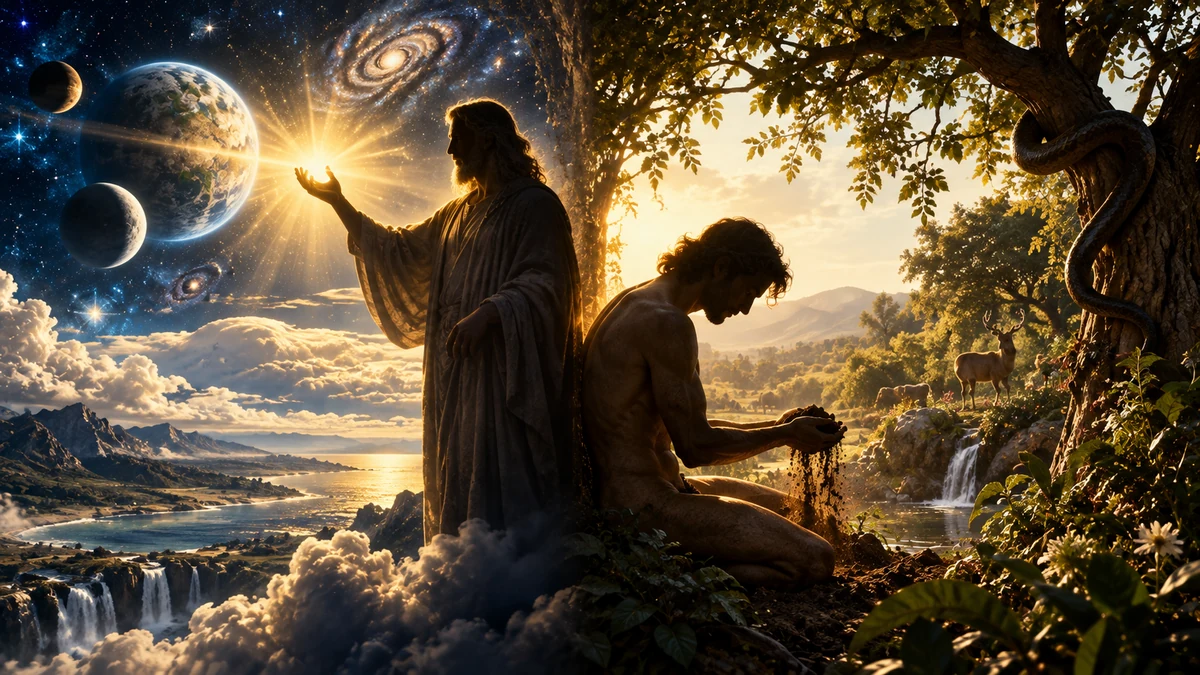
A symbolic scene of the earthly Adam and a cosmic human figure with the Tree of Life motif, representing the distinction between Adam ha-Rishon and the later kabbalistic Adam Kadmon.

Two Adams: Adam ha-Rishon and Adam Kadmon

Adam ha-Rishon and Adam Kadmon are often presented as though Jewish tradition taught two primordial humans. The sources reveal a more complex development—from Genesis and the rabbinic cosmic Adam through Philo and Paul to the Zohar and Lurianic Kabbalah.

Read article
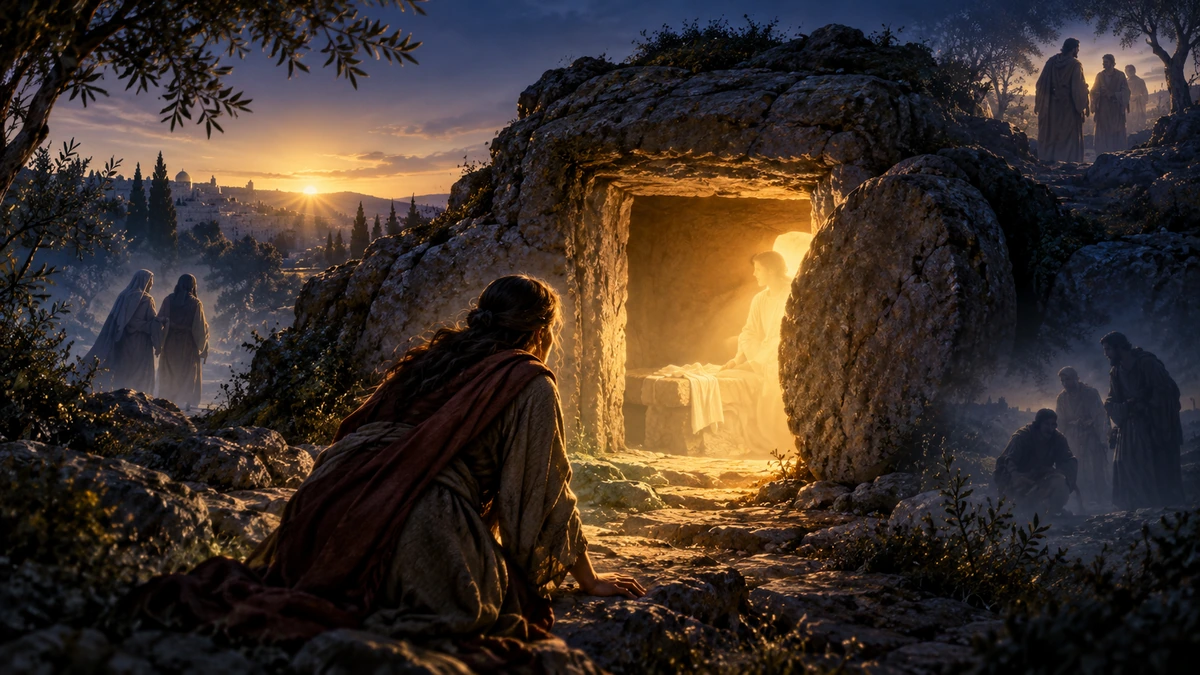
A symbolic scene of an open rock-cut tomb with four unlabelled manuscript books in the foreground; the visual represents the four Gospel narratives and is not a reconstruction of a specific historical tomb.

The Empty Tomb: Why Do the Gospels Differ?

All four Gospels know an empty-tomb tradition, yet they differ over the women, timing, messengers, reactions, Galilee, and Jerusalem. What belongs to the common core, and what reflects each evangelist’s literary shaping?

Read article
A spring landscape at sunrise beneath a full Moon, with barley, a lamb, unleavened bread and a lamp symbolizing the lunisolar calendar and spring festivals.

Easter, 14 Nisan, and the Spring Equinox

Why do Passover and Easter remain in the spring season, how does 14 Nisan relate to the full moon and equinox, and what do comparable spring festivals from Babylon and Iran to late Rome actually tell us?

Read article
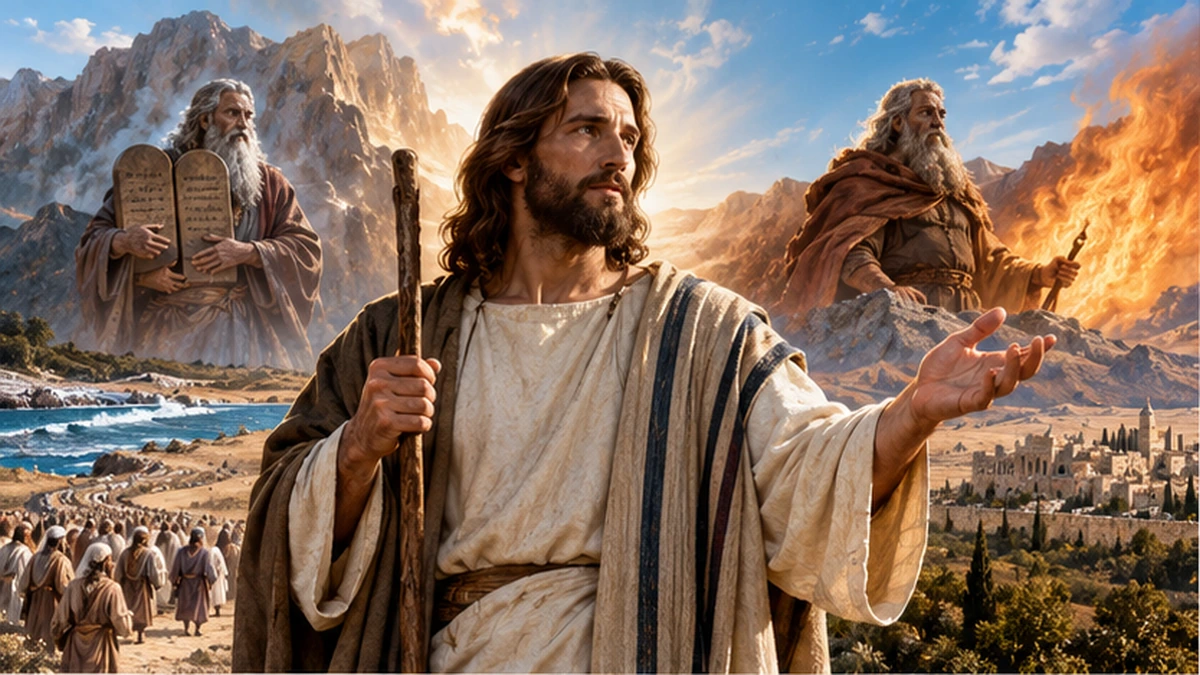
A central biblical figure stands between three connected scenes: parted exodus waters, a fiery mountain, and a landscape with a city, evoking Mosaic, Elijah, and Israel narrative patterns.

Jesus as a New Moses, a New Elijah, and a New Israel

The Gospels narrate Jesus through older scriptural patterns: Matthew draws especially densely on Moses, exodus, and Israel, while Luke develops Elijah and Elisha motifs. Typology, however, is neither historical proof nor proof of invention.

Read article
A teacher in a Jewish setting speaks with a diverse group beneath an olive tree; listeners include a child, an elder, a woman, and a Roman soldier in warm evening light.

Natural Law and the Teachings of Jesus

A comparison of where Jesus’ teachings clearly align with Natural Law, where they align only partly because the foundations differ, and where the comparison reaches its limits.

Read article
A monk beneath a large tree looks across a river valley and mountains in golden light, evoking non-harming, interdependence, and inner discipline.

Natural Law and Buddhism

Buddhism teaches universal ethical restraints, karmic causation, and compassion for all beings. Is this a form of Natural Law—or a similar moral order grounded in a different metaphysics?

Read article
A meditating figure beneath a tree looks across a river toward temples and mountains in golden light, evoking discipline, order, and an inward path.

Natural Law and Aṣṭāṅga Yoga

Patañjali calls the yamas a universal great vow. Is this an Indian version of Natural Law—or a significant resemblance between two distinct ethical and metaphysical systems?

Read article
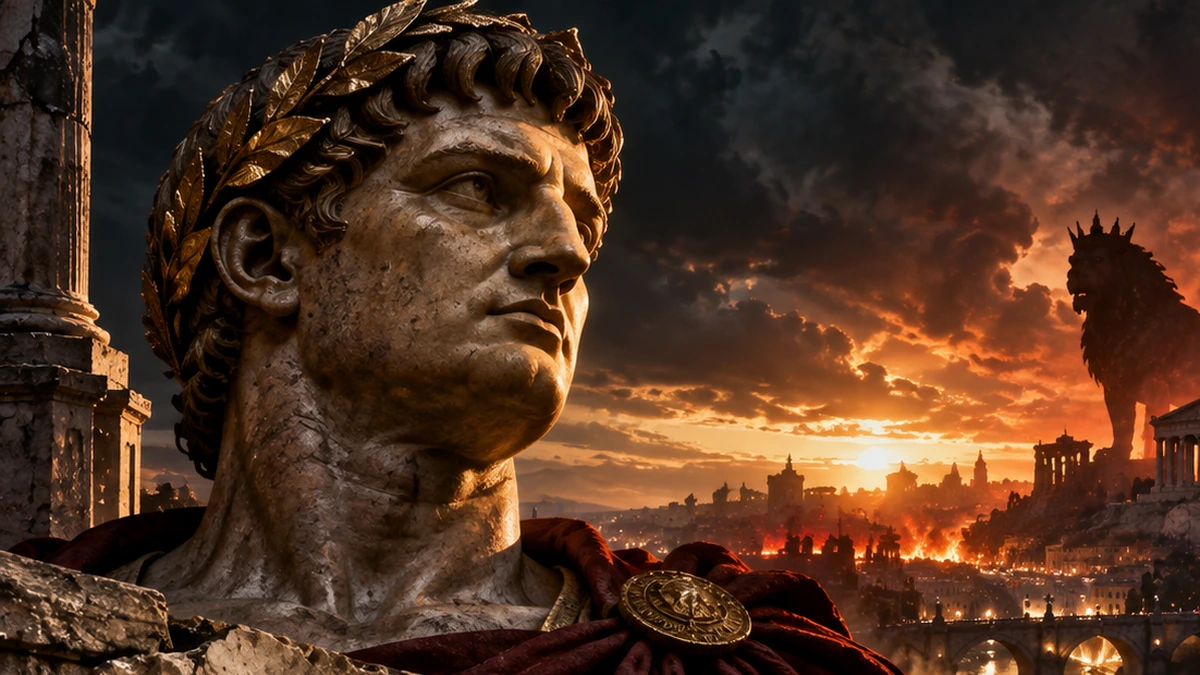
A monumental Roman imperial portrait before a burning imperial city, with an apocalyptic beast rising as a shadow over the horizon.

666 or 616: Nero and the Number of the Beast

Revelation asks the reader to calculate the beast’s number. Why do most manuscripts read 666 while some early witnesses read 616—and why does that difference strongly support, but not finally prove, a connection with Nero?

Read article
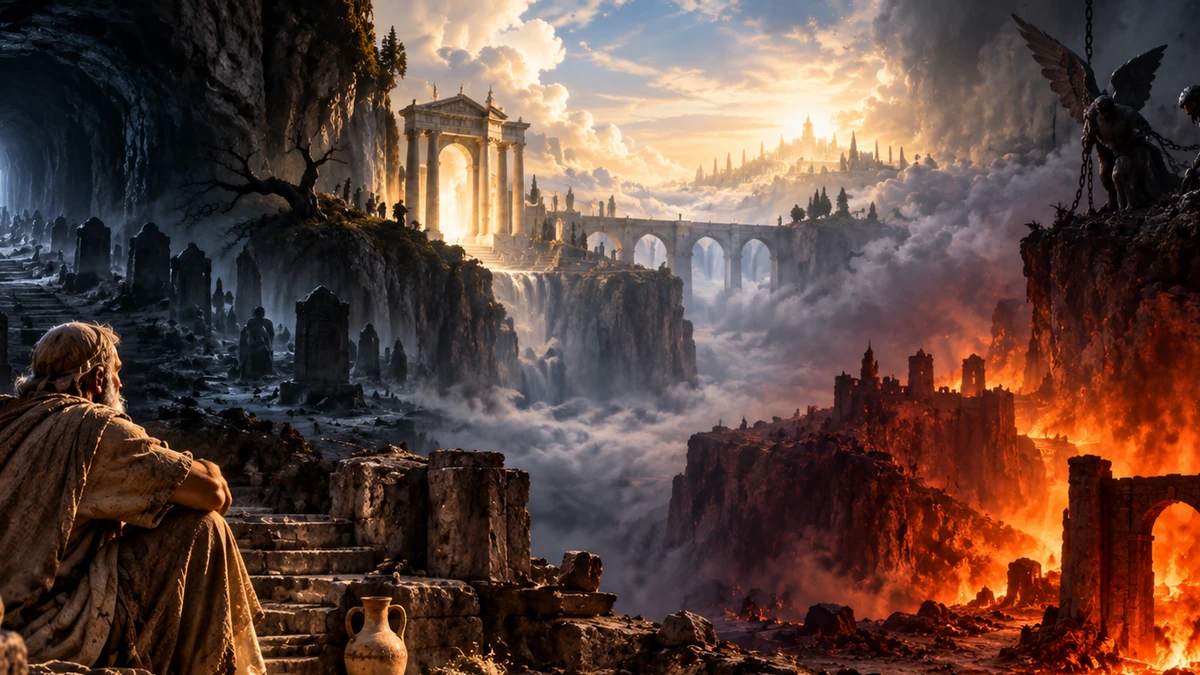
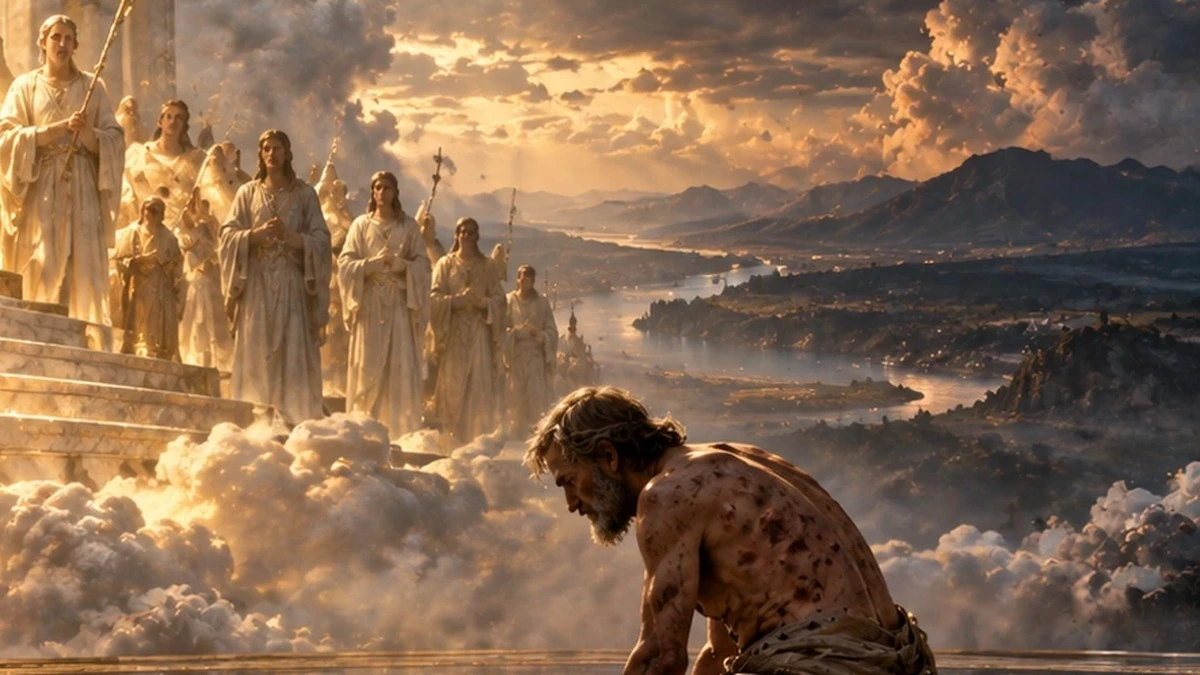
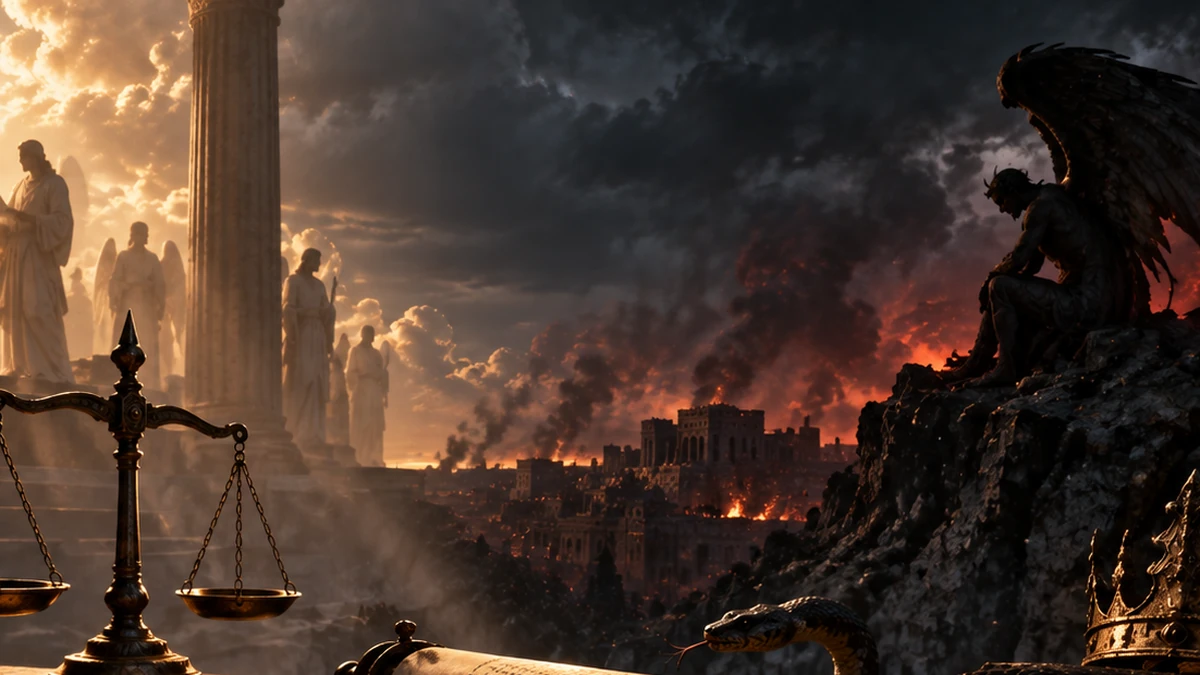
A symbolic divergence of several distinct ancient images of death, underworld, judgment, and imprisonment within one wide scene.

Hell in the Bible: Sheol, Hades, Gehenna, and Tartarus

When a translation renders several different terms with the single word “hell,” the Bible can appear to describe one uniform place. The source texts distinguish Sheol, Hades, Gehenna, and Tartarus—and Revelation's lake of fire is not even identical with Hades.

Read article
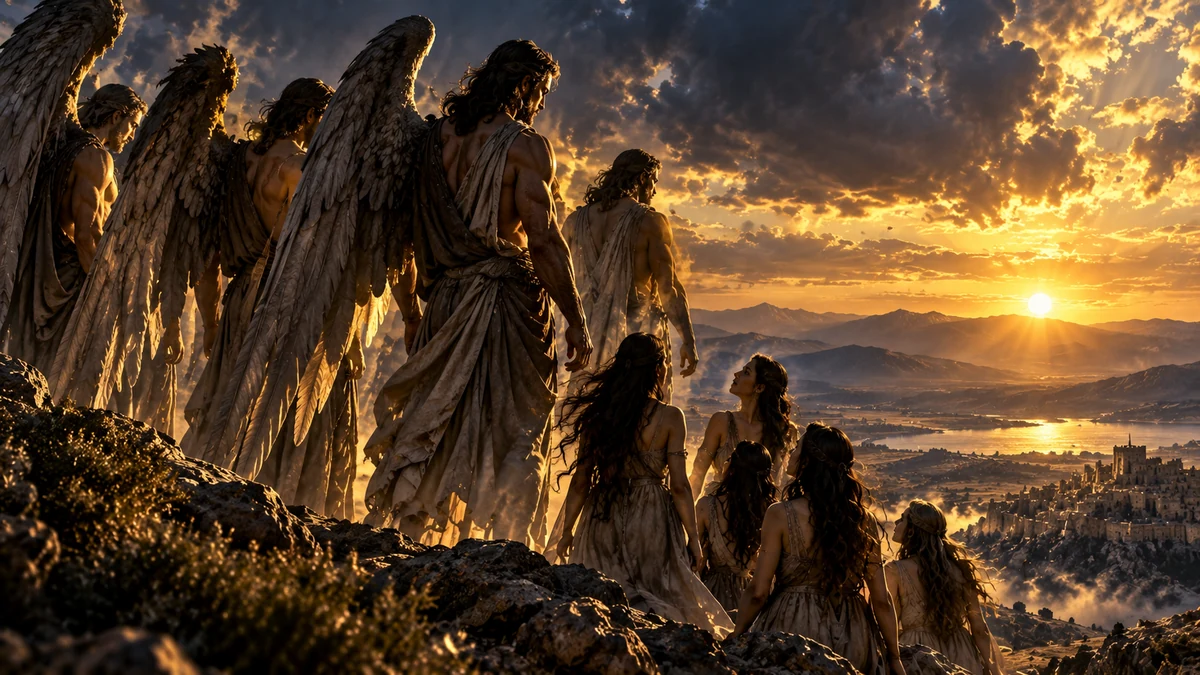
A symbolic depiction of heavenly Watchers and humans in an ancient mountain landscape, used as a visual metaphor for the Enochic tradition.

Nephilim, sons of God and 1 Enoch

Genesis 6 gives only four enigmatic verses. 1 Enoch expands them into a story of Watchers, giants, and forbidden knowledge. What belongs to the original text and what to later interpretation?

Read article
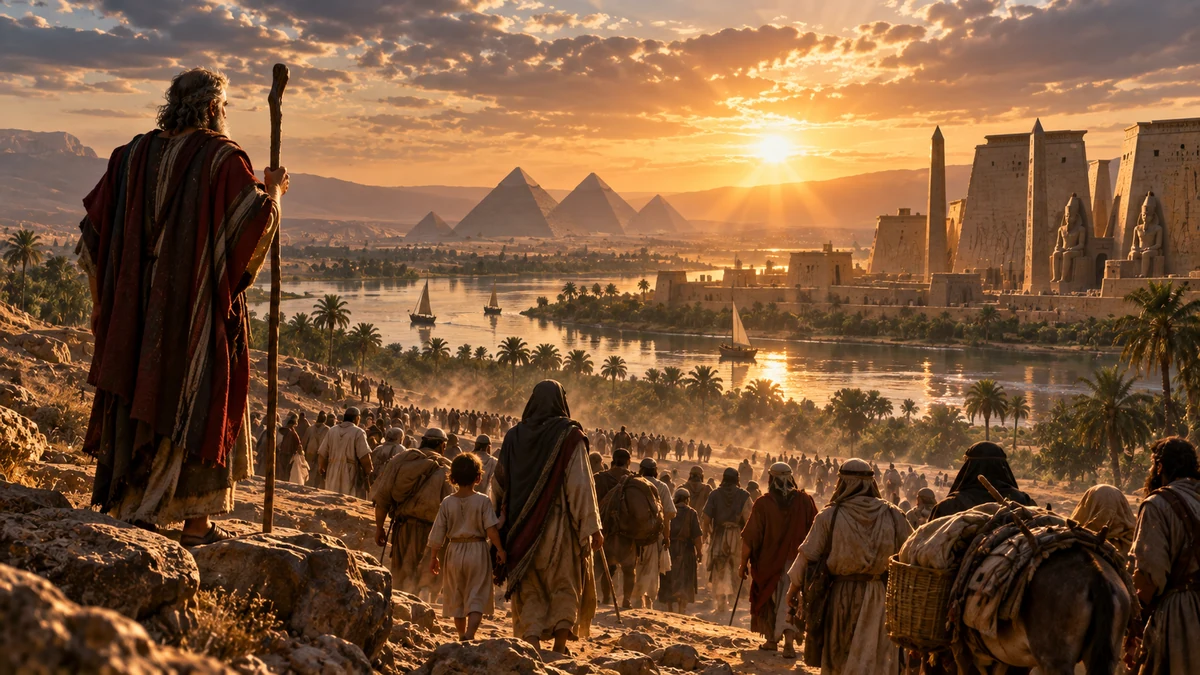
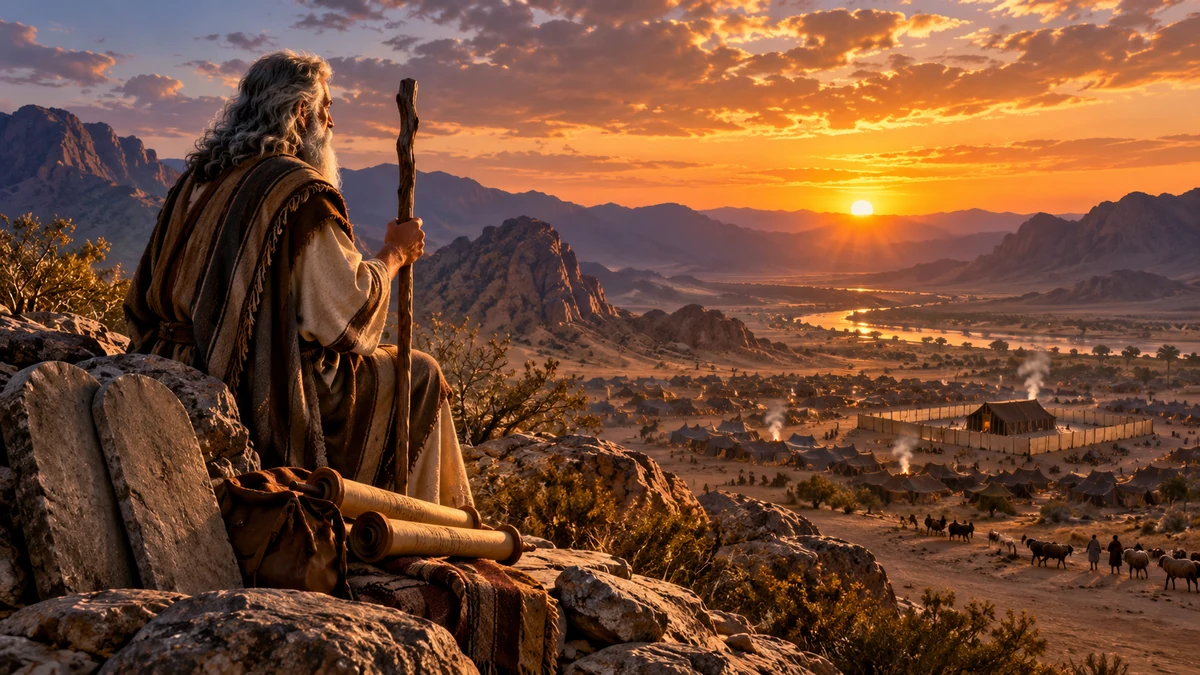
A symbolic depiction of a Moses-like figure on a mountain ridge at sunset, facing a vast desert landscape.

Did Moses Write the Pentateuch?

Jewish and Christian tradition linked the Torah with Moses for centuries. Yet the text usually speaks of Moses in the third person, describes his death, and shows signs of multiple layers. What can we actually conclude from this — and what can we not?

Read article
A meditating person between a quiet natural world and a glittering marketplace of commercialized spirituality.

New Age: Spiritual Awakening or an Industry of Illusions?

New Age brings together sincere spiritual seeking, old and new practices, self-development psychology and a powerful market of promises. How do we distinguish useful practice, an open metaphysical question and an industry of untestable claims?

Read article
An ancient narrative figure and a star map intertwine within a blue-and-gold cultural landscape.

Myths as Cultural Maps

A myth is not reliable history merely because it is old, and it is not worthless merely because it is not a literal report. It can function as a map of values, relationships and a community’s way of understanding the world.

Read article
The same Sun above different cultural images, symbolizing a shared celestial phenomenon and different historical interpretations.

Solar Myths and Universal Archetypes

Ra, Shamash, Helios, Surya, and Amaterasu are linked to the same Sun yet belong to very different traditions. What do their similarities actually demonstrate?

Read article
Historical sky observers beneath a richly patterned stellar dome compare maps and ways of organizing the celestial sphere.

The Starry Sky as a Symbolic Language

Stars do not draw heroes, animals, or deities by themselves. People connect points, name patterns, and assign meaning, allowing one sky to become calendar, compass, memory, and story.

Read article
A conceptual 16:9 composition of dark human-shaped ruling figures over the material world, a luminous path of awakening, and ancient manuscripts symbolising source-based scrutiny of archon traditions.

Archons: What Do the Gnostic Texts Actually Say?

Are archons seven cosmic rulers, planetary powers, gatekeepers of the soul, or something else? This article compares primary Gnostic sources and separates ancient texts from modern reptilian, extraterrestrial, simulation, and political-elite theories.

Read article
An elder storyteller by the coast points toward the starry sky for younger listeners while a traditional sailing vessel in the background symbolizes intergenerational transmission of star knowledge and orientation.

Star Lore: How the Sky Becomes Cultural Memory

How do stars become linked with seasons, direction, story, place, and identity? This article explores how the sky becomes a carrier of intergenerational cultural memory — without assuming one universal stellar mythology.

Read article
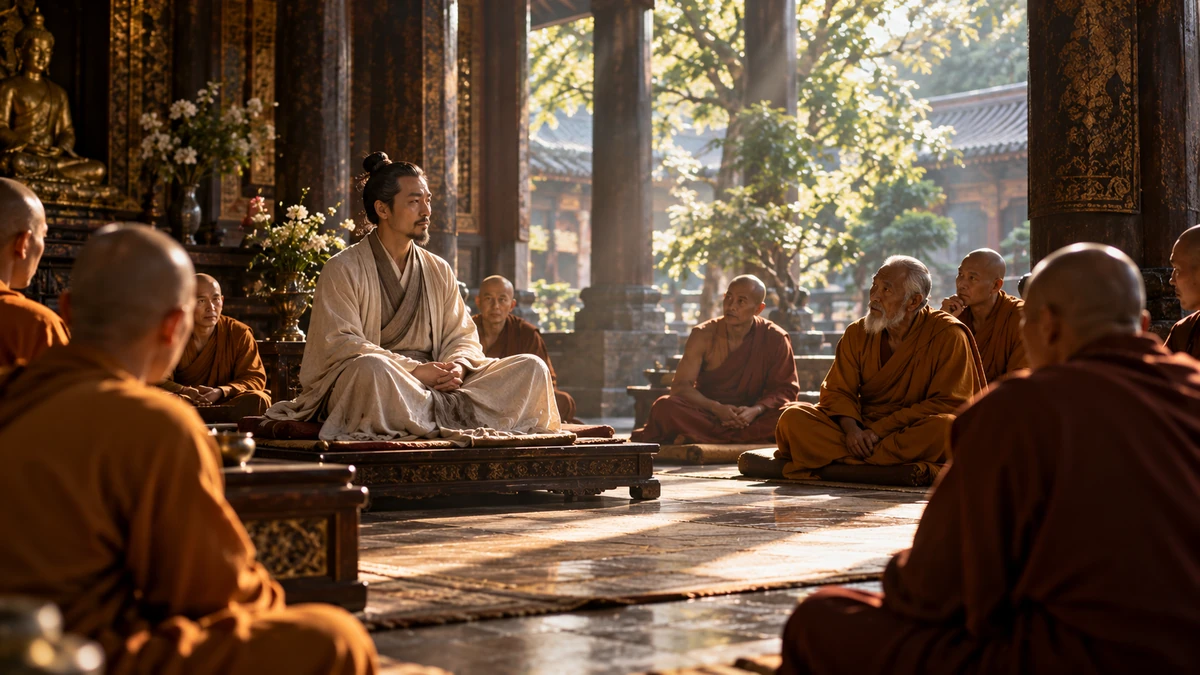
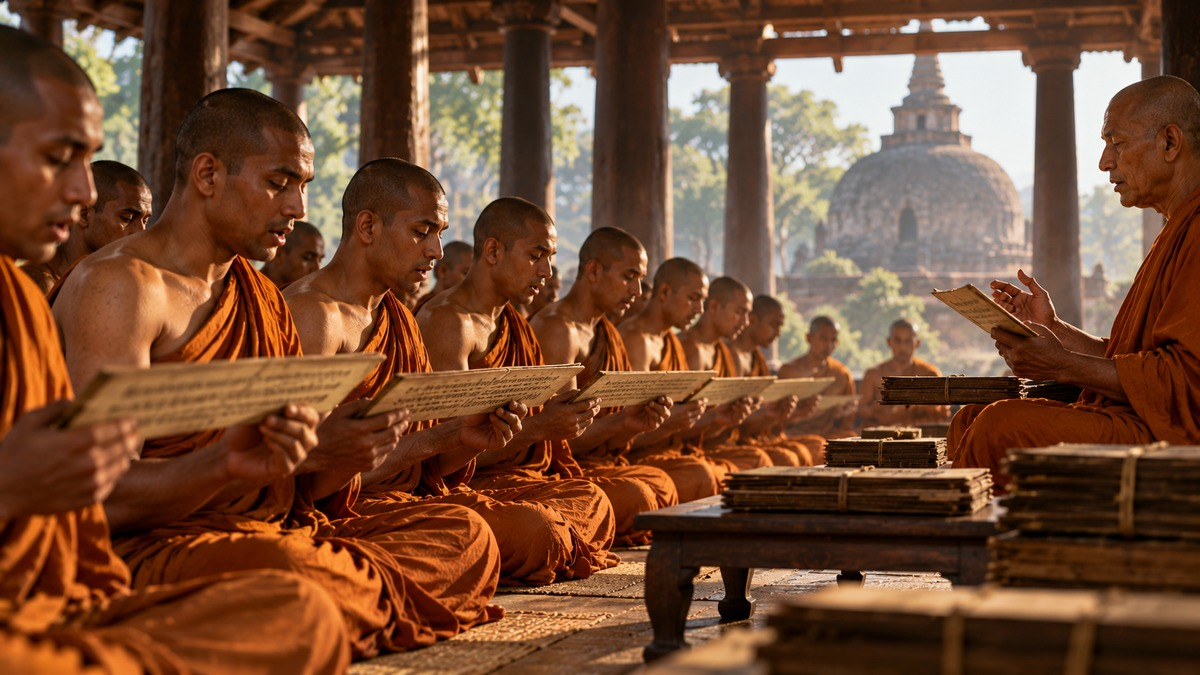
A group of monks sits in a circle inside an open wooden monastic space lit by natural light.

How Were the Buddha’s Discourses Preserved?

When we open a Buddhist sutra today, we read words on a screen or on paper. In the time of the historical Buddha, no such book existed. The Buddha left no manuscript of his teachings, and his disciples did not sit beside him with pens, writing down every sentence.

Read article
A monk sits above a broad landscape of monasteries, pilgrims and diverging mountain paths at sunset.

Is Buddhism a Single Teaching?

When someone says “Buddhism,” they may mean very different things: Theravāda in Sri Lanka or Thailand, Zen in Japan, Pure Land in China, Tibetan Buddhism, vipassanā, Mahāyāna philosophy of emptiness, recitation of Amitābha’s name, tantric visualizations, monastic discipline, meditation, ritual, or philosophy.

Read article
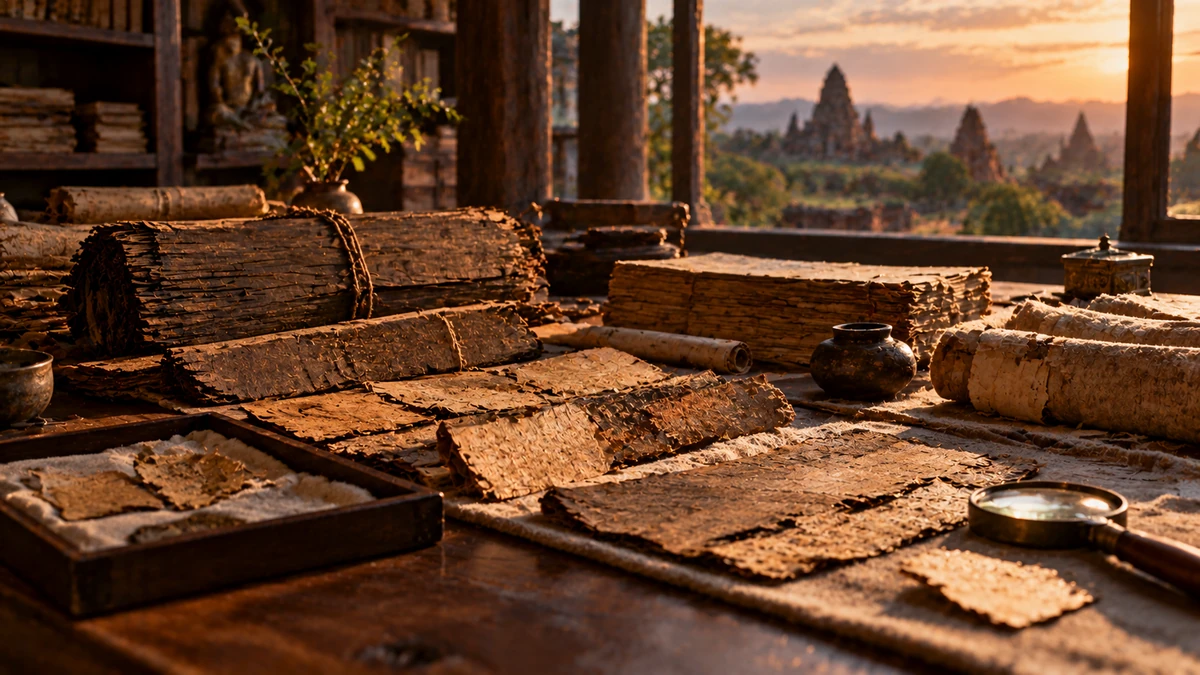
A monk reads an ancient text at sunset with a Buddha statue and temple landscape behind him.

Dhammapada — 423 Verses on Mind, Ethics, and the Path

If we had to choose one Buddhist book that has become almost synonymous around the world with “sayings of the Buddha,” the *Dhammapada* would be among the first candidates. Its short verses and vivid moral images speak about mind, anger, violence, craving, death, wisdom, the path, and nibbāna.

Read article
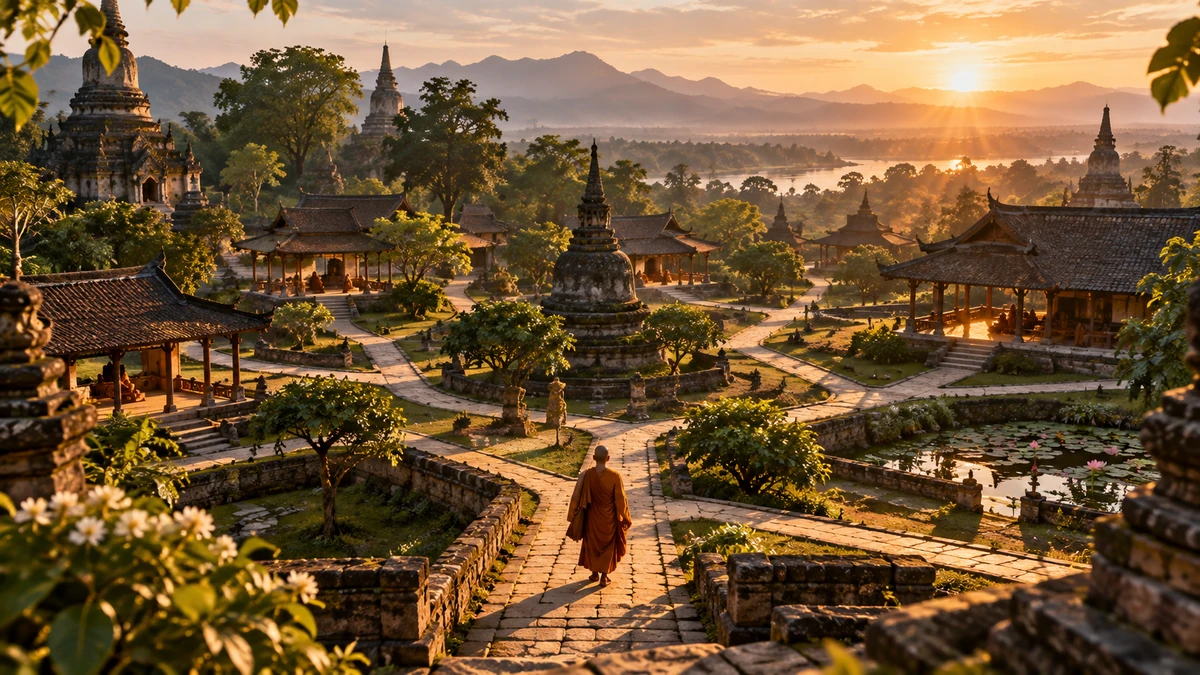
A wide view of a monastic complex with multiple connected paths, gardens, and a solitary monk.

Saṁyutta Nikāya — How Early Buddhism Organized Thousands of Short Discourses into a Thematic Network

If the Dīgha Nikāya is a collection of long discourses and the Majjhima Nikāya a collection of middle-length dialogues, the *Saṁyutta Nikāya* is organized according to a different principle. Not primarily by length, but by **connections**. The Pāli word **saṁyutta** means something like connected, joined, or bound together.

Read article
Seven monks sit in a circle beneath a large tree among old stone ruins.
The Oldest Core — What Remains When We Compare the Earliest Buddhist Traditions?

After all the preceding articles, we can finally ask the question that has hung over the whole series from the beginning: **What is the oldest recognizable core of Buddhist teaching?** We are not asking which present-day school is the most original, which sutra was certainly first, or which words the historical Buddha uttered exactly as we read them today.

Read article