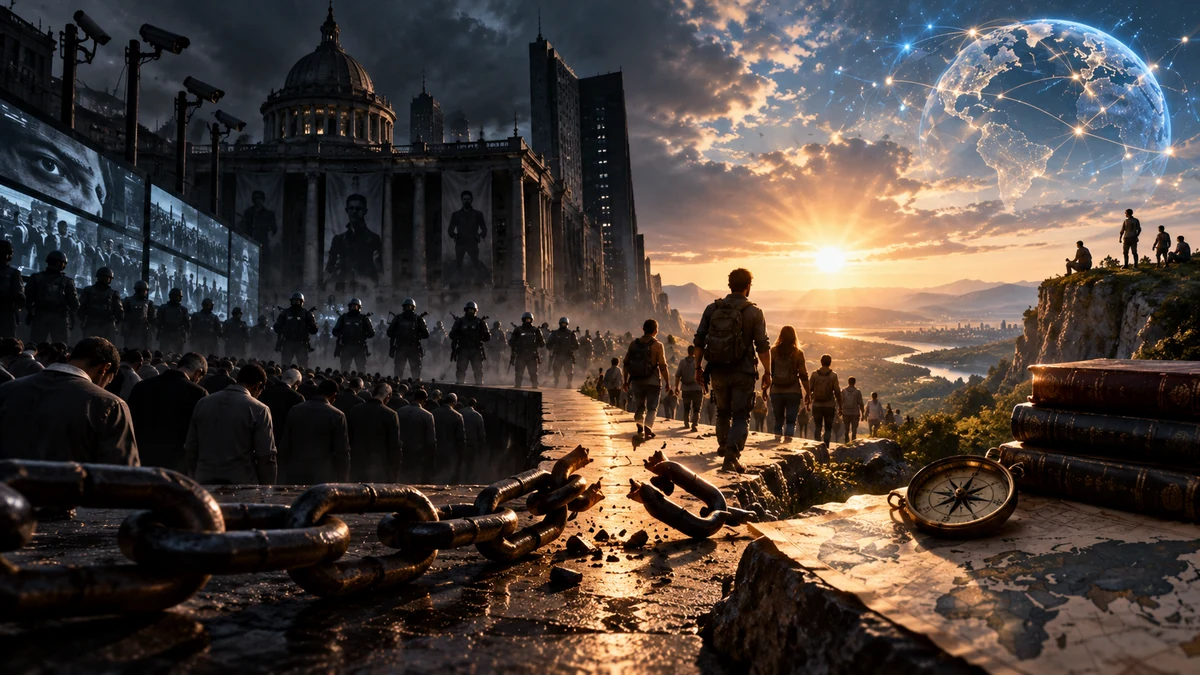

Terminal Station: The Human Without Chains
The most perfect prison is the one in which a person sees no bars — because the bars have become the infrastructure of everyday life.
Read articleShorter entry points into the questions explored across THY-REALITY. Browse by field or search directly by title and description.

The most perfect prison is the one in which a person sees no bars — because the bars have become the infrastructure of everyday life.
Read article
The most dangerous restriction is not the one people rebel against. It is the one a new generation no longer even recognises as a restriction.
Read article

When technology no longer merely helps the human being, but begins taking over their work, their decisions, their relationships — and finally redefining the human being itself
Read article

When the system no longer tracks only what you do, but begins to read — and perhaps one day also alter — the signals of your body
Read article
The best control is not the control a person tolerates. The best control is the control they begin demanding themselves.
Read article
As long as something is yours, you have rights over it. When you have only access, someone else has the switch.
Read article
What you can measure, you can compare. What you can compare, you can score. What you can score, you can begin to steer.
Read article
When the ability to pay is no longer only a question of money, but also of permission from the infrastructure
Read article
When the question “who are you?” becomes the question “what are you allowed to do?”
Read article
When the system knows enough about a person, it no longer has to command them — it can begin to predict them
Read article
A map of the road from a free human being to total control
Read article
A detailed presentation of *Secret and Suppressed II*: Newspeak, disinformation, the Illuminati, parascience, weather warfare, 9/11, electronic voting, surveillance, and post-2001 alternative research.
Read article
Who controls which information gates? Ownership, editorial decisions, platforms, search, advertising, infrastructure, the state, and AI.
Read article
In 1987 VNIITE presented SFINX: a modular domestic information system with a central processor, multiple displays, universal controllers, voice input and network logic. What was actually designed — and what belongs to later legend?
Read article
Propaganda pretended to come from North Korea in order to show Western society through an outsider's lens.
Read article
How does Jeremy Locke build a radical critique of law, the state, democracy, obedience culture and centralized control from freedom and personal sovereignty — and where does his theory cross into controversial revolutionary rhetoric?
Read article
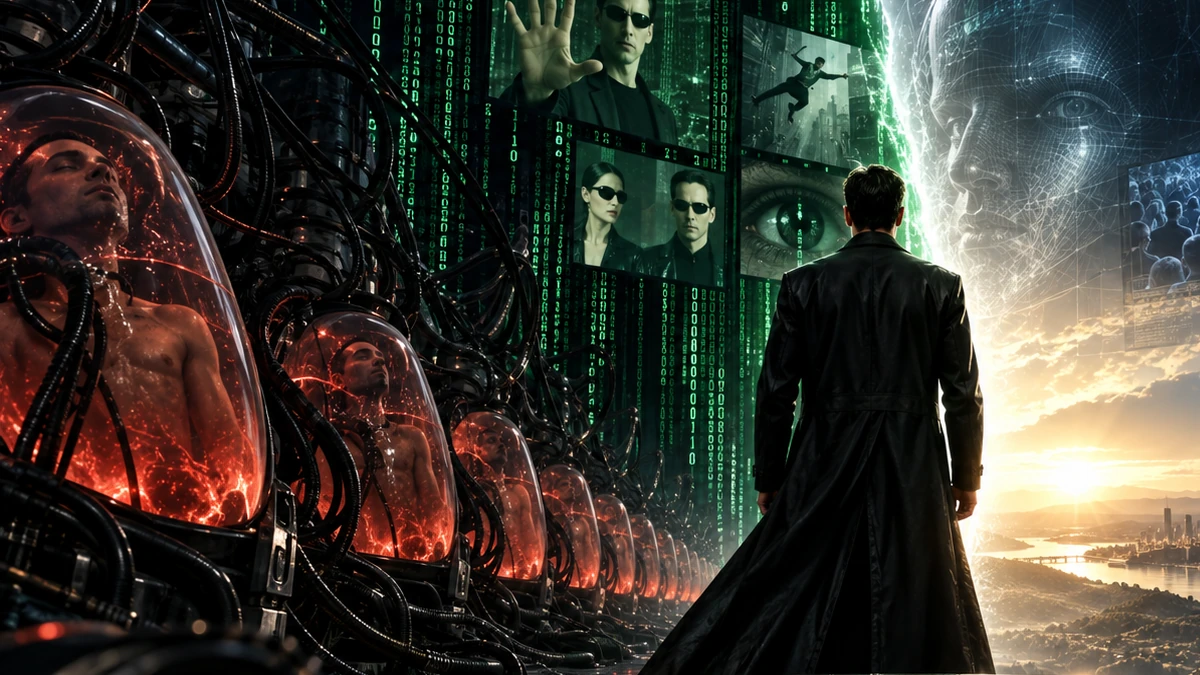
From Plato’s cave, Descartes and brains in vats to Baudrillard, Gnosticism, algorithms and synthetic media: what did The Matrix actually draw from philosophy, and why does its metaphor feel even stronger today?
Read article
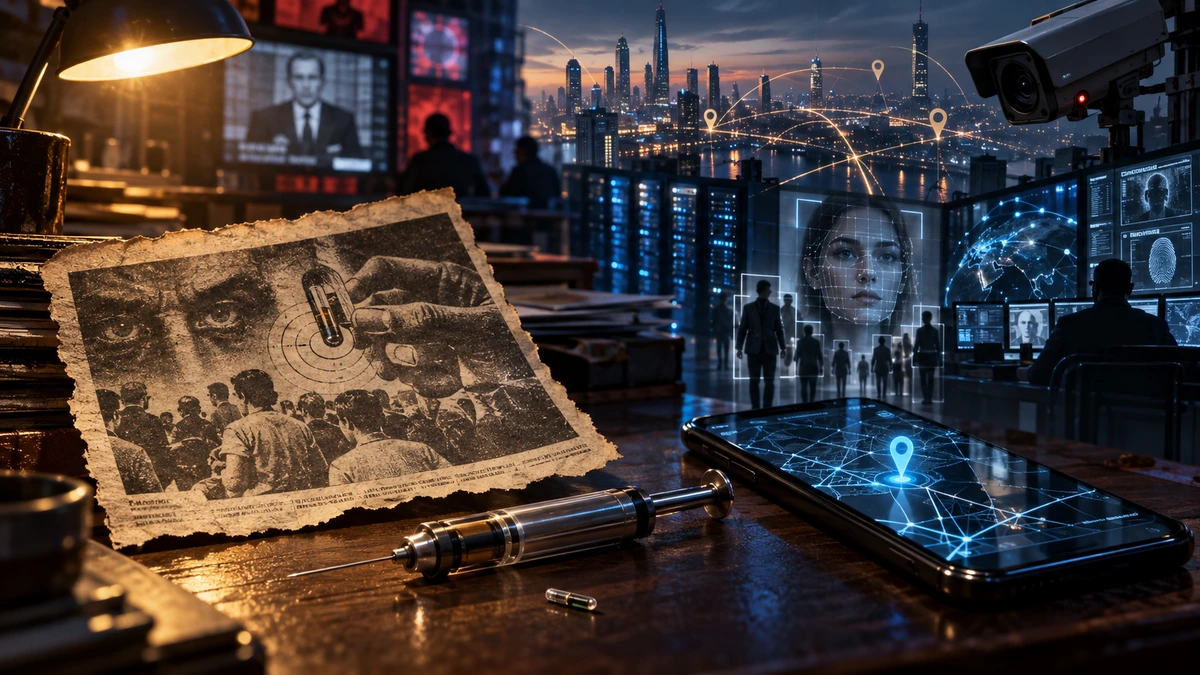
A clipping attributed to 1989 describes implanted microchips, a master computer, tracking, and vaccination.
Read article
“Brain rot” is not a medical diagnosis. This article separates the cultural metaphor from the evidence and examines short-form video, problematic use, attention, self-control, sleep, social comparison, adolescent development, and platform design.
Read article
A feed is not a mirror of the public but a selection system in which recommendations, personalisation and interface design shape visibility.
Read article
Data is not merely a record but infrastructure for digital power. This article separates personal from other data, controllers from processors, access from ownership, and examines portability, privacy, concentration and inferred profiles.
Read article
Digital identity and electronic payments can improve security and convenience, but excessive concentration can turn them into exclusion points.
Read article
When does AI support judgment, and when does its recommendation become the de facto decision? This article separates tool, adviser and authority, then defines boundaries for human oversight, challenge and accountability.
Read article
Measurement helps us see patterns, but indicators can also reshape behavior, allocate power and determine what counts as reality. This article shows how to measure without mistaking the map for the territory.
Read article
This article separates ownership from operational responsibility and shows how roads, transport, waste, logistics and communications require clear stewardship, life-cycle planning, financing and fallback arrangements.
Read article
How error, disinformation, and open questions differ, and what happens when expert labels are combined with the distribution power of platforms.
Read article
Fact-checkers, platforms, and algorithms can correct errors, but labels, editorial judgments, and distribution decisions are not the same thing as truth.
Read article
No article matches your search.