Path to the Abyss
A map of the road from a free human being to total control
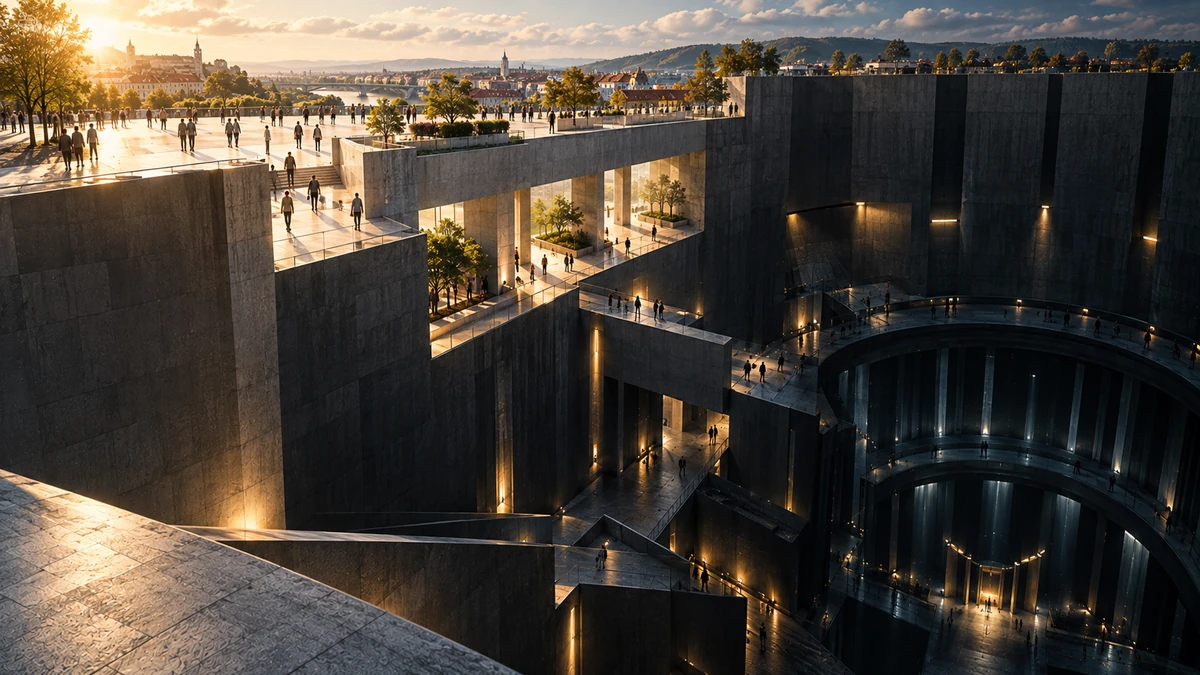
No one will wake up one morning and tell you that you have lost your freedom. There will be no fanfare. No official proclamation. No person in uniform knocking on your door to announce that from this day forward you are no longer the master of your own life. If it happens, it will come differently. Piece by piece. You will trade one part of freedom for security. Another for health. A third for convenience. A fourth because it will be easier that way. A fifth because everyone around you will already be doing it. A sixth because you will not want to be marked as difficult. A seventh because there will no longer be a practical alternative. Each individual step will be small enough that it will not seem worth standing up over.
And that is precisely why the road is dangerous. Not because every step is hell by itself. But because together they can lead there.
First comes fear
A free human being is unpredictable. A frightened one is much easier to direct. History repeatedly shows that during war, epidemic, terrorist attack, economic collapse or another major crisis, people accept measures they would probably reject in calmer times. Surveillance expands. Emergency powers become acceptable. Freedom of movement, privacy, money, communication or bodily autonomy can suddenly become matters subject to state judgment. The explanation is always similar: “It is only temporary.” “It is for your safety.” “It is for the common good.” But temporary systems have a peculiar quality. They like to stay.
Then you divide people. People who stand together are a problem for any system that wants to concentrate power. People who hate one another are far less of one. That is why modern society increasingly looks like an endless list of opposing tribes. Left against right. Men against women. Locals against migrants. Vaccinated against unvaccinated. Believers against atheists. Young against old. City against countryside. One race against another. Every new issue gets two camps. Every camp gets its own truth. Every side gets its enemy. While people shout at each other, the question of who is gaining more power is often lost in the noise.
Perhaps this is one of the oldest political lessons in history: a divided population does not need to be defeated. It defeats itself.
Then you isolate the individual. A divided person may still have family, friends, neighbours, a local community, an association or a religious space to which they can retreat from pressure. The next step is therefore for those bonds to become rarer, more fragile and more mediated through screens. As direct relationships weaken, people begin to seek more and more of their basic needs — help, belonging, information, company and a sense of security — from institutions and platforms. The system does not need to ban community. It is enough for community slowly to become something people no longer know how to build without an intermediary.
Then you break trust
When people no longer trust government, media, science, institutions, experts or one another, informational chaos emerges. But chaos is not necessarily the end of control. It can be its beginning. A person who no longer knows what is real starts searching for someone who will organise reality again. An algorithm. A platform. The state. A “trusted source.” A fact-checker. Artificial intelligence. An authority that will decide which information is safe and which is dangerous. Something that begins as a fight against falsehood can gradually become an infrastructure for deciding which information reaches a person at all. The most dangerous censorship of the future may not be the burning of books.
It may simply be that certain things never appear before your eyes again.
Then you make the individual dependent. Freedom is not only a right written on paper. Freedom is also the ability to survive when you say no. A person who cannot produce anything, owns nothing, has no savings, is in debt, cannot repair anything, does not know the neighbours and needs complex infrastructure for every fundamental part of life can be formally free. In practice, however, that person becomes increasingly dependent. On the bank. On the energy system. On platforms. On retail chains. On pharmaceuticals. On state transfers. On digital services. On infrastructure they do not control. And the more things without which they cannot live are controlled by someone else, the less it matters how much freedom the constitution theoretically guarantees.
Then you take away privacy
Your phone knows where you are. Your watch knows how you sleep. Your car knows where you drive. The retailer knows what you buy. The bank knows where you spend money. The platform knows what you watch. The search engine knows what frightens you. The health system knows your body. An algorithm can assemble all these fragments into a person it may know better than the person knows themselves. This is no longer science fiction. It is the business model of the digital world. And once a person is measured with enough precision, they can be more than observed. They can be predicted. Directed. Nudged. Penalised. Filtered.
Then identity becomes a key. Digital identity can be extraordinarily useful. Faster access to services. Less paperwork. Safer authentication. Digital signatures. Simpler transactions. But an infrastructure that confirms who you are can one day also confirm what you are allowed to do. That is a boundary everyone must understand. As long as digital identity merely proves identity, it is a tool. If it begins to connect with permissions, financial services, health conditions, travel, work or social access, it becomes something much larger. Today’s safeguards matter. But laws are not laws of nature. They can change.
And an infrastructure that exists can one day gain functions its first users never expected.
Then comes money
Cash has one inconvenient characteristic for a system of total control: it does not require a third party’s permission for every small transaction. Digital money is different. It can be faster, more efficient and more convenient. It can also be fully traceable. And technologically, money can be linked to rules. Where. When. For what. To whom. How much. Today’s European digital-money projects contain limits and safeguards. That must be stated clearly. But the question of this series is not only what the system allows today. The question is: what becomes possible when cash disappears and every economic relationship depends on digital permission? A person whose use of their own money can be disabled at the press of a button has a very different relationship to power than a person with economic autonomy.
Then you begin measuring behaviour. How much energy do you use? How much carbon do you produce? How often do you fly? What do you eat? How far do you drive? How much do you exercise? How closely do you follow health recommendations? A technocratic system loves numbers. What it can measure, it can compare. What it can compare, it can assess. What it can assess, it can rank. What it can rank, it can reward or restrict. Personal carbon allowances have already been researched. Cities have modelled radical changes in diet, mobility and consumption. Emissions-trading systems are expanding into new areas of the economy. Today this is not a system of personal social credit. But the infrastructure for measuring behaviour is expanding.
The question is where we draw the line.
Then you replace ownership with access. Once, you bought something and it was yours. Today, increasingly, you pay for the right to use something. Software. Music. A film. A car. A phone. Data storage. A feature in a car. A digital book. One day perhaps much more. An access model is convenient. But there is an important difference between: this is mine, and I currently have permission to use this. Ownership gives a person a degree of independence. Access creates a relationship between provider and user. And the provider can change the terms.
Then you make control pleasant. This is the crucial moment. Total control will not win because people like control. It will win if they like the convenience that comes with it. A phone that knows everything about you is useful. Biometrics are faster than a password. A digital ID is easier than paperwork. Cashless payment is faster than a banknote. A smart home is more comfortable. An algorithm shows you exactly what interests you. AI saves you work. Every step has a perfectly rational explanation. And that is precisely why it can go so far. The hell of the future may not look like a prison. It may have a flawless user interface.
Then the system enters the body
Here begins a boundary humanity has never crossed at the present scale. Wearable devices already measure the body. Implants exist. Brain-computer interfaces are developing. DARPA has researched direct bidirectional communication between brains and machines. Neuralink is implanting electrodes into human brains. Internet of Bodies is not a term invented by technology critics. International organisations, researchers and industry speak openly about it. For a paralysed person, such technology can be a miracle. But the same technology raises a question humanity must not skip: where does treatment end and the transformation of a human being into part of a network begin?
What happens when a digital system no longer knows only our actions, but also signals from our bodies? And one day perhaps even from our brains?
The final station has no bars
Imagine a human being of the future. Their identity is digital. Their money is digital. Their communication is governed through platforms. Their journeys are recorded. Their health information is connected. Their energy consumption is measured. Their preferences are algorithmically known. They own few things; most are used as services. To work, pay, communicate and participate in society, they need access to infrastructure they do not control. There are no chains. No guard. No prison number. They may have a beautiful apartment, a fast internet connection, food delivery and a fully automated home.
And yet practically every important part of their life can exist only as long as the system grants access. Is that a free human being?
The greatest deception would be to blame only “them.” Because no such road exists without us. Every new stage needs millions of small consents. “It is only an app.” “I have nothing to hide.” “It is only temporary.” “It is safer.” “Everyone uses it.” “There is nothing I can do.” “Someone else will take care of it.” This is not only how a political system is built. It is how a culture of obedience is built. The easiest thing is to blame politicians, corporations, banks, organisations, billionaires and technocrats. Much harder is to look inward and ask: What am I personally willing to do for the freedom I so readily talk about?
Can I live without constant convenience? Do I know my neighbours? Can I create something? Do I own anything? Can I say no? Do I verify information? Am I raising children who will know how to think without permission? Is my life independent enough that I cannot be compelled simply by the threat of losing convenience?
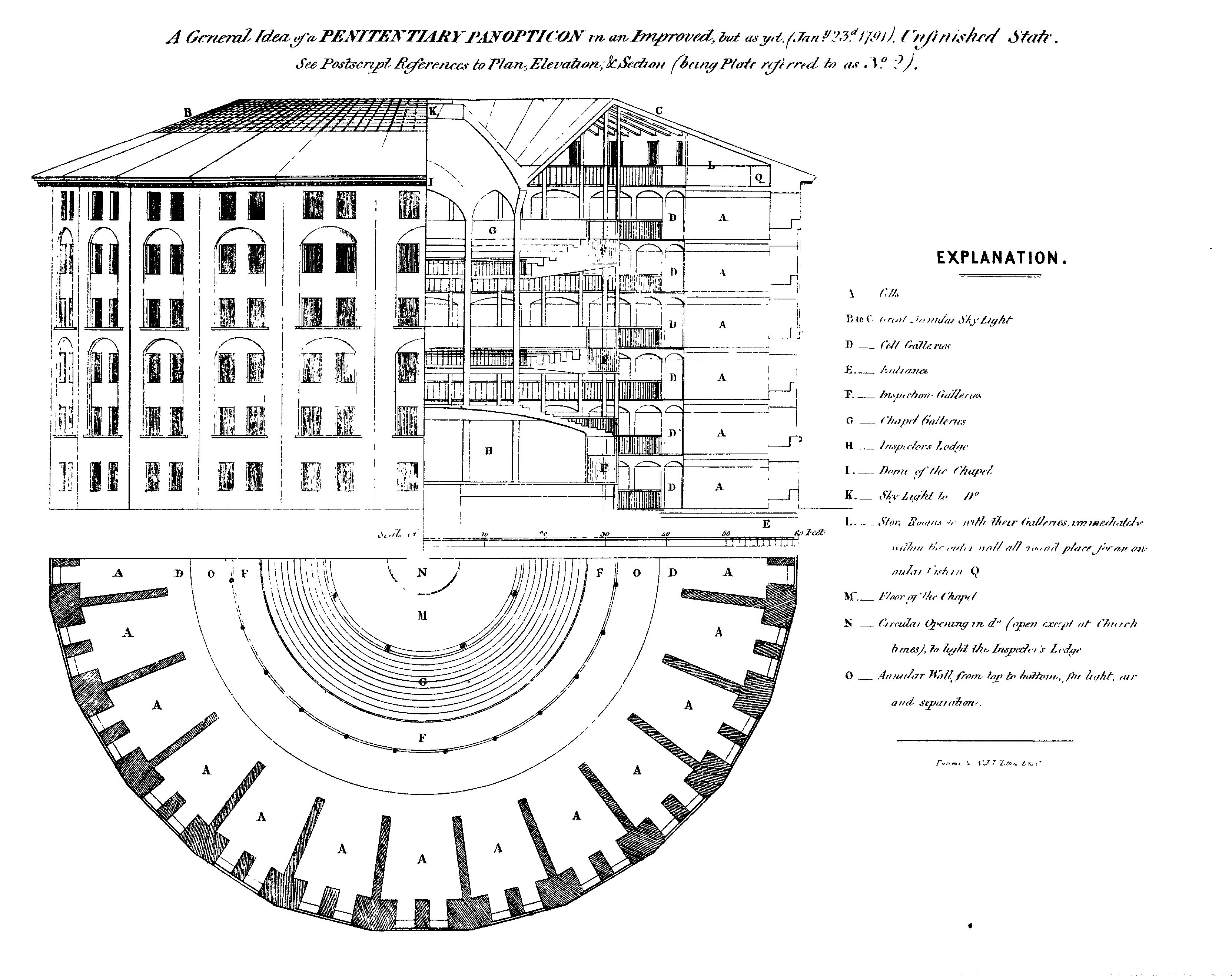
The road is not yet the destination
This is not a prophecy that all of this must happen. It is a warning. Many elements of this road already exist. Some are useful. Some are dangerous. Some are only emerging. With some, it is still unclear where they will lead. But we must not judge a direction only by the next step. We must look at where the whole road leads. No generation receives freedom as permanent property. Each receives it only in temporary stewardship. And each must decide how much it is willing to surrender in exchange for fear, security and convenience. The abyss does not begin at the bottom. It begins with the first step we told ourselves was not important enough to resist.
The path step by step
- First Step: Frighten the Person
- Second Step: Divide Them
- Third Step: Isolate Them
- Fourth Step: Break Their Trust
- Fifth Step: Make Them Dependent
- Sixth Step: Take Away Their Privacy
- Seventh Step: Turn Identity into Permission
- Eighth Step: Turn Money into a Control Point
- Ninth Step: Measure Their Behaviour
- Tenth Step: Replace Ownership with Access
- Eleventh Step: Make Control Comfortable
- Twelfth Step: Enter the Body
- Thirteenth Step: Replace the Human
- Fourteenth Step: Normalise Unfreedom
- Terminal Station: The Human Without Chains
- Exit from the Abyss
On the documentary basis
This article is the map of the entire series. Documents, laws, official strategies, court and regulatory cases, and other verifiable precedents are cited alongside the individual steps in the articles that follow. Where the road goes beyond the documented present, the text deliberately shifts into a warning question: not to declare a hypothesis to be proven fact, but to show where existing infrastructure could lead if rules, interests or political conditions change.