Eleventh Step: Make Control Comfortable
The best control is not the control a person tolerates. The best control is the control they begin demanding themselves.
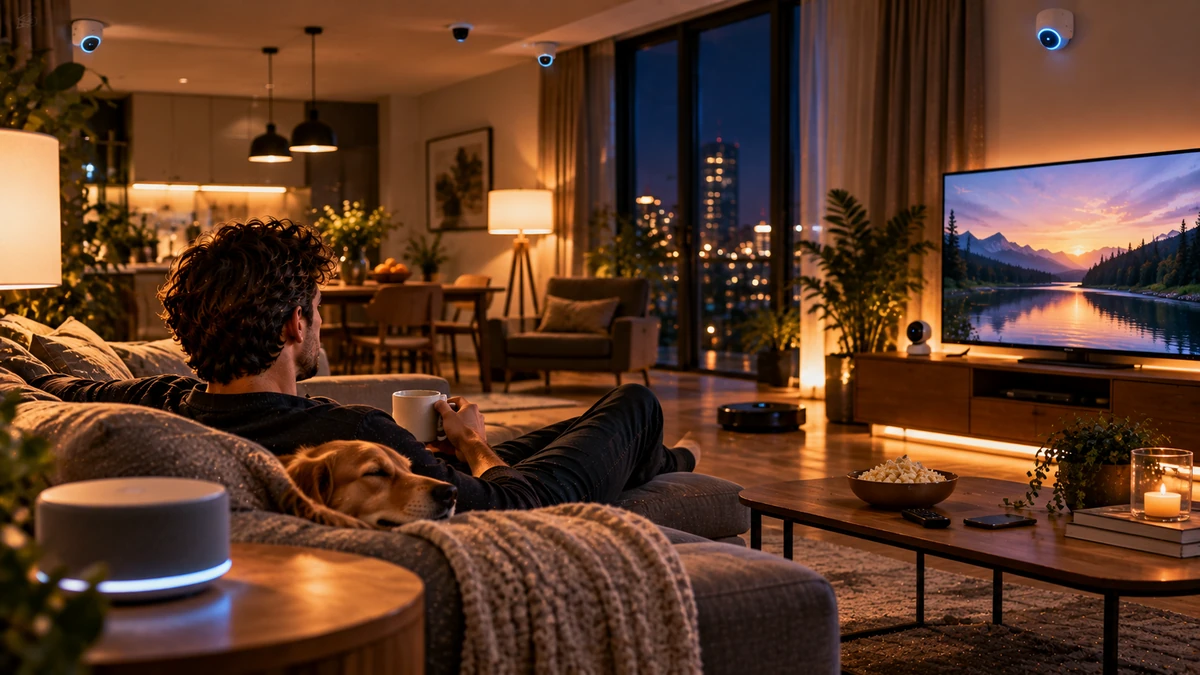
If you wanted to build a system of total control, the greatest mistake would be to present it to people as control. People do not like the feeling of being watched. They do not like orders. They do not like restrictions. They do not like waiting at barriers, showing documents, filling in forms or feeling that they must ask permission for every action. So you would not sell the system as control. You would sell it as convenience. As speed.
As safety. Personalisation. Automation. The end of queues. The end of passwords. The end of cash. The end of cards. The end of keys. The end of paperwork. A world in which you hardly have to do anything yourself anymore. And that is where the eleventh step begins. Because a system people experience as coercion needs police. A system people experience as convenience needs only a good user interface.
Friction has become the enemy
The modern technology economy has an almost religious obsession: remove friction. Fewer clicks. Less waiting. Fewer decisions. Less verification. Less conscious action. Payment should be automatic. Doors should open by themselves. Music should start by itself. Temperature should adjust itself. A purchase should finish without a checkout. The password should disappear. Identity should be verified in the background. From the user’s point of view this is understandable. Time is valuable. A long queue is annoying.
Passwords are inconvenient. Paperwork is slow. But there is a question the culture of convenience almost never asks:
What does the system have to know about you in order to remove all that friction?
If it wants to open the door before you show a ticket, it has to recognise you. If it wants to execute payment without you opening a wallet, it has to connect your body or device to your account. If a shop wants to know what you bought without scanning products at a checkout, it has to track your movement and interaction with those products. If a home is to set the temperature itself, it must know when you are home, how you use the space and what you usually want.
If the system wants to offer you “exactly the right offer”, it has to know what you buy, what you search for, where you are, how much you are willing to pay and perhaps even how likely you are to go somewhere else. Convenience does not come without data. Convenience is often a service you purchase with data.
Walk in. Take it. Walk out.
Amazon presents its Just Walk Out technology almost perfectly: enter the shop, take what you want and leave. No checkout. No scanning every item. No queue. The system uses artificial intelligence, computer vision, sensors and RFID to track product selection and automate payment on exit. Amazon describes it as a seamless shopping experience. It is a perfect example because the technology is not presented as surveillance. It is presented as the removal of an annoying step.[1][2]
And it really does remove it. But the step does not disappear. It moves into the background. A traditional shop needs a person at a checkout who sees a few minutes of your purchase. An autonomous shop needs infrastructure that, while you move through the space, understands which account entered, what it took, what it put back and what must be charged on exit. Amazon stresses that the computer-vision mode of Just Walk Out itself does not require collecting customers’ biometric data and can assign a temporary digital identifier for an individual visit.
That is an important safeguard. But the broader principle remains: more convenience requires more invisible infrastructure. The old system was clumsier. The new one is more elegant. But elegance does not mean less system. Often it means the opposite: the system has become so pervasive that the user no longer notices it.
When the body becomes the card
The next logical step is even more direct. Why look for a phone? Why look for a credit card? Why carry a badge? Your hand is always with you. Amazon One offers palm-based identification. A user can use a palm to confirm identity for payment, entry or appointment check-in. AWS also promotes the solution for more sensitive environments such as healthcare and financial services. Again, the user story is excellent:[3] nothing to forget at home. Nothing to lose. Nothing to type. You simply hold out your hand. But at the same moment something else happens. Your body becomes an identification token. Not a card you can put down. Not a password you can change. A part of you. Amazon stresses encryption, user control over enrolments and the ability to delete data in Amazon One. These are important technical protections. But this article does not ask only whether today’s implementation is secure.
It asks something more uncomfortable:
What happens to a society when using the body as a key becomes normal?
When people become accustomed to the idea that the face, palm, voice or eyes are no longer only parts of their body, but convenient credentials for access? Because when habit changes, the boundary of what still feels invasive changes with it.
A smart home is friendly precisely because it knows you
The smart home is one of the best examples of voluntary integration of surveillance infrastructure into a person’s most private space. We do not put a microphone in the living room because the state orders us to. We put it there because we want to turn on the light with our voice. We install a camera because we want to see who is at the door. A motion sensor because we want automation. A smart thermostat because we want to save energy. A smart watch because we want to know how we slept. The FTC also specifically warns users of voice assistants to examine privacy settings, voice-recording history and the access of connected services.[4][9]
Every individual function makes sense. And that is exactly why the pattern is so interesting. In its current documentation for connected-home devices, Google openly describes a broad range of data such a system may process: information about device placement and the home, motion, light, temperature, humidity, smoke and carbon monoxide, some sleep data, audio and video, detection of people or objects, device use, network data and interactions with other services.[5]
With certain features, information about coughing, snoring or recognised faces may also be generated if the user enables them. Google simultaneously describes numerous limits on data use, user controls, deletion options and separation of some categories of data from advertising. Again, this is not proof of a malicious plan. But it is a beautiful demonstration of something else: an extraordinarily detailed data map of the home can be built because it offers the user enough useful functions for them to accept it voluntarily. Once, a surveillance device had to be hidden. Today we put it on a shelf and ask whether it can start the coffee tomorrow morning. In parallel, the FTC in 2024 warned of another form of dependence in smart products:[8] consumers often receive no clear information about how long a manufacturer will provide software updates on which the usefulness of a connected device may depend.
The system does not need coercion if it knows what you want
Convenience becomes even more interesting when we move from automation to personalisation. For years we were told that collecting data enables more relevant advertising. Things we like. Things we need. Things that might interest us. But the same logic does not apply only to advertisements. It can also affect price. In 2025 the U.S. FTC published initial results from its investigation of so-called surveillance pricing. It found that pricing intermediaries can use highly detailed consumer information: precise location, demographics, browsing history, purchase history and even behaviour such as mouse movements or products left in a shopping basket.[6]
In August 2026 the FTC went a step further and published a proposed policy regarding personalized pricing — setting prices on the basis of personal data and an estimate of how much an individual is willing to pay. Think about what has happened. We began with the promise: we will know you so we can serve you better. Now we are dealing with technology that can mean: we will know you well enough to estimate how much we can extract from you.[7]
That is the essence of the problem. Data are not only a mirror. Data can be leverage. When a system knows your habits, weaknesses, time pressure, location, financial profile and likelihood of looking elsewhere, convenience can become an asymmetry of power. You see the offer. The system sees you.
Personalisation is pleasant until you notice that the world around you is no longer the same for everyone
In the old world, two people entered the same shop and saw the same price in front of them. In the digital world there is no longer any technical necessity for that to be true. Two people can see different advertisements. Different news. Different results. Different offers. Different discounts. Potentially different prices. Each lives in a slightly different digital environment. We call this personalisation. And it is often useful. No one wants to explain to an app every time what language they speak, where they live or what they usually search for.
But a personalised world also has a dark side: it is harder to see how the system treated other people. If everyone receives the same price, we can compare. If everyone receives an individual price, discrimination or exploitation may be harder even to notice. If we all see the same public message, we can discuss it. If everyone sees their own algorithmically assembled feed, society loses a common reference point. If the system can offer every person precisely the message most likely to persuade them, there is no longer any need to persuade a crowd. It is enough to optimise the individual.
The most powerful system predicts before you ask
The true goal of technological convenience is no longer merely to answer a request. It is to anticipate it. Your phone suggests a route before you enter it. A shop offers a product before you search for it. An app reminds you of a payment. A watch detects a change in bodily rhythm. A smart home changes the temperature without being asked. An algorithm chooses the next video. Artificial intelligence writes the next sentence. Each of these can be useful. But together they describe a shift: from a system that obeys the person to a system that models the person. And if it can model you well enough, it can begin influencing behaviour without a visible command. It does not say: you must do this. It says: you might like this. It does not ban the alternative. It simply places it a little lower. It does not order the purchase. It merely reduces friction towards one option and increases it towards another. It needs no punishment. Choice architecture is enough. And when the changes are small, a person often does not experience them as a loss of freedom at all. They experience them as help.
Control becomes invisible when it moves into infrastructure
This is the great reversal of this step. Old surveillance had a face. A guard. A police officer. An official. A camera on a pole. New administration can hide inside infrastructure. A recommender system. An API. A scoring model. A digital wallet. A device. The cloud. A term of use. An automated decision that no one any longer experiences as a decision. This is far more effective. Because a person can appeal against a decision. With the architecture of an environment, they often do not even realise that there is something to appeal against.

What if total control never looks like total control?
Imagine a world without queues. Without keys. Without cash. Without cards. Without physical documents. Without traditional checkouts. Without your own server. Without paper bills. Without unnecessary steps. The doors recognise you. The car recognises you. The bank recognises you. The shop recognises you. The health system recognises you. Your home recognises you. Your digital assistant knows what you want. Your identity, payments, preferences and history are connected enough that everything works flawlessly.
That could be an incredibly convenient world. And precisely for that reason it could also be an incredibly surveilled world. Not because people would have to suffer. Quite the opposite. Because the control would be pleasant enough to be mistaken for progress. What if the system’s greatest achievement were not forcing you into digital identity, biometrics, a connected home or fully traceable payments? What if its greatest achievement were making you angry if someone tried to take those things away? Then control no longer needs to be imposed. The user defends it themselves.
The most dangerous word may not be “mandatory”
Perhaps it is: default. Stored by default. Connected by default. Signed in by default. Synced by default. Automatic by default. Most people do not change default settings. Not because they are stupid. Because they have jobs. Children. Bills. Obligations. Lives. If the path of least resistance is designed well, most people will take it. Privacy does not have to be prohibited. It is enough to make privacy harder. Cash does not have to be prohibited. It is enough for digital payment to be faster.
Anonymity does not have to be prohibited. It is enough for things to work worse without an account. Ownership does not have to be prohibited. It is enough for the subscription to be cheaper at the beginning. Mandatory biometrics do not have to be introduced. It is enough for biometrics to save you thirty seconds at every verification. Then you wait. Habit does the rest.
And once we become accustomed to it, what we are prepared to accept changes too
A generation that grew up without a smartphone might have experienced the idea of a device that permanently carries a camera, microphone, location data and personal communications as a radical change. A generation born with it does not experience it as a change. It is simply a phone. The same will happen with biometrics. Digital identity. Smart homes. AI companions. Devices on the body. Perhaps one day devices inside the body. The FTC already warns, for connected products, both about the broad security surface of the Internet of Things and about the problem that consumers often do not even know how long manufacturers will provide software updates.[8][9] The strongest normalisation does not happen when you persuade a person that something is good.
It happens when a child grows up in a world in which they cannot imagine an alternative at all. Then they no longer ask:
Why does the system need this?
The question becomes:
How could we possibly live without it?
And with that, the eleventh step is complete. Control is no longer something the system does to a person. It becomes something the person expects from the system in order for life to be fast enough, safe enough and comfortable enough. But once a person is accustomed to linking their data, identity, behaviour and body with infrastructure for convenience, the next boundary opens. The system no longer needs only a phone in your pocket or a sensor in your home. It can move closer. Onto the skin. Under the skin. To the nervous system. To the brain. That is the next station. Twelfth Step: Enter the Body.
Sources and further reading
- Amazon Just Walk Out: AI, computer vision, sensors and automated payment. Amazon Web Services, Just Walk Out technology Source
- Just Walk Out and privacy. AWS, Just Walk Out Analytics Source
- Amazon One: palm as identity and payment credential. AWS, Amazon One — Palm-based Identity Solution Source
- FTC: voice assistants and privacy. Federal Trade Commission, How To Secure Your Voice Assistant and Protect Your Privacy Source
- Google Connected Home: scope of data in the smart home. Google Home & Nest Help, Google Home and Nest Privacy Hub, current 2025–2026 version Source
- FTC: surveillance pricing and use of personal data for different prices. Federal Trade Commission, FTC Surveillance Pricing Study Indicates Wide Range of Personal Data Used to Set Individualized Consumer Prices, 17 January 2025 Source
- FTC 2026: personalised pricing as an estimate of an individual’s willingness to pay. Federal Trade Commission, FTC Seeks Comment on Enforcement Policy Statement Regarding Personalized Pricing, August 2026 Source
- FTC: smart products and dependence on software support. Federal Trade Commission, Smart Products Surveyed Fail to Provide Consumers with Information on How Long Companies will Provide Software Updates, November 2024 Source
- FTC: Internet of Things as an expansion of connected devices. Federal Trade Commission, Careful Connections: Keeping the Internet of Things Secure Source