Should I Post This Photo or Private Message?
Before sharing a photograph or private message, consider permission, trust, privacy and the lasting effects of posting.
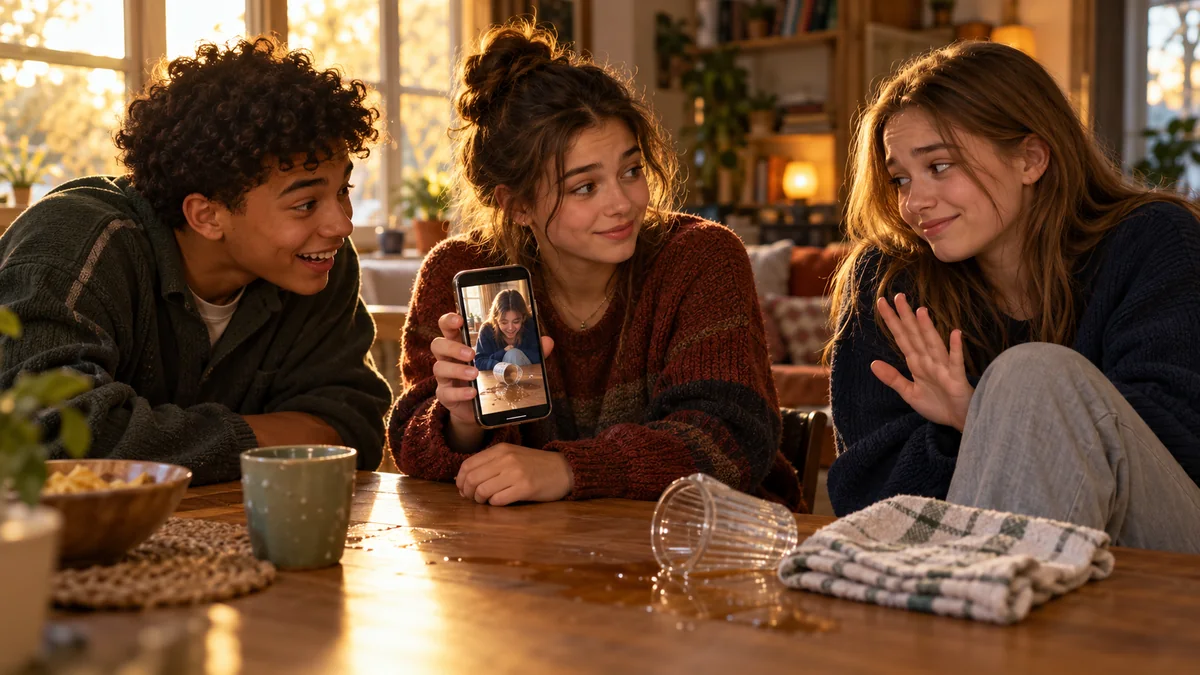
After spending Saturday with your friends, you have a photo on your phone that makes you laugh. Your friend spilled a drink, and the camera caught the surprised look on his face at just the right moment. Someone in the group writes, “Come on, send it to everyone!” You could post the photo in seconds. After all, he is your friend, not a stranger. And he thought it was funny at the time, too.
But will he still be laughing tomorrow, when people who weren't there see it? This scene is fictional, but the dilemma is an everyday one.
A private message can raise a similar question. After an argument, someone sends you an unpleasant message, and your friends want a screenshot: “Show us what they really said!” The message is on your phone. Does that mean you can show it to everyone?
Before posting or forwarding a photo in which someone else is recognizable, or sharing their private words, my advice is to ask first in most situations and explain who would see it. If they don't agree, or you're not sure, it's better to hold off. Be especially careful not to share something that could embarrass or humiliate them. That doesn't mean you have to stay silent about threats, blackmail, or violence. In those situations, you have a right to seek help safely and to show relevant information in confidence to someone who can help you.
A moment that was funny can hurt when shared more widely
Enjoying photographs does not have to come at the expense of privacy. They remind us of trips, celebrations, concerts, and friends. It's lovely when someone sends you a group photo that everyone is glad to have. Jokes have their place in friendship, too.
Trouble can start when the audience changes. At the gathering, your friend may have been the one telling everyone how clumsily he dropped his cup, laughing along with the others. That doesn't mean he wants the same incident to make him a target of ridicule in the class group chat. A joke that two people understood can become a story about “what a klutz” someone is when fifty people see it. And a photo captures just one small part of a person, not everything that actually happened.
Don't judge a photo only by whether you think it's harmless. Think about the position it could put the other person in. Be especially careful with images that reveal illness, distress, a home address, a place someone regularly visits, or another sensitive part of their life. Even an ordinary-looking photo can reveal more than you expect when it appears alongside a caption.
And remember: sometimes the nicest thing is to send the photo only to the person in it. That way, you're giving them a memory without choosing their audience for them.
“It's only in our group” doesn't mean “It will stay between us”
There is a real difference between posting something publicly and sending it to five friends you know. A private group usually limits who sees something at first. But it can't guarantee that nobody will save it, show it to others, or photograph the screen with another phone. Maybe everyone will be considerate. Or maybe someone will forward the photo to another group. Once you've sent something, you no longer have complete control over how far it spreads.
And the number of people isn't all that matters. If someone confides in a friend about problems at home, telling even one person who shouldn't know can seriously invade their privacy. On the other hand, sharing a group photo that everyone has agreed to share within a small circle can be a perfectly enjoyable thing to do.
So consider three things together: what you want to share, with whom, and why. Are you sharing a happy memory? Inviting others to enjoy the moment? Or trying to get attention at the expense of someone who doesn't even know what you're doing?
Does agreeing to be photographed mean agreeing to have the photo posted?
Not automatically. A friend may agree to have their picture taken but not want it posted on a public profile. They may be fine with you sending it to two friends but not to the whole class. Perhaps they'd like to see which photo you've chosen first.
That's why a specific question helps: “Can I send this picture to our group?” or “Would you be okay with me posting it on my profile?” If they would rather you didn't, respect that. Don't put them in a position where they have to defend their choice in front of everyone. You can choose another photo, ask whether a crop that leaves them out would be okay, or simply keep the picture to yourself. When cropping, remember that a location, someone's clothing, or a caption may still identify them.
Be particularly careful when everyone is enthusiastically saying yes in front of the group but one person looks unsure. Agreement given under pressure isn't a reliable sign that the person truly feels comfortable.
What about a photo of an audience at a concert or a group performance? The circumstances may be different from a close-up of one person caught in an embarrassing moment. It would be wrong to claim that every photo posted without written consent is automatically illegal. The legal rules depend on the circumstances, purpose, and type of publication. But when another person is clearly recognizable and is the focus of your post, asking them is usually the simplest way to reach a fair understanding.
The message was sent to you, not to all your friends
Someone may have trusted you enough to send you a private message. That does not mean they wanted everyone else to read it. Perhaps they admitted they were afraid of something, told you about an argument with their parents, or apologized to you. If you forward the message to others, you take away their chance to decide whom to trust with that information.
Fictional example: Nika and Luka have an argument. In a long message, Nika says some unfair things about Luka. At the same time, she confides that her family has been dealing with problems at home for several weeks. Luka is hurt by her words, and his friends ask what happened. At first, he wants to send them a screenshot of the whole conversation to prove his side of the story. Then he says, “We had an argument, and some of what she said really hurt. I want some advice, but I'm not going to send everyone her family's private problems.”
Luka isn't pretending he wasn't hurt, nor is he taking responsibility for Nika's words. He's simply recognizing the difference between talking about his own experience and revealing everything someone else has told him in confidence. If the message had involved a serious threat or violence, the situation would need to be judged differently.
A screenshot has another pitfall: even when it's genuine, it can mislead without the surrounding conversation. The reader may not see the question the person was answering or an agreement the two people reached later. Before turning a private conversation into public “proof,” think about whether you'll be telling the truth or only the part that suits you best.
What if I need to prove that someone has accused me unfairly?
That's a harder situation than sharing a screenshot for fun. It isn't fair to expect you to accept false accusations simply because the other person's words were written in private. Sometimes a message really does matter when you're trying to establish what happened.
But there's a difference between showing the relevant part to an appropriate person and sending the entire conversation to everyone who might take your side. If it's an ordinary misunderstanding, you might start by explaining what happened without sharing a screenshot. If you need evidence, you can show it confidentially to a parent, a school counselor, or another person who can help resolve the dispute. Try not to reveal other people's information unnecessarily. And don't alter or manipulate the original message to create a false impression.
That way, you can still defend your reputation. You do not have to turn the disagreement into a public spectacle of mockery and forwarded screenshots.
How can you say no without starting another argument?
When your friends are excited about a photo or video, it's hard to be the person who refuses to send it. You may worry that you'll seem boring or that they'll turn on you next. At that moment, a long speech about doing the right thing usually won't help. A short, calm answer is often more effective.
“No, I'm not forwarding that. They didn't want anyone else to see it.” Or: “Let's find another picture we all like.” If someone demands to see a private conversation, you could say: “That was sent to me. I'm not turning it into a show.”
You can set your own boundary, too: “We can laugh about what happened, but please don't post that photo of me.” If others ignore your “no,” that does not mean you cannot take a joke. You can stand by your boundary and seek support if you need it.
Similar agreements can help at home. Parents and grandparents often share photographs out of joy and pride, not because they mean harm. But a family album that a few visitors once looked through isn't the same as a picture on a profile that many more people may see. Explain which photos make you uncomfortable and suggest asking one another before posting. Then follow the same rule when you're taking pictures of other people. Sometimes adults need to share information to keep a child safe. That is different from sharing something merely for entertainment.
What if the post is already out there?
Maybe you sent a picture too quickly and only later realized that you'd hurt someone. The damage isn't necessarily beyond repair, but it's wise to act promptly. Take down any post you can remove yourself and ask the recipients not to spread it. If it has appeared on other profiles, you can ask for it to be taken down or use the platform's reporting tools. That won't guarantee that every saved copy has disappeared, but it may limit further sharing.
Don't just tell the person you hurt, “It was only a joke.” Instead, explain what you did and what you've done to put it right: “I posted your picture without asking. I'm sorry. I've taken it down and asked the others not to share it.” Listen if they want to tell you how it affected them. Don't demand immediate forgiveness.
If someone has posted your photo or message without permission, you can ask for it to be removed and report it to the platform. When it's safe, you can begin with a calm request. But you don't have to contact someone who is threatening or blackmailing you on your own. In that case, ask a trusted adult or another appropriate source for help. A person whose privacy has been violated is not responsible for someone else's deliberate sharing, intimidation, or blackmail.
When is sharing a private conversation justified?
Trust doesn't mean hiding threats from people who can help you. If someone threatens, blackmails, or harasses you, you can show relevant messages to a parent, another trusted adult, a school counselor, or the police. The same applies if you're seriously concerned about a friend's safety. You don't need the threatening person's permission to seek protection.
If you receive hurtful or threatening messages, ask for advice on how to preserve the evidence safely. But if intimate images of minors are involved, do not forward or download them, or make new copies just to prove something to someone. Seek help without spreading the images themselves, and ask a trusted adult or appropriate service what the safe next step is. Take It Down may help limit the spread of certain intimate images or videos of yourself, taken before you turned 18, on participating platforms. It is meant for material you already have on your device: do not download, request, or share new copies to use the service. Your images are not uploaded to Take It Down; it generates a digital fingerprint instead. Even this service cannot guarantee removal from every location.
In Slovenia, young people can talk to someone free of charge by calling TOM at 116 111, every day between 12 noon and 8 p.m. For urgent police assistance, call 113; for emergency help when life or health is in danger, call 112. If it's not safe to seek help at home, you can contact another trusted adult or an appropriate support service.
Before you tap “Send”
You don't have to give up taking photos, joking around, or telling your side of a story. But you do need to recognize the line between your memory of an event and another person's privacy.
When you want to share a recognizable photo of someone else or their private words, generally tell them what you'd share and with whom, and respect their answer. If they don't agree or the post could harm them, it's usually wiser not to send it. If you need to clear up an injustice, share only what is necessary with someone who can help. If you're facing violence or blackmail, seek help safely rather than asking the person responsible for their approval.
When you see the “Send” button on your screen, you're deciding more than what happens to a single file. You're also deciding whether people will still be able to trust you not to turn their private moments into entertainment for others.
Sources and Further Reading
- Information Commissioner of the Republic of Slovenia, Objava fotografij brez privoljenja (2023), https://www.ip-rs.si/mnenja-zvop-2/objava-fotografij-brez-privoljenja-1679477566
- Safe.si, Objavljanje in deljenje fotografij otrok, https://safe.si/starsi/objavljanje-in-deljenje-fotografij-otrok
- Slovenian Police, Spolne zlorabe otrok prek spleta, https://www.policija.si/svetujemo-ozavescamo/varnost-na-internetu/spletno-nasilje-in-spolne-zlorabe-otrok-na-internetu/spolne-zlorabe-otrok-prek-spleta
- NCMEC, Take It Down, https://takeitdown.ncmec.org/
- TOM, Stopi v stik, https://www.e-tom.si/stopi-v-stik/
- GOV.SI, Klici v sili, https://www.gov.si/teme/klic-v-sili/