What Should I Do With a Rumor or an Unverified Message?
How to find out what is true, avoid passing on other people's stories, and repair the harm if you've shared something too quickly.
How to find out what is true, avoid passing on other people's stories, and repair the harm if you've shared something too quickly.
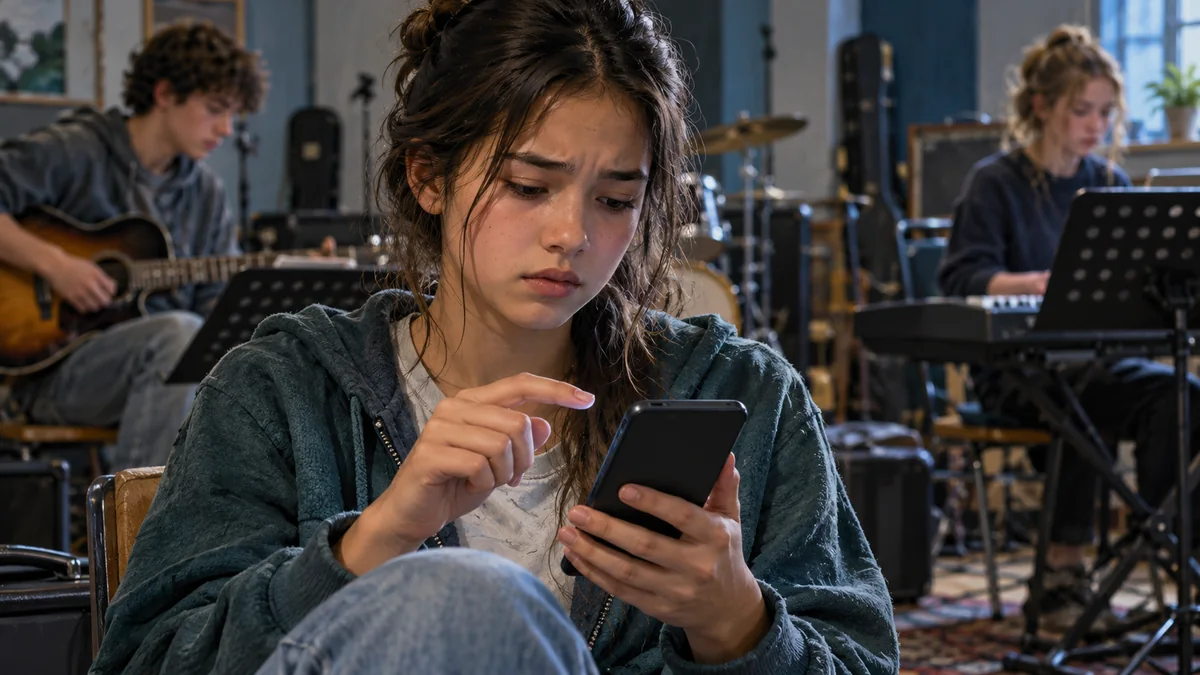
Your phone buzzes during rehearsal for a local music event. In the group chat where the young musicians share schedules, photos, and jokes, someone posts: “Apparently Neža is out of the band because money from the performance has gone missing. I heard it from someone who knows. Pass it on so people can be careful.” Replies appear almost immediately. Some are angry. Others want to know more. Someone points out that Neža really has been keeping to herself lately. Within minutes, the rumor sounds far more certain than it did when it first appeared.
What should Nika do? Neža isn't her best friend, but they've performed together. Nika doesn't want to be naive. But she doesn't want to help people treat Neža unfairly, either. As the replies pile up, she faces an uncomfortable choice: if she stays quiet, others may assume she is taking Neža's side; if she asks for proof, she may give the rumor even more attention; and if she forwards it, she may spread an accusation that is completely false.
The short answer: don't pass on an accusation you cannot verify. If you receive a public notice that might help others, check who issued it and when. If it's a story about someone's private life, start with a different question: Do I have a good reason to tell anyone about this in the first place? You can steer a conversation away from speculation, raise a serious concern with someone responsible, and correct a message you shared too quickly. None of that requires knowing every detail about the person being discussed.
When “someone said” turns into “everyone knows”
Fictional example — Nika and Neža. Nika checks who sent the message. It was Žiga, someone she knows well. He's usually honest and often helps at performances. That makes his message harder to dismiss. But Žiga has no firsthand knowledge that any money is missing. All he knows is that he overheard two older members of the music club talking. Someone else shares a screenshot that reads, “Due to problems with expenses, the lineup will change.” But nobody can tell who wrote it, when it was written, or what those problems were.
Nika reads the group's replies. One member mentions seeing Neža near the ticket desk recently, while another describes her behavior as unusual. A third concludes that she must have left the lineup because of money. Nobody has checked that conclusion. In the same way, an ordinary friendship between two people could turn into a story about them dating in a group chat. Repeating a guess does not make it true.
Standing near a cash desk doesn't mean someone took money. Being quiet or sad isn't proof of guilt. And ten people repeating a claim are not necessarily ten separate sources. They may all be repeating what one person said. Žiga's usual honesty is no guarantee that this particular story is accurate.
When Žiga writes, “I never said it was definitely true,” Nika replies, “I know. But people will remember Neža's name, not the word ‘apparently.’ I'm not forwarding it.” Žiga is offended. “I was just trying to warn people.” Nika doesn't accuse him of being a bad person. “If money really has gone missing, the people responsible for it need to look into it. A group chat isn't the place to decide who's guilty.”
Nika then reminds the group of a practical task: arranging Saturday's dress rehearsal. If there is a real problem, it should be addressed through an appropriate channel, not through accusations in the chat. Žiga tells her she is making things too complicated. She has not resolved the whole dispute, but she has not passed on the rumor and has redirected the conversation toward preparations for the performance.
These distinctions are easy to overlook. “I don't like that music” is an opinion. “Rehearsal has moved to Friday” is a claim that can be checked. A rumor is a circulating story that lacks a clear, reliable basis; it may turn out to be true, partly true, or false. Evidence genuinely supports a conclusion. An impression, a social-media like, or a crowd repeating the same thing does not. Even a genuine screenshot can be misleading if it's taken out of the conversation it came from. [1][2]
True—but still not mine to tell
Now suppose Neža really had stepped away from the performance because of problems at home or in her personal life. Would everyone in the group chat suddenly have a right to discuss the details? No. Something can be true and still be private. A person doesn't have to explain their health, family relationships, or other personal circumstances in public just because other people have started talking about them.
Whether something is true and whether you have a right to share it are two different questions. It's easy to forget that when a group chat is buzzing. Someone protests, “But it's true!” as though that alone made it right to share a private message or reveal something personal. Yet being truthful doesn't cancel our responsibility to respect another person's dignity and privacy. [1][3]
There are, of course, exceptions. If you're genuinely concerned that someone is in danger, being threatened, or has suffered serious harm, you don't have to hide that concern. But there is a big difference between telling a responsible adult, an appropriate service, or someone who can help—and announcing it to the entire group. Asking for help is meant to protect someone. Passing on a rumor usually just gives the story a bigger audience. If you're unsure whom to tell, you can first speak privately with a trusted adult.
It wouldn't be fair to demand that Neža “tell us what happened so we'll know you didn't do anything wrong.” She doesn't owe her peers a public defense. If Nika knows her well enough, she might say privately, “People in the group are saying something hurtful about you. I'm not passing it on. Is there anything I can do to help?” She doesn't send Neža more copies of the accusation or expect her to disclose personal reasons for being absent. If approaching her directly wouldn't be appropriate, Nika can ask the mentor responsible for the group for help.
Why do our fingers move faster than our judgment?
Sometimes people spread rumors to hurt someone. Other times, their reasons are less obvious. Maybe Nika is simply curious. Someone else is afraid of being the last to know. Žiga may sincerely believe he's warning his friends. A message marked “urgent,” “everyone needs to know,” or “confirmed” can make forwarding feel almost like a favor.
Good intentions don't guarantee good results. In studies of public online news, prompting people to think about accuracy before sharing improved the quality of their sharing decisions. Those experiments did not study private rumors in Slovenian youth group chats. That pause is still worth taking—not as a proven solution to private rumors, but as a chance to ask: before I tap “forward,” am I helping anyone, or just keeping the rumor alive? [4][5]
It's especially easy to believe a story because it fits what you already think about someone. If you never liked Neža, you might accept the accusation too quickly. If you like her, you might reject it without a second thought. Both reactions are understandable, but neither tells you what actually happened. Being fair doesn't mean switching off your feelings. It means refusing to mistake those feelings for evidence.
How can I check a message without spreading a rumor?
Not every uncertain message needs to go unshared forever; some contain useful information worth checking. The important questions are what you are checking—and why.
Fictional example — a canceled rehearsal. In another chat, Luka receives a photo of a notice: “No music rehearsals tomorrow. The hall is closed.” Some members travel quite a distance, so he wants to warn them. Then he notices the picture has no date. Before forwarding it, he asks the group leader, “Is this actually about tomorrow?” It turns out the hall was closed last month. Now he can share the confirmed schedule rather than pass along an outdated notice.
Here, checking the facts doesn't intrude on anyone's private life. Luka checked a practical piece of information with someone in a position to confirm it. The result is information the others can actually rely on.
When you encounter a public claim—about a timetable, an event, a change in rules, or a statement made publicly—try to find the original source, date, and full context. Don't assume the first convincing post tells the whole story. If the claim matters, check another appropriate, independent source. Researchers call this kind of checking across sources lateral reading. In one study, teaching this skill helped college students check online claims more effectively. That does not mean teenagers should investigate classmates' private messages in the same way. [6][7]
With an online photo, ask whether it really shows the place, time, and event claimed. A photo by itself doesn't guarantee an accurate explanation. If the image was posted publicly, looking for the original source or other public posts may sometimes help. But if it's a private photo or conversation involving a minor, don't turn it into an investigation: don't collect, copy, or circulate that person's material out of curiosity. [2][6]
Sometimes, even after checking, you still won't know. That's an acceptable outcome. “It hasn't been confirmed” is a perfectly good answer. What matters is not turning that uncertainty into an unsupported claim delivered with confidence.
What if my friend gets upset when I won't share it?
Nika still feels uneasy after rehearsal. Žiga says, “I told you because we're friends. You don't need to lecture me.” His response doesn't necessarily mean he intended to hurt anyone. He might simply feel embarrassed that he sent the message without checking. Nika could reply, “I believe you didn't mean to hurt anyone. But I don't know if it's true, and I don't want Neža hearing ten more versions of it because of me.”
That is very different from calling Žiga a liar. Someone can pass along false information while genuinely believing it. Misinformation may be shared by mistake, without an intention to deceive; disinformation involves deliberate deception. In a particular conversation between friends, you often can't know someone's motives for certain. Judge the act first, and try to stop the harm. One mistake need not become a verdict on someone's whole character. [8]
Žiga might also ask, “What if it's true, though?” Nika's answer isn't “Then it doesn't matter.” It's “If you know there's a real problem, tell our mentor or the person responsible for the money. But if all you have is a story about Neža, I'm not passing it on.” That takes both truth and Neža's dignity seriously. If the conversation drifts back into guessing, she can redirect it or leave; she doesn't have to stay and listen while someone is humiliated.
If the rumor has turned into humiliation, if it keeps happening, or if a threat is involved, the next step may be to involve a moderator, mentor, teacher, parent, or another trusted person. You don't have to manage the whole group yourself or put yourself at risk by confronting anyone. When online harassment continues, getting support matters far more than having the last word. [3][9]
Talking about others can be fair and kind, too
There can be good reasons to talk about someone who isn't present. Praising a musician's solo or arranging a substitute with the mentor is quite different from spreading an unverified accusation. If you need help with an upsetting experience, you may also speak about it with someone who can help. Think how much harm you might do by presenting as certain something that began as a guess. We are responsible for our words even when we did not intend to cause harm.
When people start discussing something a person never chose to make public, you can change the subject without insulting anyone: “We don't know that about her. Can we figure out who's coming to the dress rehearsal instead?” A simple change of subject may work better than a lecture. But when there's a serious concern to report, changing the subject isn't enough. After rehearsal, Nika therefore tells the mentor that an unsupported accusation is spreading in the group. She doesn't try to interrogate Neža or find a culprit herself. The mentor can address matters within the club's responsibility and help stop Neža from being put on trial in public. If the first adult doesn't respond appropriately, it's reasonable to seek help elsewhere.
At home, Nika mentions what happened. Her grandfather remembers a similar dispute from before group chats existed. “We passed stories from one house to the next,” he says. “By the time a story reached the last house, it had changed.” Nika asks whether that made people more careful about what they said back then. “Not everyone,” he admits. “But sometimes someone would finally ask whether we'd even heard the other person's side.” This conversation is fictional; it is not evidence about life in villages in the past. Its practical point is straightforward: old and new ways of spreading rumors differ, but our responsibility to other people remains.
What if I'm the one they're spreading rumors about?
What if you're the one in Neža's position? You may not know whom to trust. You may feel you have to defend yourself to every single person. You don't have to answer everyone or disclose private details to deserve fair treatment. You can ask others to stop sharing the rumor and turn to one or two people you trust for support. If it's safe and you want to, you may explain only what is necessary to correct a specific falsehood. If the humiliation continues, seek help from an adult, mentor, or appropriate service. You are not responsible for other people's accusations. Even a strong emotional reaction on your part does not excuse their behavior.
What if I've already forwarded the rumor?
This may be the hardest step: acting better today does not automatically undo what you said yesterday. Perhaps you wrote, “Looks like Neža really did take something.” Now you realize you had no evidence. You feel embarrassed and would rather delete the post and hope it disappears from everyone's memory.
Deleting the post may stop new people from seeing it. But it isn't enough if others have already read it. If a public correction could draw fresh attention to the rumor, first ask a responsible person how to repair the harm without spreading it again. Where appropriate, you might write to the same group:
“Earlier I shared a claim about Neža without evidence. I shouldn't have treated it as true or passed it on. I'm sorry. Please don't share it further.”
You don't need to repeat the details of the accusation, add more private information, or invent an explanation you don't have. If a claim has been reliably disproved and you can correct it without exposing the person again, say so. If you still don't know what's true, say that honestly.
Putting things right also means thinking about whom to apologize to—and how. You don't need to make the person affected listen to a long account of your good intentions or pressure them to forgive you immediately. If a private conversation is appropriate and safe, you can briefly acknowledge what you did and ask whether there's anything you can do to help repair it. If direct contact would place another burden on them, talk with an adult or responsible person about a better approach. Making amends is not about feeling better as quickly as possible. It is about reducing the harm you helped cause.
A correction may never reach everyone who heard the rumor. A friendship may not recover straight away, either. Even so, admitting your mistake is better than quietly hoping the damage will disappear on its own.
When there's a real danger, silence isn't the answer
Refusing to spread rumors does not mean staying silent about violence, threats, blackmail, or a serious risk to someone's safety. If a message suggests someone may be in immediate danger, don't circulate it among friends as something interesting to discuss. Contact a trusted adult, the appropriate service, or emergency assistance. Explain what you know firsthand and what you have only heard from others.
If someone keeps humiliating you online, seek support from a parent, a school counselor, a mentor, or an appropriate service. In Slovenia, young people who need someone to talk to can call the TOM helpline at 116 111, every day from 12:00 noon to 8:00 p.m. In an immediate emergency in Slovenia, 112 connects to emergency assistance and 113 to the police. These emergency numbers are for serious situations, not ordinary disagreements about who said what. [9][10][11] If you're outside Slovenia, use the appropriate local services.
If personal images are involved—especially intimate or violent material depicting minors—do not make extra copies or forward them “as evidence.” Ask a trusted adult or an appropriate professional how to report the situation or protect yourself without spreading the material. You are not responsible for someone else's violence. But you can choose not to take part in spreading harmful material. [1][9]
So what is the sensible thing to do?
The next time a message begins “Everyone's saying…”, don't rush to be the first person to pass the story on. First ask whether it is useful public information or a claim about someone's private life. Check a public notice with a reliable source, paying attention to the date and context. Don't turn a personal rumor into a group investigation, even if you're tempted to find out more. If someone is in danger, seek help discreetly and responsibly.
If you're part of the conversation, there is one more thing worth doing: don't be only a silent bystander if you can safely and calmly interrupt the spread of a rumor. Sometimes “We don't know if it's true. I'm not sharing it” is enough. Sometimes it helps to bring the group back to what it actually needs to arrange. If it becomes humiliation or a threat, get support; you don't have to fix the entire group yourself. You are not rejecting your friends. You are refusing to help them treat someone unfairly.
And if you've already shared a rumor, correct yourself clearly and reach the people who need to hear it—without spreading the claim all over again. Don't leave someone else to deal with the harm you helped cause. Being truthful is not only about stating facts you know. Sometimes it begins with the words “I don't know”—and the decision not to put someone's reputation at risk for a story you cannot verify.
Sources and Further Reading
Safe.si, Spletni in mobilni bonton oz. etika [Online and mobile etiquette and ethics] — Slovenian guidance on privacy and sharing.
UNICEF Europe and Central Asia (2025), A quick guide to spotting misinformation — checking origins and discussing information.
UNICEF UK, Cyberbullying, and UNICEF Parenting, How to talk to your child about cyberbullying — online abuse overview · support guidance.
Pennycook et al. (2021), Shifting attention to accuracy can reduce misinformation online, Nature — research abstract.
Pennycook and Rand (2022), Accuracy prompts are a replicable and generalizable approach for reducing the spread of misinformation — study.
Stanford Social Media Lab, Digital Strength Tools & Training — checking sources and images.
McGrew et al. (2021), Improving college students’ fact-checking strategies through lateral reading instruction — peer-reviewed research.
World Health Organization (2024), Disinformation and public health — the distinction between honest error and deliberate deception.
UNICEF Parenting, How to talk to your child about cyberbullying — support when someone is humiliated online.
TOM telefon, Stopi v stik [Get in touch] — 116 111; daily, noon–8 p.m. in Slovenia.
GOV.SI, Klic v sili [Emergency call] — 112 and 113 in Slovenia.