How Should I Choose Music, Movies, and Other Online Content?
Music, films and online content can influence your moods and habits. Learn to choose thoughtfully rather than follow a crowd.
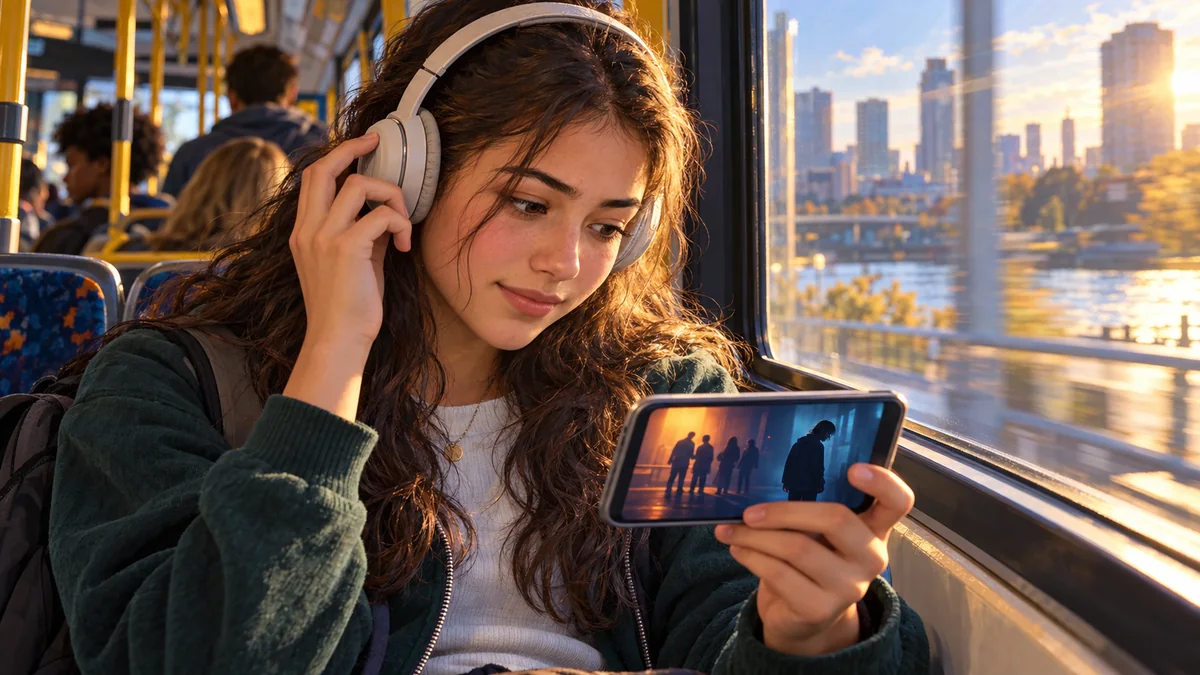
Nika is on the bus home from school. She's listening to a song she's played almost every day lately. She likes the beat, the singer's voice, and the feeling of finding something that's her own. A friend sends her the music video. When she opens it, one scene catches her off guard: someone is being humiliated as others laugh. Nika can't tell whether the video is criticizing that behavior or treating it as entertainment.
That evening, her father hears the song and remarks, “What kind of music is that?” Nika gets angry. She's convinced he's judging her before giving the song a chance. At the same time, she hasn't forgotten the scene she saw. What should she do? Defend her favorite artist, just agree with her father, or try to understand the song for herself?
You don't have to like the same music as your parents or agree with everything your friends say. But it helps to distinguish three things: what you enjoy about a piece of content, what it shows or says, and whether you want to support its message. That way, you can keep your own tastes without giving up your own judgment.
Your Taste in Music Is Not a Test of Character
A song can lift your spirits, help you get through a difficult day, or remind you of people you've had good times with. Maybe you enjoy a powerful beat even though you don't fully understand the lyrics. Sometimes a movie or song helps you make sense of a feeling you haven't found the words for. Entertainment can be worthwhile in its own right; you don't have to turn every experience into a lesson.
So it isn't fair to judge someone by their headphones, hairstyle, or favorite genre. One person listens to loud, dark music and is a caring friend. Someone else prefers gentle melodies, but that tells you no more about how they treat others. And liking horror movies, rap, classical music, or documentaries doesn't make someone a better or worse person.
But that doesn't mean every word and every scene is equally good. An artist's popularity doesn't prove they're right. An award doesn't excuse humiliation. And if a crowd laughs at cruelty, its laughter doesn't make cruelty acceptable.
The real question, then, isn't “What kind of people listen to this genre?” It helps more to ask: “What's happening in this particular song, movie, or video?” That way, you judge the content and the behavior, not the worth of people whose tastes differ from yours.
Showing an Injustice Isn't the Same as Approving of It
Think of a movie in which someone betrays a friend. The story might show whom the betrayal hurts and what happens as a result. Or it might present the betrayal as a clever trick worth admiring, with no concern for the person who gets hurt. Both stories show the same kind of action, but they don't necessarily send the same message.
It's similar with music. A song may be about anger, revenge, or loneliness without encouraging you to live that way. It may be told from the point of view of someone who is mistaken. It may use satire, exaggeration, or deliberately leave a question unanswered. At other times, a song really does glorify humiliation or exploitation. The difference isn't always clear the first time you listen.
So Nika watches the video again. First, she reads the lyrics. Because they're in another language, she also checks a translation. She notices that the words describe a relationship in which one person undermines the other's confidence. But she's still not sure whether one scene is mocking cruelty or mocking the person on the receiving end of it. She admits she doesn't know. That's more honest than pretending there's only one possible interpretation.
When something bothers you, you can take a similar approach. Listen to the whole song, not just a clip. Try to work out who's speaking in the story and whose point of view you're following. If a song means a lot to you, read its lyrics. If a movie is provocative, read a description or a thoughtful review. And if, after doing that, you still think the content turns people into targets for entertainment, you don't have to silence your concern just because you like the music.
You can still enjoy the melody but dislike the video. You can respect the artistic skill while rejecting the message. You may also decide that you no longer want to watch or listen to certain content. None of those choices requires you to judge everyone who enjoys it.
If you listen to a song often, notice what stays in your mind afterward. Does it help you, unsettle you, or leave you with a new question? A feeling alone does not prove that a song is good or bad, but it can help you decide what you want to listen to.
Is an Age Rating Just Another Ban?
You and your friends are choosing a movie for Friday night. Someone suggests a horror film, but another friend says they don't want to watch graphic scenes of torture. One of the others teases them: “What, are you scared?”
Maybe they are. So what? Courage doesn't mean forcing someone else to watch something they don't want to see. A better approach is to check what the film contains and choose something nobody feels pressured to watch. If you can't agree, you can split up and do different things. Friendship shouldn't be measured by who can endure the most disturbing scenes.
Age ratings and content descriptions can help with decisions like these. Some film classification systems explain not only the rating but also whether a movie contains frightening scenes, strong language, or graphic violence. That's more useful than guessing from a poster. Ratings differ between countries and services, so check which system you're looking at and what it means. You should also respect the age restrictions that apply.
You might see a PEGI 16 label on a video game. It doesn't tell you how difficult a game is. It's part of an age-rating system for video games based on their content and certain features. PEGI doesn't rate movies or music. Likewise, a warning that a song contains explicit lyrics doesn't give you a detailed explanation of what the song means.
An age rating can't account for everything you've experienced. Something other people watched easily might deeply upset you. So don't treat a rating as a challenge you have to overcome. Treat it as a first piece of information. If a description tells you that certain scenes aren't right for you, that's a good reason to choose something else.
Why Does an App Keep Recommending More of the Same?
Nika watched one music video. The next day, the app recommends another by the same artist, followed by a reaction video and then similar music. She hadn't searched for any of it. Suddenly, it feels as though the same subject is everywhere.
Online services may use your viewing history, clicks, reactions, and other data to decide what to recommend. They work differently, so no single rule explains every service. Still, it's worth remembering: the next video you're shown isn't necessarily the one that's most important, most truthful, or best for you. It might simply be the one the system predicts you're likely to open.
Even if you found one video interesting, that doesn't mean you want to watch ten similar ones. If the platform offers the option, you can select “Not interested,” change which accounts you follow, check your watch history, or reset your recommendations. Some services let you limit autoplay or choose a different way to view content. Not every platform offers the same settings, so it's worth finding out what the one you use actually allows.
In its 2025 guidelines, the European Commission recommended giving minors more control over the content suggested to them. These are recommendations, not a guarantee that every service already offers all the proposed options. The American Academy of Pediatrics also warns that some digital services are designed to keep people engaged for as long as possible. So the responsibility doesn't rest entirely on your self-discipline.
Algorithms can help you discover wonderful new music. There's nothing wrong with enjoying the occasional pleasant surprise. But every now and then, look for an artist, film, or program you're genuinely interested in. That way, recommendations stay a helpful tool instead of making all your viewing and listening choices for you.
A Video Can Be Fascinating—and Still Be False
Online, entertainment, advertising, and information often appear in the same feed. One video is a fictional scene, the next is a paid promotion, and a third claims to reveal a real event. Because all three can be engaging, it isn't always easy to see where a story ends and a claim about the world begins.
If someone confidently says in a short video that something happened, ask how they know. Are you seeing the whole conversation or just a clip? Can you find the original recording or a trustworthy, independent source? If it's an advertisement, remember that it's trying to sell something. If it's fiction, you don't need every scene to be literally true. But it's important not to mistake fiction for evidence.
Today, audio or video can be faked to make it seem as if a real person said something they never said. A convincing voice or face is not proof on its own. Look for the original source and independent confirmation before sharing the claim. [6]
That's part of media literacy: learning to watch, listen, check claims, and create content yourself without handing your judgment over to the loudest video. It's also central to the approach encouraged by UNESCO.
You might discover that your favorite creator has misunderstood something or exaggerated a claim. You don't need to hate them immediately because of one mistake. But liking a creator doesn't mean you have to defend every claim they make. Loyalty to a creator isn't the same as loyalty to the truth.
When Content Hurts You, You're Allowed to Say No
An uncomfortable movie may have real value because it takes injustice seriously. But not every disturbing piece of content is necessary or helpful for every person. And you don't have to put up with everything someone sends to a group chat.
If a video frightens or upsets you, you can stop watching. You don't have to forward images of real suffering to prove how terrible they are. If someone deliberately bombards you with such images, you can tell them clearly to stop and use blocking or reporting tools. If they keep doing it, you don't have to keep talking to them.
If you've seen something that deeply disturbs you, or if someone is bullying or threatening you, talk to a trusted adult, a school counselor, or another safe source of help. It doesn't matter whether you opened the content out of curiosity or it appeared unexpectedly: you are not responsible for another person's harassment. If the content shows real violence or an immediate danger, reporting it to the appropriate authorities may also be necessary. If home isn't safe, seek help elsewhere.
And one more thing: enjoying sad songs or dark stories doesn't make you a bad person. What matters more is how you understand them and how you treat other people.
How Can You Talk About Music at Home?
The next day, Nika plays the song for her father without showing him the video. “I like the beat,” she explains. “But I'm not sure what the artist meant by that scene, either.” Her father admits that what first bothered him was the singer's style of singing. When they read part of the lyrics together, he realizes he didn't know enough about the song to dismiss it outright. Nika says she still finds the video troubling and doesn't want to share it.
They haven't suddenly come to like the same music. But they've discovered that they can talk about a particular song without her father judging all young people or Nika judging all adults. Nika can still enjoy the song. She doesn't have to defend a scene she doesn't think is right.
If a movie or song causes an argument at home, try starting with a specific question: “Which scene bothers you?” or “Could we look at the lyrics together?” Explain what you see, and genuinely listen to the answer. Sometimes parents have good reasons to be concerned. Sometimes they don't know the whole story or jump to conclusions. Both possibilities can be discussed without insults.
Parents have a responsibility to set age-appropriate boundaries, while young people need room to develop their own judgment. Neither concern nor the desire for independence justifies humiliation. If a calm discussion at home isn't safe, don't put yourself in danger to prove your point. Turn to another trusted adult.
You Can Say No Even When Everyone Else Likes It
The next time someone sends you a song, movie, or video, you don't have to go looking for faults. You can enjoy it. But if something troubles you, don't let popularity or peer pressure silence that concern. Check what's actually being shown, what the wider story says about it, what warnings come with the content, and whether any factual claim can be verified. Then choose: enjoy it, look for more context, set it aside, or decline it.
You don't need to have perfect taste. It's about being able to distinguish a person from their actions, an artistic story from reality, and what appears on your screen from what you want to choose for yourself.
Nika hasn't stopped listening to her song. But she's decided not to share the troubling video just because it's popular. She understands why she likes the music and can explain what bothers her. You, too, can keep enjoying music and movies without silencing your own judgment or losing respect for other people.
Sources and Further Reading
- UNESCO, Media and Information Literacy. Critical evaluation of media content and responsible creation.
- American Academy of Pediatrics, Digital Ecosystems, Children, and Adolescents: Policy Statement, Pediatrics 157(2), published January 20, 2026. Features of digital services, content, and young people's well-being.
- European Commission, Guidelines on the protection of minors, July 14, 2025, § 6.5.2; these are nonbinding guidelines, not a guarantee that every platform provides the settings discussed.
- British Board of Film Classification, Our Age Ratings and Parent’s Guide. An example of the UK film-classification system, not presented as a rule for Slovenia.
- Video Games Europe, PEGI: The Pan-European Content Rating System. Age categories and descriptors for video games, not movies or music.
- House of Commons Library (May 5, 2026), How to verify images and videos. https://commonslibrary.parliament.uk/research-briefings/cbp-10816/ — checking the original source and independent evidence; digitally generated audio and video cannot always be reliably identified simply by listening or looking.