How Can I Balance My Phone, Video Games, and Other Activities?
Phones and games can take more time than you expect. Find ways to balance screens with sleep, relationships and other activities.
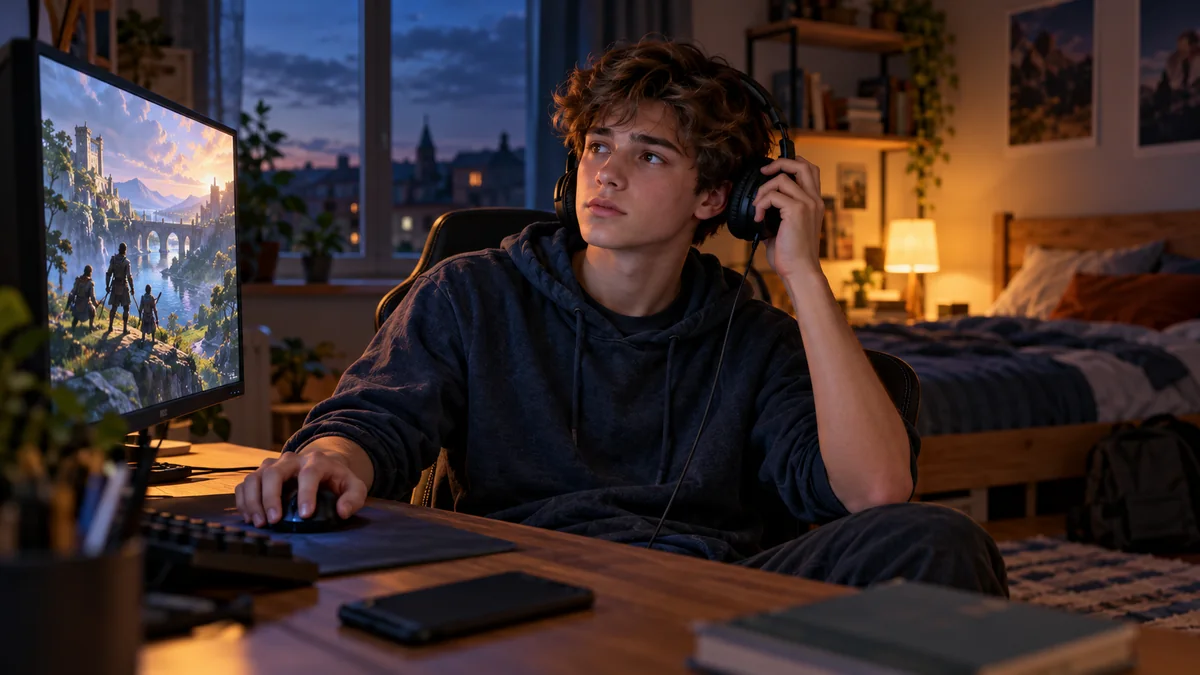
It's half past nine in the evening. You and your team have just finished an exciting game, and someone suggests another round. “Just twenty minutes,” a friend writes. You want to stay. You've played well today, the game has helped you unwind, and your friends are counting on you. Then you look at the time. You have to get up early tomorrow. From the kitchen, you hear: “Are you going to spend all night on that computer again?”
You might get angry. After all, you haven't just been wasting time: you've been playing with other people, thinking, and having fun. But you also remember an evening when “just a little longer” turned into midnight. Something similar can happen with your phone, even when you're not playing games. You mean to reply to one message, then spend another fifteen minutes watching short videos without really knowing how you ended up there.
Phones and video games aren't bad in themselves. You use them wisely when they bring something worthwhile to your day without regularly taking away time you need for sleep, responsibilities, exercise and relationships—or making it harder to stop when you need to. If they increasingly lead you to put off important things, you don't need to wait for a major argument or a serious problem. Start with one change you can try this week.
Why are screens so appealing?
In a game, you might lead a team, solve a complicated puzzle, build a world of your own, or spend time with a friend who lives far away. When nothing seems to be going well at school or at home, succeeding in a game can give you a welcome sense of progress. Those experiences are real. The friend you're connected with is still a person, and working together can be an important part of your day.
Your phone is also more than a device for entertainment. You can use it to call your grandmother, look up instructions for fixing a bicycle, practise a foreign language, record music, or edit photographs. Learning to program isn't the same as mindlessly opening one new video after another. If adults dismiss all of that by saying, “You're on a screen all the time,” you can explain what you're actually doing.
Still, even a meaningful activity needs limits. Sometimes you have to stop editing a video or talking with a friend if it means you're barely sleeping several nights in a row. The question isn't only whether an activity is good or bad. It's also when you do it and what gets crowded out because of it.
Some apps are particularly hard to put down because of how they're designed. The next video starts automatically. Your phone alerts you to a new message. A game offers a reward you don't want to miss. In 2026, the American Academy of Pediatrics (AAP) warned that design features like these can prolong use and make it harder to stop. That doesn't apply to every app in the same way, and it doesn't mean you have no choice. But it does mean that it isn't fair to blame everything on your supposedly “weak willpower.”
So don't rely solely on a promise you make at night to be more disciplined tomorrow. If non-essential notifications distract you while you're studying, silence them. Turn off autoplay where you can. Before you start a game, think about when you'll stop. Arrange things so that making a good decision becomes a little easier.
When your friends want one more round
Let's look at a fictional example involving seventeen-year-old Nejc. On Tuesday and Thursday evenings, he plays with three friends. They're a good team. He doesn't want to abandon them in the middle of an intense game, but his mother notices something else: Nejc can barely get up in the morning, and he's falling behind with assignments more often. When she calls out during a round that he must turn off the computer immediately, he snaps: “You don't even understand that they're my friends!”
Nejc isn't lying when he talks about his friends. Nor is his mother imagining how tired he is. Each sees an important part of the situation. If they argue only about whether video games are “pointless,” they probably won't get much further than the next quarrel.
A better conversation starts earlier—not ten seconds before it's time to switch off. Nejc can explain how long a typical match lasts and why it's awkward to leave in the middle. His mother can explain what worries her: his sleep, trouble getting up in the morning, and work he keeps putting off. Then they can agree on the latest time he may start his final game. If a round might last an unpredictable amount of time, he doesn't start it late at night—or chooses something he can finish more easily.
He can also tell his friends in advance: “I'm not playing after ten tonight. I've got to get up early tomorrow.” They might tease him at first. But if a friendship depends on you being available every evening, it needs better boundaries. After a week, Nejc and his mother can calmly check whether the arrangement is working and whether he's more rested in the morning.
Fairness goes both ways. If Nejc has kept the agreement, it isn't helpful for adults to interrupt his games every time without a reason or any warning. If he hasn't kept it, pointing to his friends doesn't excuse him either. Trust grows when you explain what you'll do—and then show that you can be relied on.
Is two hours the right limit?
Slovenian professional guidelines recommend an average of no more than two hours a day of recreational screen use for teenagers aged thirteen to eighteen. That's advice for maintaining a healthy balance, not a law—and not a threshold at which someone suddenly becomes addicted. Screen use for schoolwork isn't the same as screen use for entertainment, though breaks are helpful during both.
The AAP notes that there isn't enough scientific evidence to set a single time limit that's right for every teenager and every situation. It therefore looks beyond duration to the quality of content and whether screens are displacing other important activities. That doesn't contradict the Slovenian guidelines, and it isn't permission to use screens without limits: a time limit is a useful guide, but you have to judge how well it works in real life.
For example, you could spend part of Saturday creating a drawing on your computer, go outside, visit a friend, and play a game in the evening. Or the day could slip away from one video to the next, even though after a few hours you aren't enjoying any of them very much. The difference isn't just the number of minutes. It's the purpose, how you feel, and what else you've made time for.
So don't disguise entertainment as “schoolwork.” But don't let anyone dismiss a genuine school project as mindless screen time, either. Look at what screens actually mean in your day. If you regularly exceed the recommended limit for recreational use, that's a good reason to think things over and make adjustments—even if you haven't noticed any obvious problems yet.
What have screens started to crowd out?
Start with sleep. Experts recommend around eight to ten hours of sleep a night for adolescents aged thirteen to eighteen. If you have to get up at six in the morning, a late-night gaming session comes at a different cost from one played during a free afternoon. Not getting enough sleep can affect your concentration, mood, and learning, even if you don't feel tired in the evening.
Slovenia's National Institute of Public Health (NIJZ) recommends avoiding screens for at least half an hour before going to sleep and keeping devices out of the bedroom overnight. As a more cautious family rule, the AAP recommends about one screen-free hour before bedtime. These aren't magic numbers: an exciting game may leave one person wound up long after it's over, while a nighttime notification may wake someone else. It helps to find an evening routine that genuinely makes it easier to fall asleep. You could charge your phone away from the bed, finish your last game earlier, and leave some time at the end of the day for a shower, reading, or a quiet conversation.
Physical activity matters, too. For children and adolescents aged five to seventeen, the World Health Organization recommends an average of at least sixty minutes of moderate-to-vigorous physical activity a day across the week. That doesn't mean you have to play a particular sport. Walking, cycling, and dancing count too, as long as you're moving at an appropriate level of intensity. You don't have to be an athlete. What matters is whether your body gets a chance to move after long hours of sitting.
When you're in traffic, there's another important boundary: don't write messages or watch videos while cycling, riding a scooter, or driving a car. If you need to use your phone, stop somewhere safe first. No notification is more important than paying attention to the road.
Think about people as well. Playing online with friends can be genuine social time. But do you ever have time for a conversation without a game, a family meal, or a friend who wants to meet in person? Not everyone has the same opportunities. Someone may live far from other young people or have no transport. For someone else, an online connection may be especially important because of an illness, a disability, or other circumstances. It wouldn't be reasonable simply to cut off their only accessible connection. The aim is to expand your opportunities, not shrink them.
And what if your family talks a lot about your phone while the adults keep looking at theirs throughout dinner? You can mention that calmly. A good family agreement applies to adults, too. You can all put your phones aside for a while at mealtimes, with sensible exceptions for important or urgent calls.
What will you do when the screen is off?
Free time isn't a list of chores you must complete before you've 'earned' a video game. It's good to rest and have fun. Perhaps music, baking with your grandmother, photography, chess, woodworking, or talking with a friend appeals to you more than sports. Choose something you'll genuinely look forward to, not an activity meant to impress other people. That way, you're not simply taking time away from a screen; you're making room for something good.
Suppose you'd like to go to a concert or meet friends at a sports field on Saturday. Find out ahead of time who you'll be with, where you're going, how you'll get home, how much it will cost, and whether the plan is safe. If you're deciding together with your parents, tell them well in advance, not five minutes before leaving. If they're concerned, ask what exactly worries them. Sometimes it helps to agree on a time to return or arrange safe transport. If an event isn't safe, it's wiser to choose something else.
Not everyone can afford tickets, find transport to meet friends, or take part in the same physical activities. Spending time with someone nearby, making something at home, or choosing a quieter activity can be just as good. The aim isn't to fill every weekend with events. It's to learn to choose activities you genuinely enjoy that don't crowd out everything else.
How can you agree on limits without arguing every evening?
Start by showing that you want to understand the problem. Instead of saying, “I'm not even on my phone that much,” you could say: “I'd like to see how much time I really spend on games, how much on schoolwork, and how much watching videos. Then we can agree on what I'll change.” If you think your parents have misjudged what you've been doing, show them what you've created or worked on, rather than just the total time recorded by the device.
An agreement is useful when it's clear. Non-essential notifications are silenced while you're studying. Meals are phone-free for a while. Your last long game starts early enough for you to finish without rushing. If a school project occasionally takes extra time, you explain that. If you're helping a friend who's in serious distress online, don't pretend it's just unnecessary entertainment; seek appropriate support from an adult as well.
Such an agreement doesn't prove that parents are always right. Nor is it a reward you receive only if you agree with everything they say. A good agreement takes account of your needs and other people's concerns. If talking at home isn't possible, or excessive control is linked to fear and violence, turn to another trusted adult or professional support. You don't have to sacrifice your safety to demonstrate self-discipline.
Start with one change, not ten bans
Try observing one ordinary week. Not so you can punish yourself for every minute. You can check your phone's usage statistics, make a rough estimate of your gaming time, and then distinguish schoolwork, creative activities, conversations, games, and aimless scrolling. Also ask yourself which days you felt rested and when things started getting out of hand.
You may find that the biggest problem isn't two evenings of gaming with friends but constantly checking your phone while doing homework. Or perhaps evening gaming really is the problem. Choose the habit where a change would make a meaningful difference. If it's notifications, silence them. If it's sleep, move your last gaming session earlier. If you pick up your phone because you're bored, don't stop at a ban: choose something that's at least a little appealing to do instead—go for a walk, cook, draw, fix a bicycle, or spend time with someone.
A week later, see what happened. Was it easier to concentrate? Were you more rested? Could you still spend time with your friends under the new arrangement? If it didn't work, don't jump straight to an even harsher punishment. Ask why the agreement failed. Perhaps it wasn't realistic. Perhaps the unpredictable length of a game kept delaying the end. Or perhaps you kept going back to your phone because you felt lonely, worried, or sad. Then the problem isn't just about time; it's also about why the screen means so much to you.
When is it wise to ask for help?
Almost everyone sometimes struggles to put down an interesting game. An argument when someone tells you to stop doesn't by itself mean you're addicted, either. It's different if you repeatedly lose control over a long period, neglect important parts of life because of your use, and the problems continue despite attempts to change. Then talk to someone who can help, rather than deciding on your own that you're “addicted” or hiding everything.
In its ICD-11 classification, the World Health Organization defines gaming disorder. It involves impaired control over gaming, giving gaming increasing priority over other activities, and continuing despite harmful consequences—together with significant impairment in everyday functioning. Such a pattern would normally have been evident for at least twelve months. Playing for many hours isn't a diagnosis in itself, and the definition isn't an automatic diagnosis for all frequent phone use, either. Assessment is a job for a qualified professional.
If screens have become almost your only refuge from distress, you need someone who will understand the distress as well. You can turn to a trusted adult, a school counsellor, or a health professional. In Slovenia, Logout offers its Digitalna dieta programme for difficulties with excessive use and Logout&Restart for more serious problems involving loss of control. According to Logout's published information, counselling through both programmes is free for clients. The aim is to help restore balance, not to judge people for using technology.
Games have their place. So does everything else.
You don't have to give up games, creative projects, or online friends to prove you're growing up. But I recommend honestly looking at how much recreational screen time you have, protecting your sleep, and agreeing on evening limits before you start playing. If notifications or automatically playing videos keep drawing you back when you try to put down your phone, change the settings, too. If the problem is bigger, seek help.
Think again about the evening invitation: “Just one more round.” Sometimes staying will be fine because you have time and no pressing responsibilities. At other times, the wiser choice will be to let your friends know in advance that you're stopping for the night. A healthy balance doesn't mean never looking at a screen. It means being able to enjoy life beyond the screen when you switch it off.
Sources and Further Reading
- NIJZ (Slovenia's National Institute of Public Health), Guidelines for Screen Use by Children and Adolescents (Smernice za uporabo zaslonov pri otrocih in mladostnikih) (updated 17 July 2025), and Let's Put Down Screens and Enter Children's Real World Together (Odložimo zaslone in se skupaj z otroki podajmo v njihov resnični svet) (2021/2022). Time recommendations, not diagnostic thresholds.
- American Academy of Pediatrics, Digital Ecosystems, Children, and Adolescents: Policy Statement, Pediatrics, 20 January 2026; Screen Time Guidelines, updated 2025. Service design and the context in which screens are used.
- NIJZ, Back to the School Routine—How to Organise Children's and Adolescents' Sleep (Nazaj v šolski ritem – kako urediti spanje otrok in mladostnikov), 2026; CDC, Sleep; AAP, How to Help Your Teen Succeed in School. Sleep needs and bedtime recommendations.
- WHO, Physical activity; Gaming disorder. Physical activity guidance and clinical definition, not a basis for self-diagnosis.
- Logout, Digitalna dieta and Logout&Restart. Support for excessive use and problems involving loss of control.