
Knowledge library

Articles for independent inquiry.

Shorter entry points into the questions explored across THY-REALITY. Browse by field or search directly by title and description.

TOPIC PATHBeliefs, social influence and attention117 articles on this path
Back to paths
A herder follows an ox through mountain terrain, tames and rides it, then returns among people in a sunlit village as a visual metaphor for the Ten Oxherding Pictures.

Searching for the Ox: Ten Images of the Zen Path

The Ten Oxherding Pictures trace a Zen path from restlessness and searching through discipline and direct insight to emptiness and return among people. What do we know about Kuoan's series, and why does the final image end in the marketplace?

Read article

A woman facing a city shop window sees a reflection assembled from images of products, lifestyle, and status symbols.

Consumerism: when identity becomes a product

When does a purchase stop being merely a purchase and become proof of who we are? On the extended self, status signals, brands, social comparison, materialism, and identities that can be monetized.

Read article

A meditating person between a quiet natural world and a glittering marketplace of commercialized spirituality.

New Age: Spiritual Awakening or an Industry of Illusions?

New Age brings together sincere spiritual seeking, old and new practices, self-development psychology and a powerful market of promises. How do we distinguish useful practice, an open metaphysical question and an industry of untestable claims?

Read article

A conceptual scene of a crowd in an uncertain, storm-darkened environment facing an illuminated authority figure on a stage, illustrating how threat, uncertainty and the need for order can increase the appeal of decisive leadership.

Fear, Uncertainty and the Need for Authority

Why can order, clear rules, and strong authority become more attractive under threat? This article separates fear, uncertainty, loss of control, need for closure, legitimacy, and authoritarianism—and shows why the links among them are conditional rather than automatic.

Read article

A conceptual depiction of a focused woman in profile; a stream of light from the eye and neural networks passes through a narrow luminous opening toward a landscape, representing the selection and direction of attention.

Attention: The Gateway of Conscious Experience

Attention is not the same as consciousness. This article examines how competing information is prioritised, why obvious events can go unnoticed, what redirects attention and what evidence says about training it.

Read article

A geometrically ordered center surrounded by uncertainty represents the human need for certainty.

Why We Need Certainty

Why can uncertainty feel harder than a poor answer? Explore intolerance of uncertainty, need for cognitive closure, and how to seek calibrated confidence.

Read article

A person facing a cosmic mirror, symbolizing the gap between what we notice about ourselves and what may remain outside our immediate awareness.

How to Recognize Your Own Blind Spots

We quickly notice interests, emotions, and biases in other people. In ourselves, we often feel that we simply see things as they are. How can we test our own judgment too?

Read article

An individual stands between a unanimous crowd and one dissenter before a simple visual choice; the group shadow breaks on the side of dissent.

Why Conformity Often Overrides the Facts

A person can see the correct answer and still hesitate to say it when a unanimous group says something else. Conformity often grows from the need to understand reality and remain part of the group.

Read article

A person at a fork uses a flashlight to inspect the consequences of each path while a monumental hand of authority points the way.

Obey an Order or Follow Conscience?

Many systems could not function without authority. But an order cannot think in place of the person who carries it out: when is obedience reasonable, and when must moral judgment intervene?

Read article

A heavy dark burden is tied by ropes to an authority figure, a direct operator, an institutional mechanism, and a person under coercion; differing rope tensions represent differently distributed responsibility.

Does Authority Remove Personal Responsibility?

When an order-giver, an operator, an organization, and coercive circumstances all contribute to the same act, responsibility does not disappear — but it is not necessarily distributed equally.

Read article
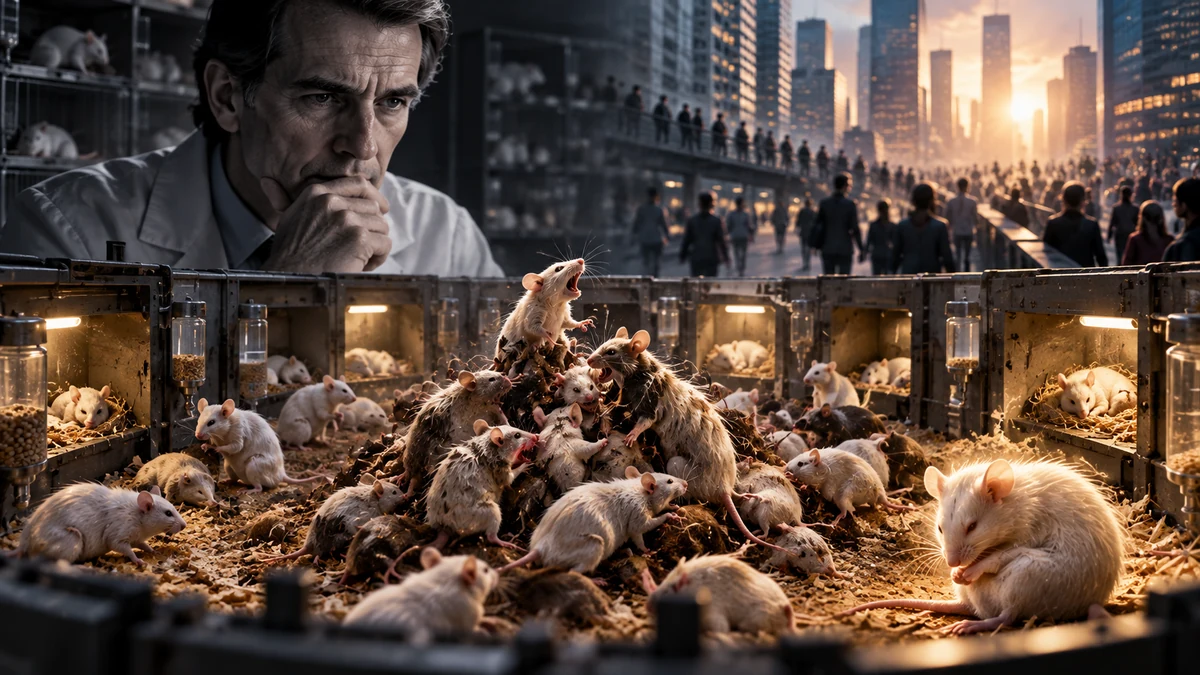
Selected information windows are illuminated and directed toward a central focus of attention.

How Media Shape What We Think About

Why do some issues become the center of public attention? Agenda-setting explains how media selection and prominence can shape which questions people perceive as important.

Read article

A person in a dark living room watches a television filled with intense crisis imagery.
SeriesMedia

Fear Sells

Why negativity, records, shocking images, and relative risk attract attention, and how journalism can become an industry of anxiety.

Read article

Hands above documents, labels, and a globe symbolize institutional classification of information before an audience.


SeriesMedia

Who Decides What Is True?

Fact-checkers, platforms, and algorithms can correct errors, but labels, editorial judgments, and distribution decisions are not the same thing as truth.

Read article