
General Petrov and Conceptual Power: The Dead Water System Under Scrutiny
Petrov argued that the highest power is not necessarily government but the ability to define the concept, knowledge and decision framework.
Read articleShorter entry points into the questions explored across THY-REALITY. Browse by field or search directly by title and description.
Petrov argued that the highest power is not necessarily government but the ability to define the concept, knowledge and decision framework.
Read article
The 1970s were neither an era of unanimous scientific fear of a new ice age nor a time when cooling was never taken seriously.
Read article
What do earlier coronavirus patents and research document—and what cannot be inferred from their existence about the COVID-19 pandemic?
Read article
Kelly’s 1980s manual is a real document collecting dozens of unconventional energy projects. What is historically verifiable, what is established physics, and where does the over-unity claim require an independent energy balance?
Read article
What does Genesis actually say about Jacob’s stone at Bethel? From the maṣṣēbāh and the northern Israelite sanctuary to archaeology, the prophets, Jubilees, and the later Stone of Scone legend, we separate text, cultic memory, and later mythology.
Read article
Does the Gospel silence really point to Jesus studying in India? We examine Notovitch’s Issa manuscript claim, later Himalayan confirmations, Ahmad’s Kashmir thesis, and the history of Roza Bal.
Read article
What does Matthew’s strange scene of opened tombs and raised saints mean, why is it absent from the other Gospels, and how should we read the different accounts of Judas’s death in Matthew and Acts?
Read article
All four Gospels know an empty-tomb tradition, yet they differ over the women, timing, messengers, reactions, Galilee, and Jerusalem. What belongs to the common core, and what reflects each evangelist’s literary shaping?
Read article
What did Origen actually teach in Peri Archōn, how much survives in Greek, what did Rufinus change, and why does John Behr read the work differently from the older Butterworth translation?
Read article
What do Philostratus' eight books actually tell us about Apollonius of Tyana, how reliable is Damis, and what do the parallels with Jesus mean once source chronology is preserved?
Read article
What does The Works of Josephus: Complete and Unabridged contain, how does it combine Josephus with Whiston’s editorial tradition, and how does it present Judaea and the first-century Roman world?
Read article
Piso Christ argues that a small group of Roman elites created Christianity and the New Testament and that several famous ancient names conceal the same people.
Read article
September means seventh, yet it is the ninth month. Is that an error, a trace of an older Roman calendar, or something more? A review of month names, the Numa tradition, Republican fasti, and Caesar’s reform.
Read article
Genesis 6 gives only four enigmatic verses. 1 Enoch expands them into a story of Watchers, giants, and forbidden knowledge. What belongs to the original text and what to later interpretation?
Read article
Jericho, Ai and Hazor became tests of the historicity of Joshua’s conquest. What do destruction layers, ruins and the emergence of early Israel actually show?
Read article
Archaeology does not confirm a mass Exodus on the scale implied by a literal reading of the text.
Read article
Around 1900 electric cars seriously competed with steam and gasoline; their decline had technological, economic and infrastructure causes.
Read article
How did The Sun present fictional life on the Moon as plausible science in 1835—and what does the episode reveal about media authority?
Read article
Genesis, Atrahasis, and Gilgamesh share striking flood motifs. What does that reveal about common tradition, adaptation, and possible historical memory?
Read article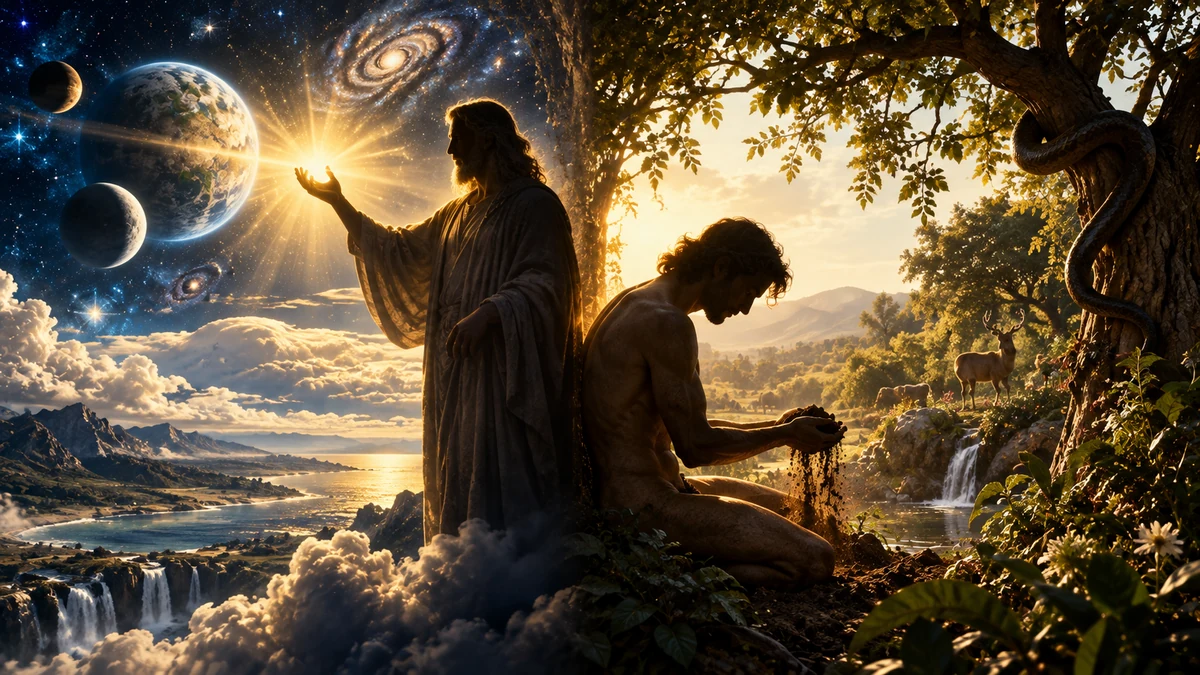
Genesis 1 and Genesis 2–3 are not simply the same story from two camera angles: they differ in style, divine designation, sequence, and anthropology.
Read article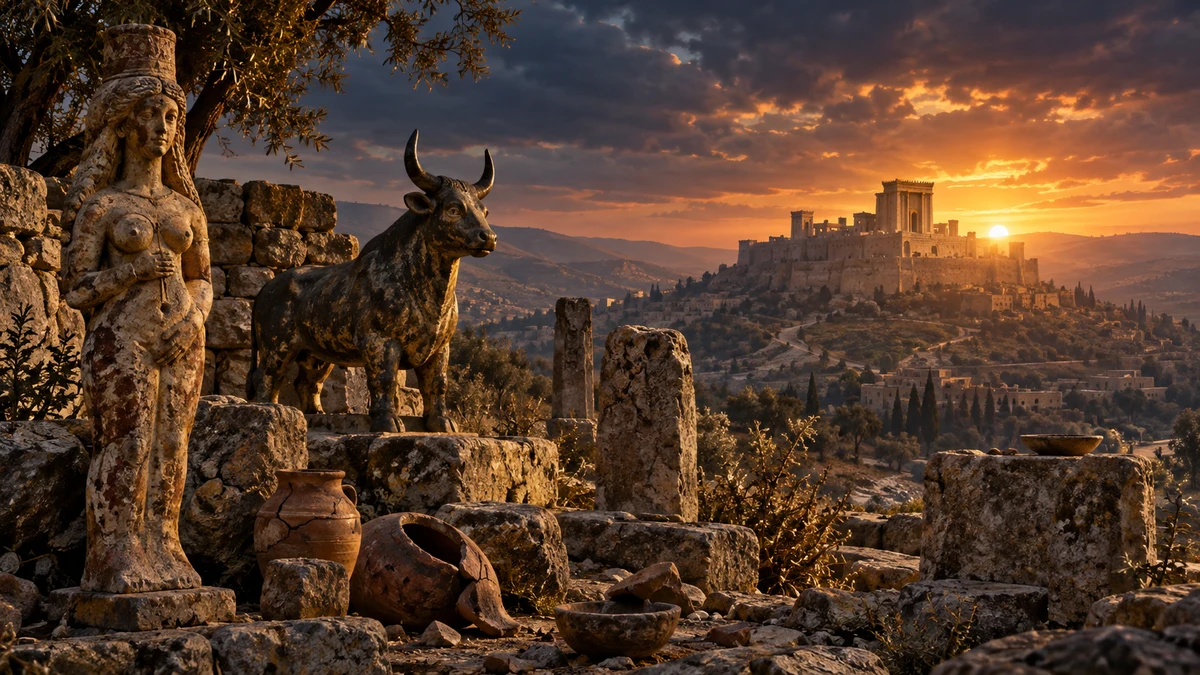
The Hebrew Bible preserves both demands for exclusive loyalty to Yahweh and traces of a wider divine world.
Read article
Tesla is extraordinary enough without myth: polyphase AC, the induction motor, remote control and wireless experiments are documented.
Read article
Early Islam is not a single chronological layer. The Qur’an, early manuscripts and inscriptions, sira, hadith, the caliphate and legal schools belong to different periods and require different evidentiary weighting.
Read article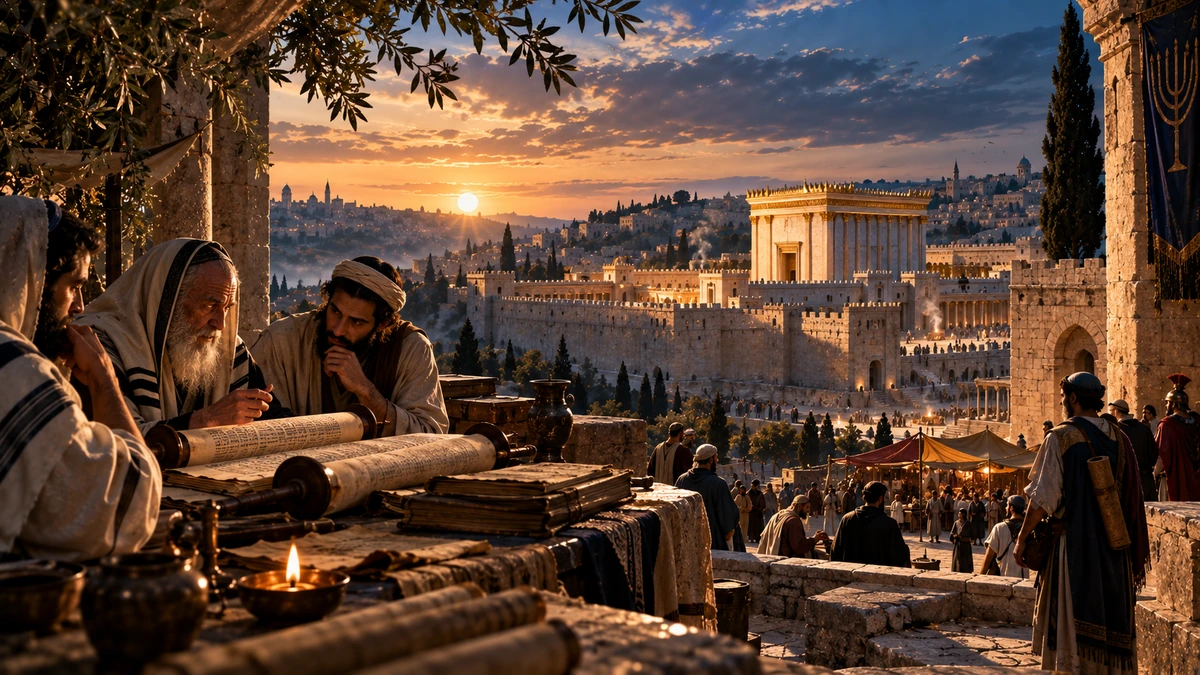
Second Temple Judaism was not one uniform tradition but a plural world of Temple, Torah, diaspora, sects, apocalyptic expectation and empire, from which rabbinic Judaism and Christianity gradually emerged after 70 CE.
Read articlePage 3 of 4