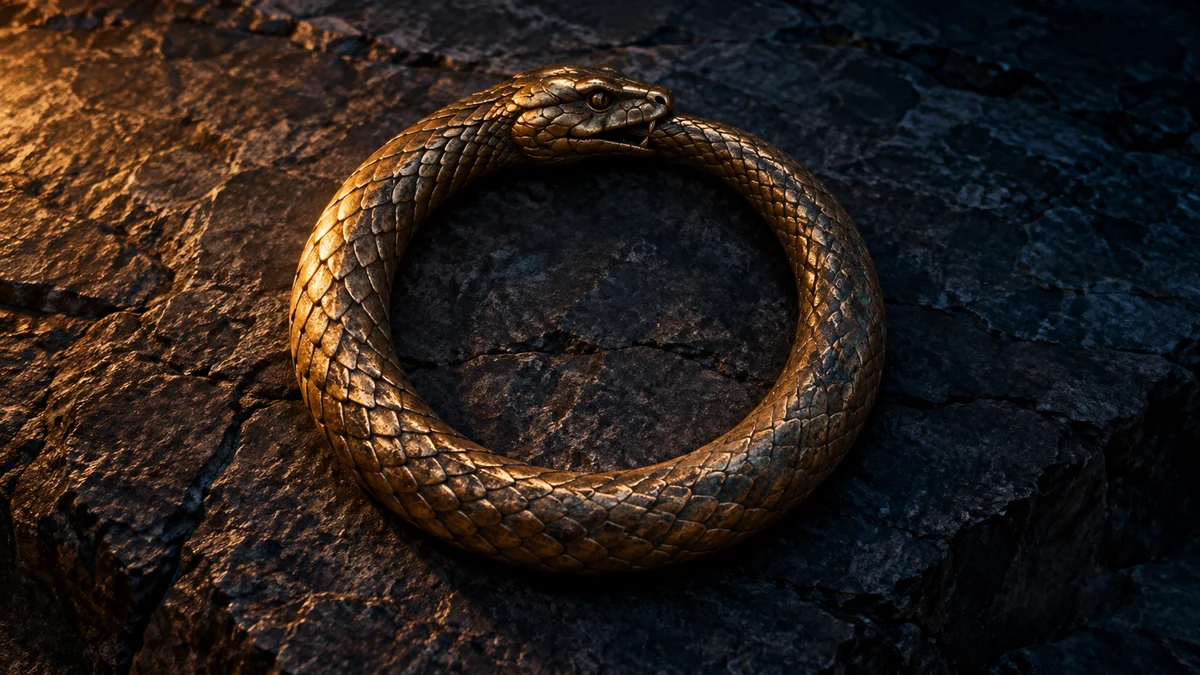
Ouroboros — The Serpent That Devours Its Own Tail: Cycles, Death, and Renewal
Ouroboros, the serpent biting its own tail, has carried different meanings across history. Trace Egyptian, alchemical, and modern interpretations.
Read articleShorter entry points into the questions explored across THY-REALITY. Browse by field or search directly by title and description.
Ouroboros, the serpent biting its own tail, has carried different meanings across history. Trace Egyptian, alchemical, and modern interpretations.
Read article
Walt Disney was a documented DeMolay member, but Disney archives state that he was not a Freemason. This article separates that historical connection from Fantasia’s magical symbolism, Club 33, and later occult interpretations.
Read article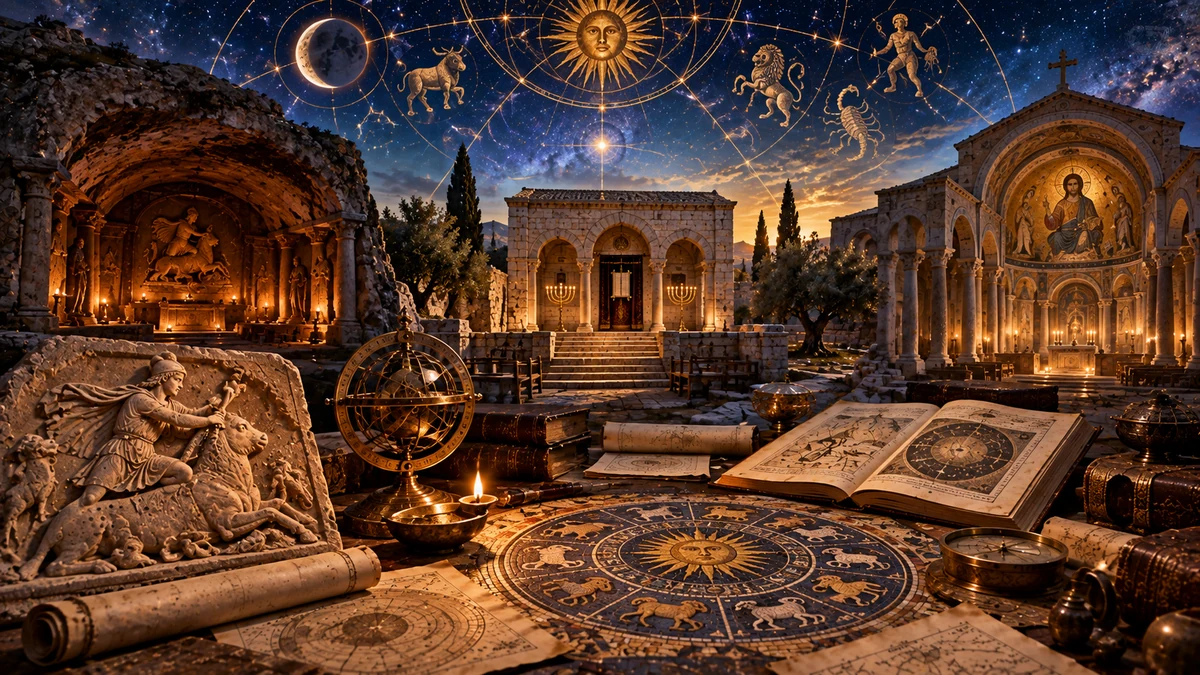
S. Grey reads the Mithraic mysteries, Judaism, and Christianity through the zodiac, Sun, planets, and calendrical cycles; the article places his astrotheological interpretation alongside archaeological, iconographic, and historical sources.
Read article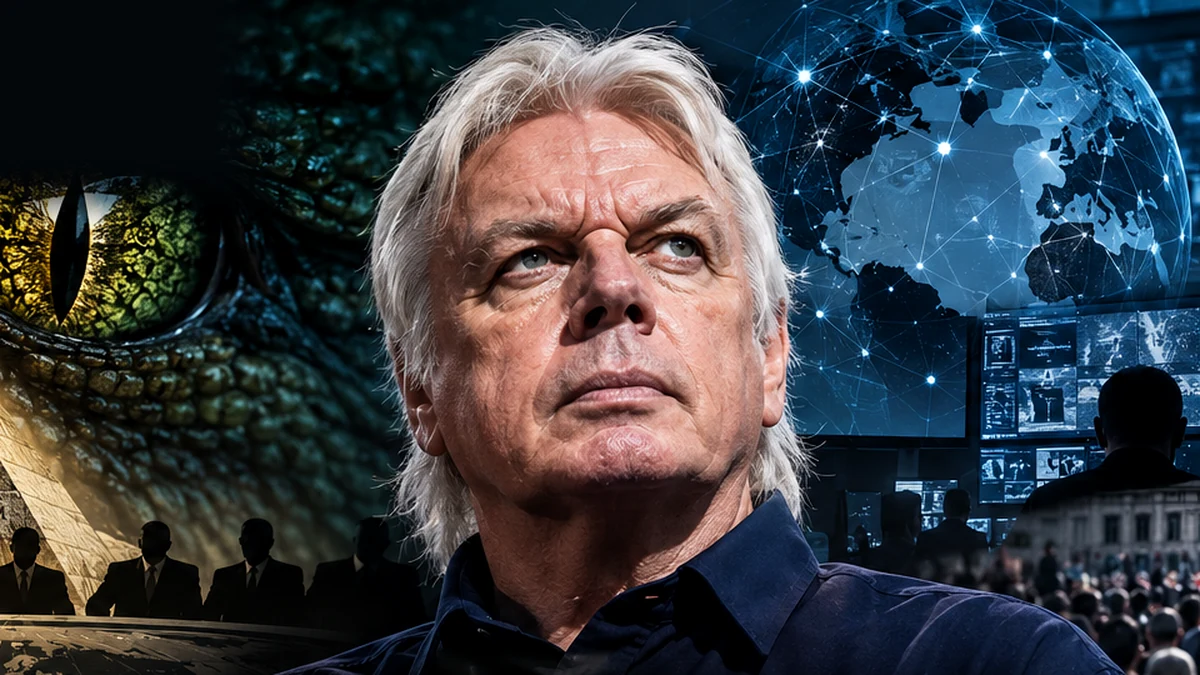
A presentation of The David Icke Guide to the Global Conspiracy: elite networks, central banks, covert programs, 9/11, symbols, reptilian bloodlines, and a metaphysics of consciousness.
Read article
The Ten Oxherding Pictures trace a Zen path from restlessness and searching through discipline and direct insight to emptiness and return among people. What do we know about Kuoan's series, and why does the final image end in the marketplace?
Read article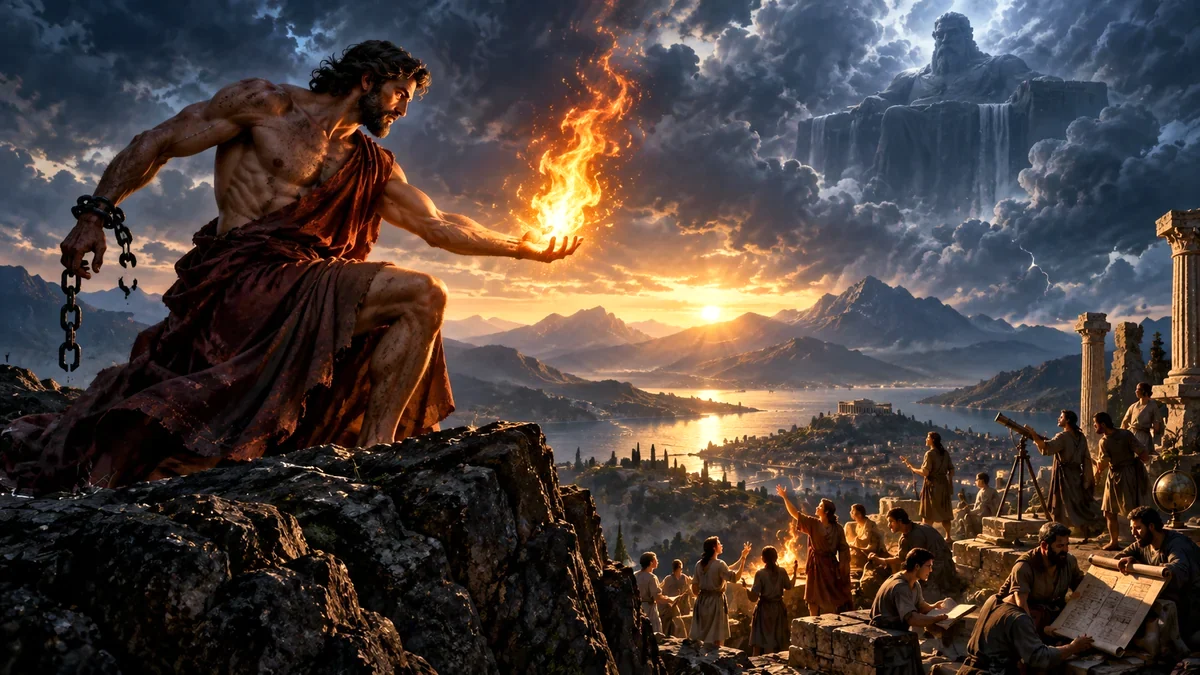
Prometheus as the giver of fire, knowledge and humanity’s creative capacity — and as a symbol of the person who places conscience, responsibility and freedom before authority’s bare demand for obedience.
Read article
What actually happens when thousands of people sing, move and feel together — and where does measurable crowd psychology end and the open esoteric account of egregores and “energy harvesting” begin?
Read article
What is actually documented in the links among Saturn, the hexagon, the cube, sevenfold symbolism, the Sabbath, the Kaaba, tefillin and the hexagram — and where does historical evidence become esoteric interpretation or an open hypothesis?
Read article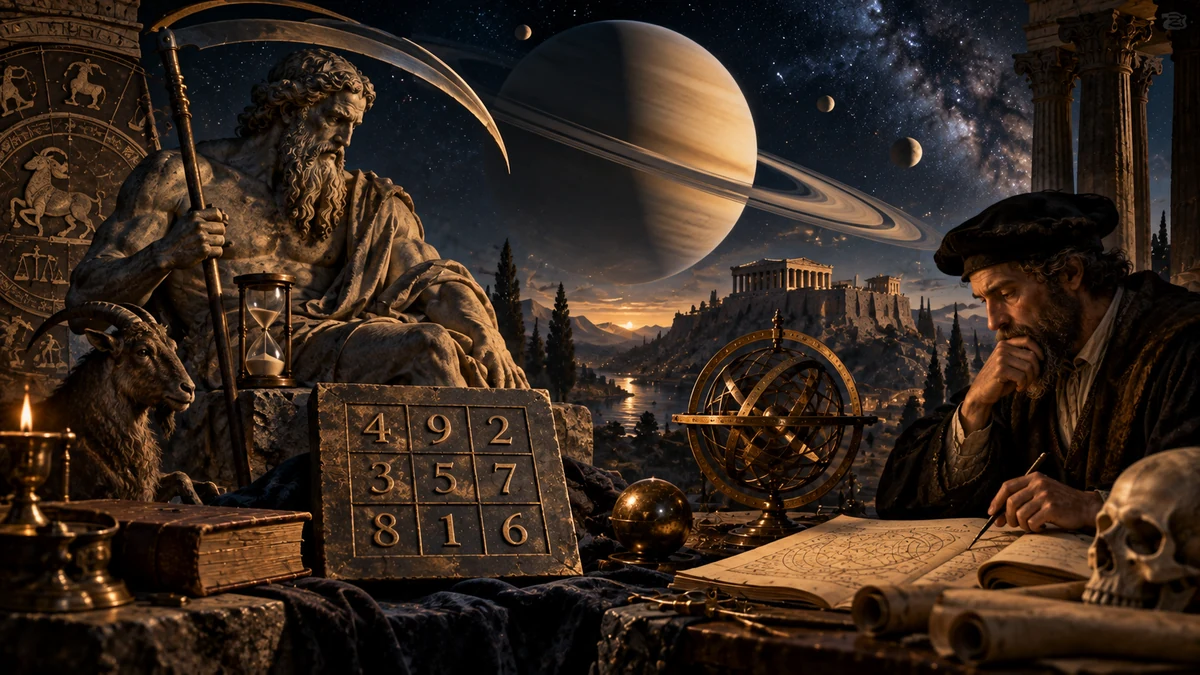
How did Saturnian symbolism develop from Rome to modern esotericism — and why should links among the Sabbath, sevenfold symbolism, the cube, Kaaba, tefillin and Saturn be treated as an open hypothesis rather than either proven fact or a closed case?
Read article
What did Jung actually claim about astrology and synchronicity — and where does symbolic meaning end and an empirical claim begin?
Read article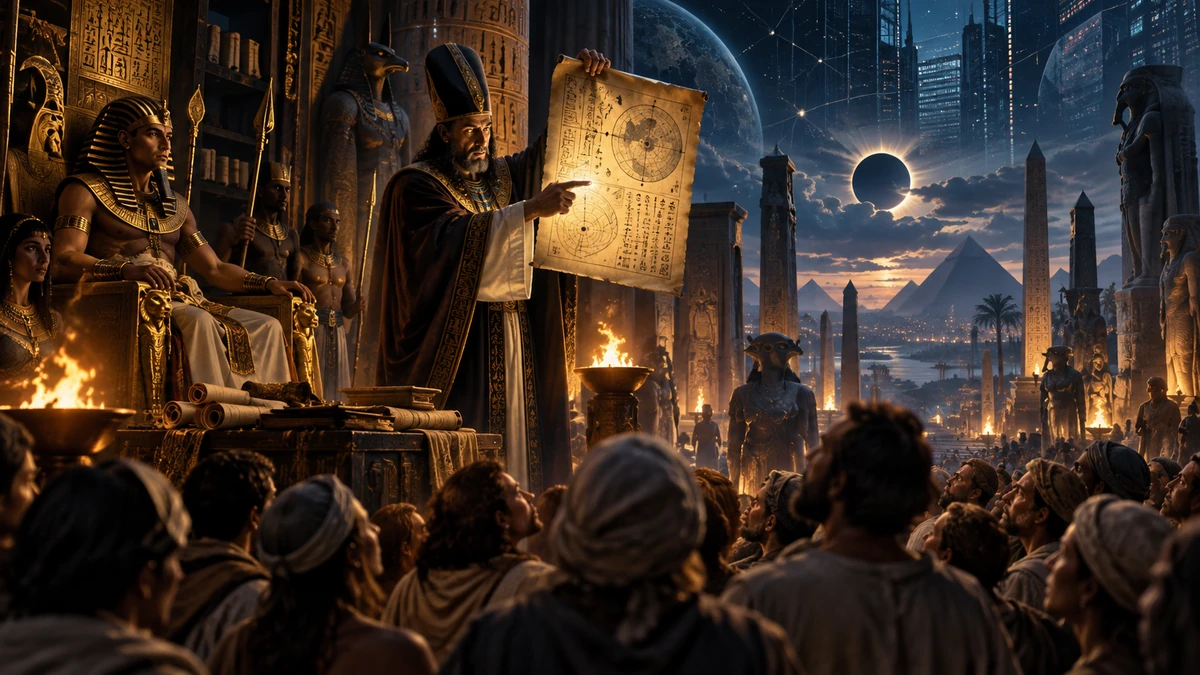
Here Pharaoh functions primarily as an allegory of power: whoever controls knowledge has power. From the eclipse to archives, data and interpretation, the article examines how information asymmetry can turn formal authority into operational power.
Read article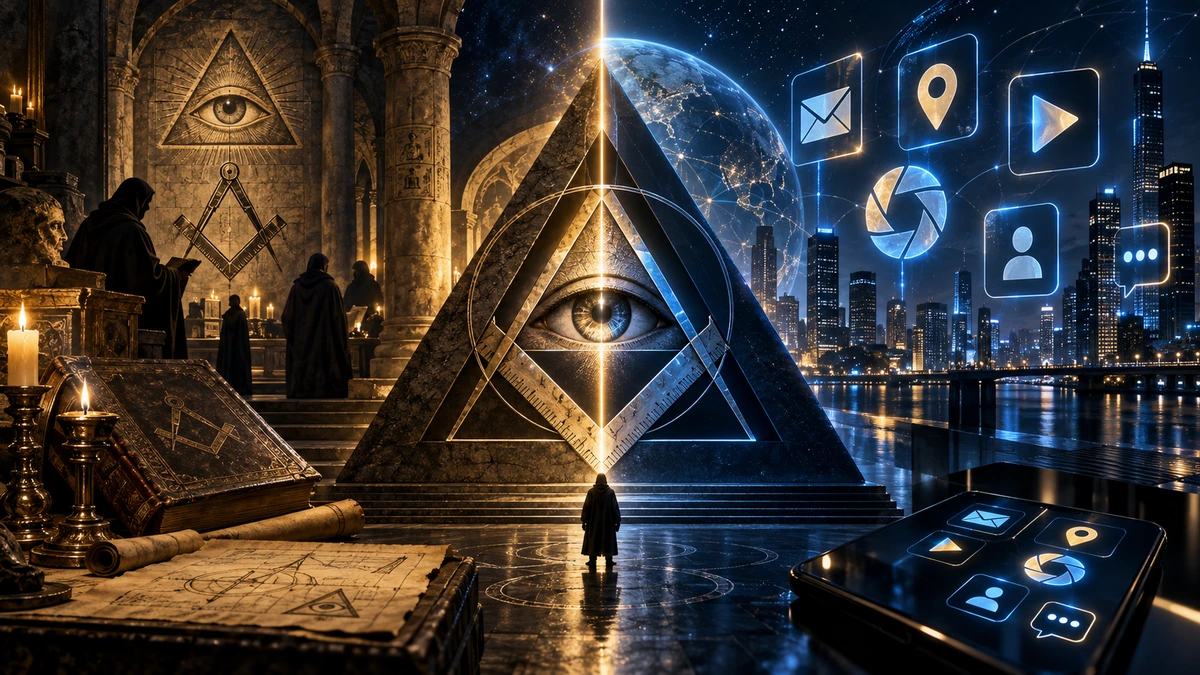
Some modern logos and older ritual emblems are not merely vaguely similar: they share strikingly close silhouettes or internal geometry.
Read article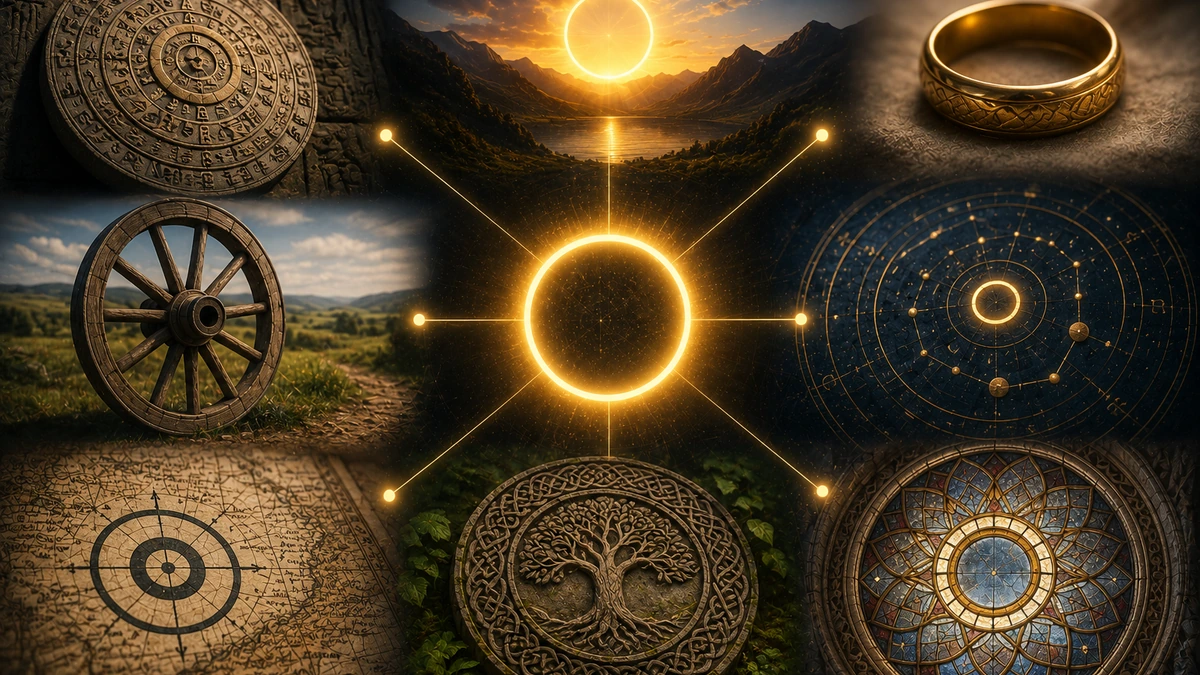
A circle, cross, tree, star, or color does not necessarily have one eternal meaning. A symbol works when people recognize it and use it within a shared system.
Read article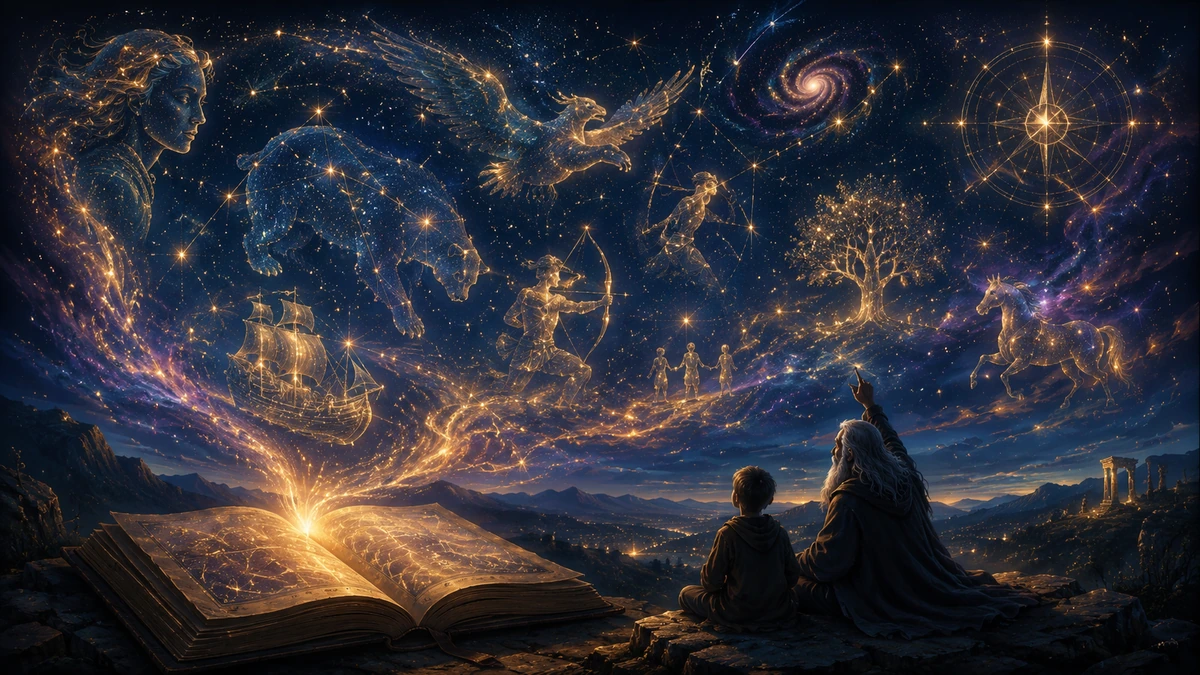
Stars do not draw heroes, animals, or deities by themselves. People connect points, name patterns, and assign meaning, allowing one sky to become calendar, compass, memory, and story.
Read article
Day, lunation, year and precession are measurable cycles. Calendar rounds and cosmological recurrences are ways societies organize, interpret and embed rhythms within larger models of the world.
Read article
Zodiacs, planets and solar motifs appear in very different religious and cultural settings. Their presence is historical evidence; claims about their meaning require context and independent support.
Read article