
Knowledge library

Articles for independent inquiry.

Shorter entry points into the questions explored across THY-REALITY. Browse by field or search directly by title and description.

TOPIC PATHPolycentricity and subsidiarity27 articles on this path
Back to paths
What Kind of Institution Deserves Our Support?

What Kind of Institution Deserves Our Support?

It is not enough to ask whether an institution is necessary. The deeper question is what it must be like to deserve our support: just, limited, accountable, close to people, and directed toward serving the community.

Read article
A multigenerational community caring together for a shared garden and local space.

Who Takes Care of the Commons?

Shared resources do not necessarily need one owner or one central manager. They need clear boundaries, fair rules, visible responsibility and people who can participate in governing them.

Read article
A group sits around a shared table and deliberates without a visible permanent leader, symbolizing shared decision making and limited roles.

How Do We Make Decisions Without a Permanent Ruler?

A community does not need a permanent ruler, but it does need a sound process. This article compares consensus, consent, voting, delegation, sortition, and limited mandates and shows when each method fits.

Read article
A local economic hub with workshop, market and circular flows connects to several external supply routes, illustrating local resilience without economic isolation.

Local Economy Without Autarky

This article shows how to build local capabilities, value circulation and fallback supply routes without confusing resilience with economic isolation.

Read article
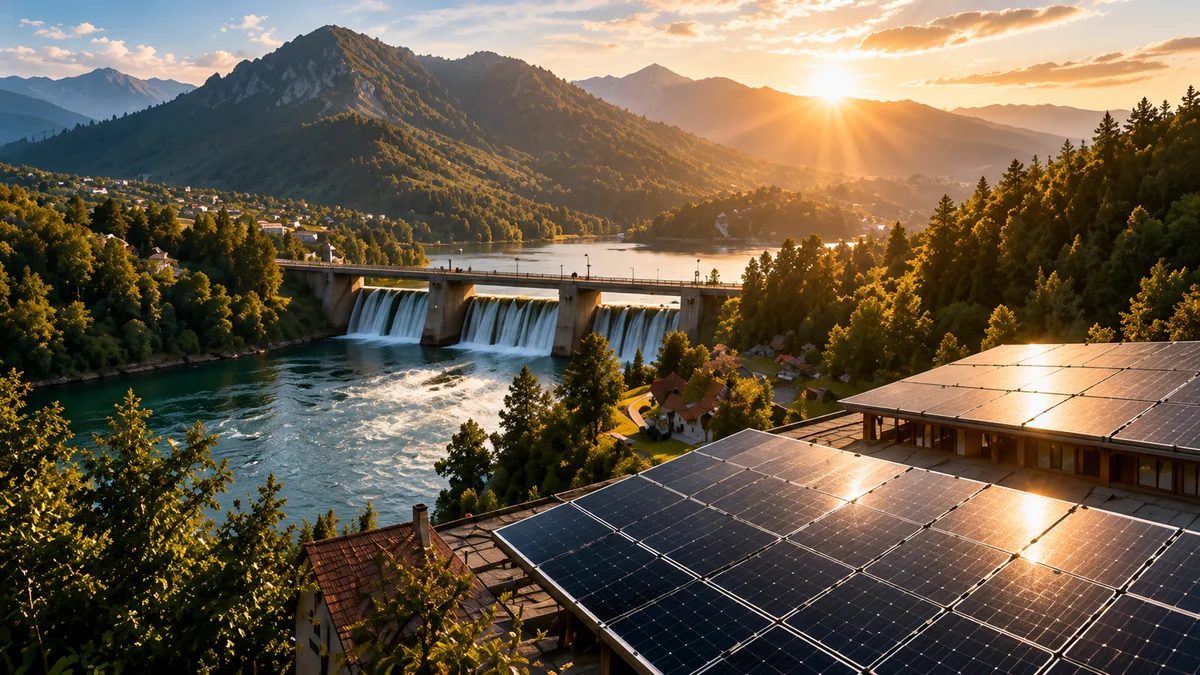
Solar panels in the foreground and a settlement in a mountain valley illustrate local energy generation connected to a wider shared system.

Energy: From Consumer to Energy Cooperation

This article shows how local generation, energy sharing, storage, flexible demand and community governance can increase resilience without the illusion of complete energy self-sufficiency.

Read article
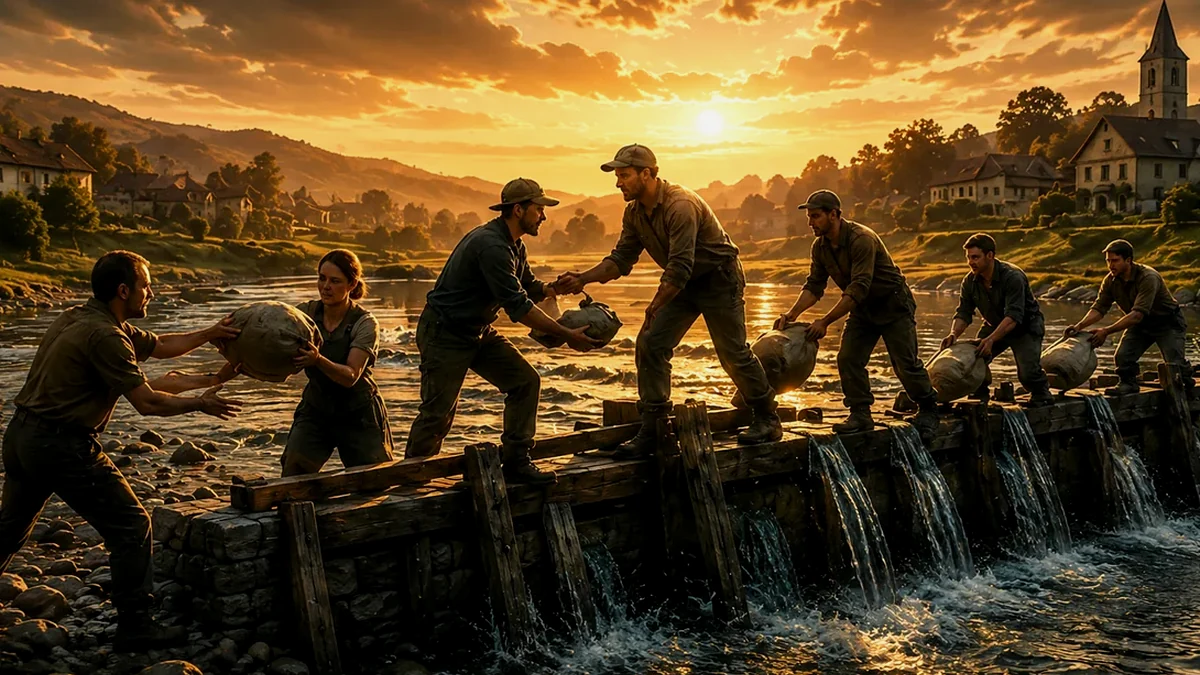
A group of people work together to repair and reinforce a shared crossing over water, illustrating practical stewardship and long-term infrastructure maintenance.

Who Maintains Shared Infrastructure?

This article separates ownership from operational responsibility and shows how roads, transport, waste, logistics and communications require clear stewardship, life-cycle planning, financing and fallback arrangements.

Read article
A river valley connects several settlements while an industrial emission in the same landscape illustrates how environmental impacts spread beyond local boundaries.

Ecology Does Not Stop at Community Boundaries

This article closes the local-material-resilience arc with its necessary boundary: air, water, biodiversity, waste and climate effects cross local borders, so sovereignty requires responsibility for externalities and future generations.

Read article
Residents and specialists study a map of a river valley, city and infrastructure together, illustrating how the appropriate decision level should follow the real scale of the problem.

Subsidiarity in Practice: Which Level Should Decide?

Subsidiarity is not the slogan that local is always better. It is a method: keep decisions at the lowest level capable of carrying them effectively, while a higher level must show why scale, effects or capacity genuinely require it.

Read article
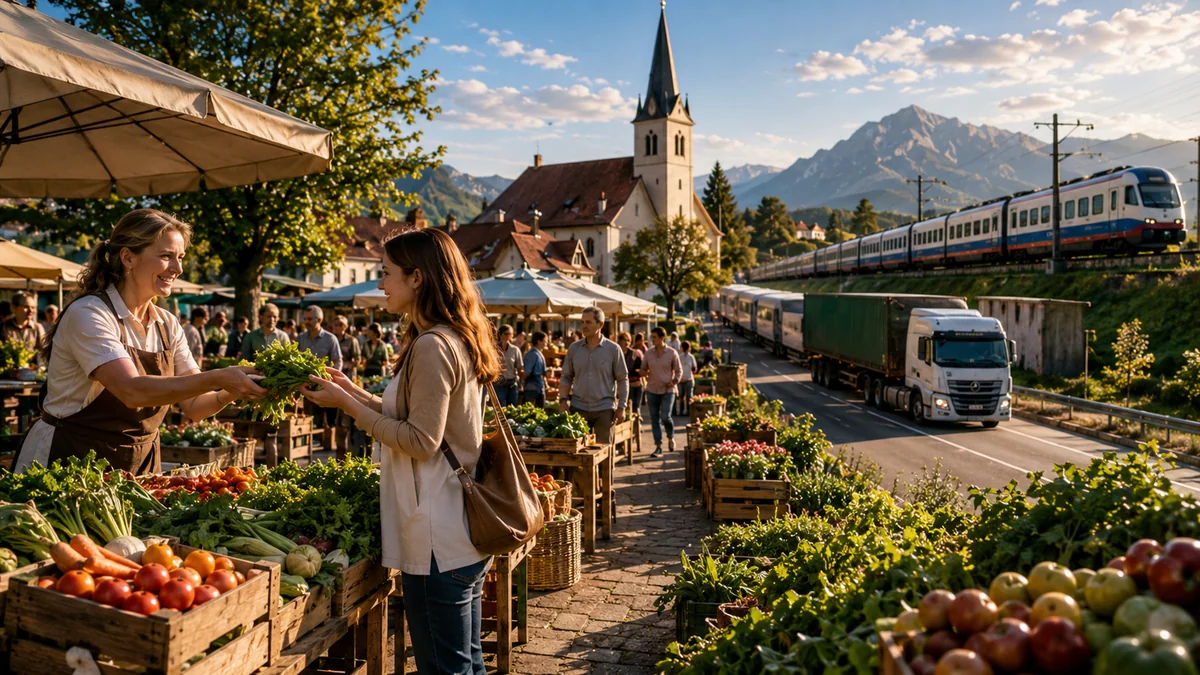
A valley where a local community connects with rail, road and port transport illustrates multiple supply routes between nearby capability and a wider trade network.

Trade and Supply Chains: Mutual Benefit or a New Dependency?

When does trade expand freedom, and when does a supply network become a critical dependency? This article measures specialisation, supplier concentration, upstream bottlenecks, substitutability, redundancy, switching time and the real option to exit.

Read article
A traveller with a backpack looks across a valley of settlements, roads, rail and bridges, illustrating the real possibility of moving between different communities.

Mobility and migration between communities

The right to leave does not mean another option is actually reachable. This article separates movement, residence, membership, entry and migration, and tests what must be portable for mobility between communities to be real rather than merely formal.

Read article
A view across a river valley with local settlements, a regional city, rail and shared infrastructure illustrates the different scales at which particular functions can work best.

When is larger scale genuinely necessary?

Larger scale is not automatically better — but sometimes it is genuinely necessary. This article shows how to identify economies of scale, rare expertise, network functions and risk pooling, while balancing them against access, responsiveness and local autonomy.

Read article
A delegate carrying the community's mandate walks toward an elevated throne while the bonds to the people behind grow thinner — symbolising the shift from bounded representation to autonomous rule.

When Does a Delegate Become a Ruler?

Delegation is often necessary, but mandate drift, information control, career incentives and difficult removal can turn a bounded representative into an autonomous centre of power.

Read article
A distributed network of communities, routes and resources with several independent nodes and no single control centre — symbolising measurable, functional decentralisation.

How Do We Measure Whether Decentralisation Is Real?

Decentralisation is not the number of municipalities, boards or providers. This article turns it into a measurable profile of decision authority, finance, ownership, data, supply routes, exit costs, redundancy and corrigibility of power.

Read article