
Knowledge library

Articles for independent inquiry.

Shorter entry points into the questions explored across THY-REALITY. Browse by field or search directly by title and description.

ACTION PATHBuild a community projectMove from a shared need to a clear purpose, decisions, conflict repair, safeguards and an executable first step.
Back to Action Paths
A group sits around a shared table and deliberates without a visible permanent leader, symbolizing shared decision making and limited roles.

How Do We Make Decisions Without a Permanent Ruler?

A community does not need a permanent ruler, but it does need a sound process. This article compares consensus, consent, voting, delegation, sortition, and limited mandates and shows when each method fits.

Read article
An older person remains at the centre of their own life while a support network of people and services helps without taking control.

Old Age, Dependency, and Dignity

Old age can increase the need for help without reducing a person’s moral worth. This article shows how to connect care, autonomy, safety, and protection from domination.

Read article
A local economic hub with workshop, market and circular flows connects to several external supply routes, illustrating local resilience without economic isolation.

Local Economy Without Autarky

This article shows how to build local capabilities, value circulation and fallback supply routes without confusing resilience with economic isolation.

Read article
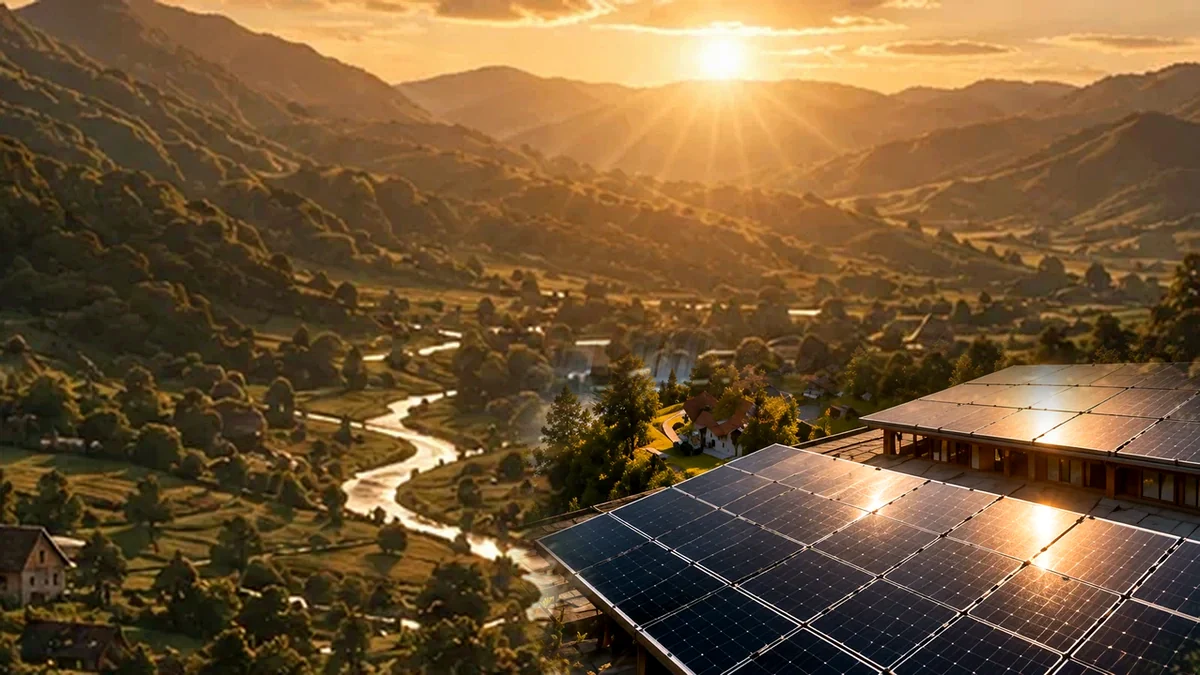
Solar panels in the foreground and a settlement in a mountain valley illustrate local energy generation connected to a wider shared system.

Energy: From Consumer to Energy Cooperation

This article shows how local generation, energy sharing, storage, flexible demand and community governance can increase resilience without the illusion of complete energy self-sufficiency.

Read article
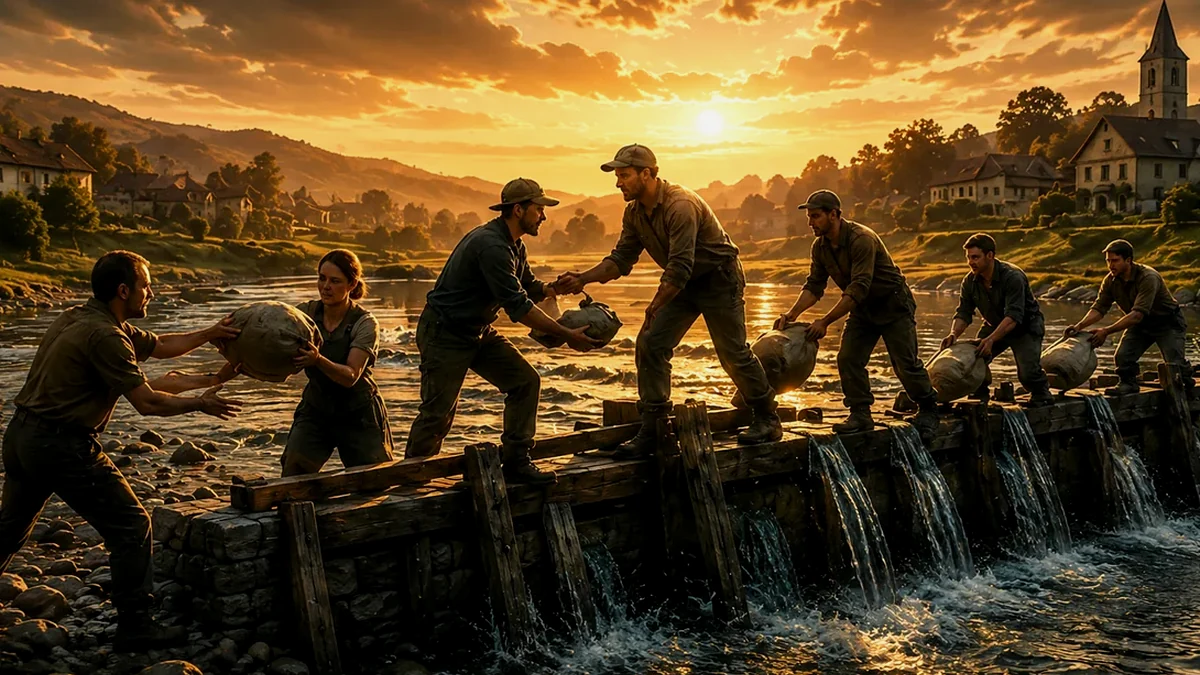
A group of people work together to repair and reinforce a shared crossing over water, illustrating practical stewardship and long-term infrastructure maintenance.

Who Maintains Shared Infrastructure?

This article separates ownership from operational responsibility and shows how roads, transport, waste, logistics and communications require clear stewardship, life-cycle planning, financing and fallback arrangements.

Read article
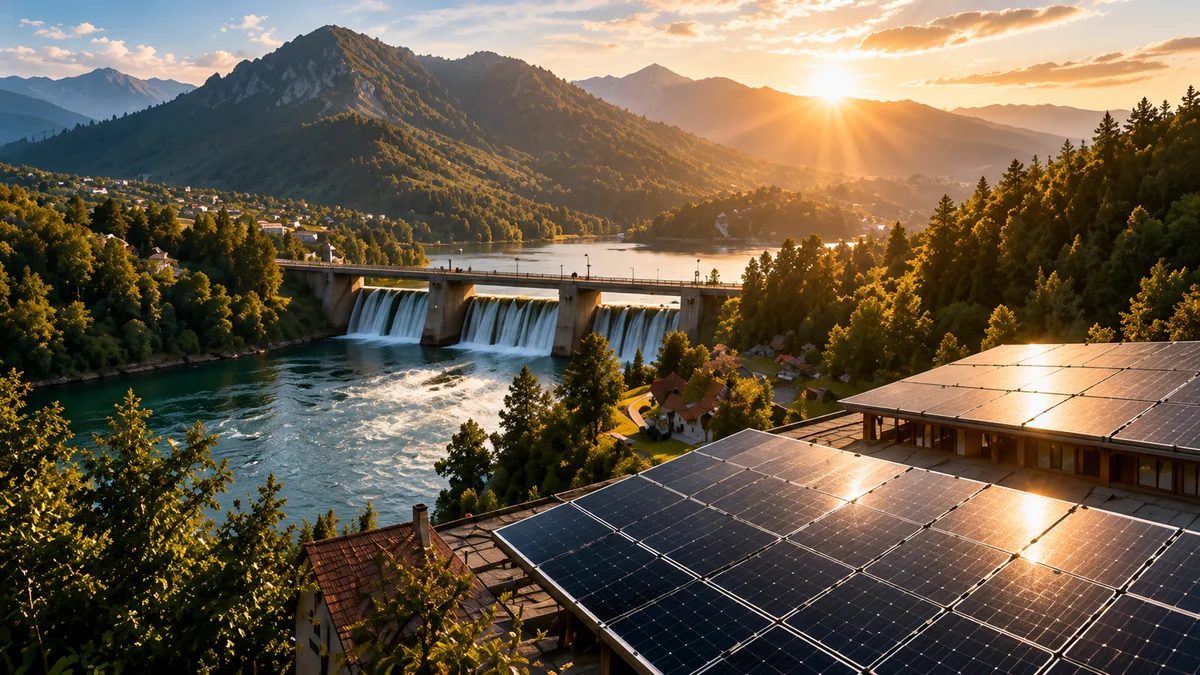
A river valley connects several settlements while an industrial emission in the same landscape illustrates how environmental impacts spread beyond local boundaries.

Ecology Does Not Stop at Community Boundaries

This article closes the local-material-resilience arc with its necessary boundary: air, water, biodiversity, waste and climate effects cross local borders, so sovereignty requires responsibility for externalities and future generations.

Read article
Residents and specialists study a map of a river valley, city and infrastructure together, illustrating how the appropriate decision level should follow the real scale of the problem.

Subsidiarity in Practice: Which Level Should Decide?

Subsidiarity is not the slogan that local is always better. It is a method: keep decisions at the lowest level capable of carrying them effectively, while a higher level must show why scale, effects or capacity genuinely require it.

Read article
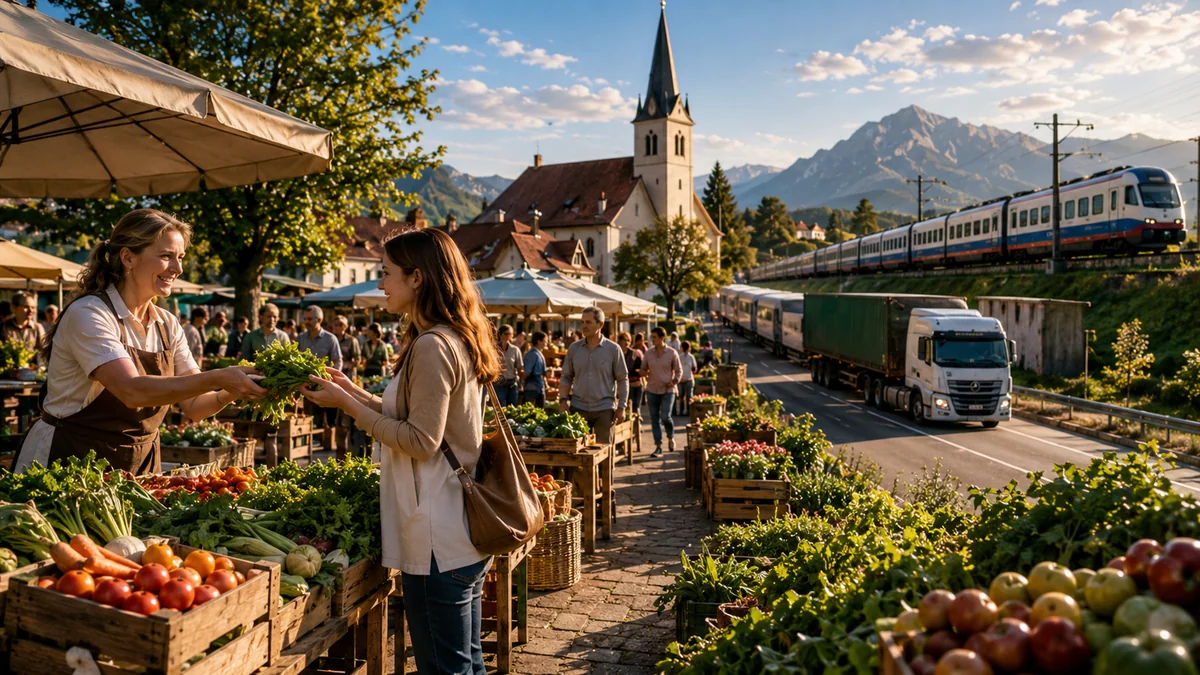
A valley where a local community connects with rail, road and port transport illustrates multiple supply routes between nearby capability and a wider trade network.

Trade and Supply Chains: Mutual Benefit or a New Dependency?

When does trade expand freedom, and when does a supply network become a critical dependency? This article measures specialisation, supplier concentration, upstream bottlenecks, substitutability, redundancy, switching time and the real option to exit.

Read article
A view across a river valley with local settlements, a regional city, rail and shared infrastructure illustrates the different scales at which particular functions can work best.

When is larger scale genuinely necessary?

Larger scale is not automatically better — but sometimes it is genuinely necessary. This article shows how to identify economies of scale, rare expertise, network functions and risk pooling, while balancing them against access, responsiveness and local autonomy.

Read article
A symmetrical table with equal parties, a shared case file, a neutral seat and scales within a protective frame — symbolising access to evidence, impartiality, equality of parties and procedural safeguards.

Fair Procedure Without an Assumed Monopoly

How do we separate fair procedure from the question of who decides? This article builds safeguards for notice, evidence, equality, impartiality, reasons and review without tying justice to a single forum.

Read article
An observation scope overlooking an open landscape — symbolising oversight of power, traceability, independent review and accountability of security institutions.

Who Guards the Guardians?

How should people and institutions with coercive powers be overseen? This article builds a layered model of internal and external oversight, traceability, complaints, whistleblower protection, rotation and accountability of the overseers themselves.

Read article
A distributed network of communities, routes and resources with several independent nodes and no single control centre — symbolising measurable, functional decentralisation.

How Do We Measure Whether Decentralisation Is Real?

Decentralisation is not the number of municipalities, boards or providers. This article turns it into a measurable profile of decision authority, finance, ownership, data, supply routes, exit costs, redundancy and corrigibility of power.

Read article
People around a large local map connect skills, spaces, food, water, energy, tools and existing services — symbolising a practical inventory of capabilities already present nearby.

Local Resource Map: What Do We Already Have Around Us?

This article turns locality into a practical tool: map people, skills, spaces, equipment, food, water, energy, organisations and connections, then verify capacity, access, operator, failure points and alternatives for every important resource.

Read article
Five people gather around one concrete local need to plan a first small shared project — symbolising a voluntary local core with clear purpose, roles and boundaries without a permanent hierarchy.

From Five People to the First Local Core

How can one concrete local need and a few reliable people become a first cooperative core without creating a new hierarchy? This article provides a minimal 30-day process for purpose, roles, decisions, membership, dissent, traceability and a first pilot.

Read article
A small local capability operates alongside the existing route until it proves reliable enough for a gradual transfer of function — symbolising transition without a vacuum or forced collapse.

Transition Without Collapse: Building Parallel Institutions

How can new local capabilities be built without destroying existing ones first? This article develops a function-by-function transition: pilot, parallel running, thresholds, redundancy, fallback and only then reduced dependence on the old route.

Read article