
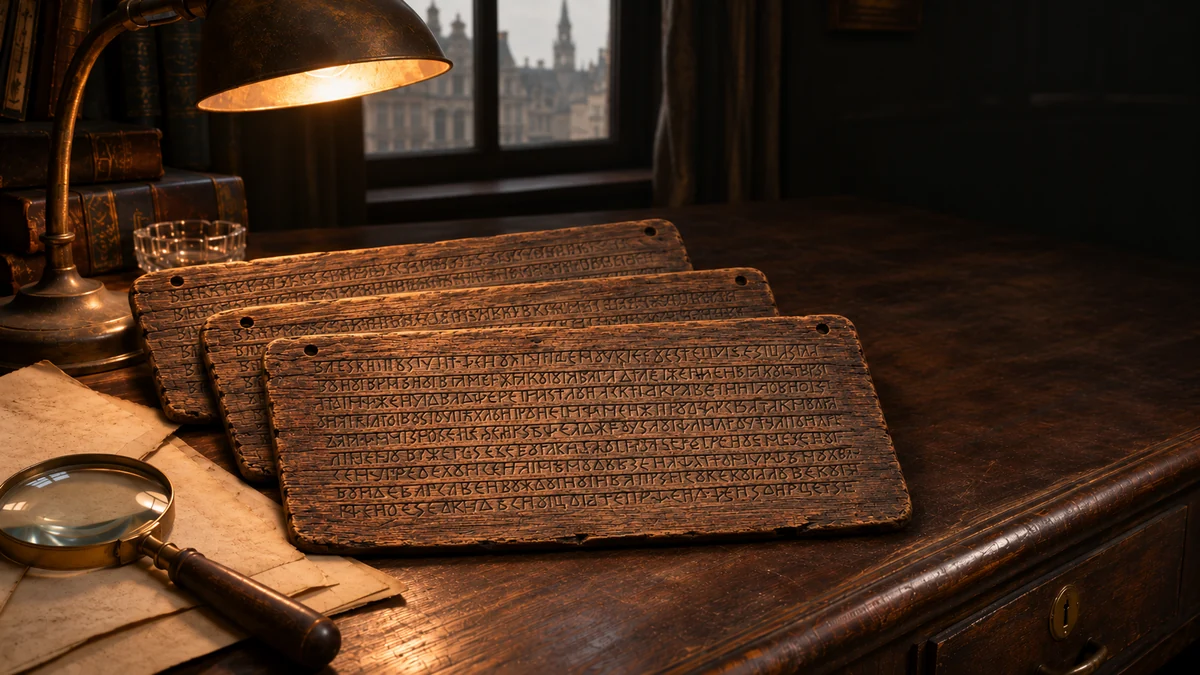
The Book of Veles — Lost Slavic Heritage or a Modern Myth?
The story of mysterious wooden tablets, Slavic gods, forgotten ancestors, and one of the most controversial texts in Slavic cultural history.
Read articleShorter entry points into the questions explored across THY-REALITY. Browse by field or search directly by title and description.
The story of mysterious wooden tablets, Slavic gods, forgotten ancestors, and one of the most controversial texts in Slavic cultural history.
Read article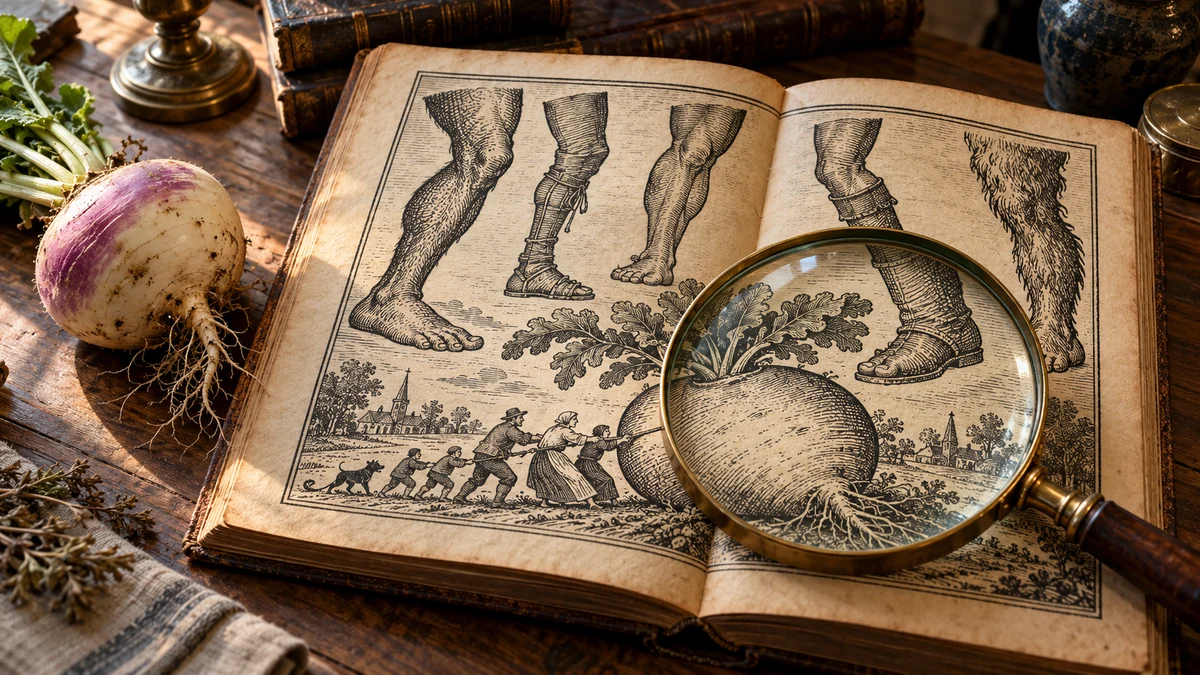
A source-based investigation of the turnip folktale, its early records, five mysterious legs, children’s games and modern giant myths.
Read article
From folk traditions to the first edition in 1832: Pushkin’s manuscripts, textual variants, questions of censorship, and the complete PT016 edition.
Read article
From Dežman’s 1868 record to Baumbach’s bestseller, the Triglav flower, the folkloristic authenticity debate, and Zlatorog as a symbol of Slovenia’s mountain world.
Read article
Gregorčič’s To the Soča praised the river’s beauty in 1879 and warned of a future storm from the south. When a front actually opened along the Soča in 1915, the poem acquired a prophetic reputation. This article separates the original poem, its political context, and later historical memory.
Read article
Prešeren’s The Baptism on the Savica joins defeat, love, Christianization, and renunciation in one of the most debated works of Slovene literature. This article separates historical Carantania from literary construction and presents religious, political, and national readings of the poem.
Read article
A comparative article separating documented Templar–Nizari contacts from Wasserman’s esoteric genealogy and Bartol’s literary construction of Alamut.
Read article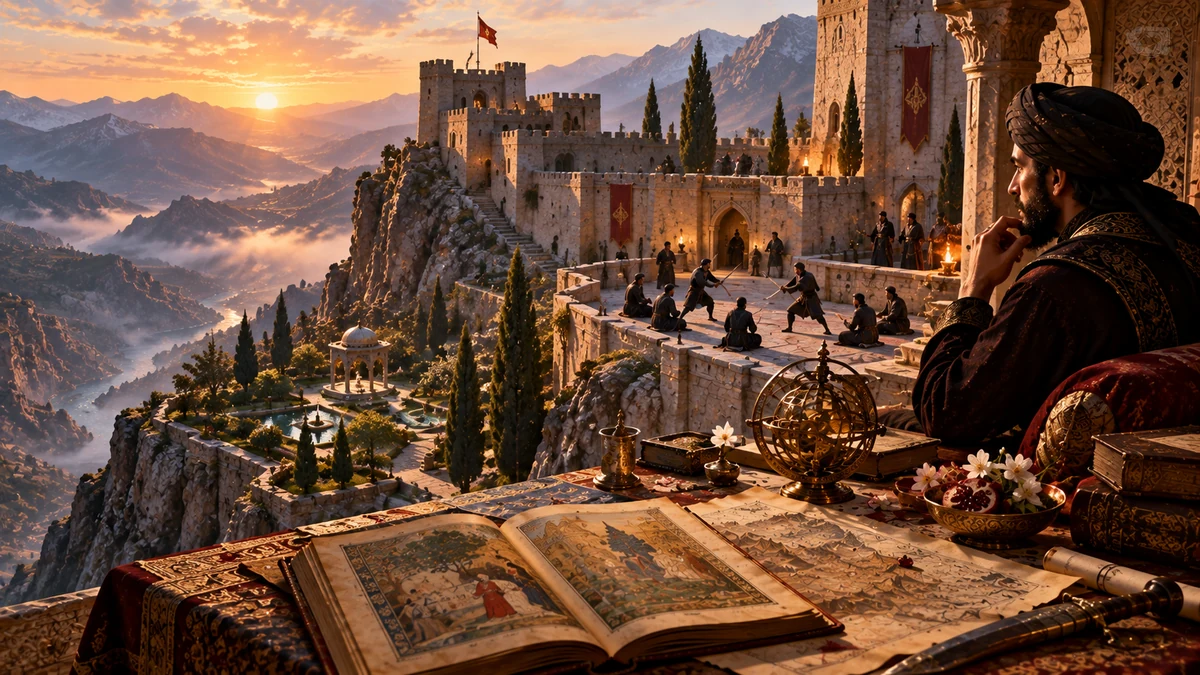
Bartol’s Alamut uses the story of Hasan-i Sabbah and the fortress of Alamut for a novel about faith, knowledge, manipulation, and political power; this article separates literary construction from Nizari Ismaili history.
Read article
The familiar line about different lamps opens into a wider passage in Book III of the Masnavi: Moses and Pharaoh within the human being, the lamp and one light, differing viewpoints, and the elephant in the dark. The article centers Rumi’s original passage and its meaning.
Read article
In La Légende des siècles, Victor Hugo built a poetic mosaic of humanity from history, legend, war, conscience, mercy and visions of the future, tracing a difficult movement from darkness toward liberty and light.
Read article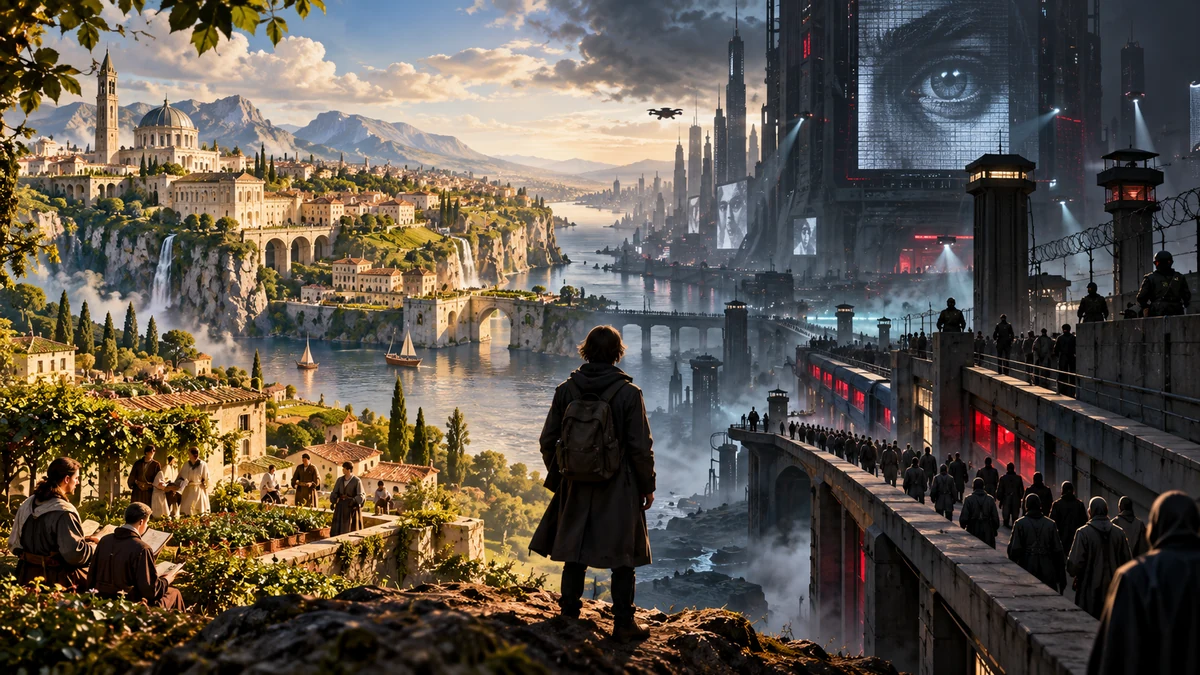
From More’s Utopia to Black Mirror: how literature, film and television invent alternative societies to test the ideals, power structures, technologies and fears of their own time.
Read article
Near the end of the forest exile, Yudhishthira finds his four brothers motionless beside a lake and accepts an unseen Yaksha's condition: questions first, water second.
Read article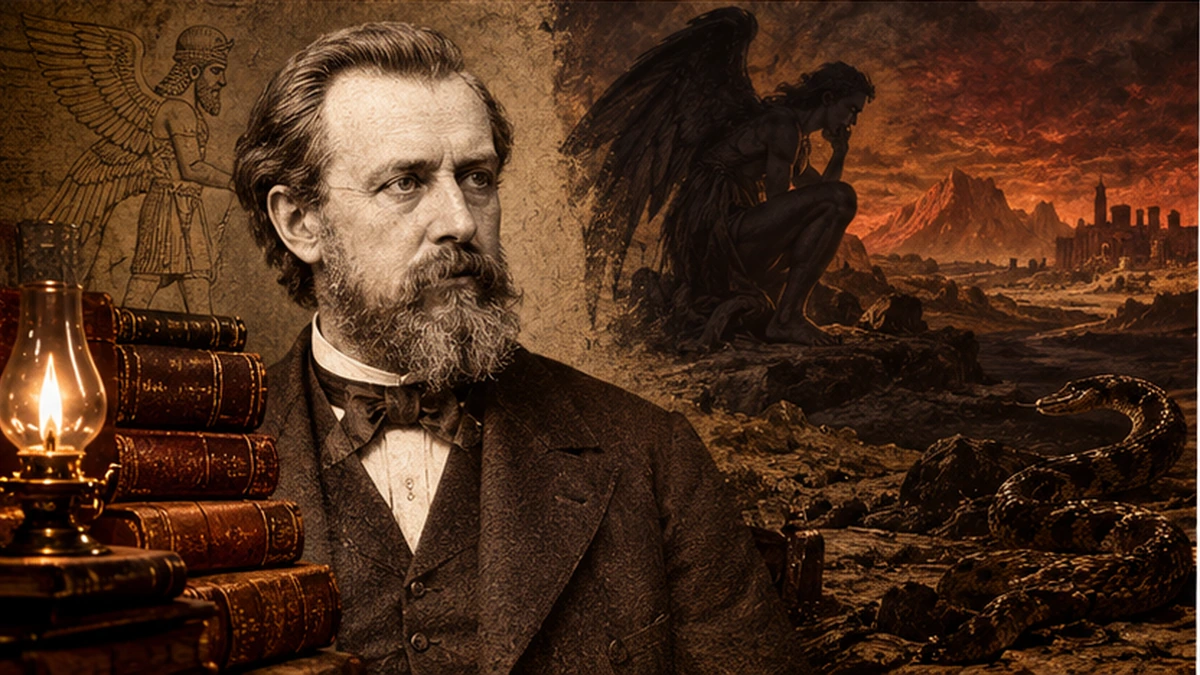
A detailed presentation of Graves’s The Biography of Satan: the development of Satan, Sheol and Gehenna, Lucifer, Persian and astral motifs, and the author’s comparative history of the Christian Devil.
Read article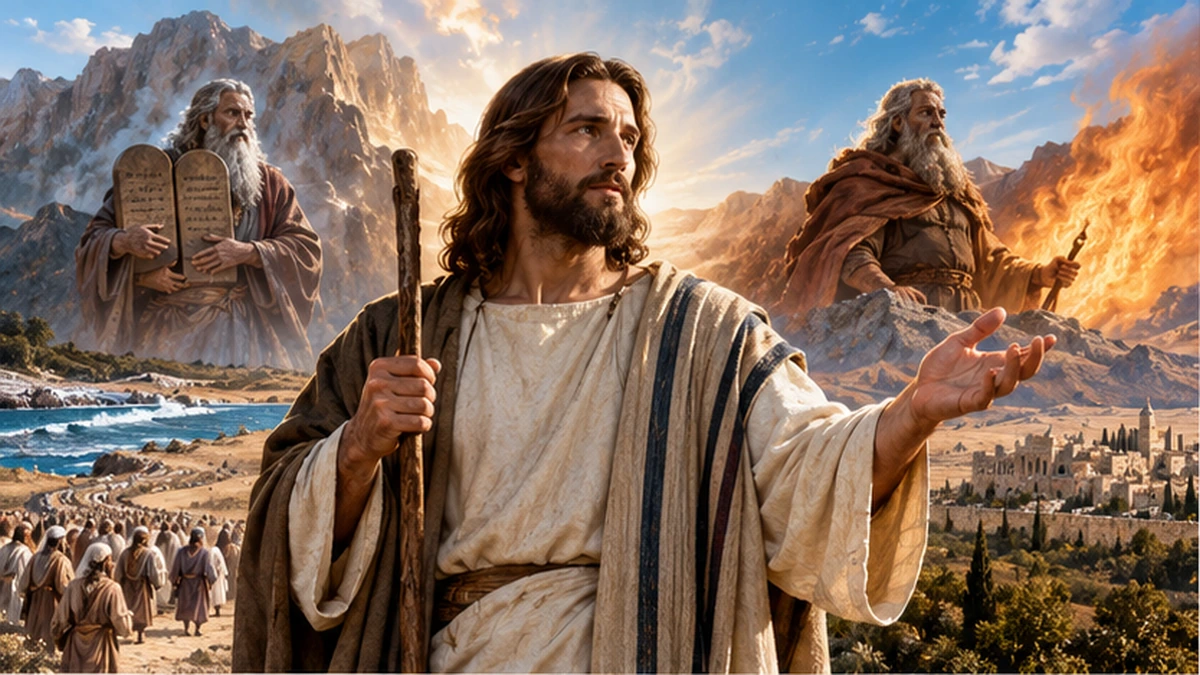
The Gospels narrate Jesus through older scriptural patterns: Matthew draws especially densely on Moses, exodus, and Israel, while Luke develops Elijah and Elisha motifs. Typology, however, is neither historical proof nor proof of invention.
Read article
The stories of Sargon and Moses share a strikingly precise motif: an infant in a sealed basket on a river. But the historical Sargon is not the same thing as the much later surviving Sargon legend, and similarity alone does not prove direct copying.
Read article