The Baptism on the Savica — France Prešeren: history, meaning, and national memory
Prešeren’s The Baptism on the Savica joins defeat, love, Christianization, and renunciation in one of the most debated works of Slovene literature. This article separates historical Carantania from literary construction and presents religious, political, and national readings of the poem.

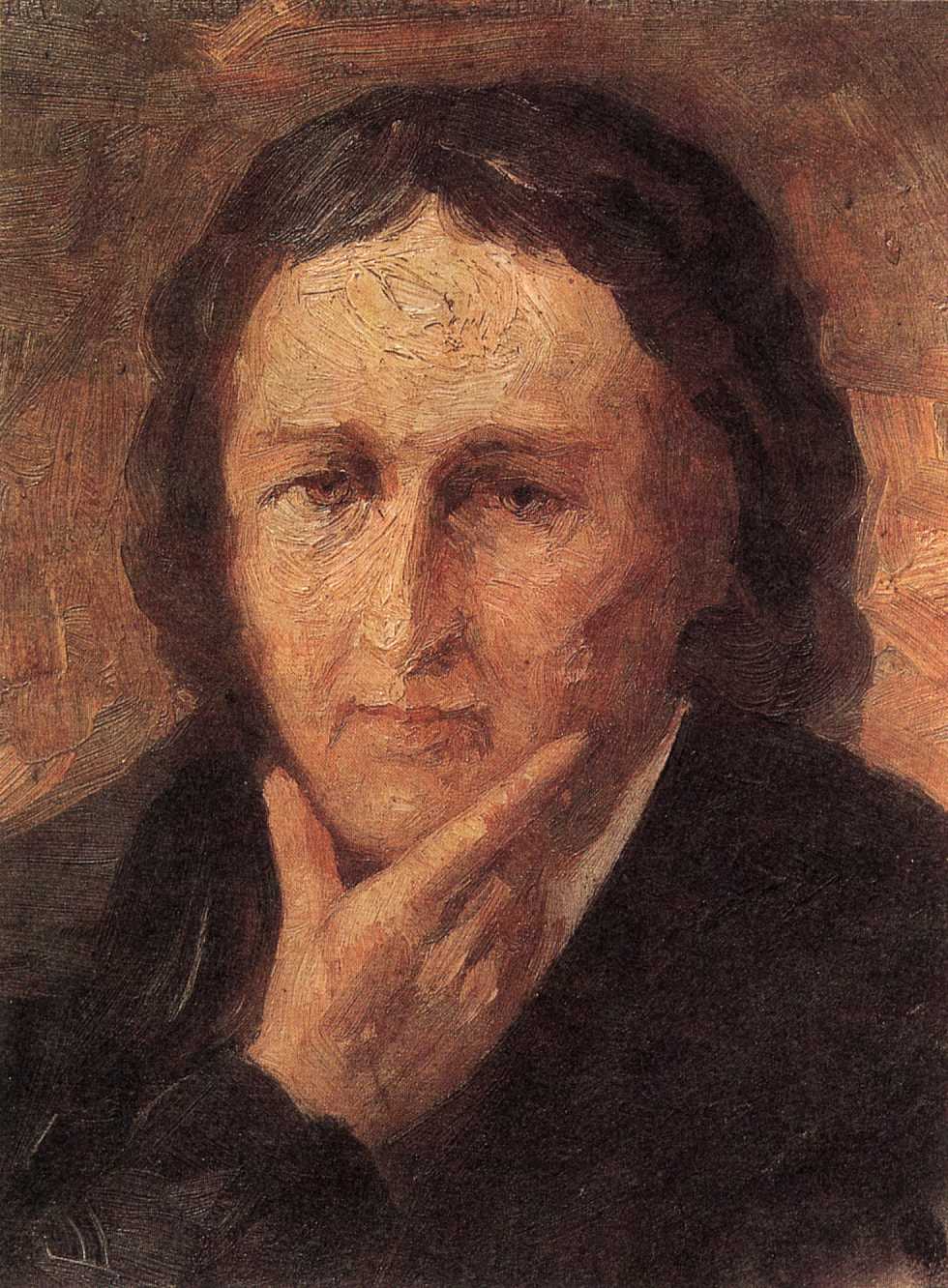
When France Prešeren published The Baptism on the Savica in 1836, he described it as a “tale in verse.” It was written after the death of his friend Matija Čop and dedicated to him. The work consists of a dedicatory sonnet, the dramatic “Introduction,” and the longer “Baptism,” in which a historically inspired conflict between the old religion and Christianity becomes the personal story of Črtomir and Bogomila. [1][2]
The poem became one of the central works of Slovene literature precisely because it does not yield a single interpretation. It can be read as a story of Christianization, a tragedy of the defeated, a renunciation of love, a meditation on historical rupture, or a work about a small people caught between larger political and cultural forces. The historical background is real, but Prešeren’s Črtomir, Bogomila, and Valjhun are not simple transcriptions of historical individuals. [3][4]
1836: a poem after the death of Matija Čop
Prešeren wrote The Baptism on the Savica in the period immediately after Čop’s death in 1835. The dedicatory sonnet speaks of transience, loss, and buried “high-flying” thoughts; personal grief therefore sets a tone of renunciation before the narrative even begins. The first book edition appeared in April 1836 as a self-published work, while later inclusion in Poezije brought smaller textual changes. [1]
For that reason, the work cannot be reduced to a historical illustration of Christianization. The historical costume allows Prešeren to speak about defeat, love, the death of a friend, faith, and personal futurity. Literary history has repeatedly found one of the poem’s central tensions in this meeting of private loss and an epic-historical frame. [2][3] The dedication therefore frames the historical narrative through grief before any political conflict appears.
The complete poem — the dedication To Matija Čop, the Introduction, and The Baptism — is also available as a standalone Primary Text, with the full Slovene original and a complete THY-REALITY English translation.
Historical background: Carantania and Christianization
In the eighth century, Carantania was a Slavic principality in the Eastern Alps, centered largely north of present-day Slovenia. Around the middle of the century it became more closely tied to Bavaria because of the Avar threat and gradually entered the Frankish political sphere. Christian mission formed part of this process, so political dependency and religious change are often intertwined in the historical record. [4][5]
The Conversio Bagoariorum et Carantanorum tells of Borut, his son Gorazd, and his nephew Hotimir, the latter two educated in Christianity in Bavaria. After Hotimir’s death there were uprisings against Christianization and foreign domination; after the revolt of 772, a prince called Valtunk appears in the sources. Prešeren’s story draws on this broad historical horizon, not on a documented biography of Črtomir. [5][6] This distinction matters because later national memory often treated literary figures as though they belonged directly to the documentary record.
The Introduction: defeat as the beginning of the story
The “Introduction” is the martial, compressed, formally strict part of the poem. Črtomir leads defenders of the old religion against Valjhun’s side, but the conflict ends in the destruction of his companions. Prešeren therefore introduces his hero at the moment when his previous world has already broken apart. [1]
This construction turns the historical conflict into an inner one. After battle ends, Črtomir remains alive but has lost his political community, companions, and the purpose that had guided him. Boris Paternu consequently treated his conversion as an existential rupture suspended between skepticism, nostalgia, and a new possibility of meaning. [3] The poem’s first decisive event is therefore not victory but survival after collective collapse.
Bohinj, Bled, and Savica: landscape as inner space
In the second part, the violence of the “Introduction” yields to water and mountain landscape. Lake Bohinj is outwardly calm, while Črtomir’s inner struggle continues. Nature therefore does more than provide scenery: lake, waterfall, sun, and rainbow accompany the passage from the world of war to personal decision. [1]
The poem is thus strongly anchored in recognizable Upper Carniolan landscape, yet the landscape is transformed by literature. Savica and Bled are both real places and symbolic spaces of transition. Later Slovene cultural reception connected physical landscape and literary memory so closely that the waterfall became difficult to separate from Prešeren’s poem. [1][7] The geography is concrete, but its emotional meaning is created by the poem rather than by the landscape alone.

Bogomila: love, faith, and decision
Črtomir meets Bogomila again at Bled, where she has by then embraced Christianity. Her decision changes the love story: the shared future Črtomir had imagined is no longer possible. Bogomila presents faith as a path beyond earthly happiness and herself renounces married life. [1]
Her role is therefore more than that of a passive beloved. Bogomila becomes the voice of the new order and the mediator between Črtomir’s defeat and his future decision. Yet the relation between persuasion through love, religious experience, and historical coercion remains open to different readings. [3] This is one reason the ending can feel simultaneously reconciliatory and deeply tragic.
Črtomir’s baptism: conversion, renunciation, or survival?
At the end Črtomir accepts baptism and then leaves to proclaim the new faith. At the level of plot this is an unmistakable reversal: the leader of resistance to Christianization becomes its missionary. Yet the literary meaning of that reversal has been interpreted in very different ways since the nineteenth century. [1][3]
Part of the older reception saw the conversion as an affirmation of Christianity, while other interpreters emphasized resignation, personal defeat, or ironic distance. Paternu stressed the internal differentiation of Prešeren’s religiosity, so a simple equation of “Črtomir’s faith = Prešeren’s faith” does not capture all the tensions in the text. [3][8]
A love story in which no one receives earthly happiness
Read primarily as a love story, the ending is strikingly unusual. Črtomir and Bogomila survive, but they do not unite. Their love is redirected toward a promise of reunion beyond death, while each accepts a life path that physically separates them. [1]
This ending connects faith with Prešeren’s broader poetics of loss. The dedication to Čop, Črtomir’s loss of his companions, and his renunciation of Bogomila create a structure in which survival is not the same as victory. The poem can therefore operate at once as a story of new beginning and as an elegy for a world that has ended. [1][2]
National and political readings: the old “pillars of Slovenedom”
Some lines acquired pronounced political weight in Slovene cultural history. After defeat, Črtomir speaks of fallen “pillars of Slovenedom,” foreign rule, and the loss of native customs. Such language inevitably brought the eighth century into dialogue with Prešeren’s nineteenth century and with later debates about Slovene cultural and political distinctiveness. [1][7]
The national reading is not the only one. Miran Hladnik has noted that the poem also stages relations between the domestic and the foreign and the acceptance of cultural change. Other scholars foreground Romantic poetics, religious conflict, personal despair, or literary influence. The poem became a national text partly because different generations could recognize different concerns in it. [7][8]
Why The Baptism on the Savica remains an open work
Reception was already not uniform in 1836, and the following century and a half produced an almost uninterrupted succession of interpretations. Scholars have debated Čop’s influence, Prešeren’s religiosity, irony, the national idea, the relation to European Romanticism, and even connections with Tasso’s Jerusalem Delivered. [2][8]
The poem can therefore be read with two forms of caution. The first is historical: the literary story is not a direct document of Carantanian Christianization. The second is interpretive: no single Christian, anti-Christian, national, resignation-centered, or love-centered reading exhausts the work. Its durability lies precisely in turning historical rupture into a question about what a person does after losing the world in which he believed. [3][4][8]
Sources and further reading
- Primary text of the 1836 edition; structure, motifs, and ending of the poem. Source
- History of debates about Čop’s influence and early interpretation of the poem. Source
- Črtomir’s conversion as existential rupture and the relation among skepticism, nostalgia, and religiosity. Source
- Modern historical context for Carantania, Frankish influence, and Christianization. Source
- Borut, relations with Bavaria, and the Christian education of Gorazd and Hotimir according to the Conversio. Source
- The revolt after Hotimir’s death, the year 772, and Valtunk as part of the historical background. Source
- The poem as a text about relations between the domestic and the foreign and about national identity. Source
- Comparative-literary context, the baptism motif, and possible connections with Tasso’s Jerusalem Delivered. Source