
Knowledge library

Articles for independent inquiry.

Shorter entry points into the questions explored across THY-REALITY. Browse by field or search directly by title and description.

A woman facing a city shop window sees a reflection assembled from images of products, lifestyle, and status symbols.

Consumerism: when identity becomes a product

When does a purchase stop being merely a purchase and become proof of who we are? On the extended self, status signals, brands, social comparison, materialism, and identities that can be monetized.

Read article
A conceptual scene of a crowd in an uncertain, storm-darkened environment facing an illuminated authority figure on a stage, illustrating how threat, uncertainty and the need for order can increase the appeal of decisive leadership.

Fear, Uncertainty and the Need for Authority

Why can order, clear rules, and strong authority become more attractive under threat? This article separates fear, uncertainty, loss of control, need for closure, legitimacy, and authoritarianism—and shows why the links among them are conditional rather than automatic.

Read article
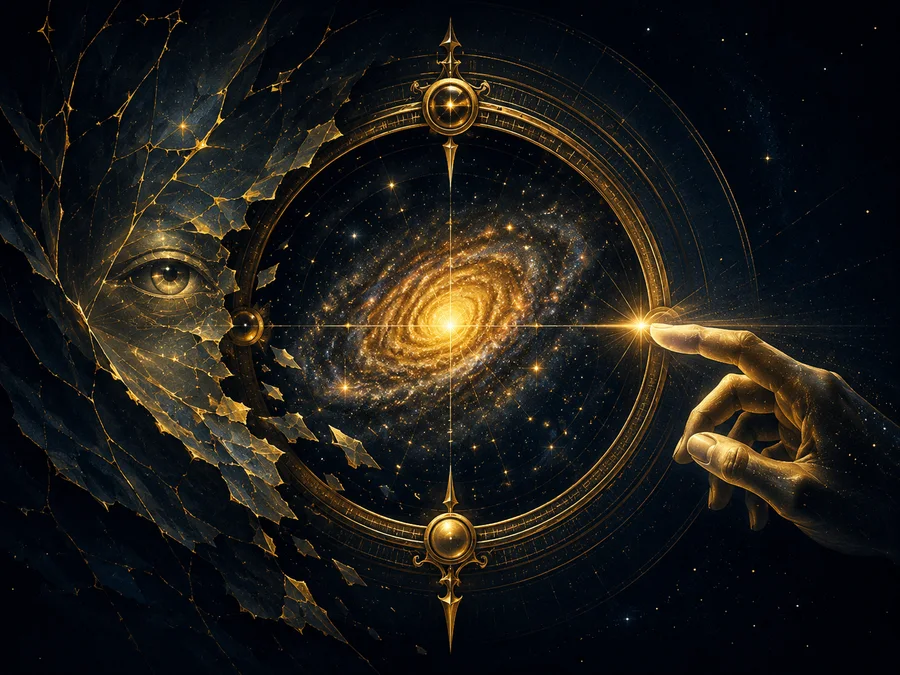
A conceptual depiction of a focused woman in profile; a stream of light from the eye and neural networks passes through a narrow luminous opening toward a landscape, representing the selection and direction of attention.

Attention: The Gateway of Conscious Experience

Attention is not the same as consciousness. This article examines how competing information is prioritised, why obvious events can go unnoticed, what redirects attention and what evidence says about training it.

Read article
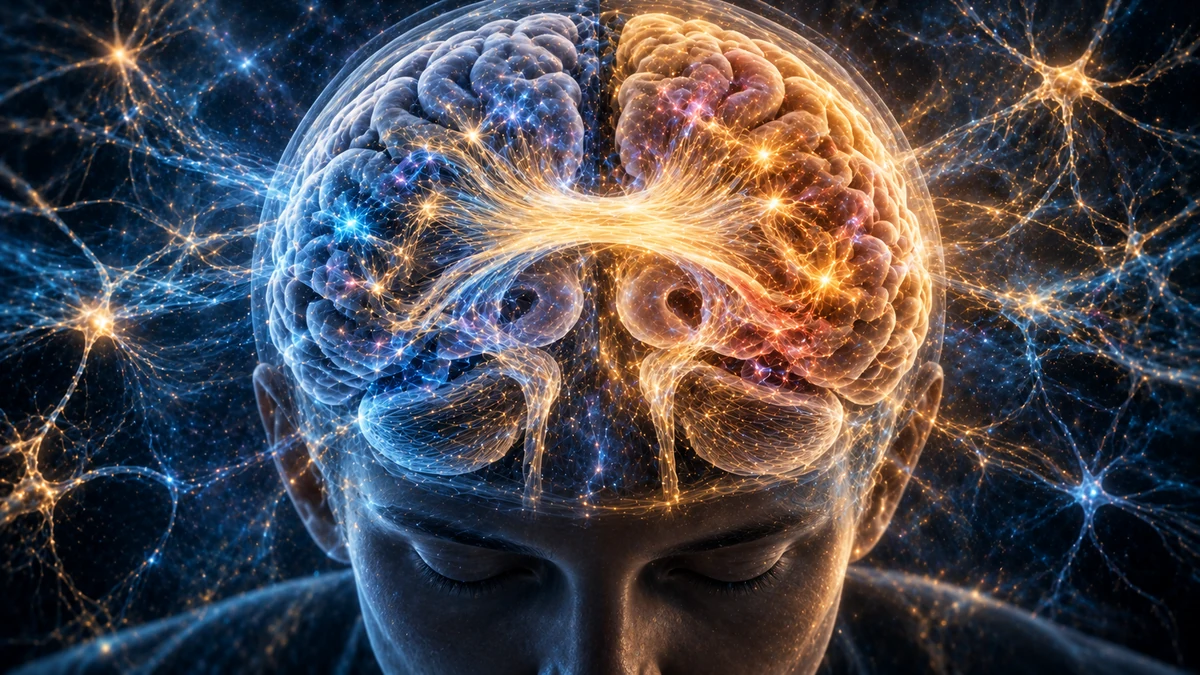
A conceptual depiction of a person in which the physical brain, flows of mental processes and the subjective field of conscious experience appear as connected but distinct levels.

Mind, Brain and Consciousness: Three Things We Often Confuse

A definitional map of three terms often used as synonyms: the brain as a biological organ, mind as the level of mental functions, and consciousness as subjective experience—without prematurely choosing a single theory of consciousness.

Read article
A human profile with a visible glowing neural network views a mountain landscape through successive layers of incomplete and increasingly coherent visual representations — symbolising how the perceptual system builds a coherent model of the world from sensory signals.

Perception Is Not Reality: How the Brain Builds Our World

Perception is not a passive photograph of the world. This article shows how the senses transduce and select signals while the brain combines them with context, attention, prior experience and expectations into a usable perceptual model.

Read article
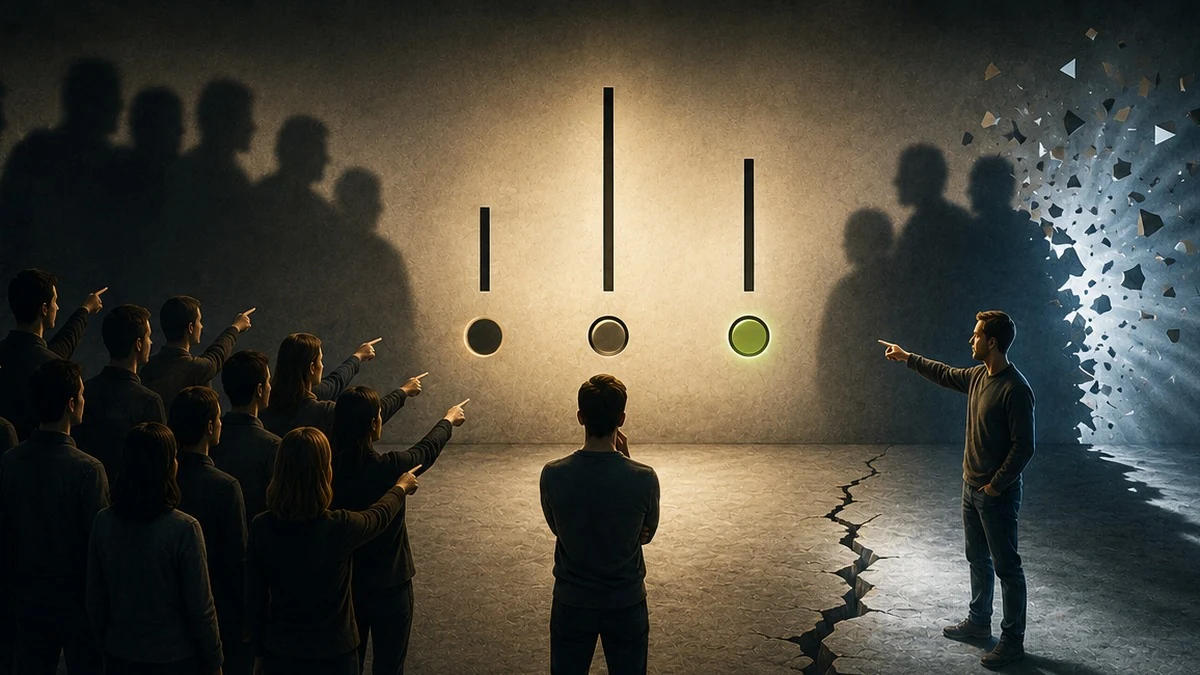
An individual stands between a unanimous crowd and one dissenter before a simple visual choice; the group shadow breaks on the side of dissent.

Why Conformity Often Overrides the Facts

A person can see the correct answer and still hesitate to say it when a unanimous group says something else. Conformity often grows from the need to understand reality and remain part of the group.

Read article
A figure faces a fragmented mirror showing several reflections of the same face connected by symbolic patterns.

Relationships as a Mirror of Consciousness

Relationships do not reveal a hidden “true personality,” but they can expose our interpretations, fears, attachment patterns, emotion-regulation strategies and repeated responses.

Read article
A geometrically ordered center surrounded by uncertainty represents the human need for certainty.

Why We Need Certainty

Why can uncertainty feel harder than a poor answer? Explore intolerance of uncertainty, need for cognitive closure, and how to seek calibrated confidence.

Read article