Who Got the Socially Owned Assets? Major Privatizations, New Owners and Lost Companies from Slovenia to Kosovo
Who received former social property after its dismantling and what happened to selected companies after privatization.
First: what did “social ownership” actually mean?
A Yugoslav enterprise was not exactly the same as a conventional Western privately owned company. Nor was it simply: a state-owned enterprise in today’s conventional sense. The self-management system used the concept of: social ownership. In its description of Slovenia’s transition, the World Bank notes that enterprises in the Yugoslav self-management system were legally without a conventional individual owner, even though employees held a strong de facto role in management.[1] Privatization therefore did not simply mean: the state sells its company. The transition first had to determine who would receive the capital, how socially owned capital would be converted into shares, how much employees would receive, how much funds would receive, how much the state would retain and how much would go to outside purchasers. Only after that do we arrive at the: final owner.
Second important boundary: a “sold company” is not always the same as “sold assets”. In some privatizations the buyer acquired shares in an operating company, the brand, employees, contracts and debts and obligations. In other cases the buyer acquired a new company into which selected assets had been transferred and while old liabilities remained in the old enterprise. Elsewhere the buyer purchased only land, a hotel, a production hall, machinery and a specific business unit out of bankruptcy. Therefore a headline such as: “factory sold for X million” can be seriously misleading unless it also explains the liabilities, obligations and the exact object of sale.
Third boundary: price was not the only element of a privatization deal. Many contracts included obligations beyond the purchase price additional investment, employment retention, social programmes, assumption of debt, recapitalization, environmental obligations and concession payments. Example Serbia’s Duvanska industrija Niš was sold to Philip Morris for approximately: EUR 387 million in purchase price, while the wider package also contained substantial investment and social commitments.[2] Kosovo’s Ferronikeli had a sale price of approximately: EUR 30.55 million, plus: EUR 20 million in committed investment
and employment obligations.[3] This article therefore does not simply compare: purchase price : book value and automatically conclude: cheap theft. That conclusion requires much stronger evidence. Fourth boundary: an irregularity is not automatically a criminal offence. This is particularly important in Croatia, where an unusually extensive state audit record exists. The State Audit Office reviewed: 1,556 former socially owned companies, representing about: 86.7% of the nominal capital involved in transformation and privatization.[4] At: 1,481 companies, or 95.2%, the auditors identified various irregularities.[4] But: irregularity ≠ proof of a criminal offence. The Croatian State Attorney’s Office later explicitly distinguished between administrative irregularities, acts for which no sanction was prescribed, misdemeanours and cases in which there were grounds for suspicion of a criminal offence[5]. This article preserves that distinction throughout.
The initial model strongly favoured insider ownership. Slovenia did not begin privatization with a large wave of direct foreign sales. The OECD describes the system created under the 1992 ownership-transformation law: 20% of capital to employees, part of the capital to state-controlled funds, ownership certificates distributed to citizens, internal buyouts and public sales and other methods[6]. In practice, most enterprises selected forms of: internal privatization. In one sample of privatized companies, insiders held about: 44% of shares after the initial privatization, the state about 30%, and privatization funds about 19%.[7] So the first answer to the question:
who received Slovenia’s socially owned property? is: to a large extent, initially employees, former employees, managers, state funds and domestic privatization funds. Ownership then began to concentrate. The dispersed certificate-ownership structure did not remain unchanged. Small shareholders gradually sold their stakes. A World Bank analysis reports that by 1999 roughly: 40% of the original shareholder stakes had been sold, and the five largest owners of a company on average already controlled about: 62% of its shares.[7] This was a second stage of transition: from mass certificate ownership toward more concentrated capital.
LEK: Slovenia’s pharmaceutical company becomes part of Novartis
One of the largest and clearest cases of a successful acquisition was: Lek. Novartis, through its then generics unit Sandoz, acquired: 99% of Lek on 29 November 2002 for approximately: USD 0.9 billion in cash.[8] The following year it acquired the remaining minority stakes. This was not the sale of a failed factory. Lek was technologically capable, export-oriented and an established pharmaceutical brand. Production in Slovenia did not simply close after the takeover. Following Novartis’s 2023 reorganization, parts of innovative production and development were transferred directly to Novartis, while the generics business became associated with the independent Sandoz group.[9] The case therefore shows:
a foreign takeover can mean loss of an independent corporate headquarters without necessarily meaning loss of production. Mercator: domestic ownership → Agrokor → Fortenova. Mercator followed a different path. After Slovenian privatization it remained for a long time mainly within the regional and domestic ownership sphere. In 2014 it was acquired by Croatia’s: Agrokor. After Agrokor’s financial collapse, Mercator was transferred into: Fortenova Group. In 2022 Fortenova completed the squeeze-out of the remaining minority shareholders and became: 100% owner of Mercator.[10] This is important because it shows: ownership of a former socially owned company can change repeatedly after privatization. The final owner in 2026 is not necessarily the original privatization buyer. Nova KBM: state → Apollo/EBRD → OTP. Nova KBM shows a third model. Slovenia’s state stake was sold in 2015 to a vehicle associated with:
- Apollo Global Management
- and EBRD.[11]
The entire holding was later bought by Hungary’s: OTP Bank. In February 2023 OTP became the indirect 100% owner of Nova KBM.[12] In 2024 Nova KBM and SKB legally merged into: OTP banka.[13] A major former Slovenian bank therefore moved in less than a decade through: state → private financial investor/EBRD → regional banking group. NLB: privatization without the state fully exiting.
NLB followed another route. In 2018 Slovenia sold through an IPO: 65% of the bank to domestic and foreign institutional investors and individuals for approximately: EUR 669.5 million.[14] After an additional sale, the state retained: 25% + 1 share.[11] This is a case of: partial privatization, not complete withdrawal of the state. TAM: an important reminder that not every vanished company was a “privatized company”.
TAM Maribor often appears in nostalgic narratives as an example of: “a factory destroyed after independence.” Its path was more complicated. The company was already in difficulty in the 1980s. In 1995 its socially owned capital was transferred to the Slovenian Compensation Fund, the Capital Fund and the Development Fund of the Republic of Slovenia. Bankruptcy was then opened in 1996.[15] TAM is therefore not a simple case in which: a foreign buyer acquires a healthy enterprise and closes it. It is a case involving an older industrial crisis, loss of markets, heavy debt, state rescue attempts, failed rehabilitation and bankruptcy. That distinction matters.
The Croatian system initially created many domestic shareholders and insider ownership. As shown in Seven Post-Yugoslav Economies, Seven Paths: Why Did They Develop So Differently After the Breakup?, Croatia’s early-1990s model gave employees and former employees priority purchasing rights, discounts and instalment payment options[16]. This created a strong insider structure. After the first wave, ownership rapidly concentrated. Some stakes passed to domestic businesspeople, investment funds, the state, pension funds and foreign strategic investors. The state audit shows that the process was systemically problematic. Across 1,556 audited companies, the Croatian State Audit Office documented:
- a fall in employment by several hundred thousand;
- bankruptcy proceedings at 345 companies;
- a large share of unimplemented development programmes;
- 1,936 identified irregularities.[4]
But again this does not prove that all 1,481 companies were: “stolen.” Some irregularities did not even carry a legally prescribed sanction.[5] This article therefore uses the formulation: a systemically large number of documented irregularities, not: proven criminal privatization of the entire economy. Hrvatski Telekom: state → Deutsche Telekom. Following the separation of postal and telecommunications operations, the first major privatization phase of Hrvatski Telekom took place in 1999. Deutsche Telekom acquired: 35% of the shares. In 2001 it became: the majority owner.[17] This is a classic strategic privatization of a telecommunications monopoly.
INA: partial sale to strategic partner MOL
INA was the largest company in the SFRY during the 1980s and employed around: 32,000 people in 1990.[18] Its first major privatization phase was completed in 2003. Hungary’s MOL acquired: 25% + 1 share.[18] It later increased its stake through a public offer.[19] The state did not fully exit. INA is therefore a case of: mixed strategic ownership, not a complete sale. PLIVA: from dispersed shareholders to a global pharmaceutical takeover.
PLIVA followed another route. By 2006 it had already been transformed into a shareholding company. That year the US company: Barr Pharmaceuticals acquired it through a public offer. Approximately: 92% of the shares were tendered, and the transaction was worth about: USD 2.4–2.5 billion.[20] PLIVA became part of global pharmaceutical capital. Again: the initial privatization and the later takeover were not the same event. Podravka: an example of a company that did not simply “go foreign”.
Podravka shows the opposite pattern. At the end of 2006, the largest single ownership block was still associated with the Croatian Privatization Fund, pension-related institutions and Kapitalni fond. Together, the state and state-linked funds held approximately: 26.4% of the capital.[21] The remainder was dispersed among financial investors, pension funds, other shareholders and treasury shares. It was therefore not true that: all large Croatian companies ended up in foreign hands.
Serbia shifted most of its large privatization wave into the new millennium
The Privatization Agency was established in: 2001.[22] It sold socially owned capital, state-owned capital and enterprise assets. A large share of Serbia’s biggest transactions therefore came: about a decade later than in Croatia or Slovenia. Duvanska industrija Niš: Philip Morris. One of the largest individual transactions was: DIN Niš. In 2003 Philip Morris acquired: 85.28% of the shares. The purchase price was approximately: EUR 387 million. The agreement also contained:
- investment commitments of around EUR 64.85 million;
- a social programme of around EUR 64.8 million.[2]
Political statements often described the wider package as exceeding: EUR 500 million.[23] This is an important distinction: purchase price is not the same as the buyer’s total contractual commitments. Duvanska industrija Vranje: British American Tobacco. That same year: DIV Vranje was privatized. British American Tobacco was the only formal bidder in the final tender stage.[24] Government data cited the wider value of the privatization at roughly: EUR 87 million.[25] A large part of Serbia’s tobacco industry thus moved under global multinational ownership.
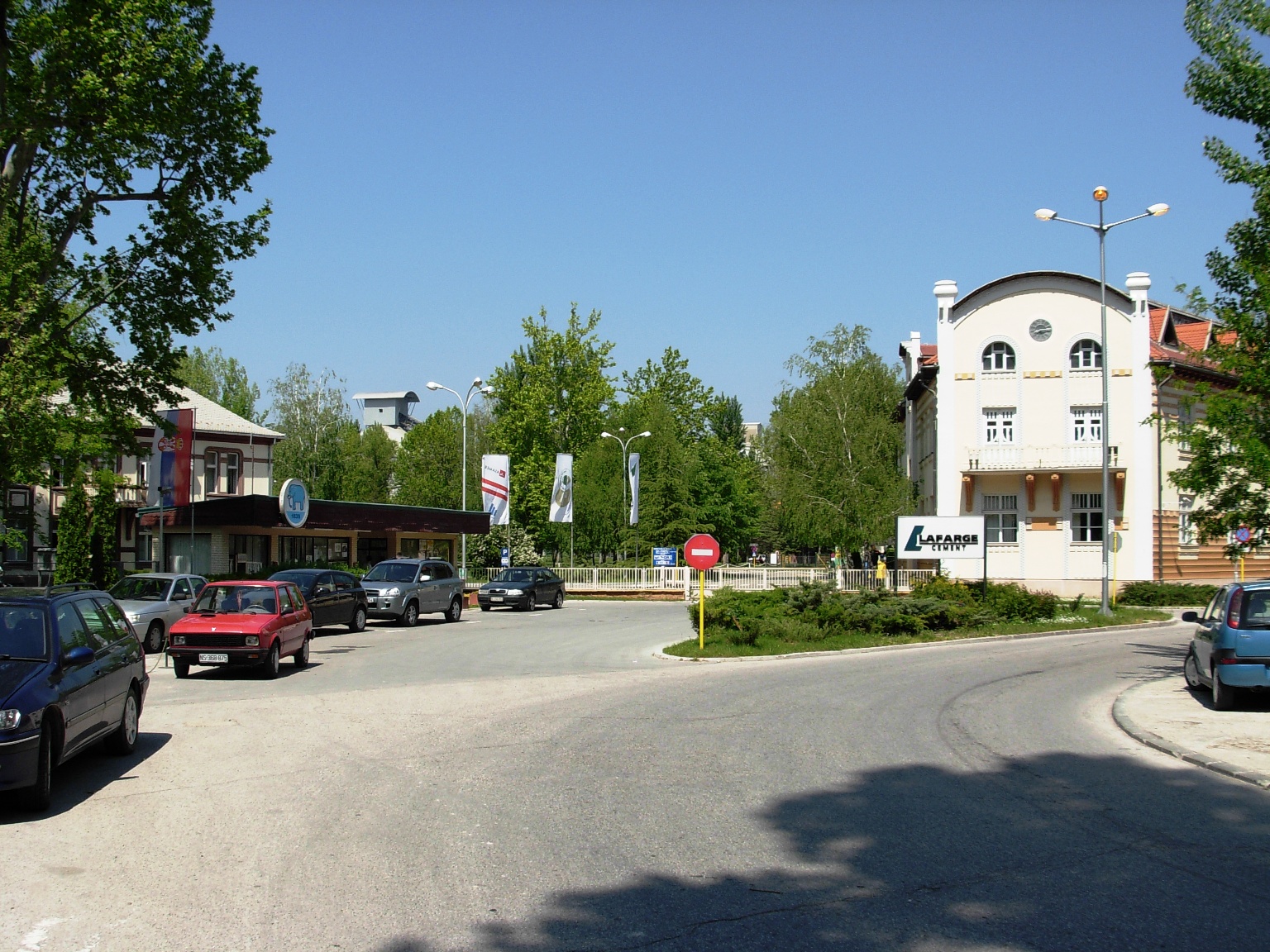
Beočin Cement Plant: Lafarge. In 2002 the Beočin cement plant was acquired by France’s Lafarge and together with Austrian partners. In 2011 Lafarge became: the sole owner.[26] The company itself states that the takeover was followed by an investment cycle of approximately: EUR 150 million.[26] This is a case in which privatization was followed by technological modernization, integration into a multinational group and continued industrial production.
Not every deal was large — and not every deal had strong investment obligations. The Privatization Agency archive contains hundreds of auctions, local buyers, consortia and widely different sale prices[27]. Some companies sold for small sums compared with their former symbolic importance. But possible reasons include debt, lost markets, obsolete equipment, liabilities and inability to continue operating. This article therefore describes an individual small transaction as: sold at a documented auction price, not, without further evidence: given away.
Here privatization did not begin with a normally functioning economy
Bosnian companies entered privatization after war, destruction of capital, loss of markets, displacement of employees and different entity legal systems. A company’s 1997 value could therefore be radically different from its 1990 value. BH Steel / Zenica Steelworks → Mittal. One of the largest deals involved: BH Steel — Zenica Steelworks. In 2004 Mittal Steel acquired: 51% of the company from the Federation of BiH government. The following year it bought another: 41% from the Kuwaiti partner, bringing ownership to about: 92%.[28] The World Bank described the transaction as the largest privatization in BiH up to that time and cited about: USD 420 million in planned investment.[29] The result: a major former industrial complex became part of a global steel group.
Energopetrol → INA/MOL → INA. In 2006 INA and MOL. acquired: 67% of Energopetrol through a recapitalization agreement with the Federation government.[30] In 2016 INA bought MOL’s: 33.5% stake and became the owner of the entire 67% package.[31] This is a direct example of regional capital: a Croatian-Hungarian energy group takes over a Bosnian distribution network. Aluminij Mostar: a privatization that did not conclude as planned.
Aluminij is a useful reminder that: a privatization tender ≠ a completed privatization. In 2008 negotiations took place over the sale of: 88% of the capital to a consortium of Glencore, FEAL and Dalekovod[32]. Negotiations remained open over electricity prices, environmental obligations and rehabilitation of red-mud sites[33]. The deal did not result in the classic completed strategic privatization often implied in simplified summaries. In 2018 the Federation still held: 44% state capital and approved financial consolidation measures.[34] Production stopped in 2019. Aluminij therefore does not belong in a simple list of: “companies sold to foreigners.”
Krivaja, Hidrogradnja, KTK, Vitezit: state stakes, bankruptcy and liquidation
As late as 2022 the Federation of BiH listed companies with state capital in bankruptcy or liquidation, including Željezara Zenica, Hidrogradnja, Krivaja, KTK Visoko, Vitezit, Unis Tools and Šipad Export-Import[35]. This matters for the question: who received socially owned property? Sometimes the answer is not: one strategic buyer. Sometimes the property is divided over years among: creditors, bankruptcy purchasers, new companies and the state. A very large part of social capital was privatized.
The World Bank estimates that in the 1990s and 2000s roughly: 65% of enterprises passed through privatization.[36] Montenegro combined mass voucher privatization, tenders, auctions and strategic partners. Jugopetrol → Hellenic Petroleum. Jugopetrol was sold in 2002 to Greece’s: Hellenic Petroleum. The IMF cited a purchase price of roughly: EUR 65 million plus investment and social obligations.[37] The Greek company acquired around: 54.5% of the shares.[38] This is a classic strategic sale to a regional energy player.
Telekom Crne Gore → Magyar Telekom. In 2005 a stake of approximately: 51.12% of Telekom Crne Gore was sold by tender.[39] The highest-ranked bidder was: Matáv / Magyar Telekom, part of the Deutsche Telekom group.[40] Telekom Slovenije was among the competing bidders.[40] The case shows how former Yugoslav telecommunications infrastructure became subject to: regional and European competition for ownership. KAP: sale to a Russian investor and the later collapse of the model.
Kombinat aluminijuma Podgorica was one of the country’s largest exporters. It was privatized in 2005.[36] The purchaser was linked to Russia’s: Rusal. Around the same period the Russian investor also acquired the bauxite mines, with commitments concerning investment, employment retention and long-term concession obligations[41]. KAP later became a case associated with large losses, disputes with the state, subsidies and bankruptcy. The example shows that: an initial strategic investor does not necessarily remain a stable long-term owner.
An interesting reversal: privatization almost stops after 2010
The World Bank reports that after the large privatization wave, the trend slowed sharply. Between 2016 and early 2025, according to its review, only: one enterprise was privatized, while the state and municipalities were also creating new public enterprises.[36] The post-Yugoslav ownership story is therefore: not a one-way path from state to private ownership. Employees and managers received a large share of the original privatization.
By the end of the 1990s, much of the corporate sector had already been privatized. The IMF reported that in March 1998 approximately: 87% of employees in privatized enterprises worked in companies privatized through different insider forms.[42] These included management buyouts, employee buyouts and other internal combinations. The first phase was therefore quite different from later large strategic foreign sales. Stopanska Banka → foreign investors.
In April 2000 a majority stake in the country’s largest bank: Stopanska Banka was sold to a consortium of foreign investors.[43] The IMF treated the sale as an important part of restructuring the banking system. Before the sale, the state had assumed part of the old problematic liabilities.[44] This is important: the sale price of a bank is not the entire cost of transition when the state has first cleaned up the balance sheet. Makedonski Telekom → Matáv.
In January 2001 a consortium led by Hungary’s: Matáv acquired: 51% of Makedonski Telekom for: EUR 343.3 million.[45] Matáv was already under significant ownership influence from Deutsche Telekom. This was one of the country’s largest single privatization receipts. Part of the proceeds was later used for infrastructure projects, pension obligations, reduction of external debt and, during the conflict, security expenditure[46]. Thus: privatization revenue did not necessarily disappear into one budget line; it became a source of public financing.
OKTA → Hellenic Petroleum. In 1999 Greece’s: Hellenic Petroleum acquired a majority stake in the: OKTA refinery.[47] The World Bank later described the transaction as a: controversial privatization deal.[48] Under the new ownership, an oil pipeline to Thessaloniki was also developed. The case matters because: strategic infrastructure moved under the control of a regional energy company.
FENI: a sold company, but not a permanently settled ownership story. The World Bank reports that the nickel complex: FENI was sold in October 2000.[49] Later decades brought new owners, financial difficulties and restructurings. Again: privatization was the beginning of a new ownership story, not the end of it. Here the legal model of privatization is especially important.
Kosovo faced a special problem: what should be done with socially owned enterprises in an environment of disputed status and unresolved historical ownership claims? The Kosovo Trust Agency, and later the Privatization Agency of Kosovo, primarily used spin-off, special spin-off and liquidation[50]. Under the spin-off model the agency created: a NewCo — a new company, transferred selected assets of the old socially owned enterprise into it, while old liabilities generally remained: with the old enterprise.[50] That is a crucial distinction. The buyer often did not purchase: the old company with all its debts. It purchased: a new company containing selected assets.
Ferronikeli: the largest industrial example
Ferronikeli was one of Kosovo’s most important industrial complexes. The contract process began in December 2005. Official PAK data list:
- sale price: EUR 30,554,371
- committed investment: EUR 20 million
- employment commitment up to 1,000 workers.[3]
The purchaser was: Alferon/IMR. The process was controversial because a previously higher bid by another bidder was rejected; research literature notes that this raised questions about the procedure.[51] But it is also documented that after restart Ferronikeli became one of Kosovo’s largest exporters.[52] The same case therefore includes controversy over procedure, private takeover, major investment and restarted production. Sharrcem: Titan Group.
The sale of the cement producer: Sharrcem was completed in 2010. PAK described it as the largest privatization sale in Kosovo up to that point. Purchaser: Titan Group. Purchase price: EUR 30.1 million. Additional obligation: EUR 35 million in investment over five years.[53] Employment commitments were also included. This is a textbook example of why: price + investment obligation gives a fuller picture than purchase price alone. Peja Brewery: privatization and new investment.
Peja Brewery remained socially owned until: 2006. PAK reports that from privatization through the end of 2010 approximately: EUR 25.5 million was invested in new production lines, technology, energy, infrastructure and marketing[54]. This is a case in which production continued after privatization. Kosovo’s privatization process is still open. This is surprisingly important. Even in 2026 PAK was still selling assets of socially owned enterprises, conducting liquidations and dealing with unsold property. Its official website in September 2026 listed approximately:
- 2,323 assets sold
- 129 sales waves
- about EUR 822.4 million in cumulative sales value.[55]
Kosovo’s privatization is therefore: not only a historical process from 2002–2010. Part of it is still ongoing. WHO, THEN, ACTUALLY RECEIVED THE SOCIALLY OWNED ASSETS? Combining the seven cases produces several categories. Employees and managers. Particularly important in Slovenia, Croatia and North Macedonia. They received shares, discounts, internal buyouts and certificate stakes. Many of these stakes were later sold. State and pension funds.
These were major intermediate owners in Slovenia and Croatia. Their role included holding part of the capital, financing pension or compensation obligations and later selling stakes. Some former socially owned property was therefore initially: transferred into state-controlled funds before later moving into private ownership. Domestic private capital. Many enterprises did not go to foreigners. They were acquired by local entrepreneurs, management consortia, business groups, domestic investment funds and regional capital. Some cases produced strong domestic groups. Others produced overleveraged holdings, bankruptcies and controversial related-party transactions. Foreign multinationals. Highly visible examples include:
- Novartis/Sandoz — Lek;
- Deutsche Telekom/Magyar Telekom — telecommunications;
- MOL — INA;
- Barr and later pharmaceutical groups — PLIVA;
- Philip Morris — DIN;
- BAT — DIV;
- Lafarge — Beočin Cement;
- Mittal — Zenica;
- Hellenic Petroleum — Jugopetrol and OKTA;
- Titan — Sharrcem.
This is the most visible part of the story: industrial and infrastructure capital becomes part of large international groups. Regional post-Yugoslav capital. Who Gained After the Breakup of Yugoslavia? Ownership, Banks, Markets, Military Presence, Debt, and Political Influence already showed that the story is not simply: the West buys the Balkans. Slovenian, Croatian and other regional companies also acquired banks, retail chains, companies and distribution networks. Mercator, Energopetrol and other examples show how: former internal republican expansion becomes cross-border capital.
Creditors. When a company becomes insolvent, major economic control can pass to banks, bondholders, secured creditors and bankruptcy creditors. This is especially relevant in overleveraged holdings, bankruptcy and financial restructuring. In that situation ownership may no longer be determined by: the privatization buyer. It may later be reshaped by: creditors. Agrokor → Fortenova is the best-known regional example.[56] Buyers of bankruptcy assets. When a company fails, what remains includes land, production halls, hotels, machinery, brands and licences. These may be sold separately. A large amount of former socially owned property therefore ended up: fragmented among multiple purchasers, not concentrated in one successor company.
WHO LOST?
Privatization creates an owner. But a change in ownership can also generate losses. The most obvious group is: employees who lose their jobs. Yet the cause is not always the same. Employment can fall because of post-privatization rationalization, loss of markets, war, technological automation, over-indebtedness, bankruptcy and changes in the production programme. This article therefore does not attribute every lost job: automatically to privatization. THE BIGGEST PROBLEM: SELLING A COMPANY AFTER CLEANING IT UP WITH PUBLIC MONEY.
This is one of the most important but often overlooked mechanisms. Before privatization the state can take over bad loans, recapitalize a bank, repay obligations, remediate environmental damage and finance severance packages. It then sells: the cleaned-up company. In such a case it is not enough to ask: for how much was it sold? We must also ask: how much did the state put in or assume before the sale? In the Stopanska Banka case, the IMF documented that the state assumed substantial liabilities during financial restructuring before the sale.[44] Similar mechanisms appear elsewhere.
SECOND PROBLEM: THE BUYER PAYS A LOT — BUT THE COMPANY LATER FAILS
A high purchase price does not guarantee success. A buyer can overpay, finance the acquisition with debt, misjudge the market and enter a financial crisis. A later bankruptcy therefore does not prove: that the original sale price was necessarily too low. Agrokor is an example of a company that executed major regional acquisitions, but later became so indebted that it entered extraordinary administration and was restructured into Fortenova.[56] THIRD PROBLEM: A “STRATEGIC PARTNER” CAN BECOME A MONOPOLISTIC OR DOMINANT OWNER.
Telecommunications, energy, cement, tobacco and banking have high entry barriers, infrastructure and strong market positions. A strategic buyer therefore does not acquire only: a building. It may acquire a network, a concession, a brand, distribution, customers and market share. That is why privatizations involving telecom operators, oil companies, banks and cement producers. are politically and economically more sensitive than the sale of a small production hall. FOURTH PROBLEM: HOW DO YOU VALUE A COMPANY IN A POST-WAR ECONOMY?
If an enterprise has lost 70% of its market, damaged infrastructure, heavy debt, obsolete technology and excess employment. its 1989 book value does not tell us: what it was worth in 1998. This is particularly important for Bosnia, Serbia, Kosovo and parts of Croatia. Comparing: the pre-war value of the entire complex with the post-war privatization price without accounting for damage and debt is methodologically unsound. BUT “VALUATION IS DIFFICULT” DOES NOT MEAN THERE WERE NO IRREGULARITIES.
The opposite extreme would be: “everything was normal because transition was difficult.” That is also unsupported. The Croatian state audit documented unvalued assets, irregular financing of buyouts, problems with development programmes and procedural irregularities.[4][5]. Kosovo’s Ferronikeli case had a documented dispute concerning exclusion of a higher bidder.[51] Bosnian privatization processes faced legal uncertainty, poor preparation of enterprises and non-competitive bids[57]. So: irregularities are a real part of the history. But they need to be demonstrated: case by case.
THE ASSETS DID NOT DISAPPEAR — BUT THAT DOES NOT MEAN WORKERS KEPT THE COMPANY. Legally and in accounting terms, the assets generally did not vanish. They changed owner, legal form or purpose. Yet to an employee the result could still look like disappearance: production stops, the job disappears, machinery and property are sold, the brand changes hands and the former factory becomes a collection of separate assets. It is therefore not enough to follow the ownership register. We also have to follow production, employment, land, machinery and cash flows after sale or bankruptcy.
- an employee’s share;
- a pension fund stake;
- a state capital holding;
- multinational property;
- a domestic entrepreneur’s asset;
- a bank claim;
- bankruptcy land;
- a new holding company;
- a privatized NewCo.
The right question is not: where did it disappear? The right question is: by what route did each asset move from social ownership to its present owner? COMPARATIVE TABLE OF MAJOR CASES.
| Economy | Company / asset | Main privatization or later buyer | Documented transaction / status |
|---|---|---|---|
| Slovenia | Lek | Novartis/Sandoz | 99% for ~USD 0.9bn, 2002 |
| Slovenia | Mercator | Agrokor → Fortenova | takeover 2014; Fortenova 100% in 2022 |
| Slovenia | Nova KBM | Apollo/EBRD → OTP | state sold in 2015; OTP indirect 100% in 2023 |
| Slovenia | NLB | public/institutional investors + Republic of Slovenia | 65% sold in 2018; state retains 25% + 1 |
| Croatia | HT | Deutsche Telekom | 35% in 1999; later majority owner |
| Croatia | INA | MOL | 25% + 1 share, 2003; later larger stake |
| Croatia | PLIVA | Barr Pharmaceuticals | ~USD 2.4–2.5bn, 2006 |
| Serbia | DIN Niš | Philip Morris | 85.28%; EUR 387m + obligations |
| Serbia | DIV Vranje | British American Tobacco | strategic sale 2003 |
| Serbia | Beočin Cement | Lafarge | takeover 2002; later 100% |
| BiH | BH Steel Zenica | Mittal | 51% in 2004; later ~92% |
| BiH | Energopetrol | INA/MOL → INA | 67% in 2006; INA alone 67% from 2016 |
| Montenegro | Jugopetrol | Hellenic Petroleum | ~54.5%; sale 2002 |
| Montenegro | Telekom CG | Magyar Telekom | ~51.12%, 2005 |
| North Macedonia | MakTel | Matáv consortium | 51% for EUR 343.3m, 2001 |
| North Macedonia | OKTA | Hellenic Petroleum | majority stake, 1999 |
| Kosovo | Ferronikeli | Alferon/IMR | ~EUR 30.55m + EUR 20m investments |
| Kosovo | Sharrcem | Titan Group | EUR 30.1m + EUR 35m investments |
| Kosovo | Peja Brewery | private owner after PAK process | privatized 2006; EUR 25.5m investment by 2010 |
This table is not: a ranking of good and bad privatizations. It is: an ownership trail.
WHAT CAN WE STATE WITH HIGH CONFIDENCE FROM THE EVIDENCE?
Social ownership was not simply conventional state ownership. In Slovenia, a large initial share of ownership was transferred to employees, citizens and funds. Slovenian ownership became more concentrated after the first certificate wave. Major Slovenian companies later became part of foreign groups. Lek, Nova KBM and other cases clearly show this.[8][11][12] Not all major Slovenian companies were fully privatized. NLB retained an important state stake.[14] Croatian privatization contained an exceptionally high number of documented irregularities.
That is not the same as proof that 95.2% of privatizations were criminal. Telecommunications and energy passed to foreign strategic partners in several countries. Much of Serbia’s tobacco industry moved to global multinationals. Zenica became part of a global steel group. Some companies were never successfully privatized and ended in bankruptcy. Montenegro privatized a large share of former socially owned enterprises, but the process later almost stopped. North Macedonia combined strong insider privatization with later major strategic foreign sales.
Kosovo used a special spin-off model in which the buyer often did not assume the old debts of the socially owned enterprise. Kosovo’s privatization process was still not fully complete in 2026. Sale price alone does not reveal the full economic value of a transaction. A later bankruptcy does not automatically prove that the original privatization was criminal. Large post-privatization investment does not automatically prove that the initial sale price was optimal. The most precise answer to the question “who got the socially owned assets?”.
Not one group. In many countries the first recipients were: employees, managers, citizens and state funds. Then capital concentrated. Some went to: domestic private owners. Some to: regional business groups. Some to: global multinationals. Some remained with: the state. Some passed to: creditors. Some was divided after bankruptcy among: purchasers of individual assets. The greatest historical transformation was therefore not simply: “the state sold the factories.” More precisely: a system without conventional individual ownership was transformed within a few decades into a system of clearly defined, transferable and increasingly concentrated property rights.
Because the question of who gained most can only be answered reliably case by case, the series continues with Sold Too Cheaply? Anatomy of the Most Controversial Privatizations of Former Yugoslavia: Price, Value, Debt, Land and Final Owners.
Sources and further reading
- World Bank. Slovenia ownership transformation: Yugoslav socially owned enterprises as legally lacking a conventional owner and transition to ownership transformation. Source
- Serbia Privatization Agency / World Bank. Duvanska industrija Niš: 85.28%, EUR 387m purchase price, investment and social obligations. Source
- Privatization Agency of Kosovo. Ferronikeli NewCo: EUR 30,554,371 sale price; EUR 20m investment obligation and employment targets. Source
- Croatian State Audit / Croatian Parliament. Final aggregate results of transformation and privatization audits: 1,556 companies, 1,481 with irregularities, 1,936 irregularities, 345 bankruptcies. Source 1 Source 2
- Croatian Parliament / State Attorney reporting. Distinction between irregularities, misdemeanours and suspicions of criminal offences. Source
- OECD Economic Survey Slovenia 2009. Dismantling social ownership 1992–2004, certificates, employees and state funds. Source
- World Bank. Slovenian privatization structure: initial insider ownership, state, funds and later concentration. Source
- Novartis. Acquisition of 99% of Lek d.d. in 2002 for approximately USD 0.9bn. Source
- Novartis / Sandoz. Reorganization of Slovenian activities in 2023 and Sandoz spin-off. Source 1 Source 2
- Fortenova Group. Mercator: Agrokor takeover 2014; Fortenova 100% in 2022. Source
- Slovenian Sovereign Holding. Completed sales of NLB, Nova KBM, Žito, Letrika and others. Source
- OTP banka. OTP becomes indirect 100% owner of Nova KBM in February 2023. Source
- OTP banka. Merger of Nova KBM and SKB and formation of OTP banka in 2024. Source
- Slovenian Sovereign Holding. Sale of 65% of NLB in 2018 for EUR 669.5m and retention of the state stake. Source
- Constitutional Court of Slovenia / Kamra. TAM: rehabilitation, transfer of social capital and bankruptcy in 1996. Source 1 Source 2
- World Bank. Croatia: insider privatization and employee discounts. Source
- Hrvatski Telekom. Privatization history: Deutsche Telekom 35% in 1999, majority owner in 2001. Source
- INA. Company history and first privatization phase; MOL 25% + 1 in 2003. Source
- INA Annual Report. MOL increases stake through public offer in 2008. Source
- Barr Pharmaceuticals / SEC. PLIVA takeover in 2006 for approximately USD 2.4–2.5bn. Source
- Podravka Annual Report. Ownership structure 2006; state and related funds ~26.4%. Source
- Ministry of Economy Serbia. Privatization Agency established in 2001 and its mandate. Source
- Serbian Ministry of Economy. Philip Morris as strategic partner of DIN; broader privatization package. Source
- Serbian Privatization Agency. Tender for DIV Vranje; British American Tobacco. Source
- Serbian Ministry of Finance. DIN and DIV privatization values in 2003. Source
- Lafarge Serbia. Beočin Cement: takeover in 2002, investment cycle and 100% ownership in 2011. Source
- Serbian Privatization Agency Archive. Individual auctions, prices and domestic buyers. Source
- World Bank. Mittal acquires 51% of BH Steel Zenica in 2004 and later the Kuwaiti stake. Source
- World Bank. BH Steel/Mittal as largest privatization up to that date and investment commitment. Source
- INA Annual Report 2006. INA/MOL consortium acquires 67% of Energopetrol. Source
- INA. INA acquires MOL’s stake in 2016 and raises ownership of Energopetrol to 67%. Source
- Government of FBiH. Negotiations over sale of 88% of Aluminij to the Glencore/FEAL/Dalekovod consortium. Source
- Government of FBiH. Open environmental and electricity issues in the Aluminij privatization process. Source
- Government of FBiH. Aluminij: 44% state capital and financial consolidation in 2018. Source
- Government of FBiH. List of companies with state capital in bankruptcy or liquidation. Source
- World Bank. Montenegro Integrated SOE Framework Assessment. Historical privatization, KAP/Telekom and later near-halt of the process. Source
- IMF / Government of Montenegro. Jugopetrol sold in 2002 for EUR 65m plus obligations. Source
- Government of Montenegro. Hellenic Petroleum as 54.5% owner of Jugopetrol after privatization. Source
- Government of Montenegro. Privatization documentation for Telekom Crne Gore; sale of 51.1204%. Source
- Government of Montenegro. Tender results: Matáv first, Telekom Slovenije second. Source
- Government of Montenegro. Rusal and the bauxite mines: investment, employment and concession obligations. Source
- IMF. Macedonia privatization by model; ~87% of employees in privatized enterprises in insider-form companies in March 1998. Source
- IMF. Stopanska Banka: majority stake sold to a foreign consortium in April 2000. Source
- IMF. Restructuring of Stopanska Banka and enterprises, including assumption of part of the liabilities before sale. Source
- Matáv / Magyar Telekom. 51% of MakTel for EUR 343.3m in January 2001. Source
- IMF. Use of telecom privatization proceeds for public projects, pensions, debt and security spending. Source
- World Bank. OKTA: Hellenic Petroleum acquires majority stake in 1999. Source
- World Bank. OKTA as privatized refinery owned by Hellenic Petroleum. Source
- World Bank. FENI sold in October 2000 during restructuring of large loss-making enterprises. Source
- Privatization Agency of Kosovo. Spin-off method: transfer of selected assets to NewCo, old liabilities remain with the old enterprise. Source
- NUPI. Privatization in Kosovo: The International Project 1999–2008. Ferronikeli: controversy regarding bidders and procedure. Source
- U.S. State Department / KTA data. Ferronikeli as a major exporter after privatization; privatized firms among major exporters. Source
- Privatization Agency of Kosovo Annual Report 2010. Sharrcem: EUR 30.1m purchase price + EUR 35m investment, Titan Group. Source
- Privatization Agency of Kosovo. Peja Brewery: socially owned until 2006, EUR 25.5m investment by 2010. Source
- Privatization Agency of Kosovo. 2026 process status: assets sold, sales waves and cumulative sales value. Source
- Fortenova Group. Formation of Fortenova out of Agrokor’s extraordinary administration and creditor settlement; Mercator transfer. Source
- Government of FBiH. Privatization Agency reporting on legal uncertainty, poorly prepared enterprises and non-competitive offers. Source