Natural Law and Aṣṭāṅga Yoga
Patañjali calls the yamas a universal great vow. Is this an Indian version of Natural Law—or a significant resemblance between two distinct ethical and metaphysical systems?

When people hear Aṣṭāṅga Yoga in a yoga studio today, the term may refer to the modern dynamic postural school associated with K. Pattabhi Jois. In Patañjali's Yoga Sūtra, however, aṣṭāṅga literally means the eight limbs of yoga: yama, niyama, āsana, prāṇāyāma, pratyāhāra, dhāraṇā, dhyāna, and samādhi. The distinction matters because the comparison here concerns Natural Law and the ethics of classical Pātañjala Yoga, not a modern exercise method.
The first two limbs—yama and niyama—are especially relevant to that comparison. The yamas are ahiṃsā, satya, asteya, brahmacarya, and aparigraha: non-harming, truthfulness, non-stealing, sexual/ascetic restraint, and non-possessiveness or non-grasping. The niyamas are purity, contentment, disciplined austerity, study/recitation, and devotion to Īśvara. The list already makes clear that this is not merely a system of physical postures.
The strongest point of comparison appears in Yoga Sūtra 2.31. The five yamas are described there as a sārvabhauma mahāvrata—a great vow not restricted by birth or social status, place, time, or circumstance. That sounds strikingly close to the idea that some moral principles are not created merely by local custom or political command. But resemblance is not identity: Western natural-law traditions and Pātañjala Yoga have different genealogies, metaphysics, and ends.
The article therefore does not try to prove that Patañjali taught 'the same Natural Law' under Sanskrit names. The more defensible question is: where do the systems genuinely converge, where do they diverge, and what can we learn by comparing them without forcing them into one doctrine?
First: Patañjali's Aṣṭāṅga Yoga is not the same as modern Ashtanga Vinyasa Yoga
Yoga Sūtra 2.29 lists eight limbs: yama, niyama, āsana, prāṇāyāma, pratyāhāra, dhāraṇā, dhyāna, and samādhi. In this classical system, āsana is only one of eight limbs, and the text gives it very little space compared with the role postures occupy in modern yoga culture.
Modern Ashtanga Vinyasa Yoga, associated with K. Pattabhi Jois and the lineage of T. Krishnamacharya, is a twentieth-century postural method. Scholarship on modern yoga shows that such dynamic sequences were shaped in the context of modern physical culture, even as their teachers situated them within a broader yoga tradition. The same word aṣṭāṅga can therefore refer today to two related but historically non-identical phenomena.
The comparison uses Patañjali's eight-limbed system as its reference point. This prevents us from projecting a contemporary exercise method backward into classical ethics or treating yama and niyama as optional supplements to physical training. In the original sequence, they come before āsana.
The five yamas: moral restraints before meditation
Yoga Sūtra 2.30 lists five yamas: ahiṃsā (non-harming), satya (truthfulness), asteya (non-stealing), brahmacarya (restraint, often sexual continence in ascetic contexts), and aparigraha (non-grasping or non-possessiveness). Translation requires care because each term has a longer history and wider semantic range than any single English label.
Within Patañjali's structure these restraints are not presented as a civil legal code. They are disciplines intended to reduce disturbance, attachment, and harmful patterns while preparing the practitioner for deeper stages of yoga. That is an important difference from legal theory: yama is primarily concerned with shaping the conduct and character of the practitioner.
Yet the list is not merely a private meditation technique. Refraining from harm, falsehood, theft, and grasping plainly governs relations with others as well. It is precisely at this boundary between self-discipline and interpersonal ethics that comparison with Natural Law becomes interesting.
Yoga Sūtra 2.31: the strongest universalist parallel
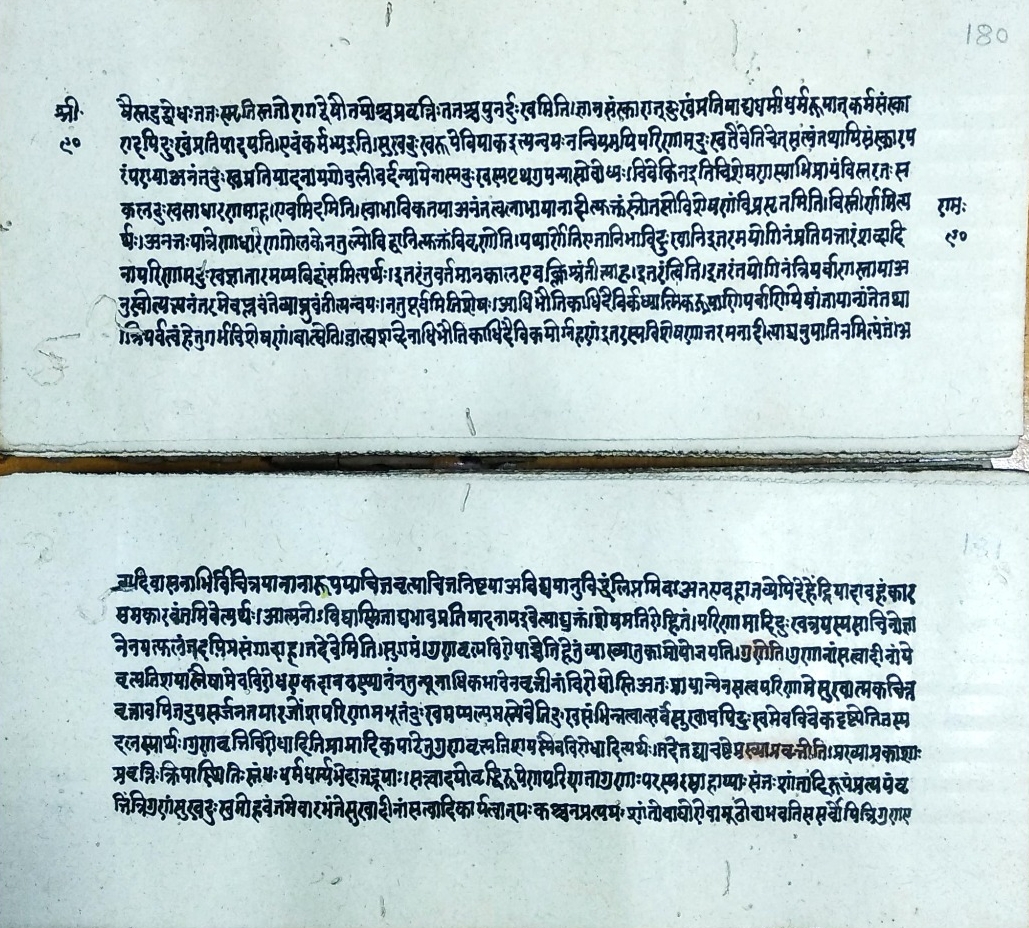
The next sūtra makes a striking claim. It calls the yamas a sārvabhauma mahāvrata and says they are not delimited by jāti, deśa, kāla, or samaya—roughly, birth or social status, place, time, or circumstance. In ordinary translation, they constitute a universal great vow.
This is the closest textual parallel to the natural-law idea of universality. If a rule is not limited to a particular place or time, its validity is not presented as merely local custom. If it is not limited by status, then at least at the level of this formula it transcends status-based exemption. The passage therefore supports serious comparison with moral principles claimed to stand above positive law and local convention.
But the sūtra does not use the European category 'natural law', does not formulate a theory of human rights, and does not discuss political legitimacy. Universality is a genuine resemblance; identity of theories would be an additional, unproven claim.
Niyama shows why the comparison cannot be complete
Yoga Sūtra 2.32 lists śauca, santoṣa, tapas, svādhyāya, and īśvara-praṇidhāna as the second limb: purity, contentment, disciplined austerity, study or recitation, and devotion to Īśvara. These practices are clearly of a different type from prohibitions on stealing or harming.
Natural-law theory can certainly discuss virtues, practical reason, and human development, but its central problem is not usually the prescription of meditative discipline, recitation, or devotion to a particular Īśvara. Patañjali's system combines ethics, asceticism, psychology of attention, and soteriology in a single path.
The first two limbs therefore should not be reduced to 'the ten commandments of yoga'. The yamas have a powerful interpersonal ethical dimension; the niyamas reveal the broader goal of transforming the practitioner, not merely establishing a minimum code of coexistence.
Ahiṃsā and responsibility: doing, causing, and approving
For THY-REALITY, Yoga Sūtra 2.34 is particularly interesting. In discussing violence and related contrary patterns, it distinguishes acts that are done directly, caused to be done, or approved. It also identifies greed, anger, and delusion as motives and recognizes different degrees of intensity.
This is a sophisticated structure of responsibility. Moral assessment does not stop at 'did I do it with my own hands?' It includes participation, authorization, approval, and motive. That structure resonates strongly with our previous discussions of responsibility, consequences, and the refusal to outsource moral agency to authority or group membership.
Even here, however, we should not claim that the text 'proved' a modern theory of indirect responsibility. Patañjali uses the framework within yogic psychology, where harmful actions generate suffering and ignorance and obstruct liberation. The comparison is functional, not genealogical.
Satya, asteya, brahmacarya, aparigraha: similar principles, different interpretations
Satya is more than technical factual accuracy; in yogic ethics it is a commitment to truthfulness in speech and conduct. Asteya prohibits taking what has not been given. Both have obvious parallels with honesty and prohibitions on theft across many moral traditions.
Brahmacarya is harder to translate directly. In ascetic settings it can mean celibacy or sexual continence; some modern interpretations broaden it into moderation or responsible use of sexual energy. We should not automatically select the most comfortable modern meaning and project it backward into Patañjali.
Aparigraha signifies non-grasping, non-hoarding, or renunciation of acquisition that strengthens attachment. This can be compared with natural-law discussions of property, greed, and the common good, but Patañjali's motivation remains distinctively ascetic: less grasping means less psychological bondage.
Natural Law: the resemblance is deeper than a list of prohibitions
Natural Law in Western philosophy is not a single list of rules. The paradigmatic Thomistic version treats natural law as principles of practical reason through which human beings recognize goods and judge action; other modern versions emphasize human flourishing, basic goods, justice, or moral norms that are not created merely by political will.
The resemblance to yama is therefore deeper than the fact that both may say 'do not steal'. In both we can find the idea that right action requires self-government, that moral judgment cannot be reduced to immediate desire, and that at least some principles claim broader validity than local convention.
Yet the argumentative architecture differs. Natural-law writers typically discuss practical reason, human goods, nature, common good, rights, and positive law. The Yoga Sūtra discusses kleśas, karmic consequences, concentration, discrimination of puruṣa from prakṛti, and liberation.
The goal of Aṣṭāṅga Yoga is not a good state but liberation
This is the article's most important boundary. Classical Pātañjala Yoga is a soteriological system. It begins from the problem of suffering and mistaken identification of consciousness with psychophysical processes; its final horizon is kaivalya, liberation or isolation of puruṣa from prakṛti.
The eight limbs are therefore not simply a program of public morality. Āsana stabilizes the body, prāṇāyāma regulates breath, pratyāhāra withdraws the senses, dhāraṇā gathers attention, dhyāna deepens meditative continuity, and samādhi leads toward states of concentrated absorption. Yama and niyama begin a transformation of consciousness as a whole.
Natural Law can also be embedded in religious metaphysics, especially in Aquinas, but historically it reaches deeply into questions of law, political authority, justice, and the common good. Renaming Aṣṭāṅga Yoga 'Indian Natural Law' would erase precisely what makes it distinctive.
Are the yamas moral ends or instruments toward samādhi?
There is a real interpretive tension here. Because yama and niyama belong to a path toward liberation, they can be read instrumentally: right conduct steadies the mind and removes obstacles to meditation. But it does not follow that they are ethically empty. The commentarial tradition places ahiṃsā at the root of the other restraints, and contemporary scholars treat these disciplines as a serious dimension of yogic ethics and self-cultivation.
For comparison with Natural Law it is therefore better to speak of an overlap of ethics and soteriology. Patañjali does not supply an independent treatise of moral philosophy that can simply be detached from the rest of yoga. Moral discipline is simultaneously a way of relating to others, a way of forming one's character, and a condition for altered modes of consciousness.
This also blocks a modern reduction in which the yamas become wellness slogans such as 'be kind to yourself'. Their classical demand is stricter, universalist, and embedded in a system that asks for profound restraint of desire and attachment.
Universality does not remove the need for interpretation
Sūtra 2.31 uses exceptionally universal language, yet application in concrete cases still requires judgment. What counts as harm? Is every unpleasant truth an instance of satya? What happens when truthfulness and prevention of harm appear to conflict? What does brahmacarya require of a householder and what of an ascetic? Such questions are not solved merely by listing a Sanskrit term.
Natural-law traditions likewise distinguish general principles from their concrete specification. Universality therefore does not mean that every practical answer is obvious or that historical communities have not developed different interpretations.
This is an important safeguard against dogmatism: the universal ambition of a principle increases rather than decreases the need for interpretation, factual accuracy, and symmetrical application. If we stretch the same word differently for ourselves and for others, we have not shown a universal law but a privilege.
Seven questions for a comparative audit
Instead of declaring that 'Patañjali taught Natural Law', we can test each proposed parallel with seven questions:
- What exactly does the primary text say, and which Sanskrit term does it use?
- Is the principle presented as universal or context-bound?
- What end does the system assign to it—interpersonal good, self-cultivation, karmic purification, liberation, or something else?
- What metaphysics and account of the human person underlie it?
- Is there historical evidence of transmission between the traditions, or only structural similarity?
- Do we apply the same criteria to differences as well as similarities?
- What evidence would falsify the comparison or force us to narrow it?
Such an audit lets us recognize genuine convergences—non-harming, truthfulness, non-stealing, self-restraint, non-grasping, and a universalist formulation—without inventing a single primordial religion or one hidden moral code shared by every civilization.
Conclusion: related questions, not the same doctrine
Aṣṭāṅga Yoga and Natural Law genuinely meet at an important point: both can confront the human being with the possibility that principles of right conduct are not merely products of immediate desire, local custom, or political command. Yoga Sūtra 2.31 gives this comparison unusually strong textual support by presenting the yamas as a universal great vow.
But Patañjali's path has its own conceptual world: puruṣa and prakṛti, karma, kleśas, meditative absorption, Īśvara, and kaivalya. Natural-law traditions have their own histories of reason, nature, good, law, and political order. Similarity ≠ identity ≠ common historical origin.
The comparison is most useful as a mirror. Yama reminds Natural Law that claims to moral universality without self-discipline can remain abstract. Natural Law reminds yogic ethics that personal spiritual practice by itself does not answer every question about justice, institutions, and the common good.
Sources and further reading
- Patañjali, Yoga Sūtra 2.28–2.35 — Sanskrit primary text: aṣṭāṅga, yama, mahāvrata, niyama and pratipakṣa-bhāvana
- Patañjali, Yoga Sūtras, BonGiovanni translation — English rendering of 2.29–2.34 and surrounding practice sequence
- Christopher W. Gowans, “Sāṃkhya and Yoga,” Self-Cultivation Philosophies in Ancient India, Greece, and China (Oxford University Press, 2021) — Yoga as self-cultivation, puruṣa/prakṛti and eight limbs
- James Mallinson, “Hinduism and Meditation: Yoga,” The Oxford Handbook of Meditation (2020) — Pātañjalayogaśāstra, ascetic reformism, meditative system and liberation
- Oxford Bibliographies in Hinduism, “Yoga” — historical overview, Yoga Sūtras c. 350–450 CE and later haṭha/postural developments
- David Gordon White, “Ceci N’est Pas Un Yogi,” Sinister Yogis (University of Chicago Press, 2009) — historiographical cautions about modern projections onto premodern yoga
- Andrea R. Jain, “Premodern Yoga Systems,” Selling Yoga (Oxford University Press, 2014) — heterogeneity of premodern yoga and discontinuities with modern postural forms
- Jean Byrne, “Authorized by Sri K. Pattabhi Jois,” Gurus of Modern Yoga (Oxford University Press, 2013) — modern Ashtanga Vinyasa lineage and paramparā claims
- Mark Singleton, “T. Krishnamacharya and the Mysore Āsana Revival,” Yoga Body (Oxford University Press, 2010) — modern postural synthesis and physical-culture context
- Wendy Doniger, “Assume the Position: The Fight Over the Body of Yoga,” On Hinduism (Oxford University Press, 2014) — competing historical claims about origins of yoga and modern postural yoga
- Kenneth R. Valpey, “Yoga Ethics—Restraints (yama) and Observances (niyama),” Yoga and Animal Ethics (Palgrave Macmillan, 2025) — open-access treatment of ahiṃsā, satya, yama/niyama and classical commentators
- Kenneth R. Valpey, “Dharma, Yoga, and Animals in the Mahābhārata,” Yoga and Animal Ethics (2025) — dharma/yoga ethical background and precursor traditions
- Kenneth R. Valpey, “Minding Animals—The Meditational Turn,” Yoga and Animal Ethics (2025) — ethical engagement versus kaivalya/disengagement tension in classical Yoga
- Edwin F. Bryant, The Yoga Sutras of Patanjali: A New Edition, Translation, and Commentary (North Point Press, 2009) — translation grounded in traditional commentators
- Christopher Key Chapple, Yoga and the Luminous: Patañjali’s Spiritual Path to Freedom (SUNY Press, 2008) — ethics, practice and Pātañjala philosophy
- Jed Forman, “Subtle, hidden, and far-off: The intertextuality of the Yogasūtras,” Journal of Hindu Studies 17.1 (2024) — Buddhist conceptual interaction without reducing Yoga to crypto-Buddhism
- Christopher W. Gowans, Sāṃkhya/Yoga self-cultivation analysis — liberation and spiritual exercises rather than jurisprudence
- Stanford Encyclopedia of Philosophy, “The Natural Law Tradition in Ethics” — natural law as practical rationality, universal binding principles, goods and divine providence in Aquinas
- Robert P. George, “Natural Law,” The Oxford Handbook of Law and Politics — basic human goods, moral norms, practical reason and political/legal dimensions
- Stanford Encyclopedia of Philosophy, “Aquinas’ Moral, Political, and Legal Philosophy” — practical reason, virtue and natural-law principles
- Suzanne Newcombe, “The Revival of Yoga in Contemporary India,” Oxford Research Encyclopedia of Religion — diversity of yoga and modern revival