God: An Anatomy — Francesca Stavrakopoulou: the Body of God in the Hebrew Bible and the Ancient Near East
In God: An Anatomy, Francesca Stavrakopoulou follows the body of God from feet and genitals to hands, face, and breath, using anatomy to tell a history of changing divine presence.
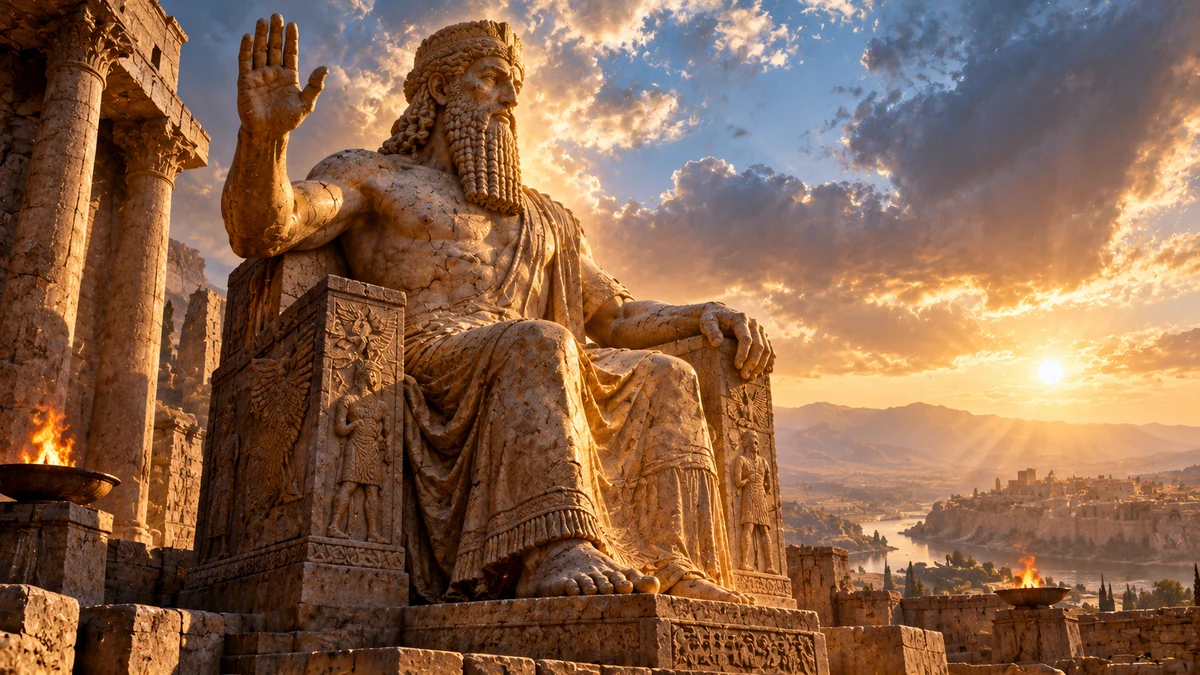
What happens if the God of the Bible is approached not through abstract attributes such as omnipotence, eternity, and invisibility, but through his feet? This is precisely the route Francesca Stavrakopoulou takes in God: An Anatomy, first published in the United Kingdom by Picador in 2021. Instead of constructing a systematic theology, she offers an anatomical journey through God’s body: from feet and genitals through belly, heart, arms, and hands to face, eyes, nose, mouth, and breath. Her starting point is that many ancient texts present God as vividly corporeal, while later Jewish and Christian ideas of a bodiless and invisible deity belong to a long historical development. [1][2][3]
The book is therefore both an anatomy and a history of an idea. Stavrakopoulou uses the body as a map for tracing changes in religious imagination: a deity who stands on the earth, sits on a throne, walks, eats, smells, writes, touches human beings, becomes angry, loves, wounds, protects, and is worshipped in a temple; and a deity whose image gradually becomes more cosmic and abstract. Stavrakopoulou has described her aim as returning this god to his “natural cultural habitat” — the religions, artefacts, temples, texts, and images of ancient south-west Asia, where embodied deities were not unusual. [4][5]
Anatomy as a method
The book is divided into five large bodily sections — Feet and Legs, Genitals, Torso, Arms and Hands, and Head — framed by an introduction and a concluding “autopsy.” Within them are twenty-one chapters with titles such as Grounded, Sensational Feet, Phallic Masculinities, Inside Out, Divine Touch, Face to Face, and Gasp and Gulp. This organisation is more than a stylistic device. Stavrakopoulou deliberately takes apart the later, unified theological idea of God and returns to individual bodily features as they appear across ancient sources. [2][3]
Her author’s note also makes the book’s geographical and linguistic framing explicit. She avoids the conventional label “ancient Near East,” preferring “ancient south-west Asia” because she regards the former as Western-centred. Biblical passages are read alongside Sumerian, Akkadian, Ugaritic, Egyptian, and other materials, as well as archaeology and images of deities. The Hebrew Bible is therefore not treated as a sealed world, but placed among societies in which gods could have bodies, families, houses, food, weapons, sexual characteristics, and social roles. [2][6]
This method shapes the tone of the book. Stavrakopoulou does not stop at saying that references to God’s hand or face are “metaphors.” She asks what a hand, foot, face, or internal organ signified within the cultural world from which the text emerged. The body thus becomes a way of reading religion itself: not merely a question of what God looked like, but of how people imagined authority, beauty, gender, power, intimacy, holiness, and danger. [4][6]
Feet on the ground: a God who stands, walks, and dwells
The first major part begins with feet. In Grounded, Footloose, and Sensational Feet, Stavrakopoulou connects biblical scenes with the wider ancient image of a deity standing on a mountain, striding through the land, sitting on a throne, or resting feet upon a footstool. Heaven can be a throne and the earth a footstool; a temple can be the house in which a deity dwells; sacred space can be the place where a divine body approaches the human world. [2][4]
Into this framework she places episodes in which biblical characters do not merely hear God but encounter divine presence in bodily terms. Jacob wrestles through the night with a mysterious divine opponent and emerges injured. In Exodus 24, Moses, Aaron, and the elders of Israel see the God of Israel, and the text specifically describes what lies beneath his feet. Stavrakopoulou reads such passages as survivals of a world in which the bodily presence of a deity was not an inherently contradictory idea. [4]
Feet are also tied to possession and sovereignty. Where a god steps, presence and control are established; where a ruler or deity places a foot upon an enemy, the body becomes a political sign of victory. Feet therefore function in the book not as a trivial anatomical starting point but as the first demonstration of its wider thesis: the ancient god is located in space, and his body marks the relationship between heaven, temple, land, and worshippers.

Genitals, masculinity, and divine sexuality
The second part is the most deliberately provocative, with chapters titled Cover Up, Phallic Masculinities, Perfecting the Penis, and Divine Sex. Stavrakopoulou insists that an investigation of the divine body cannot stop before reaching the genitals. If ancient deities were sexually differentiated, and if YHWH is overwhelmingly represented in masculine terms, then the sexual body must also enter the history she is reconstructing. [2][5]
This section expands anatomy into a history of masculinity. Penis, circumcision, fertility, offspring, marital and sexual metaphors, and male social power are brought together with the ways ancient societies imagined an idealised masculine body. Stavrakopoulou examines texts in which the relationship between God and Israel is described through husband-and-wife imagery, and she places them alongside broader traditions in which gods have consorts, children, and sexual relationships. Within this setting she also discusses Asherah and traditions of a female divine partner. [1][5][7]
The point of this part is not merely to label God “male.” Stavrakopoulou uses divine masculinity to explore how religious imagination intersects with human systems of gender and power. A divine male body may be imagined as warrior, ruler, lover, husband, and father. The book then follows the later transformation of divine sexuality in Jewish and Christian traditions, where corporeality does not simply vanish but is redirected, reinterpreted, or concentrated in new theological forms. [5][6]
Back, belly, and inner organs: a body that feels
In Part III, Torso, the book moves from outward appearance to the back and internal organs. Back and Beyond, Inside Out, and From Belly to Bowel begin with concrete anatomy but open into ancient psychologies of feeling and decision. In biblical and other ancient texts, emotions, desires, thought, and moral response are not always located in the brain as modern speech often assumes. Heart, bowels, belly, and other internal parts can function as centres of thought, compassion, anger, distress, or longing. [2][6]
Stavrakopoulou therefore treats divine anger, grief, affection, and changes of intention as bodily experiences. Her God is not pure consciousness without an interior; he feels through organs. In this context the book also turns to the famous scene in Exodus 33 where Moses cannot see God’s face but is allowed to see his back or rear as God passes by. For Stavrakopoulou, the scene joins the danger of divine proximity to unusually concrete bodily language. [5]
The torso is also the site of both power and vulnerability. A body with an interior can desire, suffer, become agitated, and be soothed. The book therefore resists treating emotional anthropomorphism as merely decorative language. Within its reconstruction, bodily emotion belongs to the way ancient communities imagined divine personhood.
Arms, hands, touch, and writing
Part IV — Arms and Hands — brings physical force together with cultural production. In biblical idiom the hand is an organ of action: it strikes, saves, creates, blesses, leads, and grasps. A “mighty hand” or an “outstretched arm” can express divine power, but Stavrakopoulou places such expressions beside ancient images of kings, warriors, and gods for whom the size and strength of an arm directly signify authority. [2][6]
In Divine Touch, the hand approaches the human body. Touch may heal, consecrate, empower, or endanger. The relationship between deity and worshipper therefore involves not only distance but the possibility of physical contact. Holy Handbooks then moves from hand to writing: the finger of God, tablets, scrolls, and the image of God as writer connect anatomy to the making of sacred text. The hand is no longer only weapon or symbol of force; it becomes the organ by which divine will leaves a material trace. [2]
Here the anatomical method is especially visible. A single body part opens several histories at once: political power, ritual touch, miracle, literacy, and scriptural authority. Stavrakopoulou moves repeatedly between body and society. The anatomy of God becomes, in her hands, an anatomy of the cultural world in which this God was imagined.
Face, beauty, and the senses
The largest final part of the book is devoted to the head. Face to Face, Headstrong Beauty, Profile, Sense and Sensitivity, and Gasp and Gulp bring together face, hair, eyes, ears, nose, mouth, breath, and voice. In the ancient world, the face is a primary site of presence. To see the face of a ruler or deity is to come into immediate proximity; for the face to be hidden is for favour and protection to be withdrawn. Biblical longing to see God’s face therefore becomes, in this book, more than poetic language: it describes access to a divine person. [2][5]
Stavrakopoulou then explores the beauty and splendour of the divine head and body. Deities may be radiant, terrifying, alluring, or majestic; their eyes see, ears receive prayer, noses smell offerings, mouths eat and speak, and breath may animate or destroy. Smell receives particular attention. Sacrificial smoke and the aroma of food in ancient religious texts need not function only as abstract symbols; the deity’s nose participates in ritual. In this way the book restores the senses to forms of religion later described mainly through spirit, thought, and word. [6]
This section also returns to representation. If God has a face, why could that face not be represented? If later tradition insists on an invisible God, what happened to earlier modes of material presence? Stavrakopoulou therefore connects biblical prohibitions of images with temple culture, throne symbolism, the Ark of the Covenant, and the broader ancient use of cult statues. In an interview about the book, she explicitly raises the question of what a temple would mean as a deity’s “house” if the deity were not imagined as present there in some materially meaningful way. [4]
From embodied deity to invisible God
Although the book is arranged anatomically, it also has a historical direction. Stavrakopoulou traces a movement from an earlier, strongly embodied YHWH toward a God increasingly difficult to confine to one body, place, or image. One major turning point in that narrative is the destruction of the Jerusalem temple and the development of religious traditions in which divine presence is less tightly bound to one sanctuary. In the book’s arc this makes room for a God understood as cosmic, omnipresent, and eventually invisible. [4]
Yet the older body does not simply disappear. Its parts remain throughout biblical language: God’s hand saves, his face shines or turns away, his eyes see, his nose smells, his mouth speaks, and his feet rest above the earth. Later readers may interpret such expressions metaphorically, but Stavrakopoulou’s project is to show that they are rooted in a cultural world where divine corporeality was not itself an embarrassment. [1][6]
The concluding An Autopsy is therefore more than a recap. “Autopsy” becomes a literary image for the end of a particular kind of God: the bodily, local, masculine, social, sensory deity of ancient south-west Asia who, through long religious transformations, becomes the more incorporeal God of later Jewish and Christian theology. The final chapter returns one last time to the body to ask what, within the book’s own historical narrative, survived, changed, or disappeared from view. [2][6]
Humanity in God’s image — or God in humanity’s?
One of the most important consequences of this anatomy is a rereading of the claim that humans are made in the image of God. Stavrakopoulou places that idea within a world in which “image” need not refer only to moral or spiritual resemblance. If the deity possesses a human-shaped body, resemblance can operate in both directions: humans can be imagined as godlike, while a god can be imagined as an enlarged, idealised, overwhelmingly powerful human form. [4]
This is where the scope of the book becomes most apparent. God’s body becomes a way of thinking about human bodies, sexuality, power, beauty, eating, violence, emotion, and death. Stavrakopoulou consequently presents the project not only as a history of religion but as cultural history. In the narrative she constructs, long-lived biblical images have contributed to the language through which Western societies have thought about embodiment, gender, sacredness, and human exceptionalism. [1][7]
The book’s reception reflects that breadth: it won the PEN Hessell-Tiltman Prize and was shortlisted for the Wolfson History Prize, where it was presented as an ambitious historical synthesis linking biblical studies with material culture, the history of religions, and cultural history. [1][7]
What the book brings together
At first glance, God: An Anatomy can be summarized as a book about the body of YHWH. Its anatomical route, however, joins several stories. It describes a world in which gods walk, sit, eat, smell, and touch; a body used as a language of royal and masculine authority; a temple understood as a site of divine presence; hands that save and write; a face that may be sought or withdrawn; and senses through which relationships between deity and worshippers are imagined.
At the same time, the book tells a story of transformation. Stavrakopoulou begins with a deity embedded, in her reconstruction, in the religious world of ancient south-west Asia and ends with the God of Judaism and Christianity increasingly conceived in later theology as bodiless, invisible, and transcendent. The body is the thread through which she connects archaeology, the Hebrew Bible, comparative mythology, the history of interpretation, and later Western culture. [1][2][4]
The book is therefore not structured as an encyclopedia of every biblical description of God. It is an anatomically organised history of a large transformation: how a deity described with feet, genitals, belly, hands, face, nose, and breath could, across centuries, become a God whose bodily language is often read as metaphor. The tension between those two images is the space in which the entire book unfolds.
Sources and further reading
- Pan Macmillan / Picador — Francesca Stavrakopoulou, God: An Anatomy, official book page. Source
- Google Books — God: An Anatomy, bibliographic record and chapter contents. Source
- Everand — God: An Anatomy, contents and author’s note in preview. Source
- University of Iowa, Bible & Archaeology — interview with Francesca Stavrakopoulou about the book, May 5, 2022. Source
- The Times of Israel — interview on the body of God and the book’s design, 2022. Source
- Biblical Archaeology Society — Erin Darby, review of God: An Anatomy, March 6, 2024. Source
- Wolfson History Prize — God: An Anatomy, 2022 shortlist page. Source