Fact, Interpretation, Hypothesis, and Speculation Are Not the Same
We observe an event and almost immediately assign it meaning. How can we separate what we know from what we infer, test, or merely imagine for now?
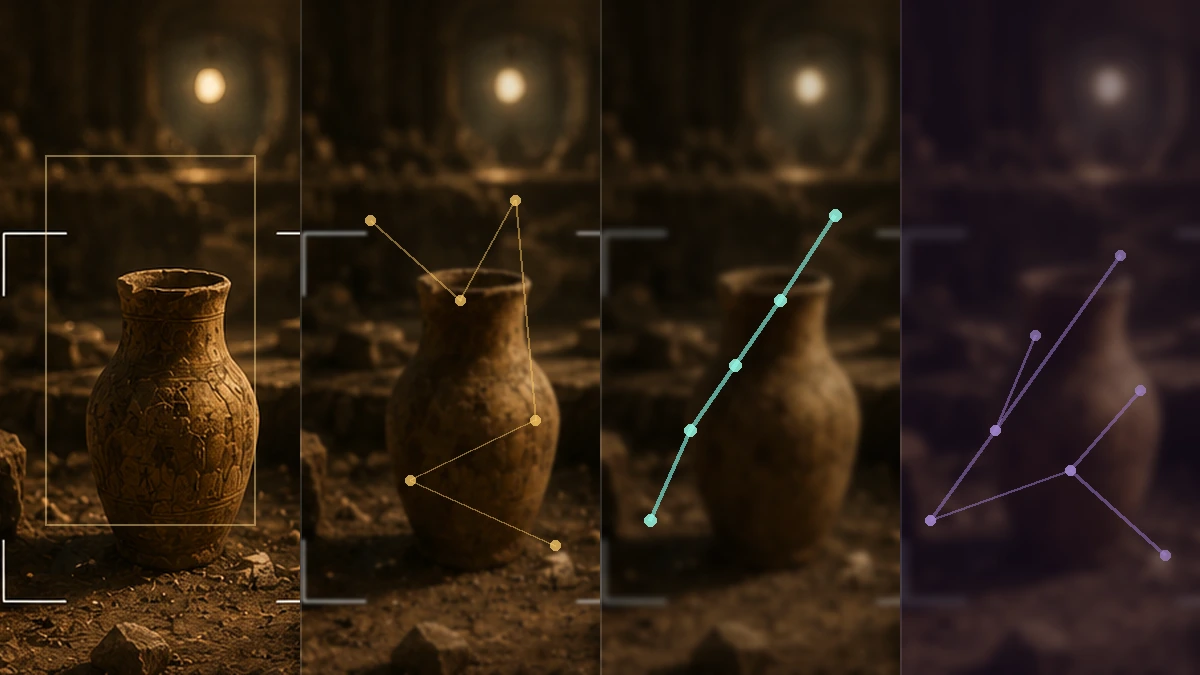
When someone says “that is a fact,” the phrase sounds as if the discussion is over. In everyday conversation, however, the label fact is often applied to very different things: direct observation, measurement, interpretation, inference, explanation, assumption, or even rumor. One of the most useful habits in investigating reality is therefore to ask a simple question: what kind of claim are we hearing or making?
Do we know something directly? Are we inferring from data? Are we proposing an explanation that can be tested? Or do we have an interesting possibility for which the evidence is still thin? Good inquiry needs observations, interpretations, hypotheses, and creative possibilities; the problem begins when we confuse their status.
Speculation is not a problem because it is not yet proven. The problem begins when speculation is presented as fact.
Fact and observation
What do we mean by a fact? In a glossary published by the National Academy of Sciences, a scientific fact is described as an observation that has been repeatedly confirmed and, for practical purposes, is accepted as true. At the same time, scientific knowledge is not treated as absolutely immutable: new measurements, better instruments, or broader context can improve a description.
Consider body temperature. “The thermometer read 38.4 °C” is a report of a measurement if the instrument was suitable and used properly. From the same datum we can generate further claims: the person has a fever, probably has an infection, became infected at work, or was infected by a particular colleague. These statements do not have the same epistemic status, and each successive claim requires additional information.
Observation is not completely simple either Philosophy of science has long noted that empirical data are generated within procedures involving instruments, models, and background knowledge. If a thermometer displays a value, we need reason to think that the device is suitable for measuring temperature and that it was used in a way that yields meaningful data. Contemporary discussions of theory and observation therefore do not treat empirical data as entirely “pure” content without conceptual background.
This does not imply that every observation is merely a subjective story. A more useful rule follows: for factual claims, we should be able to show how the result was obtained. Who observed it, what was measured, by what procedure, when, and can the result be independently checked?
Interpretation and inference
Interpretation answers the question: what does this mean? Imagine a video in which a person stands up in the middle of a conversation and leaves the room. A relatively direct description is: the person stood up and left. Almost immediately, interpretations can appear: the person was offended, had no answer, became angry, intended to show contempt, or simply had somewhere else to be.
The recording by itself may not tell us which explanation is correct. Interpretation is not therefore a defect; without interpretation, understanding events would be extremely limited. The important point is not to confuse a description of an event with an explanation of its intention. “You did not reply for three hours” describes timing; “you ignored me for three hours” already attributes intent.
An inference can be very well supported without being directly observed If we see wet pavement, people carrying umbrellas, and droplets on windows, the inference that it recently rained is highly reasonable even if we did not see the rain itself. Several independent signs fit the same explanation.
Scientific work likewise involves inference from observed effects, measurements, and patterns. Scientific method is not simply a collection of isolated facts; it includes systematic observation and experimentation, inductive and deductive reasoning, model construction, and the formation and testing of hypotheses and theories. There is no single mechanical sequence that fully describes every scientific discipline.
Hypothesis, prediction, and testing
A hypothesis is a proposed explanation exposed to testing The National Academy of Sciences defines a hypothesis as a tentative statement about the natural world that leads to deductions that can be tested. If predictions fail, the hypothesis may be modified or abandoned; if tests succeed, it gains support, but it does not thereby become finally proven.
For example, “plants near the window grow faster because they receive more light” can be tested by comparing growth under controlled conditions and specifying what results should occur if the explanation is correct. A key strength of a good hypothesis is that it exposes an explanation to possible correction.
A successful prediction does not show that an explanation is the only possible one If hypothesis H predicts X and X is observed, that is evidence in favor of H, but sometimes X can also be produced by another explanation. A broken window is consistent with burglary, but it could also have been caused by a stone, a falling branch, or another event. Good inquiry therefore asks which other explanations could generate the same observation.
This protects us from a common logical mistake: treating a successful prediction as complete proof of one unique explanation.
Speculation and its legitimate place
What does speculation mean here? Speculation does not have as standardized a scientific definition as hypothesis. In this article, the term refers to a possible explanation or idea that currently lies considerably farther from direct evidence, or that has not yet been formulated clearly enough for serious testing.
Suppose an archaeological object contains one large circle surrounded by twelve smaller circles. The existence and arrangement of the circles can be described. We may interpret the arrangement as intentional. We might formulate the hypothesis that the twelve circles represent months and specify what additional artifacts or texts would support or undermine that explanation. If, without additional evidence, we say that they represent twelve lost civilizations, we have moved much farther beyond what the object itself supports.
An unusual possibility is not false merely because it is unusual. The relevant question is what currently supports it and how it could be tested.
Speculation has a legitimate role Inquiry would not progress if we were allowed to think only about what had already been demonstrated. Many research paths begin with “What if …?” and scientific work contains creativity, modeling, trials, and repeated movement between evidence and ideas.
The problem is therefore not speculation but erasing the label speculation before the work has been done that could move an idea closer to evidence. An epistemically honest statement can be: “This is currently speculative. We do not yet have sufficient evidence, but we can identify what we would need to look for in order to test it more seriously.”
Different claims carry different evidential weight
Four claims, four different weights Suppose a photograph of a crowd shows a person with a raised right hand. If the image is authentic and clear, that can be described directly. Saying that the person is greeting the crowd is an interpretation. Saying that the raised hand is part of a particular political salute is a hypothesis that can be investigated using surrounding video, historical context, other photographs, and testimony. Saying that it secretly signals membership in a hidden organization remains speculative without further evidence.
Online, this is where a common escalation occurs: possible → interesting → probable → proven, while the amount of evidence has not actually increased between the steps.
“It could be” is a very low evidential threshold An enormous number of things could be possible. A light in the sky could be an aircraft, satellite, meteor, drone, atmospheric phenomenon, or something not yet correctly identified. When the data are insufficient, “we do not know” may be the most accurate answer.
The unknown is not an empty space that must immediately be filled by the most interesting story. Eliminating three explanations does not automatically prove the fourth unless the list of possibilities is genuinely exhaustive and the eliminations are reliable.
“I don't know” is not evidence for whichever explanation remains on a list of possibilities.
How language organizes facts, opinions, and theories
Facts do not organize themselves A collection of measurements by itself does not determine causal relationships. We connect data through models, explanations, and hypotheses that generate testable predictions. Science is therefore not only a collection of increasingly numerous facts but also a process of developing explanations that organize them.
A hypothesis also does not “turn into a fact” after enough support. The National Academy of Sciences describes a theory as a well-substantiated explanation of an aspect of the natural world that can incorporate facts, laws, inferences, and tested hypotheses. Facts, hypotheses, and theories serve different roles rather than occupying successive rungs of one ladder.
Opinion is another separate category The word opinion covers different types of statements. “Vanilla is my favorite ice cream” is a preference. “I think it will rain tomorrow” is a forecast that can be evaluated. “I think Earth is about 4.5 billion years old” is grammatically framed as a personal opinion but refers to an empirical question supported by a large body of evidence.
Calling something an opinion therefore does not determine its evidential quality. What matters is the kind of question involved and what supports the claim.
The same applies to the word theory In everyday language, “I have a theory” often means “I have an idea.” In science, theory has a stronger meaning: a well-supported explanatory framework that connects a substantial body of observations, inferences, and tested hypotheses.
A scientific theory is therefore not merely a hypothesis waiting to become a fact. These categories describe different roles in knowledge-making.
Language often reveals epistemic status The words proves, shows, supports, is consistent with, suggests, could mean, and might be are not interchangeable. They express different strengths of claim. If the evidence is weak and we say “proves,” we have increased the force of the evidence using language alone. If the evidence is strong but we only say “maybe,” we may understate it unnecessarily.
The strength of our language should roughly track the strength of our evidence.
Five questions for a quick claim check
- What was directly observed or measured? Strip away explanations and write down the datum itself.
- What is already interpretation? Where did we move from “what happened” to “what it means”?
- What explanation is being proposed? Is there a sufficiently clear hypothesis?
- What would we expect if the hypothesis were correct? A useful hypothesis directs the search for new information, not only the interpretation of what is already known.
- Which other explanations fit the same evidence? The more viable alternatives remain, the lower our confidence should usually be.
This process does not guarantee the right answer, but it makes it substantially harder to confuse our explanation with the event itself.
Keep the creativity — and the labels
THY-REALITY does not need fewer hypotheses or fewer creative possibilities. It needs hypotheses that are labeled clearly and speculation that knows it is speculation. Nor do we need a world in which we speak only about what has been directly observed, because without inference and models we would understand very little.
We do need to distinguish between “I observed this,” “I infer this,” “I propose this explanation,” and “for now, I imagine this possibility.” These statements can concern the same object while carrying very different evidential weight.
Before asking whether a claim is true, ask what kind of claim it is.
Sources and further reading
- National Academy of Sciences (1999). Science and Creationism: A View from the National Academy of Sciences, 2nd ed. National Academies Press Source
- Stanford Encyclopedia of Philosophy. Scientific Method. Substantive revision 8 August 2026 Source
- Stanford Encyclopedia of Philosophy. Theory and Observation in Science. Substantive revision 12 January 2026 Source
- National Research Council (2007). Taking Science to School: Learning and Teaching Science in Grades K–8. National Academies Press. DOI: 10.17226/11625 Source
- University of California, Berkeley (2009). Understanding Science website clarifies what science is, is not Source