Croatia 1990–1991: From Political Dispute to War — Krajina, the JNA, Tuđman, and the Serbian Rebellion
How Croatia moved from the 1990 elections, parallel Serb structures and a changing JNA role into open war.
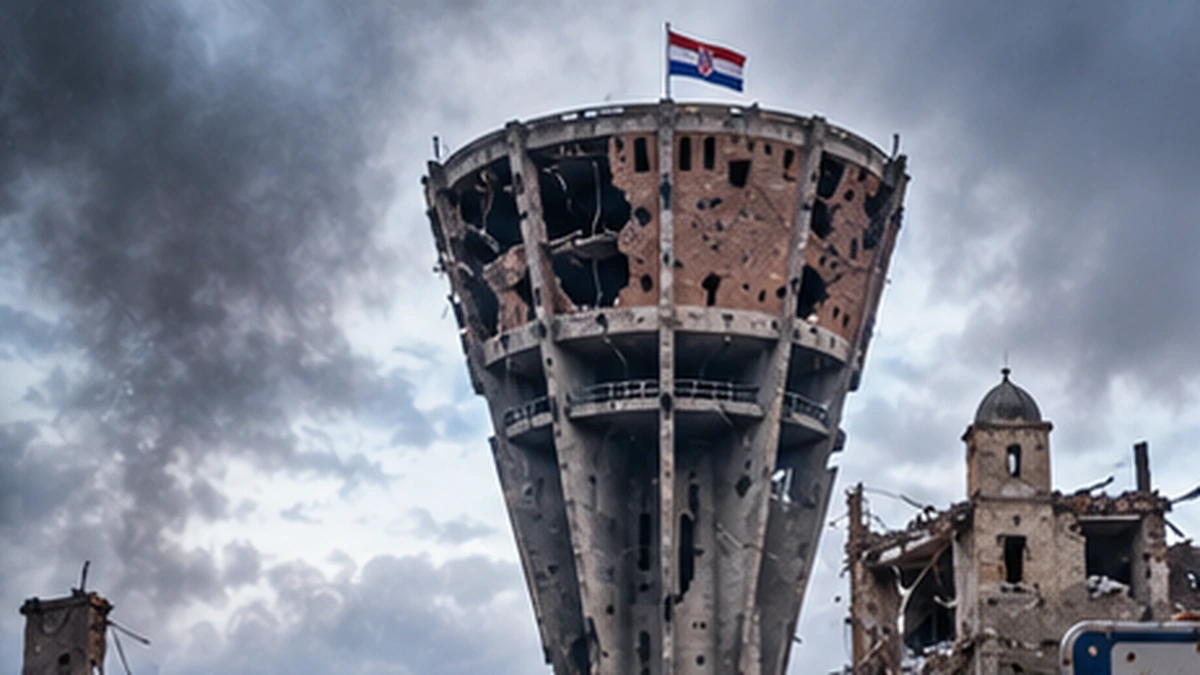
A war for which everyone chooses a different beginning
If we ask when the war in Croatia began, we will get several answers. With the elections in April and May 1990? With the removal of Territorial Defence weapons in May 1990? With the barricades around Knin in August 1990? In Pakrac and at Plitvice in March 1991? In Borovo Selo on 2 May 1991? On 25 June with Croatia’s declaration of independence? Or in August and September, when the JNA began taking part in major attacks on Croatian forces and settlements?
Every date tells us something real. None tells the whole story by itself. The war was not one decision. It was a process in which political democratization, the collapse of the common state, national fears, constitutional conflict, parallel authorities, armament, the breakdown of the police monopoly, Serbia’s role, and the transformation of the JNA gradually merged into war. That is why it is important not to begin at the end.
The 1990 elections: democracy arrives in a country where the national question is already no longer calm
Croatia’s first multi-party elections were held in April and May 1990. The Croatian Democratic Union — HDZ — led by Franjo Tuđman won. The electoral system was majoritarian and two-round, which converted the victory into a substantially larger parliamentary majority. With around 42 percent of the vote, HDZ won 205 of 351 seats, roughly 58 percent of all mandates.[1] This is an important detail. It is not accurate to say that 58 percent of the seats meant the same level of voter support. The electoral system magnified the result. But the political effect was clear.
After decades of one-party rule, a party came to power that placed much stronger emphasis on Croatian statehood, national sovereignty, multi-party democracy, a market economy, and the possibility of a much looser Yugoslavia or an independent Croatia. For much of the Croatian majority, this was a democratic break with the past. For a significant part of Croatia’s Serbs, the same change looked different. Croatian Serbs were not a small, abstract minority.
According to the 1991 census, Croatia had approximately 4.78 million inhabitants. Around 3.74 million, or 78.1 percent, identified as Croats. 581,663 people, around 12.2 percent, identified as Serbs.[2] But this population was not evenly distributed. In parts of the Knin Krajina, Lika, Kordun, Banija/Banovina, western Slavonia, and eastern Slavonia, Serbs formed local majorities or very large shares of the population. The status of Serbs was therefore not only a classic question of minority culture. It was also a question of who would control the police, local administration, weapons, and political authority over territories whose local ethnic composition differed sharply from the Croatian average. The memory of the NDH was politically alive.
The fears of some Croatian Serbs cannot be understood without the Second World War. The Ustaša authorities of the Independent State of Croatia committed mass crimes and persecution against Serbs, Jews, Roma, and political opponents. That historical memory was not dead in 1990. It survived in family stories, partisan history, local memory, and political propaganda. When national symbols, rhetoric about historical statehood, and statements by individual nationalist politicians appeared in the Croatian public sphere, some Serbs could interpret those changes through the memory of the 1940s. This does not mean that the new democratic Croatia was a repetition of the NDH. It was not. It means that political symbols that represented restored national statehood for one person could trigger historical fear in another.
Research on the 1990 election campaign finds that Croatian and Serbian media often presented the same events in very different ways and that the campaign further sharpened national tensions.[3] The fear therefore existed. The next question is who politically shaped it and what it was turned into.
In May 1990 the JNA moves Territorial Defence weapons
On 14 May 1990, Chief of the General Staff Blagoje Adžić ordered that Territorial Defence weapons and ammunition be moved into JNA depots or placed under its direct control.[4] The order did not apply only to Croatia. It was Yugoslav-wide. A Presidency of the SFRY document dated 31 May officially justified the measure by referring to poor security at dispersed depots, weapons theft, and the danger that “extremist organizations” might gain access to arms.[4]
According to those figures, around 54 percent of Territorial Defence weapons had already been stored in JNA facilities, while 46 percent were outside them.[4] But the political consequence of the order went beyond the stated concern with depot security. A republic whose new authorities wanted increasing sovereignty lost direct access to a significant part of its reserve armament. Croatia understood the measure as disarmament.
A later entry by then-President of the SFRY Presidency Borisav Jović, cited by Croatia before the International Court of Justice, described the move more politically: according to his account, shifting the weapons would practically disarm Slovenia and Croatia so that the Territorial Defence could not be used for violent secession.[5] That is Jović’s account, not an independent judicial finding of motive. But it shows that the political dimension was not merely a later Croatian interpretation. A new leadership and new symbolism.
Rapid symbolic and political changes followed the election. The word “Socialist” was removed from the republic’s name. State symbols were changed. Croatian national symbolism gained an increasingly prominent place in public life. For many Croats these were normal consequences of multi-party democracy and departure from the communist system. For some Serbs they were evidence that the state they had known was disappearing. Here too, however, a feeling of threat must be distinguished from the legal loss of all rights. They are not the same thing.
What actually changed with the constitution?
This is one of the most politicized questions in the whole story. The 1974 Constitution of the Socialist Republic of Croatia defined Croatia as the national state of the Croatian nation, the state of the Serbian nation in Croatia, and the state of other nationalities living there.[6] The new Constitution of the Republic of Croatia, adopted on 22 December 1990, used a different formulation. It defined Croatia as the national state of the Croatian nation and the state of members of other nations and minorities, explicitly naming Serbs among them, while guaranteeing equality and national rights.[7]
Two extreme claims are therefore inaccurate. The first: “Nothing changed.” Something did. Serbs were no longer constitutionally described as the Serbian nation in Croatia in the same formulation used in 1974. Their collective constitutional position was symbolically and politically defined differently. The second: “The new constitution stripped Serbs of citizenship and all rights.” That is also false. The constitution explicitly included them among the communities whose members were citizens and guaranteed equality and national rights.[7] The real dispute was therefore deeper. It was not only about individual civil rights. It was about whether Serbs in Croatia were a constituent political nation or a national community with minority rights inside the Croatian state.
But the rebellion did not begin in December
This chronology is crucial. If the December 1990 constitution had been the direct cause of the Serbian armed rebellion, the rebellion would have followed the constitution. It did not. Political organization, a referendum, and barricades appeared months earlier. On 25 July 1990, a Serbian assembly was held in Srb, adopting declarations on political autonomy or sovereignty of Serbs in Croatia and establishing the Serbian National Council.[8] On 16 August the Serbian National Council called a referendum on Serbian autonomy. On 17 August the Croatian authorities declared it illegal and attempted to secure police stations and weapons in parts of the Serb-majority areas. That same day, barricades appeared on roads around Knin and elsewhere.[9]
The so-called Log Revolution had begun. The referendum was held from 19 August into early September and received near-unanimous support among those who participated.[9] The chronology therefore has to be stated precisely: changes in Croatian national policy and anticipated constitutional changes were part of Serbian fear and mobilization; the December constitution itself could not have caused the August barricades because it did not yet exist. From political party to parallel authority.
The Serbian Democratic Party — SDS — initially operated as a legal party in Croatia’s new multi-party system. But the political process in the Krajina areas rapidly went beyond ordinary party organization. Milan Babić became one of the most important political leaders. Milan Martić, a police official, built armed police structures. Serbian municipal associations, the Serbian National Council, parallel police structures, Territorial Defence units, and later the Serbian Autonomous Region of Krajina emerged. By the end of 1990, the political dispute had therefore acquired a territorial structure. Two rival ideas of legitimate authority were appearing on the same territory. Zagreb argued that this was territory of the Republic of Croatia and Croatian law applied everywhere.
The Krajina Serb leadership argued that Croatian Serbs had a right to organize their own political authority and could not be forced into a state from which Croatia intended to secede. Once both sides begin organizing police and armed units, a legal dispute becomes a security dispute. Serbian fear was not the same thing as the Serbian separatist project.
This distinction is essential. Some Croatian Serbs had real reasons for insecurity: historical memory of the NDH, sharp nationalist rhetoric in part of Croatian politics, a changed collective constitutional status, changed symbols, and fears of losing influence in the police and administration. But that does not mean that armed parallel authorities were the only or inevitable way to defend those interests. Milan Babić later pleaded guilty before the ICTY to his role in a campaign whose goal was the forcible and permanent removal of most Croats and other non-Serbs from roughly one third of Croatia and the incorporation of that territory into a new Serb-dominated state.[10]
He admitted political and logistical support for taking territory, assisting the organization of Territorial Defence, encouraging the acquisition and distribution of weapons, calling for JNA involvement, and using inflammatory nationalist propaganda.[10] We therefore need to distinguish between the fears of ordinary people and a political leadership that turned those fears into a territorial separatist project.
Serbia and Milošević: how far did Belgrade’s responsibility extend?
Serbian authorities and structures in Belgrade were not merely external observers of the Krajina conflict. Krajina Serb structures received political, financial, material, and military support from Serbia and from JNA structures. In his guilty plea, Milan Babić described support, armament, and JNA cooperation in the seizure of territory.[10] In the separate trial of Milan Martić, the ICTY found a joint criminal project whose objective was to create a unified Serb state area through crimes against the non-Serb population. The Trial Chamber listed Slobodan Milošević and several other political, military, and security officials among the participants.[11]
But an essential legal boundary must be preserved. Slobodan Milošević was not convicted in his own trial. He died in 2006 before the proceedings concluded, so there was no final judgment in his case.[12] It is therefore inaccurate to say: “The ICTY convicted Milošević for the war in Croatia.” It did not. What can be said is that final proceedings against other leaders established facts about organized support and a project of forcible removal of non-Serbs; in the Martić Trial Chamber’s findings Milošević was identified among participants in that project, while his own criminal trial ended without judgment. Croatia arms itself as well.
Zagreb did not remain passive. Because Croatia’s Territorial Defence had lost direct control over much of its armament after the JNA’s May decision, the new authorities expanded the arming of the police and began building new security structures. Weapons were also acquired covertly. In 1991 the Croatian National Guard — ZNG — was established as the nucleus of the emerging Croatian armed forces. The conflict was therefore not a simple story in which only one side was armed and the other made no military preparations. By spring 1991, both political sides increasingly expected the possibility of armed conflict. The major difference lay in initial access to heavy weapons. The JNA possessed tanks, artillery, aircraft, major depots, and a professional command system.
Croatian forces were only beginning to build those capabilities. Pakrac and Plitvice: a police dispute becomes armed conflict. In early March 1991, armed confrontation occurred in Pakrac. At the end of the month, conflict followed at Plitvice. Such incidents mattered more than the number of casualties alone. They demonstrated that parallel police structures were no longer just a political declaration, that Croatian police were trying to reassert state authority, and that the JNA was increasingly entering between both sides as an armed arbiter. But an arbiter with political interests of its own has difficulty remaining neutral for long. Borovo Selo: 2 May 1991.
Borovo Selo was one of the crucial moments of early escalation. On 2 May 1991, 12 Croatian police officers were killed and 21 wounded in an armed clash in the village near Vukovar.[13] The event shocked Croatia. It demonstrated that the conflict was no longer confined to roadblocks and political declarations. The latest professional analysis from 2026 treats the episode as a prepared urban ambush in which heavy Croatian losses were also the result of poor tactical preparation, lack of protected vehicles, weak command, and the institutional unpreparedness of a police system facing military-style combat.[14] This is a useful corrective to commemorative politics. The event was bloody. But understanding it requires more than saying it was simply treachery or simply spontaneous self-defence.
At Borovo Selo, local Serb armed groups, volunteers, Croatian police, the JNA, and the wider political conflict were already intersecting. The JNA then entered the area as a buffer force. But its impartiality was becoming increasingly difficult to sustain.
The JNA: from common army to one of the principal forces of the war
In 1990 the JNA was formally not a Serbian army. It was the armed force of the SFRY. Its members came from all republics, and its formal mission was the defence of the federation. Even in the first local clashes of 1991, it often appeared as a force intended to separate Croatian police from Serbian armed groups. The U.S. State Department’s historical overview notes that the JNA initially presented itself as separating the sides, but it soon became apparent that it favored Croatian Serbs.[15] The change should not be treated as a magical instant. The JNA did not transform overnight from a neutral Yugoslav army into a Serbian force. It was a process.
But by late summer 1991, concrete judicial findings already make neutral separation impossible as a general description of its conduct. Kijevo: 26 August as a clear turning point. In the Milan Martić case, the ICTY examined the attack on Kijevo, a Croatian village surrounded by territory controlled by Krajina forces. On 26 August 1991, forces of the JNA’s 9th Corps together with police and Territorial Defence units of the SAO Krajina attacked Kijevo.[16] In its broader analysis of the JNA’s role, the court found that the army had in earlier stages sometimes interposed itself between the sides, but at Kijevo it took part in the attack alongside Krajina forces.[16] After the attack, homes were looted and burned, while the church was damaged and later destroyed.[16]
This matters. It is not based only on the later national memory of one side. It rests on judicial reconstruction of a specific event. From late August onward, it is therefore much harder to describe the JNA solely as a neutral federal army. The Croatian referendum and independence do not stop the violence — they place it in a new framework.
Croatia held a referendum on its future constitutional status on 19 May 1991. A large majority of participants supported a sovereign Croatia and the possibility of leaving Yugoslavia. A large share of Croatian Serbs boycotted the vote. On 25 June, Croatia and Slovenia declared independence. The Brioni Agreement suspended implementation of part of those decisions for three months. But armed conflict in Croatia was already under way. This is important. The war did not begin because Croatia suddenly became independent on 25 June.
Barricades, parallel authorities, police clashes, and deaths had already occurred. The declaration of independence did, however, transform the political framework. For Zagreb, the conflict increasingly became the defence of the territory of its own state. For the Krajina leadership, it became a struggle to prevent Serb-populated areas from becoming part of an independent Croatia. By September the dispute had become a major war.
In its 2015 summary of the evidentiary record, the International Court of Justice stated that at least from September 1991 the JNA intervened in fighting against Croatian government forces.[17] By the end of the year, the JNA and Serb forces controlled approximately one third of the territory of the former Socialist Republic of Croatia.[17] This was a qualitatively different stage of conflict. We are no longer speaking of a police station, a local barricade, or a few dozen armed men. We are speaking of tanks, artillery, brigades, sieges of cities, front lines, refugees, and systematic territorial seizure.
Vukovar: the city where the imbalance of military power became visible to everyone
Before the war, Vukovar was a multi-ethnic city. In summer and autumn 1991 it became one of the central battlefields. From late August until 18 November, the city was besieged and attacked by JNA forces together with Serbian Territorial Defence and paramilitary units. The scale of destruction made Vukovar a symbol of the war. After the fall of the city, one of the best-known crimes of the Croatian war followed. Wounded people, prisoners of war, and others were removed from Vukovar hospital under JNA control. Part of the group was transferred to Ovčara. In the trial of JNA officers, the ICTY reconstructed that more than 200 people were killed there; the judgment confirmed by name 194 victims from the indictment through exhumation and identification.[18]
The court found that members of Serbian Territorial Defence and paramilitary groups carried out the killings after JNA protection had been withdrawn. Mile Mrkšić was convicted of aiding and abetting the murders by withdrawing military protection from the prisoners. Miroslav Radić was acquitted.[18] Precision matters here too. It is not correct simply to repeat the original indictment’s number as the final proven figure. What matters most is that there is a detailed judicial reconstruction of the crime.
Dubrovnik: the explanation of protecting local Serbs no longer works
The attack on the Dubrovnik area reveals another dimension of the JNA’s role. There was no issue of a large local Serbian community in the Old Town that the federal army needed to separate from Croatian forces. In autumn 1991, the JNA conducted a military campaign in the Dubrovnik area. On 6 December, the Old Town was shelled for hours.
In the trial of General Pavle Strugar, the ICTY found that the shelling of the Old Town was deliberate, was not directed against actual or suspected Croatian military positions inside the Old Town, and caused civilian casualties and extensive damage to protected cultural heritage.[19] Strugar was finally convicted of crimes connected with the attack on civilians and cultural property.[19] Dubrovnik is therefore important to the question of what the JNA had become by the end of 1991. The explanation that the army was merely separating Croats and local Serbs is not sufficient here.
Croatian forces also committed crimes against Serbs. Any account that seeks to understand the war rather than construct a national myth has to include this. Croatian armed and security forces committed crimes against Serbian civilians in 1991. Among the best-documented cases are Gospić and Pakračka Poljana. In Gospić, Serbian civilians were illegally detained and killed in autumn 1991.
Human Rights Watch later highlighted the case as one of the relatively rare early examples in which Croatian courts conducted a serious prosecution and convicted those responsible.[20] At Pakračka Poljana, a reserve unit of the Croatian Ministry of the Interior was based in autumn 1991. Illegal detention, beatings, torture, and killings have been documented, primarily against Serbian civilians but also against some Croats.[21] These crimes should not be minimized because Croatia was under attack or because other forces carried out larger campaigns of violence.
A civilian remains a civilian. Chronology still matters, however. Crimes committed by Croatian forces in autumn 1991 cannot explain the Serbian barricades of August 1990. They could, however, reinforce fear among Serbs, intensify desires for revenge, and further strengthen national narratives in which coexistence appeared unsafe.
Was this a civil war or aggression?
The terms are politically charged. Croatia’s official history speaks of the Homeland War and aggression. Serbian nationalist narratives have long emphasized civil war and a Serb rebellion against Croatian secession. Rather than choosing a slogan, it is more useful to describe the concrete facts. At the beginning of the conflict, Croatian Serbs were inhabitants of the same republic, and much of the violence had characteristics of an internal armed conflict. At the same time, Krajina structures received support from Serbia, while the JNA progressively changed from a federal institution into a direct military actor against Croatian government forces. By late summer and autumn 1991, JNA units together with local Serbian and paramilitary forces were seizing Croatian territory.[16][17] A single label therefore obscures the evolution of the conflict.
A more precise description is: the war began as an internal constitutional, political, and ethno-territorial conflict involving an armed rebellion by part of the Croatian Serb population, then developed — through the direct role of the JNA, support from Serbia, and the collapse of the federation — into a major war for control of the territory of the Republic of Croatia. Did Serbia “attack Croatia”? Serbia did not formally declare war on Croatia in 1991. The JNA was formally still the army of the SFRY. That is one reason the later legal proceedings were complex. But a formal label does not exhaust the actual role.
In the Martić case, the ICTY found a project to create unified Serbian territory through forcible removal of non-Serbs and, at trial level, identified political and security officials from Serbia among the participants.[11] Milan Babić admitted taking part in the political, military, and logistical infrastructure of such a project and encouraging JNA participation.[10] In Croatia v. Serbia, the International Court of Justice found mass killings, serious bodily or mental harm, and forced displacement of Croats in a number of areas, but did not find the specific intent required for the legal qualification of genocide and therefore rejected Croatia’s genocide claim.[22] This is an important double boundary.
Crimes and forcible displacement are documented. Genocide in the legal sense was not proven. Milošević does not explain every Serbian decision. It is tempting to reduce the story to one man. Slobodan Milošević played an exceptionally important role. Serbian politics, media, security structures, and the relationship to the JNA strongly affected the conflict. But Croatian Serbs were not puppets without political agency.
Milan Babić, Milan Martić, Jovan Rašković, local SDS organizations, municipal assemblies, police officers, and local Territorial Defence units had their own interests, rivalries, and choices. Babić later even broke politically with Milošević over the Vance peace plan. It is therefore more accurate to speak of an interaction among a local Serbian separatist project, support from Serbia, and increasingly close military linkage with the JNA. That is more complex than saying every order came directly from a single office in Belgrade. It is also better supported by the documents. Tuđman was not only a symbol of democratic independence either.
For many Croats, Franjo Tuđman was the president under whom the country achieved independence. But a historical portrait also has to include the more difficult aspects of his politics. HDZ’s national rhetoric and changes in the symbolic language of the state increased insecurity among some Serbs. The new constitutional formulation changed their collective status. Nationalist and exclusionary tones appeared in parts of Croatian political life. Croatian security forces later committed documented crimes against Serbian civilians. All of this belongs in the story. But none of it means that establishing a separate Serbian territory in 1990 was a democratically unavoidable consequence, that forcibly removing Croats from Krajina was legitimate self-defence, or that Croatian nationalism gave the JNA the right to help seize territory.
The political mistakes of one side are not a license for the crimes of another. What had actually emerged by the end of 1991? By the end of the year several parallel processes were visible. Croatia had declared independence, built its own army, lost control of roughly one third of its territory, suffered destruction of cities and mass displacement, and was moving toward international recognition. The Krajina Serb authorities had built their own political and military structure, expelled Croats and other non-Serbs from areas under their control, and in December 1991 proclaimed the Republic of Serbian Krajina.[10] The JNA had moved from being a common federal army into direct cooperation with local Serbian forces, participated in major attacks, and as the federal state disintegrated was losing the character of an institution representing all republics equally.
Serbia was becoming the political, financial, security, and logistical center of Serbian projects beyond its borders. This was the new reality with which 1992 began. What was cause and what was consequence? In this war, causes and consequences quickly became intertwined. Croatian nationalism increased Serbian fear. Serbian separatism increased Croatian fear. Croatian armament became evidence of danger for Serbs. Serbian barricades and weapons became evidence for Zagreb that even more armament was necessary. The JNA presented its interventions as protection of order and separation of the sides. Croatia increasingly understood JNA presence as protection of the Serbian rebellion. Every new incident appeared to confirm the darkest interpretation of the previous one.
This is the mechanism of escalation. It is not necessary to believe that everyone wanted war from the beginning. It is enough that each next step made peace politically more costly and military preparation more rational. The most important correction: this was not “ancient hatred”. Croats and Serbs were not peoples who had lived for centuries in uninterrupted mutual war. Even in 1991 there were mixed marriages, mixed cities, mixed villages, friendships, workplaces, and people who identified as Yugoslavs. War required the political and institutional production of new boundaries. It required parties, media, local authorities, police, weapons, military structures, propaganda, and concrete decisions by people with power. That does not mean identities were unreal. It means identity by itself does not shoot. Institutions and people shoot.

What can the evidence support?
Serbian fears were not completely invented. Historical memory, nationalist rhetoric, symbolic change, and the altered collective constitutional formulation were real factors. The new constitution did not strip Serbs of citizenship or all rights. It changed their collective constitutional definition, but explicitly named Serbs among the communities of citizens and guaranteed equality and national rights.[7] The armed separatist process began before the December constitution. The Serbian assembly in Srb, the referendum, and the August barricades all predated the constitution.[8][9]
The Krajina leadership did not remain at the level of a demand for cultural autonomy. Babić’s guilty plea and the Martić judgment document a project of territorial seizure and forcible removal of Croats and other non-Serbs.[10][11] The JNA was not simply a “Serbian army” from the beginning. Its role changed over time. But by late summer 1991, there is documented JNA participation in attacks alongside Krajina forces.[16] Croatian forces also committed crimes against Serbian civilians.
Gospić and Pakračka Poljana are documented examples.[20][21] Those crimes do not explain the beginning of the Serbian rebellion in 1990. They occurred later. Milošević’s influence is documented, but the ICTY never delivered a final judgment on his own criminal responsibility. He died before the end of the trial.[12] The ICJ did not find genocide in Croatia. It found acts of mass violence but not the specific genocidal intent required by the Convention.[22]
And then comes Bosnia
By the end of 1991, two relatively clear territorial sides had already emerged in Croatia: the Croatian state, and areas controlled by Krajina Serbs and the JNA. Bosnia and Herzegovina would be far more complicated. None of its three principal communities would possess its own republic that could simply be taken out of Yugoslavia without confronting the claims of the other two. Bosniaks — then constitutionally called Muslims. Serbs. Croats. All lived intermingled across the same territory. And each of the three major political projects had a different answer to the question: what should Bosnia become after Yugoslavia breaks apart? From here the series continues with Bosnia 1992: A Republic Without a Majority — Referendum, Three National Political Projects, and the Beginning of the Bloodiest War of the Breakup
Sources and further reading
- Frontiers in Political Science. “Rethinking representative democracy in Croatia,” 2024. Overview of the 1990 electoral system and HDZ’s result: around 42% of votes and 205 seats, roughly 58% of parliament. Source
- Croatian state statistics / European demographic reviews. 1991 census: 4,784,265 inhabitants, 3,736,356 Croats (78.1%) and 581,663 Serbs (12.2%). Source
- Pauković, Davor. Study of Croatian and Serbian press and the 1990 election campaign, addressing growing national tensions and divergent media interpretations. Source
- Presidency of the SFRY / JNA General Staff order, 14 and 31 May 1990. Documents reproduced in material before the International Court of Justice concerning transfer of Territorial Defence weapons and the Presidency’s official explanation. Source
- Republic of Croatia, Memorial before the International Court of Justice. Croatia cites Borisav Jović’s entry describing the transfer as practical disarmament of Slovenia and Croatia. This is a party submission quoting a political actor, not an independent ICJ finding. Source
- 1974 Constitution of the Socialist Republic of Croatia, Article 1(2). The formulation defining Croatia as the national state of the Croatian nation, the state of the Serbian nation in Croatia, and the state of other nationalities is reproduced in judicial material. Source
- Constitution of the Republic of Croatia, 22 December 1990, Narodne novine 56/1990. Primary source explicitly naming Serbs among national communities and guaranteeing equality and national rights. Source
- Knežević, Domagoj. “Serbian Democratic Party from the constitution of the first multi-party Parliament to the outburst of Serbian rebellion in Croatia in August 1990.” Radovi HAZU, 2018. Source
- ICTY, Prosecutor v. Milan Martić, Trial Judgement. Reconstruction of July–August 1990: the Serbian assembly in Srb, the Serbian National Council, the autonomy referendum, the Croatian ban, and the road barricades. Source
- ICTY, Prosecutor v. Milan Babić. Babić admitted participation in persecution of Croats and other non-Serbs, support for territorial seizure, organization of Territorial Defence, armament, and securing JNA involvement. Source
- ICTY, Prosecutor v. Milan Martić. Martić was sentenced to 35 years. The Trial Chamber found participation in a joint criminal project aimed at creating a unified Serb state area through crimes against non-Serbs. Source
- ICTY. “Prosecution Case — Croatia and Bosnia and Herzegovina.” The tribunal explains that Milošević died before the conclusion of his trial and therefore no judgment was delivered in his case. Source
- Croatian Ministry of the Interior. Official figures for Borovo Selo: 12 Croatian police officers killed and 21 wounded on 2 May 1991. Used primarily for casualty figures. Source
- Galović, Ivan. “Borovo Selo 1991: Urban Ambush and the Tactical Failure of a Security System in Transition.” Police and Security, 35(3), 2026. Recent professional analysis of the event as an urban ambush and of Croatian police tactical/institutional unpreparedness. Source
- U.S. Department of State, Office of the Historian. “The Breakup of Yugoslavia, 1990–1992.” Notes that the JNA initially appeared to intervene between the sides but increasingly favored Croatian Serbs. Source
- ICTY, Prosecutor v. Milan Martić — Kijevo. Judicial reconstruction of the 26 August 1991 attack by JNA 9th Corps forces together with SAO Krajina forces, including looting, burning, and destruction. Source
- International Court of Justice. Summary of the Judgment of 3 February 2015, Croatia v. Serbia. Summarizes that by at least September 1991 the JNA was intervening against Croatian government forces and that JNA and Serb forces controlled roughly one third of Croatia by year’s end. Source
- ICTY, Prosecutor v. Mrkšić, Šljivančanin and Radić. Judicial reconstruction of Ovčara; 194 victims from the indictment were identified through exhumation and autopsy. Mrkšić was convicted of aiding and abetting murder; Radić was acquitted. Source
- ICTY, Prosecutor v. Pavle Strugar. Final findings on the deliberate shelling of Dubrovnik’s Old Town on 6 December 1991 and damage to civilians and protected cultural property. Source
- Human Rights Watch. “The Real State of War Crimes Prosecutions in Croatia,” 2004. Discusses the prosecution and convictions for the killing of Serbian civilians around Gospić in 1991. Source
- Serbian National Council — crimes archive. “Pakračka Poljana.” Summary of documented unlawful detention, torture, and killings by a reserve Croatian Interior Ministry unit in autumn 1991. Source
- International Court of Justice. Application of the Genocide Convention (Croatia v. Serbia), Judgment/Summary, 3 February 2015. The Court rejected Croatia’s genocide claim for lack of proof of specific genocidal intent; Serbia’s counterclaim was also rejected. Source 1 Source 2