78 Days: NATO’s 1999 Bombing of Yugoslavia — Military Targets, Civilian Casualties, and the War in Kosovo
What NATO bombed during 78 days, how many civilian deaths can be documented, and what was simultaneously happening to Kosovo’s population.
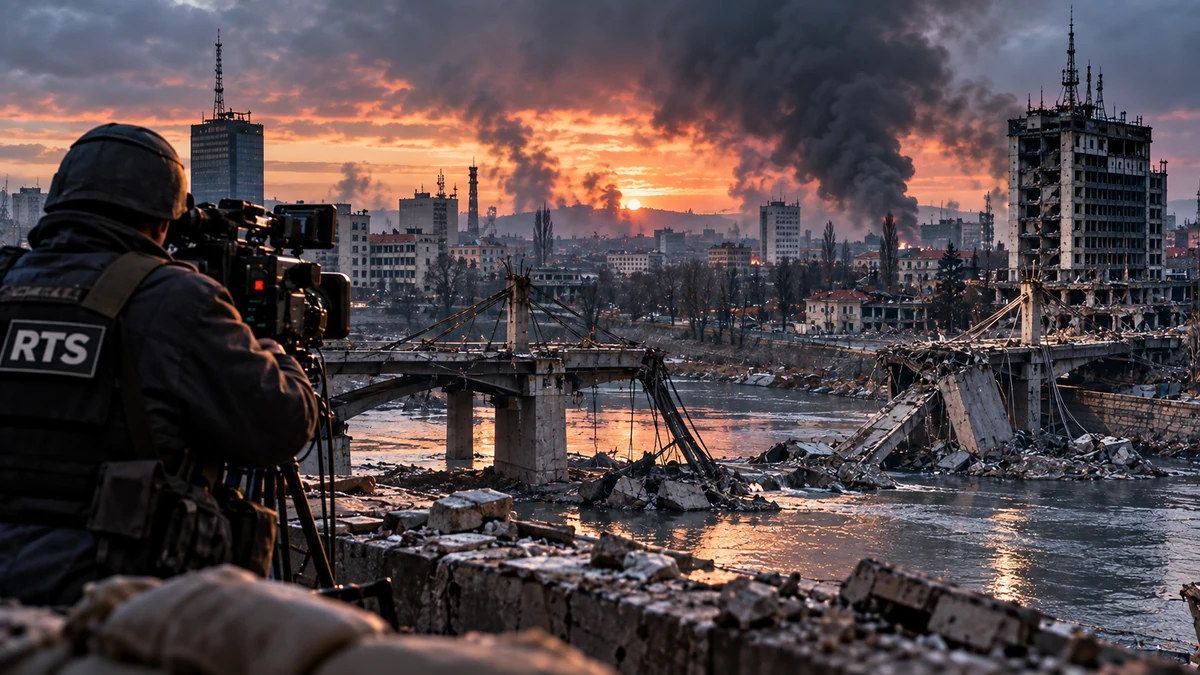
24 March 1999
On the evening of 24 March, NATO aircraft began striking targets in the Federal Republic of Yugoslavia. The operation was called: Operation Allied Force. NATO justified the campaign as a means to: stop violence and repression in Kosovo; force the withdrawal of Yugoslav military, Serbian police, and paramilitary forces; enable the return of refugees and displaced persons; deploy an international security presence; and secure a political settlement providing substantial autonomy for Kosovo.[1] As shown in Rambouillet 1999: Račak, Appendix B, and the Road to NATO’s Bombing Campaign, however, no United Nations Security Council resolution explicitly authorized the use of military force before the bombing began. The question of whether the initial decision to use force was itself legally authorized is therefore not re-litigated here. The central question here is different: how was the war conducted, and what happened to civilians on both sides during those 78 days?
How large was the operation?
NATO aircraft flew more than 38,000 sorties during the 78-day campaign. The later ICTY prosecution review used figures of: 38,400 total sorties, 10,484 strike sorties, and 23,614 air munitions delivered or launched.[2] NATO reported no Allied combat deaths caused by hostile action during the air campaign.[1] That mattered for how the war was fought. The Alliance sought to conduct the campaign primarily from the air, minimize risk to its own pilots, and avoid a ground invasion. But reducing risk to the attacker can change the distribution of risk for people on the ground. That later became one of the central legal and ethical controversies surrounding the campaign.
What did NATO seek to destroy?
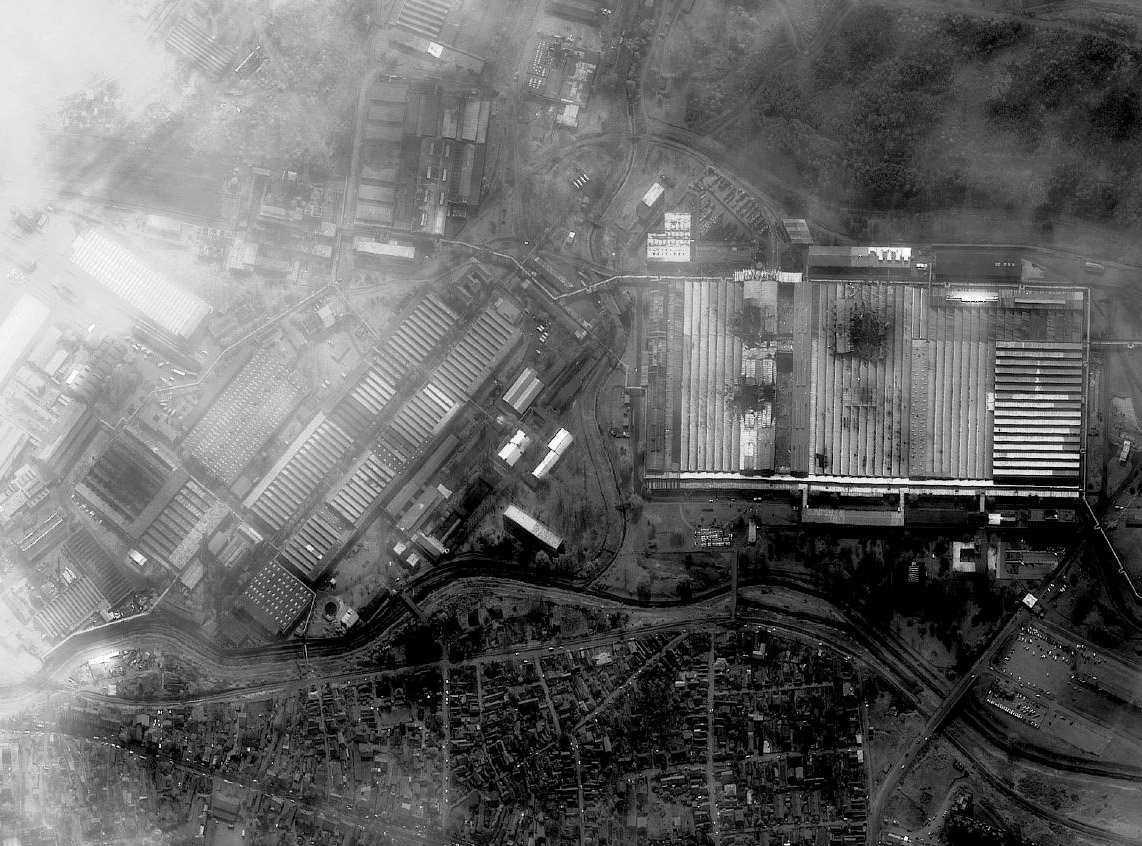
In the opening phase, major target categories included: radars; air defenses; military command posts; communications systems; airfields; barracks; depots; and other facilities linked to the Yugoslav armed forces.[1][2] The campaign gradually expanded. Targets also included: bridges; railways; roads; oil refineries; military-industrial plants; state communications; the electrical grid; government ministries; and parts of the media infrastructure.[2] NATO linked such targets to: military movement; command and control; air defense; military logistics; and the functioning of the state apparatus. Critics argued that for so-called dual-use facilities — objects serving both military and civilian purposes — the boundary between a military objective and civilian infrastructure can become dangerously broad.
Electricity: military command or pressure on society? The electrical grid is one of the clearest examples. NATO used graphite or conductive munitions designed to temporarily disable electrical systems. Transformers and other installations were also later attacked. At a 25 May press conference, NATO spokesman Jamie Shea was asked why around 70 percent of the country was without electricity and therefore also suffering disruptions to water supply. His answer was straightforward: electricity also powers military command-and-control systems.[3] This captures NATO’s logic. The grid was not attacked merely because it was a grid.
NATO connected it to military operations. But the civilian consequences were obvious: homes lose power; hospitals are affected; water pumps stop; industry and transport are disrupted; and ordinary life becomes harder. The legal question is therefore not only: does the military use electricity? It is also: does the concrete anticipated military advantage justify the foreseeable civilian harm of a specific attack? Bridges: when the target remains military but people are on it.
Bridges were an important category of target. The military rationale was logistical: bridges can carry troops, fuel, weapons, and supplies. But a bridge is also a civilian space. It carries: trains, buses, cars, ambulances, and pedestrians. Bombing bridges therefore produced several of the best-known civilian tragedies of the campaign.
Grdelica Gorge: a passenger train on the bridge
On 12 April, a NATO aircraft attacked the railway bridge over the South Morava in the Grdelica Gorge. At that moment a civilian passenger train was crossing. Two missiles struck. The ICTY review committee used a conservative figure of: at least 10 dead and at least 15 wounded.[2] Human Rights Watch, after its own investigation, listed 20 dead.[4] That difference should be preserved. There is no need to erase serious source disagreement for the sake of a single perfect number.
NATO said the bridge was a military supply route and that the pilot saw the train too late. A more difficult question followed: a second missile was fired after the first strike. Amnesty International and Human Rights Watch both questioned whether the attack should have been terminated at that point.[5] The ICTY review committee concluded that the available evidence did not show the degree of recklessness required to justify a criminal investigation.[2] The same event therefore received different legal assessments. Đakovica: military vehicles and refugees on the same road.
On 14 April, NATO aircraft attacked an area between Đakovica and Dečani. The intended targets were forces believed to be participating in village burnings and security operations. But convoys of Kosovo Albanian refugees were also hit. The ICTY review used an estimate of: 70 to 75 civilian deaths and more than 100 wounded.[2] Human Rights Watch documented approximately 73 deaths.[6] After the incident NATO changed aspects of its rules of engagement. Pilots were told to improve visual identification before attacking vehicles on the ground.[6] That matters. Changing the rules after civilian deaths indicates that the Alliance itself accepted that greater precaution was possible. RTS: 16 people who were not Milošević.
At around 2 a.m. on 23 April NATO deliberately bombed the headquarters of Radio Television of Serbia — RTS in central Belgrade. Sixteen civilian employees were killed. They included: technicians, security staff, a cameraman, a makeup artist, program employees, and other workers.[7] NATO advanced two main arguments. First: RTS formed part of the regime’s propaganda apparatus. Second: the broader television and radio infrastructure was linked to military communications and command systems.[2] This produced one of the most important legal disagreements of the entire campaign. The ICTY prosecution review committee concluded that there was insufficient basis to initiate a criminal investigation.[2]
Amnesty International took a much more severe view: it described the attack on RTS as a direct attack on a civilian object and, in its legal assessment, a war crime.[8] Human Rights Watch also questioned the legitimacy and proportionality of the target and noted that RTS resumed broadcasting within hours.[9] For THY-REALITY, the correct formulation is therefore neither: “RTS was definitively proven to be a lawful military target.” nor: “an international court convicted NATO of a war crime.” Neither is accurate. The proper formulation is: the legal assessment remained disputed; the ICTY prosecution did not open an investigation, while Amnesty International classified the strike as a war crime.
Niš: cluster bombs in a city. On 7 May NATO attacked the airport at Niš. CBU-87 cluster bombs were used. One opened prematurely. Submunitions fell on civilian areas, including locations near a hospital complex and a market. Human Rights Watch documented 14 killed and 28 wounded.[10] The ICTY review used a figure of 13 killed and 60 wounded.[2] Following Niš, U.S. President Bill Clinton prohibited further U.S. use of cluster bombs in the campaign. British aircraft continued to use them.[6]
Human Rights Watch estimated that cluster munitions caused roughly 90 to 150 civilian deaths during the war, even though they represented a comparatively small share of the weapons used.[10] The problem extends beyond the moment of impact. Some submunitions fail to explode. They remain in the ground after the war as accidental landmines. Civilian casualties can therefore continue long after the air campaign ends. The Chinese Embassy: precision weapon, wrong building.
During the night of 7–8 May, a U.S. B-2 bomber using precision-guided munitions struck the Chinese Embassy in Belgrade. Three Chinese nationals were killed. At least 15 people were wounded.[2] The United States later issued a detailed explanation. The intended target was said to be the Yugoslav Federal Directorate for Supply and Procurement, which the CIA considered a legitimate military objective. But: the target had been incorrectly geolocated; intelligence databases did not contain the correct location of the new Chinese Embassy;
and the target-validation process failed to detect the error.[11] Five GPS-guided bombs therefore struck precisely the building they had been programmed to hit. The problem was not weapon accuracy. It was: a wrong target in the targeting data chain. China did not regard the American explanation as convincing and publicly questioned whether the strike had truly been accidental.[12] The historical record therefore supports: the documented U.S. admission of error and its technical explanation; the documented Chinese rejection of that explanation; but not a factual declaration by this article that the Embassy was intentionally attacked, because the reviewed evidence does not establish such intent.
Varvarin: a bridge on market day. On 30 May a bridge over the Great Morava at Varvarin was attacked. It was a Sunday. A market was taking place nearby and there was also a religious holiday service. Ten civilians were killed and 30 wounded, 17 seriously, according to a later judgment of the German Federal Constitutional Court summarizing the incident.[13] The second strike was particularly controversial. After the first impact, people ran toward the bridge to assist the wounded. Several minutes later a second wave struck. Human Rights Watch found that after Varvarin NATO changed its bridge-targeting rules:
pilots were instructed not to attack bridges during daylight, weekends, holidays, or market days where civilian risk was higher.[6] Again, a post-incident change shows that civilian risk could have been better managed. Koriša: one of the largest single civilian incidents.
On 13 May NATO aircraft attacked an area near the village of Koriša in Kosovo. Approximately 48 to 87 civilians were killed, depending on the source and counting method.[2] NATO argued that the intended target was military and suggested that civilians may have been used as human shields. The issue remained highly disputed. The ICTY review committee did not recommend a criminal investigation. Amnesty International argued that NATO failed to take sufficient precautions to protect civilians.[5] This article therefore does not adopt either propaganda formulation: “NATO intentionally bombed refugees” or: “civilian deaths were simply an unavoidable consequence of a lawful target.” The documentary record does not justify either simplistic conclusion. Dubrava: one group of dead, two different crimes.
Dubrava Prison in Kosovo is one of the most instructive cases of the war. NATO bombed the prison in May. Human Rights Watch estimates that NATO bombs directly killed about 19 prisoners in the main strike, in addition to some deaths from an earlier attack.[14] Yugoslav authorities later attributed a much larger death toll to NATO bombing. But after the air strike, Serbian prison guards and security forces, according to Human Rights Watch, executed approximately 76 prisoners.[14] This is an important methodological lesson. If every person who died at one site is automatically attributed to one side, the result is propaganda. At Dubrava there were: prisoner casualties caused directly by NATO bombing, and a separate later mass killing committed by Serbian security personnel. Both can be acknowledged at once.
How many civilians did NATO kill?
This question has produced widely different numbers. Yugoslav authorities publicly cited figures ranging from roughly 1,200 to 5,000 or more civilian deaths.[15] Human Rights Watch conducted an incident-by-incident review and documented: 488 to 527 civilian deaths in 90 incidents.[6] The ICTY prosecution review independently compared HRW’s work with the Yugoslav White Book. It found that the White Book’s incident-level documentation was largely useful and contained approximately 495 documented civilian deaths and 820 injuries. The committee therefore used:
roughly 500 civilian deaths as its working estimate.[2] This does not mean there is a perfect name-by-name accounting of every victim. It does mean that detailed incident documentation does not support the much higher public claims of several thousand civilians directly killed by NATO bombs. The article therefore uses the formulation: around 500 documented civilian deaths caused by the air campaign, while separately acknowledging the higher figures published by Yugoslav authorities. Did NATO deliberately bomb civilians?
For the campaign as a whole there is no evidence that the operational objective was: to kill the civilian population. The ICTY review noted that roughly 500 documented civilian deaths occurred during more than 10,000 strike sorties and more than 23,000 air-delivered munitions, which in the committee’s assessment did not indicate a campaign designed to inflict mass civilian casualties.[2] But this does not mean: every individual strike was lawful. Amnesty International found serious violations of the laws of war in several incidents.[5] Human Rights Watch likewise questioned the legitimacy of some targets and the proportionality of some attacks.[6][9] The distinction is therefore between:
the purpose of the campaign as a whole and the legality of an individual attack. A campaign may not have been directed at civilians as such while specific strikes may still have been unlawful or insufficiently precautionary.
Why did the ICTY not investigate NATO?
After the war, the ICTY Prosecutor established a committee to review allegations against NATO. The committee examined: NATO public materials; the Yugoslav White Book; Human Rights Watch evidence; Amnesty International material; environmental reports; and NATO responses.[2] It ultimately recommended: that the Prosecutor not open a criminal investigation. This is sometimes converted into: “The ICTY ruled that all NATO bombing was lawful.” That is not accurate. The committee: was not a trial chamber; did not carry out a complete investigation of every strike;
did not interview all planners and operators responsible for target selection; did not conduct its own field investigation in Yugoslavia; and itself noted that some NATO replies to specific questions were general and incomplete.[2] Its conclusion was narrower: in the committee’s view, the available material did not provide a sufficient basis to prosecute individuals before the ICTY. That is not the same as a general acquittal of every strike.
Industry, refineries, and the environment
NATO also bombed industrial locations in: Pančevo; Novi Sad; Kragujevac; Bor; and elsewhere.[16] Particularly sensitive targets included: petrochemical plants; oil refineries; hazardous-material storage; and energy infrastructure. After the war, the United Nations Environment Programme — UNEP — conducted a field assessment. Its conclusion was two-sided. It did not find evidence of: an environmental catastrophe affecting the whole Balkans. But it did find serious local contamination and four major environmental hot spots: Pančevo, Kragujevac, Novi Sad, and Bor.[16] Some pollution predated the war. Some was directly connected to the consequences of the attacks. That is far more precise than either propaganda extreme: “the bombing ecologically destroyed the Balkans” or: “there was practically no environmental damage.” Both are too broad.
Meanwhile in Kosovo: the ground war becomes much worse
If this article discussed only NATO bombing, it would omit the events used politically to justify the intervention. At the same time, Kosovo experienced the largest campaign of population expulsion in the conflict. Human Rights Watch found that a major government offensive began on 20 March, four days before the first NATO strikes.[17] After bombing began, the violence expanded dramatically. This sequence matters. It does not support the statement: “NATO bombing created the expulsion campaign from nothing.” But neither does it support:
“the bombing had no relationship to the intensity of what followed.” A later British parliamentary inquiry concluded that Serbian/Yugoslav measures against Kosovo Albanians were already prepared, while the withdrawal of OSCE monitors and the start of NATO strikes contributed to their intensification.[18] That is cautious but important wording. 700,000 or 850,000?
Different numerical frameworks exist for the forced displacement of Kosovo Albanians. In Milutinović/Šainović et al., the ICTY found that deliberate acts of FRY and Serbian forces caused the departure of at least 700,000 Kosovo Albanians between late March and early June 1999.[19] Human Rights Watch, drawing on UNHCR and its own documentation, used a broader figure of: 862,979 expelled from Kosovo plus several hundred thousand additional internally displaced persons.[17] The difference is not necessarily a contradiction. The judicial figure is a conservative evidentiary minimum within a specific legal case. Humanitarian statistics attempt to capture the total movement of population.
The article therefore uses: more than 700,000 — and according to broader humanitarian estimates more than 850,000 — Kosovo Albanians were driven from Kosovo during the campaign. Were people fleeing NATO bombs, or were they expelled by the state?
This was one of the central propaganda disputes of 1999. Belgrade argued that mass refugee flows were caused by NATO bombing and the chaos of war. Some people unquestionably fled: bombs; front lines; fear; and general wartime disorder. But final judicial findings do not permit the conclusion that this explains the main mass exodus. The ICTY Appeals Chamber upheld findings that in all 13 municipalities addressed in the case, FRY and Serbian forces intentionally and forcibly displaced Kosovo Albanian civilians.[20] The court also upheld findings concerning: mass killings; sexual violence;
destruction and damage to mosques; looting; destruction of identity documents; and destruction of homes.[20] It upheld the existence, involving several senior officials, of a common criminal purpose aimed at forcibly changing the ethnic balance and preserving control over Kosovo.[20] The claim: “Albanians simply fled NATO bombing” is therefore inconsistent with the established evidence.
Operation Horseshoe: a useful story, a weak evidentiary foundation
During the bombing campaign, the German government presented intelligence regarding an alleged Serbian/Yugoslav plan known as Operation Horseshoe / Hufeisen / Potkova. Publicly, it was presented as a pre-existing plan for systematic expulsion of Kosovo Albanians. The claim became a powerful political argument. After the war, serious disputes emerged over it. The British House of Commons Foreign Affairs Committee found that the authenticity of the specific document and even the origin of the operation’s name were contested. Some military experts argued that the German defense ministry had turned more general intelligence reporting into a more definite “plan” than the original information supported.[18] The most important conclusion, however, is different. The committee stated that:
regardless of whether Operation Horseshoe existed in the precise form presented publicly, the evidence demonstrated organized elements in the campaign of expulsion.[18] Later ICTY judgments independently established an organized campaign of forcible displacement without relying on a document called “Horseshoe.”[20] Horseshoe is therefore unnecessary to prove the crimes. For precisely that reason, this article does not use it as the foundation of the story. The bombing did not immediately stop the violence.
This is an uncomfortable fact for the humanitarian argument. If the objective was to protect Kosovo Albanians, the first weeks after 24 March became the worst phase of the war for them. Human Rights Watch documented: mass expulsions; killings; looting; rape; village burnings; destruction of documents; and organized transportation toward the borders.[17] This does not prove: NATO caused the crimes. Decisions to conduct individual expulsions and killings were taken or implemented by Serbian and Yugoslav forces and associated paramilitary formations. It means: air power could not immediately protect people on the ground. In the first weeks, the opposite occurred: the civilian catastrophe intensified dramatically.
NATO and the KLA: the military relationship changes during the war. At the beginning of the air campaign the KLA was one side in an internal armed conflict. NATO did not formally enter the war as the KLA’s air force. In practice, however, interests increasingly overlapped. The KLA fought Serbian-Yugoslav forces. NATO attacked those same forces from the air. Kosovo Albanian fighters could: observe movements; report targets; tie down opposing units; and take advantage of the pressure created by bombing. That does not mean there was a single integrated chain of command. It means that by the end of the war the KLA cannot be understood completely separately from the air pressure NATO was exerting on its opponent. The KLA also committed crimes.
As shown in Kosovo Before 1999: Autonomy, Repression, Parallel Society, and the Road from Rugova to the KLA, the KLA was not only a victim of state repression. Documented abuses include: abductions; killings; unlawful detention; and attacks on Serbs, Roma, and Albanians accused of collaboration.[17] After Serbian and Yugoslav forces withdrew in June, a new wave of violence followed. Human Rights Watch documented retaliatory attacks against: Serbs; Roma; and other minorities during the period in which KFOR was taking control.[21] This matters for the conclusion of this article. The defeat of one repressive structure did not automatically produce a safe multiethnic society. The direction of violence changed.
When did the war end?
Early June brought a diplomatic breakthrough. On 3 June the Yugoslav leadership accepted principles delivered in Belgrade by: Martti Ahtisaari, and Russian envoy Viktor Chernomyrdin.[22] On 9 June the Military Technical Agreement was signed at Kumanovo between representatives of the FRY/Serbia and the international security force KFOR.[23] It provided for: withdrawal of Yugoslav and Serbian military, police, and other security forces from Kosovo; and deployment of an international security presence.
On 10 June, the Security Council adopted Resolution 1244. By 14 votes to none, with China abstaining, it authorized: an international security presence; a UN civil administration; withdrawal of Serbian/Yugoslav forces; demilitarization of the KLA; return of refugees; and a process of substantial self-government for Kosovo, while reaffirming the sovereignty and territorial integrity of the FRY.[22] NATO then suspended the bombing. On 12 June KFOR began entering Kosovo.[1] Did NATO win because of the bombs?
There is no single-factor answer. NATO’s own institutional history argues that Alliance unity and 78 days of pressure compelled Milošević to accept the demands of the international community.[1] The final decision, however, was also shaped by: Russian diplomacy; Ahtisaari-Chernomyrdin negotiations; the threat of continued escalation; infrastructure destruction; military losses and constraints; political isolation; and the possibility of a future ground operation, although no invasion was launched. A more accurate formulation is therefore: the air campaign was the central element of military pressure, but the final settlement was not the result of one bomb or one political factor. Was the June settlement identical to Rambouillet?
Not entirely. The final framework retained several central Western demands: withdrawal of Serbian and Yugoslav forces; international security deployment; return of refugees; substantial Kosovo self-government.[22] But the legal basis was now different. Resolution 1244 explicitly authorized the international civil and security presence. And as shown in Rambouillet 1999: Račak, Appendix B, and the Road to NATO’s Bombing Campaign, the June arrangement did not simply reproduce Rambouillet Appendix B and its broad NATO rights throughout the entire FRY. That distinction matters.
What did the bombing achieve? By June: Yugoslav and Serbian security forces leave Kosovo; KFOR enters; refugees begin returning in large numbers; Kosovo comes under temporary UN administration; the KLA is required to demilitarize.[22] Those are concrete outcomes. The costs were equally concrete: around 500 documented civilian deaths from bombing; destroyed infrastructure; serious local environmental contamination; major economic damage; and 78 days of war for people in Serbia, Montenegro, and Kosovo.[2][6][16] At the same time Serbian and Yugoslav forces carried out a campaign in which: at least 700,000, and according to broader humanitarian estimates more than 850,000,
Kosovo Albanians were driven from the province.[17][19] Hundreds of civilians were killed in judicially established incidents.[20] These are different forms of responsibility. One does not erase the other. The most important mistake: competing over which victims “count”.
Political memory often turns the story into a contest. One side shows: RTS; Grdelica; Niš; Varvarin; the Chinese Embassy; and says: this is the only real story of 1999. The other shows: expulsions; mass killings; burned villages; refugee columns; and says: everything else is a distraction. That logic is wrong. A civilian killed in the RTS building is not less of a civilian because Serbian forces were expelling Albanians. A Kosovo Albanian forcibly driven across the border is not less of a victim because NATO bombed a bridge in Serbia. History does not require exchanging victims. It requires separating responsibility.
What can the evidence support with a high degree of confidence?
The bombing lasted 78 days. From 24 March until suspension on 10 June 1999.[1] NATO flew more than 38,000 sorties and more than 10,000 strike sorties. The ICTY review used 38,400 total sorties, 10,484 strike sorties, and 23,614 delivered air munitions.[2] Targets were not limited to immediate battlefield units. Communications, bridges, energy infrastructure, industry, and RTS were also attacked. Roughly 500 civilian deaths caused by NATO strikes are well documented.
HRW: 488–527; ICTY review: around 500.[2][6] Yugoslav public estimates were substantially higher. Frequently around 1,200 to 5,000 or more.[15] Detailed incident evidence does not substantiate those higher figures. That does not mean every case is perfectly resolved. Individual NATO strikes remain legally disputed. Amnesty International found serious humanitarian-law violations in several attacks and classified the RTS strike as a war crime.[5][8] The ICTY Prosecutor did not open a criminal investigation of NATO.
But the review committee did not issue a judicial ruling that every attack was lawful.[2] Cluster munitions caused a disproportionately large share of civilian deaths. Human Rights Watch estimated roughly 90–150 civilian deaths from their use during the conflict.[10] According to the official U.S. investigation, the Chinese Embassy was hit because of a chain of target-location errors. China did not consider that explanation convincing.[11][12] Industrial strikes caused serious local environmental contamination.
UNEP did not find a Balkan-wide environmental catastrophe but identified four major contamination hot spots.[16] The large campaign of expelling Kosovo Albanians began before the first NATO bomb. HRW places the start of the major offensive at approximately 20 March.[17] The campaign intensified dramatically after bombing began. The precise causal relationship is debatable; the escalation in time is well documented.[17][18] More than 700,000 Kosovo Albanians were forcibly displaced from Kosovo. The ICTY established at least 700,000; broader humanitarian estimates exceed 850,000.[17][19]
ICTY judgments confirmed organized forcible displacement and other crimes by Serbian/Yugoslav forces. Including deportation, forcible transfer, killings, sexual violence, and destruction of religious sites.[20] The disputed “Operation Horseshoe” is not necessary to establish that an organized expulsion campaign existed. The authenticity of the specific document is contested, while later judicial findings independently established the campaign.[18][20] The KLA also committed abuses. And after KFOR arrived, Serbs, Roma, and other minorities became victims of retaliatory violence.[21]
What happens to Yugoslavia after 1999?
Under Resolution 1244, Kosovo formally remained linked to the FRY framework. In practice: Belgrade lost direct authority over the province; UNMIK took over civil administration; KFOR took over security; and Albanian institutions began moving from a parallel system toward actual public authority. For Serbia and the remaining Yugoslav federation, 1999 meant something else as well. Bombing damaged: transport; energy infrastructure; industry; and the wider economy. Questions about the long-term consequences of weapons and environmental exposure remained. Especially: depleted uranium. How much was used?
Where? What did UN measurements find? Is there evidence of increased cancer? What was the “Balkan syndrome”? And where does science end and political interpretation begin? That question is taken up in Depleted Uranium After 1999: What NATO Used, What UNEP Found, and What We Actually Know About Health Risk
Sources and further reading
- NATO. “Kosovo Air Campaign (March–June 1999).” Official overview: 24 March start, 78 days, more than 38,000 sorties, 10,484 strike sorties, political objectives, and suspension on 10 June. This source represents NATO’s institutional account of the campaign. Source
- ICTY Office of the Prosecutor. Final Report to the Prosecutor by the Committee Established to Review the NATO Bombing Campaign Against the Federal Republic of Yugoslavia, 2000. Central review of the campaign: 38,400 sorties, 10,484 strike sorties, 23,614 air munitions, roughly 500 civilian deaths, and incident reviews of Grdelica, Đakovica, RTS, the Chinese Embassy, Koriša, and others. Source 1 Source 2
- NATO press conference, 25 May 1999. Primary source for NATO’s explanation of attacks on the electrical grid through its relationship to military command-and-control systems. Source
- Human Rights Watch. Civilian Deaths in the NATO Air Campaign — Appendix A. Incident documentation; HRW records 20 deaths at Grdelica while the ICTY review uses a lower minimum. Source
- Amnesty International. Federal Republic of Yugoslavia (FRY)/NATO: “Collateral damage” or unlawful killings?, 5 June 2000. Finds serious concerns regarding target selection, proportionality, and precautions in several attacks. Source
- Human Rights Watch. Civilian Deaths in the NATO Air Campaign — Summary, 2000. Documents 488–527 civilian deaths in 90 incidents and examines bridges, convoys, target selection, and changes in rules of engagement. Source
- Human Rights Watch. RTS incident documentation, 23 April 1999. Sixteen RTS employees killed and sixteen wounded. Source
- Amnesty International. “Serbia: Impunity for NATO – ten years after Operation Allied Force,” 23 April 2009, and the underlying 2000 report. Amnesty legally classified the RTS strike as a war crime; the ICTY prosecution review reached a different prosecutorial assessment. Source 1 Source 2
- Human Rights Watch. Discussion of RTS, urban bridges, and dual-use infrastructure, questioning the military necessity or proportionality of some attacks. Source
- Human Rights Watch. Cluster-munition documentation. The 7 May Niš strike caused 14 deaths and 28 injuries according to HRW; HRW estimated roughly 90–150 civilian deaths from cluster munitions during the conflict. Source 1 Source 2
- U.S. Department of State, Thomas Pickering. “Accidental Bombing of the P.R.C. Embassy in Belgrade,” 17 June 1999. Primary U.S. investigative explanation of targeting and database failures. Source
- Ministry of Foreign Affairs of the People’s Republic of China. Chinese official response rejecting the U.S. accidental-bombing explanation as unconvincing. Used as the position of the Chinese government, not as an independent finding of intent. Source
- German Federal Constitutional Court, judgment of 13 August 2013 concerning Varvarin. Summarizes the 30 May 1999 strike: four missiles, ten civilians killed and thirty wounded, seventeen seriously. Source
- Human Rights Watch. Under Orders — Dubrava Prison. Separates prisoners killed directly by NATO bombing from approximately 76 prisoners subsequently killed by Yugoslav/Serbian security personnel. Source
- Human Rights Watch. Comparison of civilian casualty estimates. Yugoslav public estimates ranged from roughly 1,200 to more than 5,000; HRW’s incident review verified about 500. Source 1 Source 2
- United Nations Environment Programme — UNEP. The Kosovo Conflict: Consequences for the Environment and Human Settlements, 1999. No evidence of a region-wide Balkan environmental catastrophe, but serious local hot spots in Pančevo, Kragujevac, Novi Sad, and Bor. Source
- Human Rights Watch. Under Orders: War Crimes in Kosovo, 2001. Detailed documentation of the campaign from March to June 1999, the major offensive beginning around 20 March, more than 850,000 expelled according to broader humanitarian data, killings, sexual violence, looting, destruction, and also KLA abuses. Source
- UK House of Commons Foreign Affairs Committee, Fourth Report, 2000. Reviews Operation Horseshoe and the relationship between the KVM withdrawal, NATO bombing, and escalation of expulsions. Treats the specific Horseshoe document as disputed while recognizing organized elements in the expulsion campaign. Source 1 Source 2
- ICTY. “Five Senior Serb Officials Convicted of Kosovo Crimes, One Acquitted,” 26 February 2009. The Trial Chamber found that deliberate acts by FRY and Serbian forces caused the departure of at least 700,000 Kosovo Albanians between late March and early June 1999. Source
- ICTY Appeals Chamber. “Convictions for Kosovo crimes upheld for four senior Serbian officials,” 23 January 2014. Upholds findings of intentional forcible displacement across 13 municipalities, killings, sexual violence, destruction of mosques, and responsibility of senior officials. Source 1 Source 2
- Human Rights Watch. Under Orders — Abuses After June 12, 1999. Documents retaliatory violence, abductions, and expulsions against Serbs, Roma, and other minorities after KFOR deployment. Source
- United Nations Security Council Resolution 1244 / Security Council record, 10 June 1999. Adopted 14–0–1 under Chapter VII; authorizes international civil and security presences, requires FRY/Serbian withdrawal and KLA demilitarization, enables refugee return, and establishes interim administration while reaffirming FRY sovereignty and territorial integrity. Source 1 Source 2
- Military Technical Agreement, Kumanovo, 9 June 1999. Primary agreement between KFOR and the governments of the FRY and Serbia concerning withdrawal of security forces and deployment of the international security presence. Source