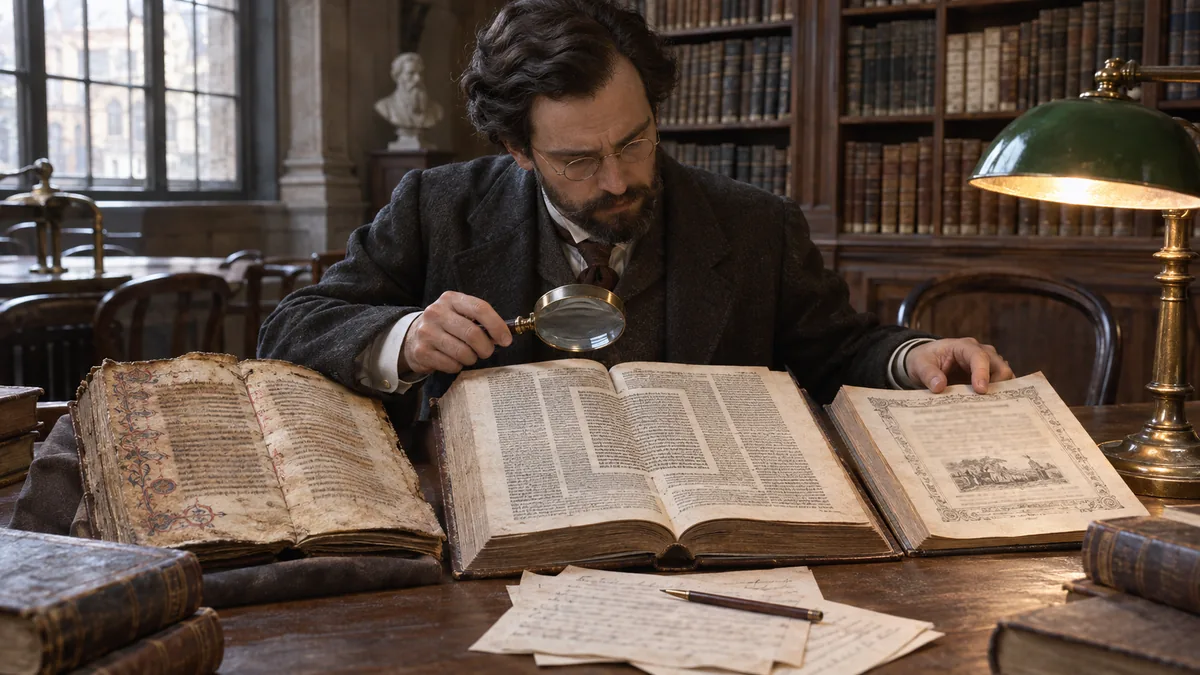
Fake Talmud Quotes: Forgeries, Censorship, and Propaganda
How do false quotations of the Talmud spread? An examination of forgeries, mistranslations, censorship and the use of texts in propaganda.
Read articleShorter entry points into the questions explored across THY-REALITY. Browse by field or search directly by title and description.

How do false quotations of the Talmud spread? An examination of forgeries, mistranslations, censorship and the use of texts in propaganda.
Read article

The Yijing or I Ching connects divination, 64 hexagrams, and later philosophical interpretations. Explore its origins, uses, and manuscript history.
Read article
The Great Work links furnaces, metals, colour stages, the philosopher’s stone, spiritual alchemy and Jungian individuation. What is historical and what is later psychological interpretation?
Read article
Early-fifteenth-century parchment, an unknown script, strange plants, celestial diagrams, and multiple scribal hands: what we actually know about the Voynich Manuscript and why no explanation has yet become a generally accepted solution.
Read article
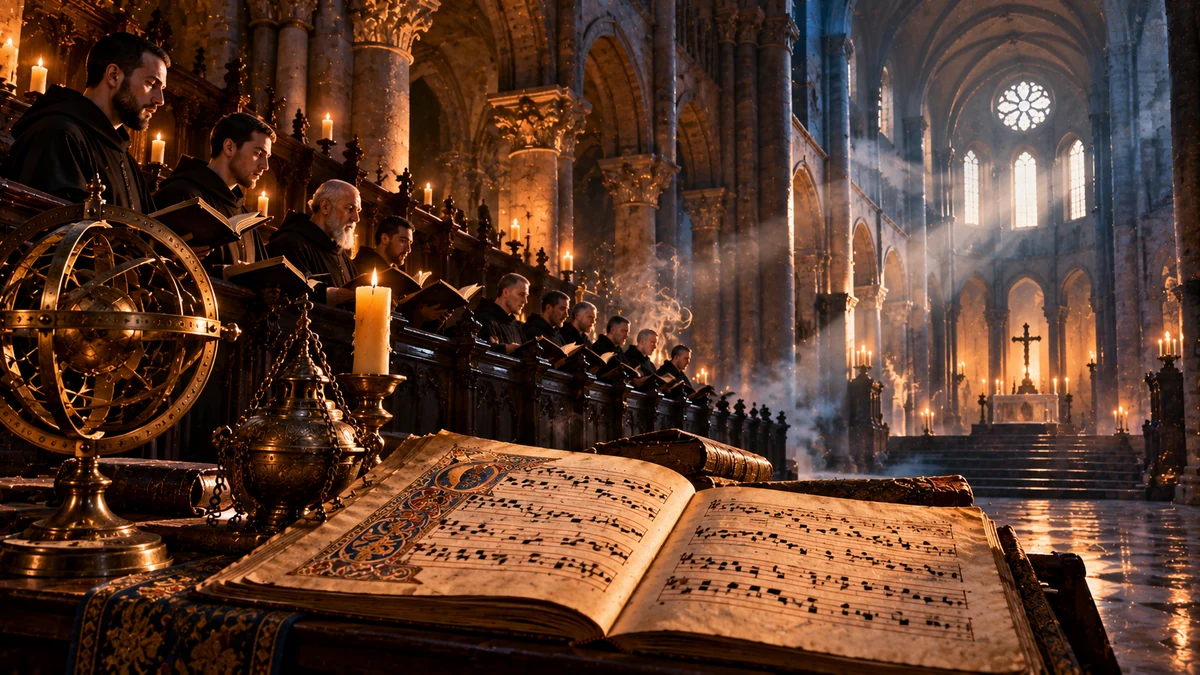
Gregorian chant is neither a single ancient melody nor a hidden frequency system, but a centuries-long tradition of Latin liturgical song. This article follows its formation, neumes, eight modes, Guido of Arezzo, and the acoustics of sacred space.
Read article
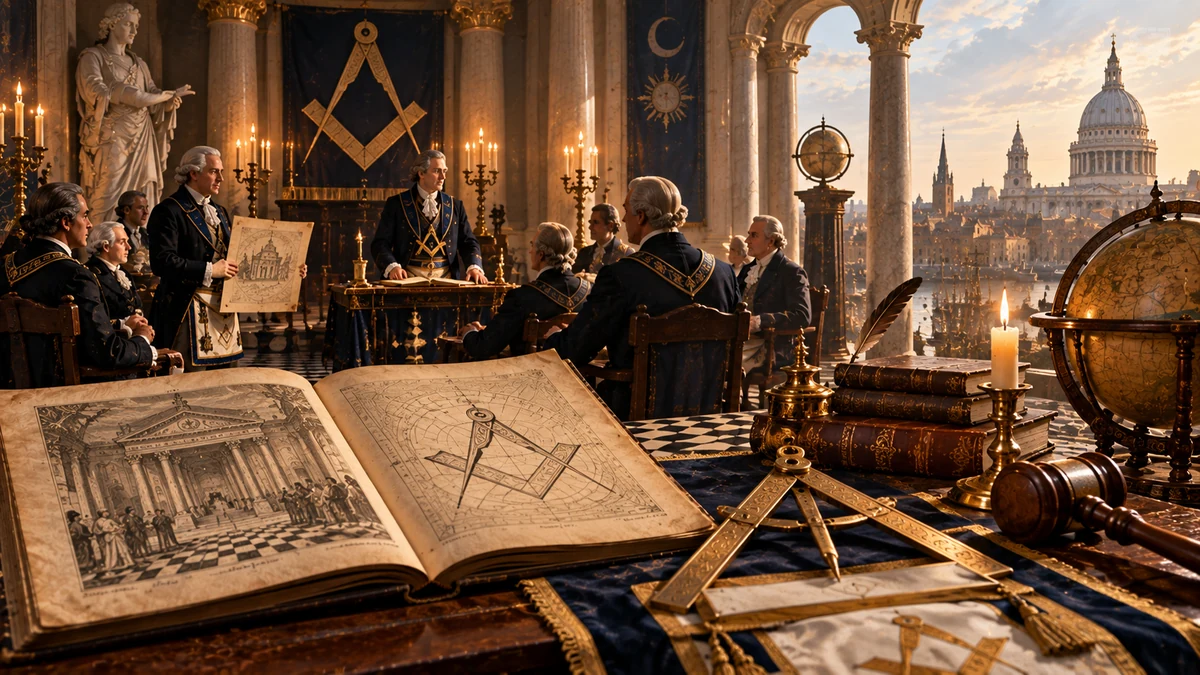
Jasper Ridley follows Freemasonry from guild roots and the London Grand Lodge of 1717 through revolutions, anti-Masonic campaigns, and the twentieth century; this article tests where documented history ends and the myth of a unified hidden power begins.
Read article
Three anonymous texts from 1614–1616 triggered a European Rosicrucian ‘furore’. What in the story of Christian Rosenkreuz is documented history, what is literary programme, and when did real organisations emerge from the myth?
Read article
Mark 16:9–20, John 7:53–8:11, and the Comma Johanneum have three very different manuscript histories. What does textual criticism actually show about their originality, age, and later reception?
Read article
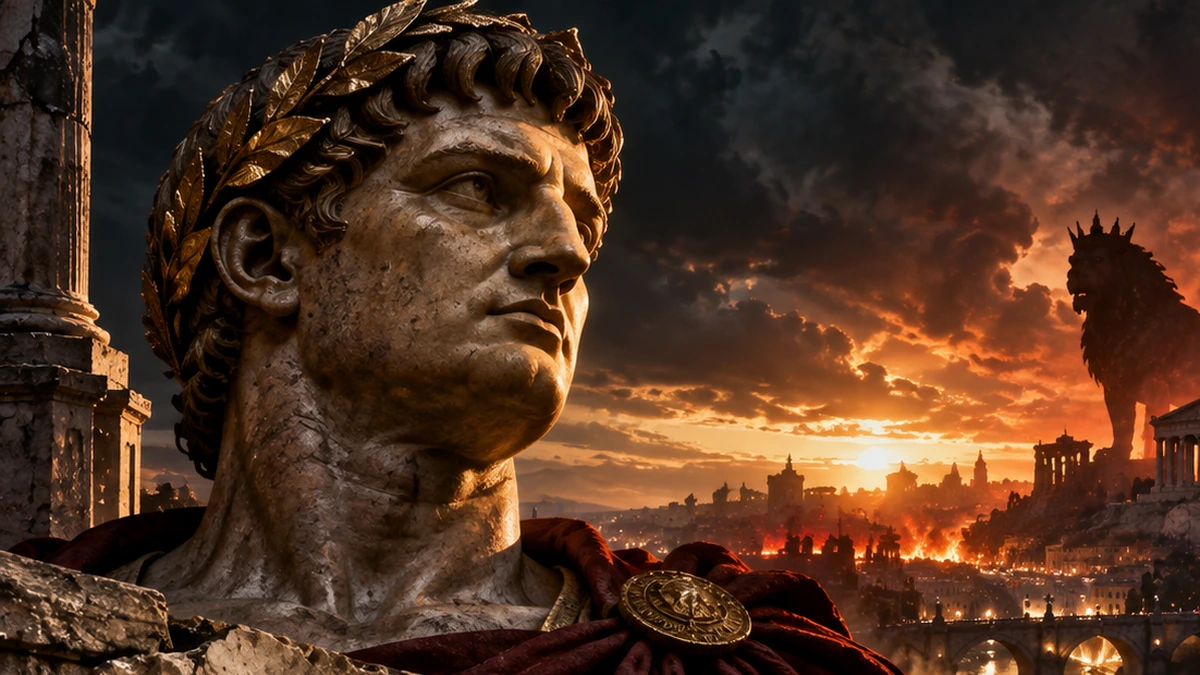
Revelation asks the reader to calculate the beast’s number. Why do most manuscripts read 666 while some early witnesses read 616—and why does that difference strongly support, but not finally prove, a connection with Nero?
Read article
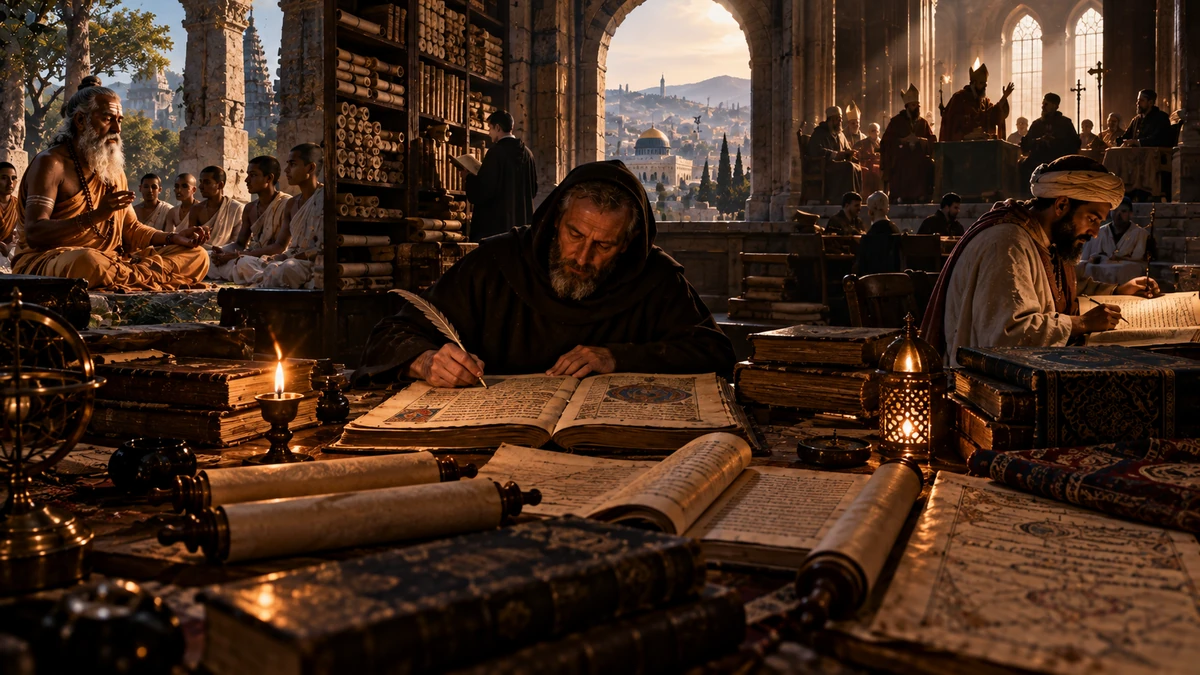
Sacred texts often form through oral tradition, writing, redaction, manuscript variation, translation and canonization. What does that history demonstrate — and what does it not?
Read article