How Can I Get Along with My Brothers, Sisters, and Others at Home?
Living under one roof does not mean wanting the same things, sharing every possession, or being entitled to make decisions for one another. But home can become a place where we learn to live together fairly.
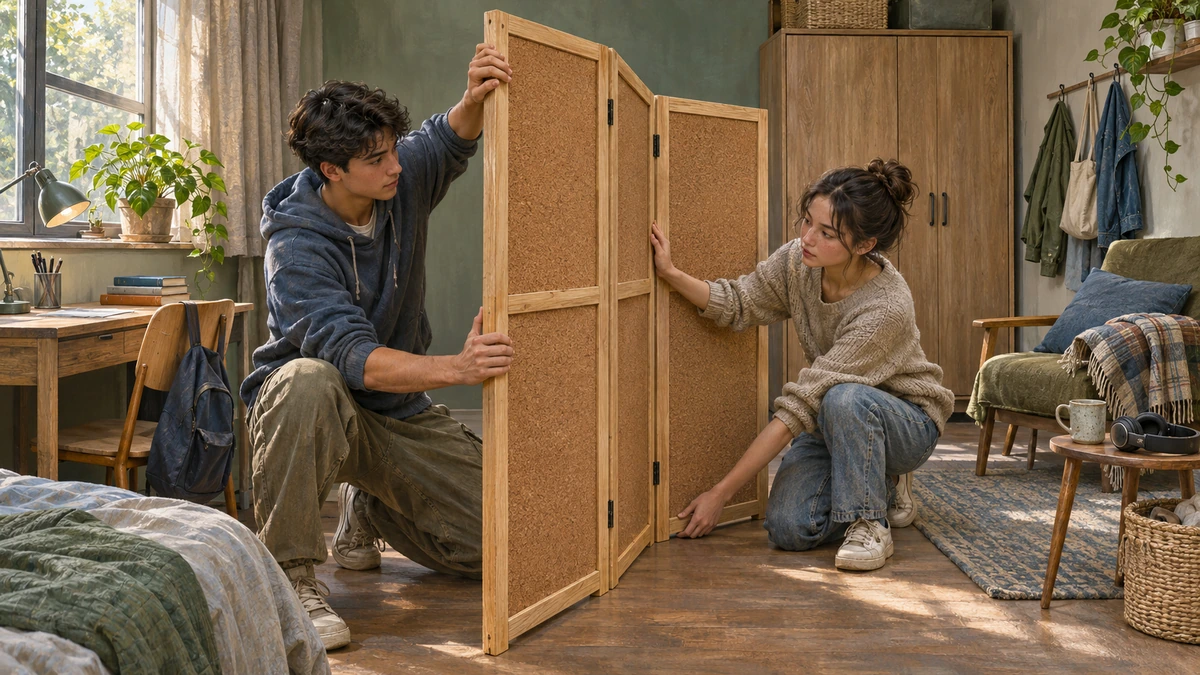
Living under one roof does not mean wanting the same things, sharing every possession, or being entitled to make decisions for one another. But home can become a place where we learn to live together fairly.
In the morning, you're waiting for the bathroom, but somebody stays in there for another twenty minutes. In the afternoon, the headphones you've saved up to buy go missing. In the evening, you're left doing the dishes again, even though you need to study. When you bring it up, someone says, “Stop arguing. You're family, after all.”
But what if the problem is precisely that you've been arguing about the same thing for a month? Must you always give in to keep the peace at home? And can you expect your brother or sister to respect your boundaries even when you're willing to help?
The short answer: you don't have to agree with the people at home all the time, and you don't have to be best friends. But three skills are worth developing: telling personal belongings from shared ones, contributing fairly to life at home, and resolving disagreements without insults or humiliation. Start with one specific, manageable problem, suggest a workable agreement, and keep your side of it. If someone repeatedly crosses your boundaries, ask an adult who will listen for help. If you're afraid of violence or coercion, don't try to settle it through ordinary family negotiation: put your safety first.
Why Do We Fall Out So Easily at Home?
You can have a pleasant evening with your friends and then say goodbye. But you run into your brother or sister even when you're tired, worried, or desperate to be alone. If you share a bedroom, a computer, or the only quiet table in the house, you can't always do things the way the other person would like.
Space isn't the only thing family members share. They also share adults' attention, time, money, and responsibilities — often without noticing how differently these affect each person. A younger child might want more company and the same freedom as an older one. An older child might want to stop being treated like an unpaid babysitter. Sometimes one child genuinely needs more help, while another feels overlooked. Ordinary differences in needs can quickly turn into painful accusations: “He always gets his way,” “She can do whatever she wants,” or “He's Mum's favourite.”
Before you decide that someone is selfish, ask what keeps happening. Does the noise bother you because you need peace, or because nobody asks what you think? Are you upset because somebody damaged something you own, or because borrowing it without asking broke your trust? The answer matters: different problems need different solutions.
Understanding what lies behind a disagreement does not excuse threats, blackmail, or violence. But it's a useful place to begin when the disagreement is ordinary and both people can talk without fear.
“I Only Borrowed It” — When Does Borrowing Cross a Line?
The following scene is fictional.
Sixteen-year-old Maja needs her headphones after school to listen to a recording for an assignment. She finds them with her younger brother, Tim. It's the third time he's taken them without asking.
“You've taken them again!” Maja says.
“I didn't steal them. You've got them back now.”
“I didn't have them when I needed them.”
Tim explains that the family's shared headphones are broken and that without headphones he can't play his game without disturbing everyone else. That's an understandable problem. But it doesn't entitle him to decide on his own that Maja's headphones now belong to everyone.
Maja has good reason to set a boundary. Tim has good reason to point out that the shared equipment is broken. If they do nothing but accuse each other, they'll overlook both problems. So the conversation could change: “Please ask before you use my headphones. I need them today. But we can tell everyone that the shared pair doesn't work anymore.” Tim could admit what he did: “I took them without asking. That wasn't right. I'll ask next time.”
An agreement like that isn't a miracle cure. If Tim takes the headphones again, Maja doesn't have to explain the same thing calmly for the tenth time. She can keep them in an agreed safe place and ask a parent or caregiver to help establish clear rules. Nor is there any need to humiliate Tim to teach him to respect someone else's possessions. If an item has been damaged, the family should consider repairing or fairly replacing it, taking account of his age and what he is actually able to do.
Mine, Yours, Ours — and the Space We Need for Ourselves
Many things in a home are used by everyone: cutlery, the fridge, perhaps the television or computer. But being part of a family doesn't automatically turn personal possessions into communal property. A gift, a private notebook, clothes, savings, or something entrusted to you should be treated differently from the family dishes. Who legally owns a particular item can be a separate question; everyday agreements about respect and borrowing are important even without legal arguments.
So I recommend one simple habit: before taking someone else's personal belongings, ask; say when you'll return them; and return them in good condition. If the answer is no, don't immediately assume the other person is being stingy. They might need the item, have saved for a long time to buy it, or have had a bad experience. And when you're the one being asked, consider whether you can sometimes help generously. Lending something voluntarily builds trust; being pressured to lend it wears that trust away.
Arguments also arise over something you can't hold in your hands: privacy. If you share a bedroom, you can't expect the entire room to belong to you all the time. But you can reasonably ask people to knock before coming in, leave one another's drawers alone, and not turn private conversations into jokes in front of others. Someone else's messages, photos, and passwords aren't there for you to explore out of curiosity either. The Convention on the Rights of the Child protects children from arbitrary or unlawful interference with their privacy. That doesn't mean a caregiver can never act when they need to protect a child from danger. [1]
“Go to your own room” isn't useful advice for someone who doesn't have one. In a small home, an agreement about time may matter more than a door. If one person is preparing for an exam and another wants to play loudly, they might agree on a quiet hour for studying and a different time for noisier activities, perhaps using headphones or another space when possible. Each person might have a shelf or box for private belongings. Video calls and visits can be arranged in advance. Not every option will work in every home, but even a modest agreement is better than a rule that always forces the same person to leave the shared room.
Another distinction matters: privacy and secrecy are not the same thing. You don't have to show a sibling your messages just to satisfy their curiosity. But if somebody tells you they are being threatened, blackmailed, or abused, it is right to seek help from a safe adult who can protect them. That's not permission for routine snooping. It is the difference between respecting a person and preventing harm.
Why Am I Doing the Dishes While Someone Else “Doesn't Notice” Anything?
Every home depends on work that nobody thinks to photograph at a family celebration: an emptied bin, clean plates, washed clothes, food for the family pet. It also depends on someone noticing that the washing-up liquid has run out, remembering when the rubbish is collected, and keeping track of what needs to be bought. Unfairness isn't only about who does a task. It can also be about who always has to remember it needs doing.
A fair division of chores doesn't mean a nine-year-old and a seventeen-year-old should have exactly the same number of tasks or equally demanding jobs. Age, abilities, health, schoolwork, other commitments, and safety all matter. A fair arrangement can't mean that one person always gets free time while another never does. Professional parenting guidance recommends clear, age-appropriate chores, gradually learning new skills, and rotating jobs where suitable. [2][3]
The following scene is fictional.
Nika often washes the dishes after dinner. Her younger brother, Jan, is supposed to take out the rubbish, but he often leaves it until the next day. “I always do everything,” Nika says angrily. Jan protests, “I have chores too!” At first, their mum thinks they're arguing about something trivial again. Then Nika explains what's really bothering her: it isn't just the washing-up. Every evening, she also has to remind Jan, check the bin, and clear the counter.
Instead of arguing over who feels more unfairly treated, they could try a different arrangement for two weeks. First, everyone works out what actually needs doing and who currently does it. They include the adults' work, too; it wouldn't be fair to pass the entire burden of running the home on to the children. Next, they assign tasks according to age and skills. Nika might do the dishes on some evenings, while Jan sets the table and takes out a light bag of rubbish, if he can do so safely. Both know what counts as a finished job, and responsibility for reminding Jan doesn't automatically fall to Nika. The following week they swap the tasks both are capable of doing. After fourteen days, they discuss what actually worked and what needs to change.
Two weeks isn't a professionally prescribed timeframe. It's simply a suggested trial that the family can adapt. The point is to turn “you never do anything; I always do everything” into something the family can observe and check together. If someone temporarily needs to do less because of illness, disability, or an important exam, that isn't automatically unfair. But if the same child always has to sacrifice study time or rest, the family shouldn't simply ignore it.
Cooking, cleaning, looking after animals, and basic home maintenance are neither “women's skills” nor “men's skills”. Both girls and boys should have opportunities to learn them according to their abilities. In some settings, girls carry a disproportionate share of household and caring work. UNICEF highlights this in regional material, but we cannot use it to make assumptions about every family in Slovenia. Instead, let's look at who actually does the work at home, who organises it, and who has time to themselves. [4]
Does the Older Child Have to Become a Second Parent?
An older brother can explain a maths problem to a younger sibling, a sister can show someone how to make a snack, and a younger child might get an older one interested in a game they haven't played in years. Such help is valuable. It can also be a good thing when care and practical skills are passed between generations in an extended family.
The difficulty begins when “Please help” quietly turns into “You're older, so everything is your responsibility.” Occasionally keeping an eye on a younger child while an adult is available is different from repeatedly having to miss school, rest, training, or time with friends because childcare has been assigned to you without discussion. What counts as suitable help also depends on both children's ages and the specific safety arrangements. Parents and caregivers retain the primary responsibility for children's appropriate care and upbringing. [1][3]
If this is a problem in an otherwise safe home, explain what you can realistically contribute: “I can help after school on Tuesday. But I have a test on Thursday and need the afternoon to study. How are we going to arrange childcare then?” You're not rejecting your younger sibling. You're asking for help to be organised without costing you your own childhood or adolescence.
If you're younger, consider the other side too: your older sister doesn't become your permanent playmate just because she's home. You can ask her to play, but you can't demand that she put all her work aside. Respecting somebody else's time is one of the first acts of genuine friendship.
“You Like Him More” — Is Every Difference Unfair?
Sometimes it seems that your brother always gets praise while you always get told what to do. Or your younger sister gets help with her homework while you're expected to manage alone. That feeling deserves to be taken seriously. But not every difference in how adults respond means they love one child more. One child may be ill, have different learning needs, or still be too young for a particular responsibility.
Fairness doesn't always mean exactly the same treatment in every detail. Even so, adults shouldn't constantly compare one child with a “better” sibling, automatically blame the older one, or let only the loudest person tell their side. If this keeps happening, give a couple of specific examples rather than making a sweeping claim about love: “When my brother took my things, I was punished as well, without being allowed to explain what happened. Next time, please listen to me first.”
Don't blame your brother for every decision made by the adults. If it hurts, try to explain what you need: more time to talk, clearer rules, or a fair chance to describe what happened. If a direct conversation doesn't work, another trusted adult may be able to help in a safe situation. You don't have to carry that feeling alone, and you don't have to turn it into a contest over who deserves more affection at home. [5]
When People at Home Are Still Learning to Live Together
In some homes, brothers and sisters have lived together since birth. In others, half-siblings, a parent's new partner's children, grandparents, or other relatives join the household later. An only child can face the same issues about privacy, bathrooms, and household rules. People's habits vary: some are used to knocking before entering, while others leave doors open; some expect everyone to eat together, while others need more time alone.
It's unfair to label a new family member an intruder simply because they're different. But it's equally unfair to demand immediate brotherly or sisterly closeness, or insist that you must share all your personal belongings. Particularly in stepfamilies, young people may need time, personal space, and continued contact with the parent they lived with before. Paediatric guidance also recognises these needs. [6]
So the first success in a newly formed household may not be a hug at all. It may be an agreement about who uses the bathroom when, where people can keep their things, and how work is shared. If trust grows later, all the better. If the relationship remains reserved for now, respectful coexistence is still worth working towards. The planned next article, N24, will address sadness, parental separation, and other deeper family changes. Here, our main concern is the everyday business of sharing a home.
How Can We Talk Without Someone Having to Lose?
In an ordinary, safe disagreement, start with what happened, not a judgement about the other person's character. There's a big difference between “You're selfish. You always steal my things” and “Yesterday you took my charger without asking, so I didn't have it when I needed it.” The second statement gives the other person a chance to explain what happened without taking away your right to say what you expect next time.
It helps to keep the discussion to one issue. What happened? What does each of us need? What will we do differently next time? These aren't questions for a formal family interrogation. They're a way to avoid getting lost in ten old grievances. If you discover you've misunderstood something, be willing to rethink your view. If the other person apologises, allow them the chance to change their behaviour. If you're the one who damaged something or broke an agreement, apologise — and help put things right, too.
When voices rise, it can be reasonable in a safe situation to say, “We're both too angry right now. Let's talk again when we've calmed down.” What's important is actually returning to the issue later; a pause shouldn't become a way to punish someone with silence. If you cannot resolve an ordinary disagreement on your own, an adult can help — ideally someone who doesn't merely look for a culprit but makes sure both people are heard. Guidance on dealing with sibling disagreements emphasises time to calm down, a clear understanding of the problem, and respect for personal space. [5]
But you can't force somebody else to cooperate. If several attempts at talking have failed, keep respecting other people's boundaries, put your belongings somewhere safe, ask for a reasonable boundary of your own, and seek help with establishing a shared rule. A fair relationship doesn't require you to give way every time just to prove that you're kind. Nor does it give you permission to retaliate by damaging or hiding someone else's belongings.
When Is It No Longer an Ordinary Argument?
Two brothers can argue about a computer without either being violent. It's a very different matter if somebody hits you, threatens to hit you, touches you against your will, sexually harasses you, blackmails you with photographs, frightens you, or repeatedly humiliates and controls you. Saying “I was only joking” does not erase what happened. You don't have to wait for the danger to happen again or for a visible injury before asking for help. [7]
In cases of violence, I do not recommend trying to negotiate with the perpetrator, insisting on a family meeting, forcing a confrontation, or assuming that both people must be equally to blame. Slovenian government guidance says that mediation between the parties does not take place when domestic violence is suspected. Responsibility for violence lies with the person who commits it. [7][8]
If you're in immediate danger, move to safety if you can do so safely and call 113 (police). For urgent medical assistance, fire and rescue services, or other emergency response, the number is 112; it can also connect you with help in an emergency. Tell them what's happening and where you are. If you can't speak safely at home, look for someone outside the dangerous environment: a trusted adult, teacher, school counsellor, or a centre for social work (center za socialno delo). TOM telefon, a free helpline for children and young people in Slovenia, is available at 116 111. If the first person does nothing, tell someone else. Some professionals are required to alert the relevant authorities when they suspect violence against a child, so complete confidentiality cannot be promised when safety is at risk. [7][9]
It's not your job to prevent somebody else's violence by behaving more nicely. A separate article, N25, will explore safety in greater depth, but you don't have to wait for it to take the first step.
Can the Relationship Become Something Good, Not Just Bearable?
Sometimes it feels as if you and a sibling do little but complain to each other. Then, while fixing a bicycle, cooking, or looking after an animal together, you discover that each of you has skills the other can use. An older family member can show you how something is done; a younger one may bring a fresh idea. This is also a valuable part of family heritage: knowledge, help, and care pass between people instead of everyone having to start from scratch. We don't have specific ethnographic evidence here to claim that every Slovenian family in the past lived this way — and we don't need it to recognise the value of willingly helping one another.
Try sometimes to notice another person's effort, not just their mistakes. Thank them for taking care of an unpleasant task. Ask their advice about something they're good at. Suggest an activity where nobody has to compete. At the same time, allow them to want to be alone sometimes. Spending time together isn't a compulsory way of proving love, and no one should have to reveal their private thoughts in the name of family unity. Professional guidance recognises the importance of shared interests as well as personal space among siblings and their caregivers. [5]
Some brothers and sisters will become close friends; others will remain different throughout their lives. We may never feel equally close to all the other people at home, either. But even learning to greet one another, cooperate, borrow fairly, and give each other room to breathe can change the atmosphere in a home.
What Would I Recommend You Do First?
Don't begin with a grand family speech about everything that's ever hurt you. Choose one recurring but safe problem. If it's a charger, agree on how it may be borrowed. If it's a shared bedroom, work out a realistic quiet hour. If it's chores, the adults and children should look together at what everyone actually does — including remembering, reminding, and organising — and try a fairer division of work. Give the agreement a chance, then check whether it works. Keep the promises you make yourself.
I would recommend two things at once: don't demand from others what you're unwilling to respect yourself, and don't give up your dignity just to make everything seem peaceful from the outside. If you can help, do. If you need a boundary, explain it. If you're wrong, put things right. If the other person refuses to cooperate, seek suitable help. If home is unsafe, protection comes before reconciliation.
A family isn't successful because its members never disagree. What matters more is whether people's needs are heard and whether they help one another deal more fairly with shared responsibilities and mistakes.
Sources and Further Reading
United Nations / UNICEF, Convention on the Rights of the Child, particularly Articles 12, 16 and 18–19: https://www.unicef.org/child-rights-convention/convention-text. Privacy protection does not entail a right to one's own bedroom; caregivers have duties to protect children.
Raising Children Network, Household chores for kids and teenagers: https://raisingchildren.net.au/pre-teens/family-life/routines-rituals-rules/chores-for-children. The chore schedule is an editorial example, not a professionally prescribed procedure.
American Academy of Pediatrics / HealthyChildren, Age-Appropriate Chores for Children: https://www.healthychildren.org/English/family-life/family-dynamics/communication-discipline/Pages/chores-and-responsibility.aspx. Age-related guidance is indicative, not a Slovenian legal rule.
UNICEF, Four key ways to promote equity in household tasks: https://www.unicef.org/lac/en/parenting-lac/nurturing-care/four-key-ways-promote-equity-household-tasks. Data from Latin America and the Caribbean should not be generalised to Slovenia.
Raising Children Network, Sibling fighting: what you need to know: https://raisingchildren.net.au/pre-teens/behaviour/sibling-fights/sibling-fighting. Guidance on ordinary conflicts is not a safety protocol for violence.
American Academy of Pediatrics / HealthyChildren, Stepsiblings: https://www.healthychildren.org/English/family-life/family-dynamics/types-of-families/Pages/stepsiblings.aspx. Guidance for stepfamilies, not mandatory rules for every household.
GOV.SI, Pomoč žrtvi v primeru nasilja [Help for victims of violence]: https://www.gov.si/teme/pomoc-v-primeru-nasilja. Responsibility rests with the perpetrator; protection takes priority over negotiation; includes TOM telefon.
GOV.SI, Mediacija v družinskih sporih [Mediation in family disputes]: https://www.gov.si/teme/mediacija-v-druzinskih-sporih/ (additional C2 verification). Mediation between the parties does not take place when domestic violence is suspected.
GOV.SI, Klici v sili [Emergency calls]: https://www.gov.si/teme/klic-v-sili/. Numbers 112 and 113 were checked at C2; contacts and links must be checked again before the joint publication of the entire series.