Barack Obama — The Surge, Drones, Libya, and Remote Warfare
When Barack Obama took office in January 2009, the U.S. military had already been operating in Afghanistan and Iraq for years. At the same time, covert counterterrorism operations were developing beyond conventional…
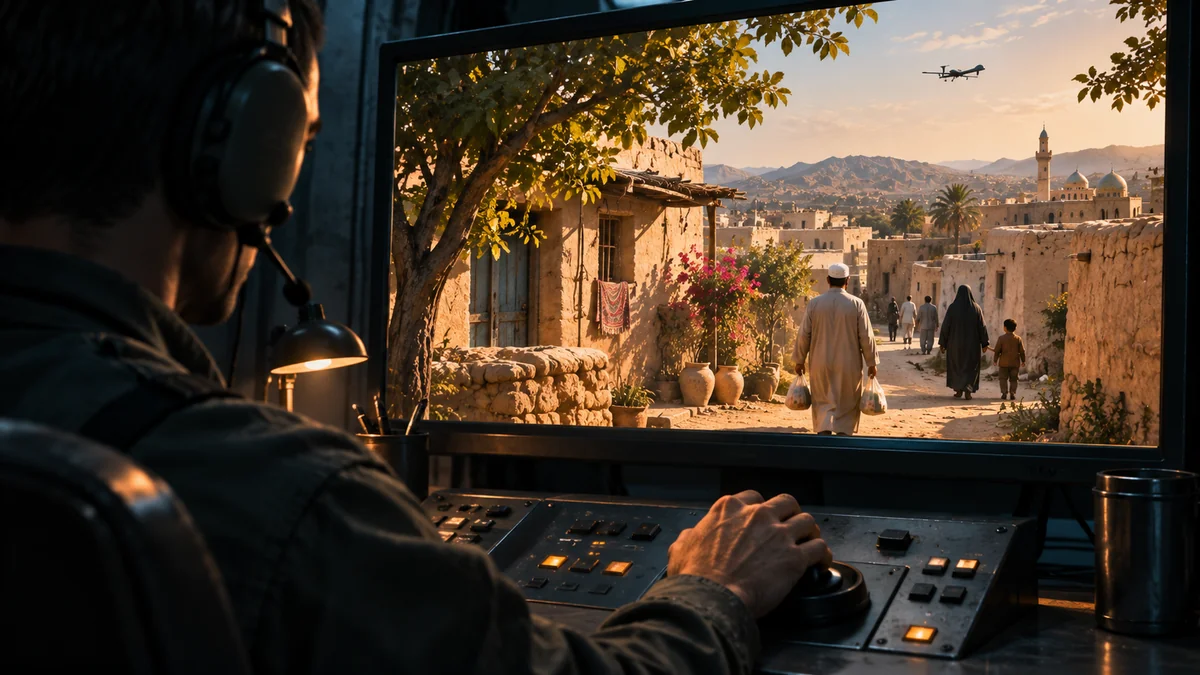
Editorial illustration.
When Barack Obama took office in January 2009, the U.S. military had already been operating in Afghanistan and Iraq for years. At the same time, covert counterterrorism operations were developing beyond conventional battlefields. The new administration promised a different course. But to people living in places where aircraft and unmanned systems continued to employ weapons overhead, a change in political leadership did not necessarily look like the end of war. What exactly did Obama inherit, which operations did he authorize himself, and which deaths cannot fairly be attributed to a single president?
Answering those questions requires more than a list of conflicts and a death toll. In this series, P1 denotes a demonstrable direct presidential decision or order; P2 the strategic or political framework of a campaign; and P3 the execution of an individual operation. We distinguish deaths resulting from direct U.S. force (DIRECT-US), coalition operations (US-LED / COALITION), the overall toll of wars involving multiple perpetrators (WAR-TOTAL / MULTI-ACTOR), and subsequent indirect consequences (INDIRECT / LEGACY). These are not labels of legal conviction. They allow political responsibility, direct causation, and uncertainty to be examined separately.
Afghanistan: An Inherited War and His Own Decision to Increase Troop Levels
The war in Afghanistan began in 2001 under George W. Bush; Obama did not make the original P1 decision to launch it. That does not mean he was merely a passive administrator during his own presidency. In February 2009, he approved approximately 17,000 additional U.S. troops; in March, he announced roughly 4,000 more personnel to train Afghan security forces. He stated the aim of weakening al-Qaeda and preventing Afghanistan from becoming its safe haven again. [1] [2]
As conditions failed to improve as expected, Obama announced the deployment of another 30,000 troops at West Point on December 1, 2009. The broader strategy included an announcement that the transfer of responsibility and withdrawal of some American forces would begin in July 2011. The approximately 100,000 U.S. troops present at the later peak of the surge were more than a figure on an organizational chart: they meant more patrols, operations, air cover, and interactions with local populations. But the number of deployed troops cannot, by itself, tell us how many people died. [3] [4]
Obama's decision to send additional forces is a documented P1 decision to increase the military presence, while the continuing Afghan strategy falls under P2. What happened in specific strikes is a separate question. U.S. and allied commanders also tightened restrictions on the use of fire to protect civilians during this period; UNAMA's annual reports document that civilians nevertheless continued to die, including in airstrikes. The existence of such rules matters because it shows that the risk of civilian casualties was not simply denied. Yet a rule is not proof that every use of force was justified or that mistakes did not occur. [5]
In February 2010, a convoy of Afghans in Uruzgan Province was mistakenly identified as a hostile group. An American investigative summary examined in a professional military publication reported up to 23 people killed and twelve injured. Technological surveillance did not prevent the misinterpretation of information; the decision to employ force emerged through an operational chain, not from the president personally identifying the vehicles. This is a DIRECT-US / P3 case, not evidence that Obama selected the convoy as a target. [6]
An even graver and more unambiguous incident involving U.S. forces took place on October 3, 2015. An AC-130 aircraft struck a Médecins Sans Frontières (MSF) hospital in Kunduz. The U.S. investigation described a misidentified facility, communication and technical failures, and human errors within the command chain; the Department of Defense reported 42 deaths and disciplinary measures against sixteen personnel. Responsibility of U.S. forces for the strike itself is documented. Evidence that Obama personally ordered the hospital attacked is not. The distinction prevents both the denial of U.S. responsibility and the attribution of an unproven personal order. [7]
A partial troop withdrawal began in 2011. Announcing the formal end of the principal U.S. combat mission at the close of 2014 did not mean a complete departure: training, advising, and counterterrorism operations continued. As conditions deteriorated, Obama revised plans for further troop reductions in 2015 and 2016; he envisaged approximately 8,400 U.S. troops remaining by the end of his term. Meanwhile, people in Afghanistan also died in Taliban and other anti-government attacks and as a result of actions by Afghan government forces. [4] [8] [9]
For 2016, UNAMA documented 3,498 civilians killed and 7,920 injured by different actors. In its analysis of air operations, it distinguished Afghan forces, international military forces, and cases in which the responsible party could not be reliably identified. That nationwide accounting cannot be converted into a single number of “civilian deaths caused by Obama's Americans.” This does not erase U.S. incidents such as Uruzgan and Kunduz; it means that fair attribution requires more evidence than a date on a calendar. [5]
Abbottabad: Presidential Authorization of a Specific Operation
On May 1, 2011, a U.S. special operations unit killed Osama bin Laden in Pakistan. In his public statement, Obama said he had authorized the operation and that the forces had acted at his direction. This represents a different level of responsibility from a wrongly selected target in Kunduz: in Abbottabad, there is direct evidence of presidential authorization of a specific operation, or P1. The White House subsequently explained that taking him alive was contemplated as an option in principle, if actually feasible. Public documents, however, do not allow every tactical second inside the compound to be reconstructed with certainty. [10]

Abbottabad was not a drone strike. Nevertheless, it illustrates a feature of the period: the highest level of the executive branch could authorize limited, highly targeted operations overseas without a major U.S. ground campaign taking place there. This is precisely why unmanned aircraft, special forces, missiles, and airstrikes should not all be folded into the same category when examining subsequent events.
Remote Warfare: Fewer U.S. Troops on the Ground Do Not Mean Fewer Questions
Obama did not invent armed drones or covert targeted operations. He inherited a program already used by the Bush administration and expanded it substantially. The Bureau of Investigative Journalism recorded 563 U.S. strikes, mostly drone strikes, in Pakistan, Yemen, and Somalia during Obama's two terms, compared with 57 under Bush. The same independent database estimated 384–807 civilian deaths in those strikes. This is an analysis using a particular geographical scope and data-collection method, not an exhaustive global count of all U.S. attacks. [11]
MQ-9 Reaper at Hurlburt Field, Florida, May 3, 2014 (Staff Sgt. John Bainter).
The phrase drone strike often obscures important distinctions. An operation might be carried out by the CIA, the U.S. military, or another organization. Some targeted killings used missiles fired from aircraft or ships; not every strike involved an unmanned aircraft. Moreover, a P2 policy of targeted killing is not the same as P1 personal approval of a target, while an individual strike is normally P3 unless stronger evidence of presidential decision-making exists.
In May 2013, Obama publicly defended his approach to the targeted use of lethal force. The White House set out standards under which the use of force outside areas of active hostilities was generally to be linked to a continuing, imminent threat, the infeasibility of capture, and near certainty both that the target was present and that civilians would not be killed or injured. These standards imposed political and procedural constraints; their existence alone does not establish that they were met in every strike. [12] [13]
Even those publicly stated criteria did not explain everything. Reporting at the time described broader approval in 2012 for so-called signature strikes in Yemen, in which a pattern of activity might carry greater weight than the previously confirmed identity of a particular person. Because so much information remained classified, this must be presented as a reported decision based on statements by U.S. officials, not as a fully declassified presidential order containing a target list. [14]
Two Sets of Numbers That Cannot Be Combined Into One
For January 20, 2009–December 31, 2015, the U.S. government published an estimate of 473 counterterrorism strikes outside areas of active hostilities, in which 2,372–2,581 combatants and 64–116 non-combatants were assessed to have been killed. For 2016, it released a separate aggregate of 53 strikes, 431–441 estimated combatant deaths, and one estimated non-combatant death. These figures are not a record of all U.S. strikes worldwide: Afghanistan, Iraq, and Syria were excluded as areas of active hostilities. Nor does the category “strike” automatically mean “drone strike.” [15] [16]
The independent TBIJ estimated substantially higher civilian death tolls in specific countries. This difference is not merely a question of arithmetic. The databases cover different geographical areas and periods, use different sources of testimony, and apply different criteria for classifying someone as a combatant or civilian. The figures 64–116 and 384–807 are therefore not two measurements of one unchanged denominator. They cannot be added, averaged, or substituted for each other without comparing the underlying incidents. [11] [15]
Behind every number is a person. In Yemen on September 30, 2011, Anwar al-Awlaki, a U.S. citizen whom the administration linked to the operational leadership of al-Qaeda in the Arabian Peninsula, was killed in a U.S. strike. Attorney General Eric Holder told Congress in May 2013 that U.S. forces had specifically targeted al-Awlaki. Obama confirmed authorization of the operation in a speech. Here the link between the named target and the presidential decision is much stronger: P1. But the fact that a state deliberately killed one of its citizens without an ordinary criminal trial raises a separate and serious constitutional and ethical question. The administration argued that this was a lawful use of force against an operational threat; critics warned of the limited judicial oversight of such decisions. [12] [17]
Two weeks later, his sixteen-year-old son Abdulrahman al-Awlaki died in another U.S. strike. Holder's letter expressly did not identify him among those who had been specifically targeted. His death falls within the sphere of U.S. operational responsibility, but it does not prove that Obama issued a separate order to kill the child. That distinction matters precisely because both deaths were irreversible, while the evidentiary chains behind them differ. [17]
In December 2009, U.S. Tomahawk missiles killed at least 41 civilians near al-Majalah in Yemen, according to Human Rights Watch's assessment based on parliamentary and field documentation. HRW also documented that unexploded cluster munitions later killed at least four more civilians and injured thirteen. Those later deaths belong in a separate temporal category of consequences of the strike. They must not be presented as simultaneous deaths in the original attack, nor should Tomahawk missiles be described as drones. This was a direct U.S. operation, but the public evidence in the archive examined does not confirm that the president personally selected the particular target. [18]
In December 2013, a U.S. strike hit a column of vehicles associated with a wedding procession. Human Rights Watch documented at least 12 deaths and 15 injuries. Witnesses and relatives described the people as civilians, while U.S. and Yemeni officials claimed that al-Qaeda members were present. The available evidence does not justify the categorical claim that all twelve were proven civilians, nor the dismissal of their deaths as automatically justified. This was a documented attack involving disputed victim status. [19]
Libya 2011: A Mandate to Protect and the Question of Its Limits
Violence in Libya did not begin with NATO bombs. Before the intervention, Gaddafi's forces had violently suppressed demonstrators, the conflict had developed into an armed uprising, and abuses and attacks on civilians were also reported among rebel groups. The UN Security Council first imposed sanctions and then, on March 17, 2011, adopted Resolution 1973, authorizing “all necessary measures” to protect civilians and civilian-populated areas, establishing a no-fly zone, and excluding a foreign occupation force. The resolution did not expressly mandate the overthrow of Gaddafi. [20] [21]
On March 19, 2011, Obama publicly authorized the start of a limited U.S. military operation in Libya. Two days later, he confirmed in a letter to Congress that the armed forces had acted at his direction. The P1 decision to initiate U.S. use of force is thus documented without any need to speculate about hidden motives. The initial operation, Odyssey Dawn, relied heavily on American capabilities but was multinational from the outset. The approximately 110 Tomahawk missiles in the opening salvo are a combined U.S.–British figure, not an exclusively American one. [22] [23]
By March 31, NATO had taken full command of Unified Protector. By the operation's conclusion on October 31, it reported more than 26,500 sorties, including more than 9,700 strike sorties. A sortie is not the same as a weapon fired, and a weapon fired is not a death toll. Nor does U.S. participation in the NATO campaign turn every British, French, or other aircraft's attack into an American strike. [24]
The obligation to protect civilians applies even when forces acting in their protection themselves cause civilian deaths. A UN commission of inquiry documented 60 civilians killed and 55 injured in five of the twenty NATO strikes it examined. At the same time, the commission did not find that NATO deliberately targeted civilians and described extensive precautionary measures; in some cases, limited information prevented it from assessing all circumstances or whether precautions were sufficient. Human Rights Watch documented 72 civilian deaths in eight attacks it investigated, including an incident at Majer in which 34 people were killed. The samples overlap. Adding 60 and 72 would therefore manufacture an appearance of precision rather than a valid total. Without documentation establishing the nationality of the forces responsible for each strike, all these deaths certainly cannot be moved into DIRECT-US. [25] [26]
Within the United States, military force in Libya also prompted a domestic legal dispute. There was no new, specific congressional authorization for the war before the strikes. A Justice Department legal opinion argued that the president could act within his constitutional powers in view of the operation's limited scope and purpose. Critics in Congress and the legal profession rejected this interpretation and the administration's later position on the War Powers Resolution. This debate should not be presented either as unanimous validation of legality or as an already issued judicial finding of wrongdoing. [27]
The campaign's purpose remained contested as well. On March 28, Obama publicly distinguished protecting civilians from forcibly changing the regime. In April, he and the British and French leaders wrote that the military mandate was not to remove Gaddafi by force, while clearly expressing their shared political wish for him to leave power. Opponents argued that NATO's campaign had in practice moved beyond civilian protection; the participating governments continued to defend their interpretation of the mandate. The tension between the formal justification, the chosen political objective, and the effects of military power is documented. [28] [29]
In October 2011, an American Predator participated in a strike on Gaddafi's convoy. NATO publicly maintained, however, that it did not know Gaddafi was in the convoy at the time of the strike. According to Human Rights Watch's reconstruction, Gaddafi was later captured alive by local anti-Gaddafi forces, while the circumstances of his death were never definitively resolved forensically. Confirmed U.S. participation in the convoy strike matters; it is not proof that Obama personally ordered Gaddafi's killing, nor proof that a U.S. weapon directly caused his death. [30] [31]
The regime's fall did not produce a stable state. Armed fragmentation, a new civil war, militia violence, and the rise of extremist organizations followed. These are important consequences when assessing the intervention decision and the lack of preparation for what came afterward. In 2016, Obama himself identified inadequate planning for “the day after” as one of his mistakes. Nevertheless, a subsequent death directly caused by a local militia or another armed group does not retroactively become a proven direct U.S. killing. INDIRECT / MULTICAUSAL / LATER-ACTOR remains a separate framework for assessing the consequences. [32]
Iraq and Syria in 2014: The Resumption of U.S. Strikes
After the withdrawal of most U.S. forces from Iraq at the end of 2011, ISIL seized large areas of Iraq and Syria by 2014, committed mass atrocities, and displaced many residents. This context cannot be omitted when explaining the American return. The threat to Yazidis on Mount Sinjar, the advance toward Erbil, and the Iraqi government's request for assistance were among the publicly stated reasons for intervention. At the same time, deaths caused by the Islamic State belong in a separate register of perpetrators, not among casualties of U.S. airstrikes. [33]
On August 7, 2014, Obama said he had authorized two missions: limited airstrikes to protect American personnel and humanitarian measures for civilians trapped on Mount Sinjar. Strikes began the following day. In September, he outlined a broader plan to degrade ISIL militarily, and overnight on September 22–23, American strikes against targets in Syria began on his express instructions. The initiation of force in Iraq and Syria thus rests on documented P1 decisions; the wider anti-ISIL campaign is P2, while responsibility for individual strikes must again be established by identifying who actually carried them out. [34] [35] [36]
The international legal frameworks for Iraq and Syria differed. In Iraq, the U.S. administration relied on the request and consent of the internationally recognized Iraqi government. No equivalent consent was given by Damascus for operations in Syria. The United States informed the UN Security Council that it was acting in collective self-defense of Iraq under Article 51 of the UN Charter and invoked the argument that Syrian authorities were unwilling or unable to address the ISIL threat. The legal validity of this approach remains disputed among specialists; recording the American argument does not declare it unquestionably valid. Domestically, the administration also relied on existing congressional authorizations from 2001 and 2002 rather than newly enacted, specific legislation for war against ISIL. [37] [38]
Operation Inherent Resolve was a U.S.-led multinational coalition, not an operation conducted by NATO as an organization. Air power, logistics, intelligence, and training of local units were major elements of its activity. Iraqi troops, Kurdish units, Syrian partner forces, other coalition members, and ISIL, however, were not one military organization. American support or a dominant share of airstrikes does not by itself establish who caused any particular death on the ground. [39]
Civilian Deaths in Operation Inherent Resolve: Official and Independent Counts
On January 2, 2017, the coalition officially assessed that at least 188 civilians had been unintentionally killed in its strikes since OIR began, with some cases still under investigation. This was the coalition's cumulative assessment at that time, not a final total for all deaths during Obama's term and not a national U.S. tally. [40]
For calendar year 2016 alone, Airwars estimated 1,237–1,901 civilian deaths in incidents it regarded as likely or confirmed coalition attacks. Its approach draws on local reports, investigation of individual incidents, and evidentiary thresholds different from those used in military procedures. The estimate cannot be averaged with the official figure of 188, added to it, or attributed in its entirety to U.S. forces. The discrepancy is a significant issue of public accountability: the military and independent observers often assessed the same circumstances with different evidence and levels of access. [41]
At al-Tukhar near Manbij, the disagreement is more concrete. In a later report, the U.S.-led coalition assessed up to 24 civilians killed in a strike overnight on July 18–19, 2016. Amnesty International, drawing on its own sources, reported at least 73 civilian deaths, while Airwars compiled a wider range of 78–203 reported civilian deaths. The coalition acknowledged the strike; independent investigators attributed it to U.S. forces, but the estimates differ and should not be converted into one seemingly definitive number. For affected families, methodology is not an abstract matter: it can determine whether their losses are even acknowledged and whether anyone answers to them. [42] [43] [44]
A further official CENTCOM release in November 2016 covered an assessment of 64 civilian deaths in 24 U.S. airstrikes. This is particularly useful evidence of national attribution, but it must not be added to the wider coalition cumulative total from that period, because the same incidents may already be included. Double counting is not a more rigorous criticism of war; it is an accounting error. [45]
Mosul and Raqqa: The Boundary of a Presidential Term
The Iraqi offensive to retake Mosul began on October 17, 2016, while Obama was still president. Iraqi forces led most ground operations; the coalition provided extensive air, artillery, intelligence, and advisory support. The battle continued after January 20, 2017, when Donald Trump assumed the presidency. Likewise, the campaign to isolate Raqqa in Syria began under Obama, but the decisive urban fighting occurred during the following administration. It is incorrect to assign the entirety of either battle's death toll to one president or the other simply by using the starting or ending date. [46]
In 2016, a separate U.S. operation against ISIL also took place near Sirte in Libya under Obama, known as Odyssey Lightning. At its conclusion in December, AFRICOM reported 495 U.S. precision strikes. These were not the NATO strikes of the 2011 Libya war, and 495 is not a death toll. Although the national actor carrying out this campaign is more clearly identifiable, the public sources in the research examined do not permit an equally clear and comprehensive accounting of civilian deaths. [47]
What Can Be Attributed to Obama — and What Cannot
The documents examined identify distinct decisions Obama made himself: the 2009 increase in U.S. troops in Afghanistan; the special operation against bin Laden; the documented specific authorization to target Anwar al-Awlaki; and the initiation of American force in Libya in 2011 and in Iraq and Syria in 2014. In these instances, the question whether a P1 presidential decision existed is much clearer than how many deaths can be directly and exclusively attributed to it.
It is also documented that U.S. forces caused civilian deaths during his presidency, including in Afghanistan, Yemen, and the campaign against ISIL. Proven direct causation by U.S. forces should be named plainly. Presidential responsibility for a strategy does not, however, establish that the president approved each individual target. Coalition responsibility does not mean every bomb was American, and the total death toll of a multi-sided war is not a single president's personal balance sheet. Legal responsibility for particular acts, political responsibility for decisions, and moral responsibility for foreseeable consequences are related but distinct questions.
This is also the hardest part of assessing remote warfare. Physical distance from a person who dies beneath a fired weapon can distance the public from that person's story and make decisions taken in the halls of power less visible. It does not make the death any less real. Critical investigation must therefore demand evidence and accountability for each specific incident, while resisting the tempting but unsupported idea that history can be reduced to one death toll with one signature beneath it.
Sources and further reading
- Barack Obama, White House, Statement by the President on Afghanistan, February 17, 2009. Source
- Barack Obama, White House, Remarks by the President on a New Strategy for Afghanistan and Pakistan, March 27, 2009. Source
- Barack Obama, White House, Address to the Nation on the Way Forward in Afghanistan and Pakistan, December 1, 2009. Source
- White House, Fact Sheet: Bringing the U.S. War in Afghanistan to a Responsible End, May 27, 2014. Source
- UNAMA, annual reports Afghanistan: Protection of Civilians in Armed Conflict, for 2009 and 2016 (published in 2010 and 2017); the two periods and categories of perpetrators are treated separately. Source 1 Source 2
- U.S. Army University Press, The Ostrich Complex (professional military review of findings from the investigation of the Uruzgan incident), 2020. Source
- U.S. Department of Defense, CENTCOM Commander: Communications Breakdowns, Human Errors Led to Attack on Afghan Hospital, April 29, 2016. Source
- White House, Statement by the President on Afghanistan, October 15, 2015. Source
- White House, Statement by the President on Afghanistan, July 6, 2016. Source
- White House, Remarks by the President on Osama Bin Laden (May 1, 2011) and Press Briefing (May 4, 2011). Source 1 Source 2
- Jessica Purkiss and Jack Serle, The Bureau of Investigative Journalism, Obama’s covert drone war in numbers, January 17, 2017. Source
- Barack Obama, White House, Remarks at the National Defense University, May 23, 2013. Source
- White House, Fact Sheet: U.S. Policy Standards and Procedures for Use of Force in Counterterrorism Operations, May 23, 2013. Source
- Washington Post, White House approves broader Yemen drone campaign, April 25, 2012; contemporaneous reporting based on statements by officials. Source
- Office of the Director of National Intelligence (DNI), Summary of Information Regarding U.S. Counterterrorism Strikes Outside Areas of Active Hostilities, original publication July 1, 2016, period January 20, 2009–December 31, 2015. Archived copy of the original document examined: ; the same aggregate subsequently reproduced in Congressional Record, January 9, 2020: The original DNI URL in the locked source map has not been changed. Source 1 Source 2
- Office of the Director of National Intelligence, Summary of 2016 Information Regarding United States Counterterrorism Strikes Outside Areas of Active Hostilities. Source
- Eric H. Holder, U.S. Department of Justice, letter to Congress concerning U.S. citizens killed in counterterrorism operations, May 22, 2013. Source
- Human Rights Watch, Between a Drone and Al-Qaeda: The Civilian Cost of US Targeted Killings in Yemen, October 22, 2013. Source
- Human Rights Watch, A Wedding That Became a Funeral: US Drone Attack on Marriage Procession in Yemen, February 19, 2014. Source
- UN Security Council, adoption of Resolution 1970 (February 26, 2011), Security Council meeting report. Source
- UN Security Council, adoption of Resolution 1973 (March 17, 2011), Security Council meeting report. Source
- White House, Barack Obama, announcement authorizing limited military action in Libya, March 19, 2011. Source
- Barack Obama, White House, War Powers Letter on Libya, March 21, 2011. Source
- NATO, NATO and Libya (February–October 2011), chronology and operational information. Source
- UN Independent Commission of Inquiry on Libya, A/HRC/19/68 (2012), paragraphs 83–89: sample of twenty NATO strikes, civilian casualties, precautions, and limits of the commission’s findings. Original source: ; officially accessible version: Source 1 Source 2
- Human Rights Watch, Unacknowledged Deaths: Civilian Casualties in NATO’s Air Campaign in Libya, May 13, 2012. Source
- U.S. Department of Justice, Office of Legal Counsel, Authority to Use Military Force in Libya, April 1, 2011; written legal opinion of the executive branch concerning presidential constitutional powers, not a judicial determination. Source
- Barack Obama, White House, Remarks by the President in Address to the Nation on Libya, March 28, 2011. Source
- Barack Obama, David Cameron and Nicolas Sarkozy, joint opinion article about Libya, April 14, 2011. Source
- NATO, press briefing on the Sirte convoy and Gaddafi’s presence, October 24, 2011; U.S. press reporting on the Predator. Source 1 Source 2
- Human Rights Watch, Death of a Dictator: Bloody Vengeance in Sirte, October 16, 2012. Source
- White House, Press Briefing concerning Obama’s “day after” remark, April 11, 2016. Source
- UN Security Council, condemnation of ISIL’s advance into Mosul, June 11, 2014; documentary context. Source
- Barack Obama, White House, Statement by the President, August 7, 2014. Source
- Barack Obama, White House, War Powers Letter Regarding Iraq, August 8, 2014. Source
- Barack Obama, White House, Statement on Airstrikes in Syria, September 23, 2014. Source
- U.S. Permanent Mission to the United Nations, letter to the Security Council S/2014/695, September 23, 2014; explicit argument of collective self-defense of Iraq and the “unwilling or unable” approach regarding Syria, not a definitive judgment of international law. Source
- Congressional Research Service, U.S. Military Action Against the Islamic State: Answers to Frequently Asked Legal Questions, report R43720. Source
- Combined Joint Task Force — Operation Inherent Resolve, History, official organization and partners. Source
- CENTCOM/CJTF-OIR, Monthly Civilian Casualty Report, January 2, 2017. Source
- Airwars, Annual Assessment 2016: Civilians paid heavy price in Coalition and Russian airstrikes, January 17, 2017. Source
- CENTCOM/CJTF-OIR, Combined Joint Task Force – Operation Inherent Resolve Civilian Casualty Report, November 25, 2016 (official assessment of the incident near Manbij). Source
- Amnesty International, USA must come clean about civilian deaths caused by Coalition air strikes in Syria, October 26, 2016. Source
- Airwars, incident CS273, al-Tukhar/Manbij, July 19, 2016. Source
- CENTCOM, November 9 Iraq and Syria Civilian Casualty Assessments, November 9, 2016. Source
- CJTF-OIR, Iraqi Security Forces Begin Battle for Mosul, October 17, 2016. Source
- U.S. Africa Command (AFRICOM), AFRICOM Concludes Operation Odyssey Lightning, December 20, 2016. Source