What Should I Do If I'm Bullied or Threatened at School?
Bullying is more than an ordinary disagreement. Learn how to stay safer, tell trusted adults and get meaningful help.
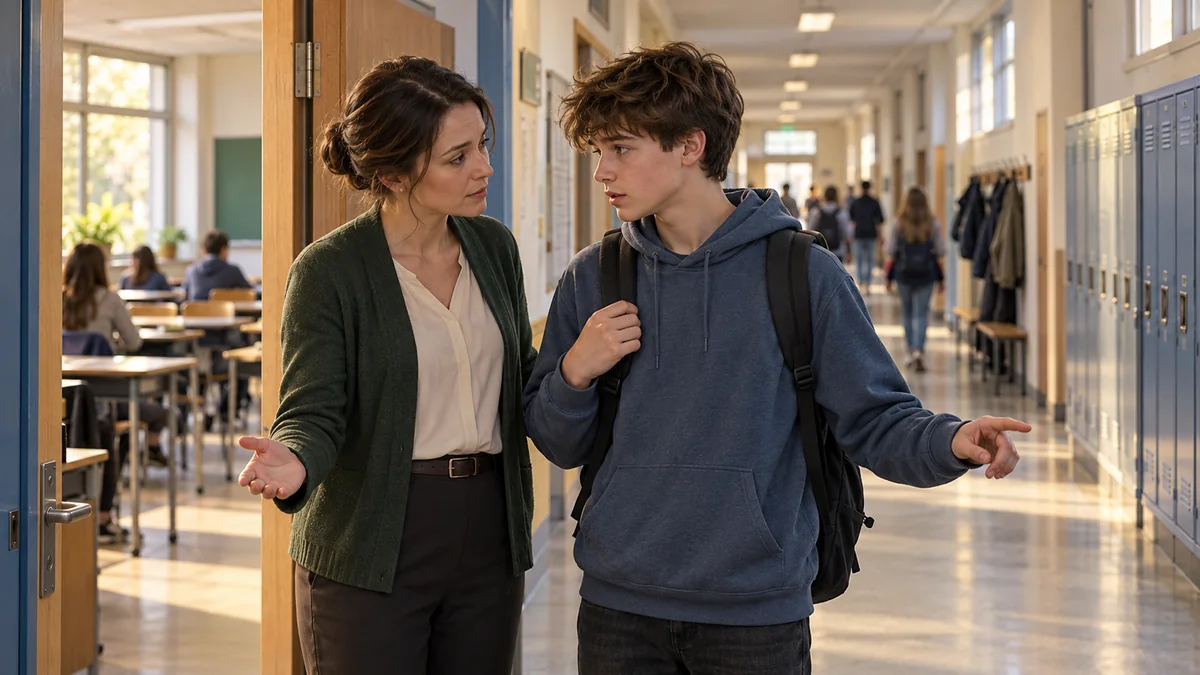
The bell rings for break, and most of your classmates head straight into the hallway. You stay in your seat. For weeks, a group has been hanging around the lockers, and you're afraid you'll run into them. Sometimes they trip you. Other times they mock you in front of everyone. They've even shared a video of you in the class group chat without your permission. When you objected once, they said, “We're just joking.” What frightens you most now is what they might do if you tell someone.
If someone is bullying or threatening you, you don't have to handle it alone. If you can, get somewhere safe and tell an adult who can help protect you as soon as possible—a teacher, your homeroom teacher, the school counselor, or another adult you trust. Ask what can be done to keep you safe, not just whether someone can have a talk with the others. If the first adult dismisses you, tell someone else who can help get the school to act. If an assault or serious threat is taking place and immediate police intervention is needed, call 113 in Slovenia. If emergency medical or other rescue assistance is needed, call 112. Say where you are and what is happening. If you can't make the call, ask someone with you to call.
You might feel embarrassed. You might be afraid reporting it will make things worse. That fear is understandable, and adults need to take it into account when planning how to protect you. But that fear does not mean you have to put up with the abuse. It's important that adults address your fear of retaliation, too.
When Is a “Joke” No Longer a Joke?
Classmates sometimes argue. They may say hurtful things, then talk it through later. In that kind of disagreement, both usually have some room to speak up without being intimidated.
It is different when a person or group repeatedly singles someone out: humiliating or excluding them, threatening them, or using their power to make it hard to stand up for themselves. Power isn't just physical strength. It can come from the size of a group, social status, influence over friendships, or control of a class group chat. When this happens repeatedly, it's often called bullying. Peer violence is a broader term: it also includes serious incidents that need to be addressed even if they happen only once.
Is every rude comment bullying? Not necessarily. But you don't have to wait for harmful behavior to happen again before asking for help. Even one serious assault, act of extortion, or credible threat calls for an immediate response. You do not have to decide what label fits an incident before asking for help. Adults are responsible for thinking about how to keep you safe.
Saying “We're only joking” doesn't make an incident harmless. Ask whether you can really say no, whether it keeps happening, and whether others are using your fear against you. If you ask them to stop and they continue to mock you, calling it a “joke” doesn't excuse their behavior.
What If I'm Already Afraid of the Next Break?
Your immediate safety comes first. If someone threatens you in the hallway, blocks your way, or seems likely to attack you, try, if possible, to reach a teacher, a staff member on duty, or a place where an adult can help. If you can't get away safely, call for help. You don't have to risk a fight, film the abuse, or return to somewhere dangerous to prove you're brave.
If they wait for you on the way to the bus or home, tell a responsible adult where you feel unsafe before school ends. ask who can accompany you and where you can go if they threaten you again. A temporary arrangement doesn't solve the bullying; it helps protect you while adults take action. If an assault or threat requires an immediate police response in Slovenia, call 113. If someone is injured and needs emergency medical care, or a life is at risk, call 112.
You may freeze or find that you cannot say “stop” at all. Some people cry; others try to laugh it off in the hope of being left alone. None of those responses means consent to violence. And it isn't your fault if you couldn't think of the perfect thing to say while you were frightened.
How Can I Explain What's Happening When Nobody Sees It?
Fictional example: Fifteen-year-old Tim has been avoiding the lockers for weeks. Three classmates hide his belongings almost every day, insult him in front of others, and share humiliating videos in a group chat. The first adult Tim tells says, “Just ignore them.” Tim tries to stay away, but they're waiting for him again the next day. He is so afraid of retaliation that several more days pass before he tries again.
Eventually, Tim writes a few lines on a piece of paper and gives it to the school counselor: “They're waiting near the lockers almost every break. They're posting videos in the chat. I'm afraid to walk past them on my way home. I don't want to be left alone with them after we talk. Who will help keep me safe today?”
The counselor starts by arranging where Tim can be safe today and who he can go to during the next break. Then the counselor starts the school's follow-up process. Tim doesn't have to repeat every detail in front of the group in the same room. One conversation will not solve everything: adults still need to check whether the bullying is actually stopping and whether Tim is safe during breaks and on his way out of school.
If speaking feels too frightening, you can start with a short note or message too. Try to say what happened, where and roughly when it happened, who was there, and what you fear will happen next. You don't have to remember every date. And you don't have to risk your safety to get video evidence. Adults should take what you say seriously and act to protect you; you do not have to come with a perfect set of evidence.
Instead of saying only “They're picking on me,” you could say: “They threaten me near the lockers during breaks. It's been going on for weeks. I'm afraid they'll find out I told someone. Please help me stay safe.” If the hardest part is the thought of walking down the same hallway after reporting it, say that plainly.
What Should the School Do When It Learns About the Violence?
Slovenian schools follow a protocol for responding to violence between students. When a staff member becomes aware of violence, they must first stop it and protect the child, then notify the relevant staff and record what happened. The school counseling service arranges separate conversations and, when needed, a safety plan. The school also needs to follow up to see whether the harm is stopping. In more serious cases, other responsible services—including a social work center or the police—may become involved.
Your immediate protection cannot wait for every detail to be investigated, even though the full response may take time. The response shouldn't stop at “Just ignore them.” You can ask: “Where will I be safe during breaks? Who will know about the threats? Who should I go to if they happen again? When will we check whether things are improving?” And if you're worried about retaliation, ask: “How will you protect me if they try to get back at me for reporting it?”
Adults may need information from several people and may need to speak with those who are causing the harm. But that does not mean you must face them in the same room to prove your account. Separate conversations and attention to safety matter for exactly that reason. Confidentiality cannot always be absolute: responsible staff sometimes have to share information to protect a child. Ask who will be told and how they'll protect your safety and dignity in the process.
Under the Slovenian protocol, informing parents or guardians is also part of the response. If home is safe, a parent or guardian can accompany you to a meeting. But if telling someone at home would put you at further risk, say so immediately to the school counselor or another safe adult. Staff cannot promise complete secrecy, but they must take your safety seriously when planning what to share and which services to involve.
What If I've Told Someone but Nothing Changes?
Perhaps a teacher promised to speak to the other students, yet the bullying carried on. Or perhaps it moved from the classroom to the bus and online spaces. That doesn't mean you explained yourself badly. Protection isn't complete just because a conversation took place. The real question is whether you are safer now.
Go back to the person responsible and explain what happened after your report: “After the meeting, they told me I'd regret telling. I was afraid to go home today. I need a new plan to keep me safe.” If the first adult doesn't act, contact another teacher, the school counseling service, or school leadership. If home is safe, a parent or guardian can support you in following up. Serious threats or assaults can also be reported to the police. You don't have to wait for things to get worse before people take you seriously.
If it's safe to do so, you can write down when incidents happened and what you've already told people. That record may help with the follow-up. But don't try to gather evidence by going back to the people harming you, provoking a dangerous incident, or secretly filming an assault. Adults at school are responsible for recording and looking into the incidents too.
Even if the investigation takes time, ask what protection is in place today and who will check whether it works. If you're afraid even to walk through the school doors, the meeting shouldn't end with “We'll see” and no attempt at a safety plan.
What If the Bullying Continues on My Phone?
Maybe it started with jeers in class, then moved to a fake account, a group chat, or a video. Online abuse can be especially exhausting because it reaches you at home, too. But it isn't less serious because it happens “only on a screen.”
Do not answer threats with threats of your own. And do not pass humiliating posts around, even to show others what happened. If it's safe, you and a trusted adult can save ordinary, non-intimate messages, a post's web address, the account name, and the time of the incident. Ask for help using the platform's reporting or blocking options if you need it. Tell the school about abuse involving classmates in a group chat, too, when it affects your safety or school life.
Intimate images, especially those involving anyone under 18, need different precautions. Do not download, duplicate, or forward them, even “as evidence.” If the material is already on your device, ask a responsible adult or the police for guidance rather than circulating it yourself. If someone threatens to post it or tries to blackmail you, don't send money or agree to further demands. Involve a safe adult immediately and, where necessary, the police. Let those responsible tell you how to handle any existing material safely. Sexual violence or sexual blackmail calls for particularly careful protection; the next article will cover that in more detail.
Muting notifications may give you a break. But it does not replace getting help from an adult. It wouldn't be fair if the only answer were “Turn off the internet” while the abuse continued. Adults and the appropriate services need to address the people causing the harm—not simply your use of a device.
Do I Have to Talk to Them, Make Up, or Apologize?
If two classmates have argued and both feel safe, they may choose to talk things through. That isn't the same as one person being intimidated by a group.
If a group is intimidating or threatening you, you should not be pressured into facing them just so someone can say the matter is settled. Speaking directly with someone who has been violent toward you can create additional danger, especially if you fear retaliation. You can say: “I'm afraid to talk in front of them. Please speak to us separately and make sure I'm safe.” School staff should put safety first and listen to your concerns before deciding how to proceed.
Perhaps you've said something hurtful yourself in the past. You can take responsibility for your own words and try to put things right. But that doesn't give anyone the right to hit, blackmail, or repeatedly humiliate you. Nothing about an argument—or an apology you have not made—gives anyone permission to be violent.
What If Other People Saw It and Stayed Silent?
When several people mock you, it can feel as though the whole class is against you. Some students may laugh because they fear becoming the next target; others may be unsure what to do. That doesn't excuse joining in the humiliation, but it does help explain why adults' actions matter so much.
If you see someone being hurt, do not put yourself at risk by trying to physically intervene. Don't film it for entertainment or share the footage. If you can help safely, find a teacher, say what you saw, or accompany the student being hurt to an adult. Sometimes even saying afterward, “I saw what happened. I can come with you to tell someone if you'd like,” means a lot. Adults and the relevant services—not one student—are responsible for stopping the violence.
If you're the person being targeted, you don't have to convince the whole class. Start with an adult who can help you stay safe; if help doesn't follow, find another person who can act. A friend's support matters, but it cannot replace the protection the school is responsible for providing.
What If All of This Makes Going to School Difficult?
After repeated bullying, you may dread getting up for school, sleep badly, find it hard to concentrate, or stop seeing friends. You don't have to prove you're “tough enough” to withstand abuse. Tell an adult how the violence is affecting you, not only what other students are doing. If your health or well-being is suffering, ask a trusted adult to help you reach a healthcare or mental-health professional.
If you start thinking you do not want to live or might hurt yourself, tell a safe adult or healthcare professional today. If you're in immediate danger or can't stay safe, call 112 immediately in Slovenia, or ask someone to call for you. The previous article discusses this kind of distress in more detail. The bullying needs to stop, and you also have a right to help with the harm it has caused you.
Who Can I Call If I Need Help?
In Slovenia, children and young people can call TOM at 116 111 for a free, confidential conversation every day from noon to 8 p.m., including holidays. The TOM contact page also lists a chat service with a weekly schedule and a way to send a message. TOM says you can expect a reply to a message within about a week, so do not rely on email when you need immediate help. TOM is not an emergency response service. If someone is seriously threatening you right now and you need the police in Slovenia, call 113; for emergency medical or other rescue assistance, call 112.
If the violence is happening at school, seek out a teacher, the school counseling service, or school leadership. If you have support at home, involve your parent or guardian. If you don't feel safe at home, tell the counselor or another safe adult and ask them to help you reach an appropriate service. What matters is reaching someone who can help keep you safe—not finding the “right” person on your first try.
What Can I Do Today?
If you're afraid of the next break, tell an adult before the break and ask where you'll be safe. If you're still at home and afraid of going to school, tell a safe adult and work out how you can reach the school counseling service safely. If you're being blackmailed online, don't send money or comply with new demands; get a safe adult's help with reporting it and protecting yourself. If the first conversation doesn't lead to protection, contact another responsible person and explain that the abuse is continuing.
You can start with one short sentence: “I'm afraid to walk past the lockers. I need help staying safe.” That is enough to ask for help. Violence is not a test of your strength, and you do not have to earn protection by being brave. You deserve to be taken seriously and to be able to go to school without fear of being attacked or humiliated.
Sources and Further Reading
- Ministry of Education of the Republic of Slovenia, Recognizing and Preventing Peer Violence in Schools (official summary of the protocol): https://www.gov.si/teme/prepoznavanje-in-preprecevanje-medvrstniskega-nasilja-v-solah/
- National Education Institute of Slovenia, Protocol for Responding to and Addressing Peer Violence in Educational Institutions, online edition 2023: https://www.gov.si/assets/ministrstva/MVI/SRI/NASILJE/Protokol_medvrstnisko_nasilje.pdf
- Slovenian Police, What Can You Do If You Are a Victim of Peer Violence?: https://www.policija.si/svetujemo-ozavescamo/policija-za-otroke-najstnike/nasilje-med-vrstniki/kaj-lahko-storis-ce-si-zrtev-nasilja-med-vrstniki
- Slovenian Police, Where and How Does Peer Violence Take Place?: https://www.policija.si/svetujemo-ozavescamo/policija-za-otroke-najstnike/nasilje-med-vrstniki/kje-in-kako-se-dogaja-nasilje-nad-vrstniki
- GOV.SI, Emergency Calls: https://www.gov.si/teme/klic-v-sili/
- TOM Helpline, Contact Us: https://www.e-tom.si/stopi-v-stik/
- Safe.si, What to Do If You Have Experienced Online Abuse: https://safe.si/napotek/kaj-storiti-ce-si-postal-zrtev-spletnega-nasilja
- Slovenian Police, Online Peer Violence: https://www.policija.si/svetujemo-ozavescamo/varnost-na-internetu/spletno-nasilje-in-spolne-zlorabe-otrok-na-internetu/medvrstnisko-spletno-nasilje