What Should I Do If I Experience Sexual Harassment, Violence, or Abuse?
Abuse and sexual harassment are never the victim’s fault. Learn safe ways to seek protection, support and help.
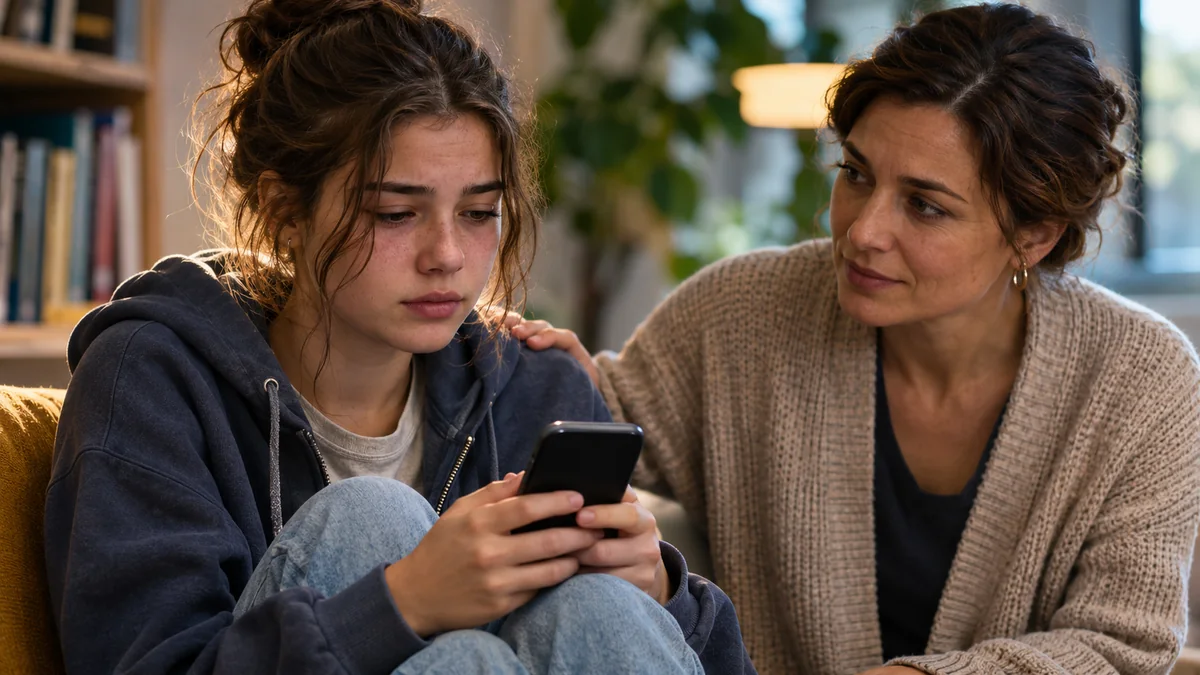
After practice, you get a message from someone you know and have trusted until now. They ask you not to tell anyone about something that happened. They used to give you a lot of attention, but now they say that if you speak up, any trouble they get into will be your fault. Your stomach tightens. You wonder whether you understood what happened, who will believe you, and whether you will have to see this person again tomorrow.
If someone sexually harasses you, pressures or forces you into sexual acts, blackmails you, or abuses you, you have a right to safety and help. The person who harms you bears responsibility for what they do—not you. If you are in danger right now, try to get somewhere safe. In Slovenia, call 113 if you need the police to respond immediately, or 112 for emergency medical or rescue assistance. If there is no immediate danger, tell an adult you can safely turn to, or contact a professional support service, as soon as you can. If you have recently been sexually assaulted, seek medical care promptly, even if you have no visible injuries.
Before asking for help, you do not have to name a crime, collect evidence, or work out how much of your story you can tell. You can begin with just this: “Something happened. I don't feel safe, and I need help.”
How do I know when someone has crossed a boundary?
Sexual harassment can take different forms: unwanted comments about your body, unwanted messages, sexual comments or suggestions, pressure, touching without freely given consent, or continuing despite obvious discomfort. Sexual violence and abuse may involve someone violating your body or sexual boundaries, forcing you into sexual acts, or exploiting your trust, age, or dependence on them. Whether an act meets a particular legal definition depends on the facts and is for the appropriate authorities to assess. You do not have to make that legal judgment yourself before seeking protection.
It also matters who has power and how they use it. They might be older than you or have influence over your life. They might control your grades, your place on a team, where you live, or whether you feel accepted. They might tell you that what they want is proof of love, special trust, or maturity. If someone uses fear, threats, or their position of authority to make you do something against your will, that is not a free choice.
Fear can make it hard—or impossible—to move or speak. You might try to smile just to get through the situation, or keep replying to messages afterward because you are afraid of what will happen if you stop. Freezing, staying silent, having been friends with someone, accepting a gift, or not physically fighting back are not signs that you consented. None of these things makes you responsible for the abuse. This is true for girls, boys, and young people of every gender.
You do not need to be certain which label fits what happened. You can start by saying what you feel able to share and why you are worried. The adults and professionals you turn to must take your safety seriously and respond appropriately.
What should I do if it is happening now—or I am afraid of the next encounter?
If you are in danger right now, try to get to a safer place or reach someone who can help. If possible, go somewhere other people are present, or ask a staff member, a neighbour, or another safe adult for help. If you cannot leave, call for help if you can do so safely. Do not go back to the person who harmed or threatened you to demand an explanation, force a confession, or record evidence. You do not have to put yourself at risk to be taken seriously.
If you need immediate police intervention because of an assault or a serious threat, call 113 in Slovenia. If your life or health is at risk and you need emergency medical or rescue assistance, call 112. If you cannot make the call yourself, ask someone else to call for you. Say where you are and that you are unsafe or need help; you do not have to tell the whole story in your first sentence.
Your safety afterward matters too. If you are frightened of going home, returning to practice, or being in class tomorrow, tell an adult: “I might be alone with that person again tomorrow. I need a plan so that doesn't happen.” A simple “Don't worry, it'll be fine” is not enough. Ask who will make sure you are safe today, and whom you can tell if the threats happen again.
Why does medical care matter after a recent assault?
You might be thinking, “I'm not injured. Why would I need an examination?” After a sexual assault, you may have no visible injuries, yet a medical assessment can still be important. Healthcare professionals can assess injuries, consider any risk of sexually transmitted infections or pregnancy where relevant to what happened, and offer further support. They should explain the proposed examination and other possible steps in language you can understand, including why they recommend each step.
Do not delay medical care because you feel ashamed or uncertain, or because you have not decided whether to report the assault. Some forms of care are time-sensitive. For example, WHO guidance recommends assessment and, if appropriate, starting HIV post-exposure medication as soon as possible and no later than 72 hours after certain kinds of exposure. Where pregnancy is possible, emergency contraception may be appropriate within five days (120 hours). This does not mean these measures are needed after every incident of harassment or assault; a healthcare professional must assess whether they are appropriate. And if those windows have passed, it is still worth seeking medical care: an examination, treatment of injuries, other tests, and emotional support may all still help. A healthcare professional should help decide which treatments, if any, are appropriate for you.
If you are underage, or you are afraid that someone at home may find out in a way that puts you in danger, tell healthcare staff or a safe professional helping you get care. Rules about confidentiality, protection, and involving the relevant authorities depend on the circumstances. Explain that you are worried about your safety at home and ask them to explain what will happen next, rather than going without care because you are afraid.
It is all right if you cannot remember every detail. Your safety and health matter more than giving a “perfect” account. If you are concerned about how evidence might be handled, tell the healthcare staff or police. Do not put off medical care or put yourself at risk to collect evidence; trained professionals can explain any relevant forensic procedures.
What if it was someone I love—or someone I am expected to obey?
Abuse does not always come from a stranger. It can happen in a relationship, within a family, at sports practice, at school, or anywhere a person should be able to expect trust. That can make it much harder to tell anyone. You might be afraid your family will break apart, you will lose your place on a team, someone will lose their job, or no one will believe you.
It is not your responsibility to protect a person who is harming or threatening you from those consequences. The reputation of a family, school, club, or adult is not more important than your safety. You do not owe anyone silence, forgiveness, or another meeting with someone who threatens you just to keep the peace for everyone else.
If the person responsible is your parent, guardian, or someone else in your household, you do not have to tell that person first. Turn to someone you can safely trust outside that circle: a school counsellor, teacher, doctor, another relative, a social work centre (center za socialno delo, CSD), the police, or a specialist support organisation. You can also say, “I'm not safe at home. I don't want to be sent back there after this conversation without protection.” The appropriate services have a duty to assess how you can be protected. Tell them, too, if you fear being returned to an unsafe situation after you disclose what happened.
If the person is a teacher, coach, or another adult in a position of authority, seek help from someone or some service that is not under that person's influence. Slovenia's school protocol addresses suspected abuse by a peer, a staff member, and a third party separately. You are not responsible for negotiating with the person suspected of abusing you or conducting an investigation yourself.
How can I even start talking when I feel ashamed?
Fictional example: Sixteen-year-old Nika has been turning off notifications on her phone for several days. Someone she once trusted is sending messages that frighten her. She does not want to talk about it at home because she fears how one of the adults will react. At school, she finally goes to speak to the counsellor.
“I don't know if you'll believe me,” she says. “I can't tell you everything yet. I'm scared about going home today.”
The counsellor does not pressure her for a detailed account. First, she asks whether Nika is safe right now and whether the person can reach her today. She tells Nika that coming to her was the right thing to do and explains, in terms Nika can understand, which people or services might need to be involved to protect her. Nika says that the person may be waiting for her after school. The counsellor does not simply say, “Come back tomorrow.” She begins working with the appropriate services to arrange where Nika can be safe today. Not everything is resolved after that first conversation, but Nika is not left to face the danger on her own.
If speaking feels too hard, you can write a few sentences and show them to someone safe. You could start with, “Someone crossed a line with me. I'm not ready to explain everything, but I need help.” If you have been threatened, you could add: “I'm afraid they'll retaliate if they find out I told someone.” If it is not safe to tell anyone at home, say that clearly.
The first conversation is not a test. You do not have to recall events in perfect order or speak without pausing or crying. If the first adult dismisses or blames you, try another safe adult or contact a professional support service directly. One person's failure to take you seriously does not mean what happened to you is not serious.
What if someone threatens to share intimate photos or videos of me?
Online abuse can begin with a friendly conversation and turn into pressure, threats, or blackmail. Someone might demand more photos, money, a meeting, or silence, and threaten to publish private material if you refuse. Even if you originally sent a photo yourself, nobody has the right to use it to blackmail you.
Do not send any more intimate images, pay for a promise of silence, or agree to meet the person blackmailing you. Involve a safe adult as soon as possible and, where necessary, the police. If it is safe to do so, you can write down the account name, approximate time, and wording of the threat, but do not make new copies of intimate images. Tell the adult or police what is happening and ask how to handle any material that already exists.
If intimate images involve a minor, do not download, forward, post, or send them to friends “as evidence.” The police or a specialist service can explain how to handle existing information and report the abuse. Slovenia's Spletno oko reporting service accepts reports of suspected child sexual abuse material online. It is not an emergency protection service. If you need an immediate police response in Slovenia, call 113.
Even if you once trusted someone, spoke with them, or sent them a personal message, that does not give them the right to blackmail you or expose your private life.
Will adults tell other people if I confide in them?
It makes sense to want a say in who hears about something so personal. You can ask, “What can stay between us, and when would you need to tell someone else to keep me safe? Can you explain what will happen?” A professional should not promise to keep everything secret when duties to protect or report may apply. If they need to involve others to protect you, they should explain whom they will inform and why, as far as the safety circumstances allow.
When a school becomes aware of sexual violence, its professional protocol requires it to put the child's safety first and start the appropriate protection and notification procedures. The first conversation should be supportive, not an interrogation. You do not have to repeat intimate details publicly or confront the person who harmed you to receive protection. It is the job of the appropriate adults and services—not yours—to work out what needs to happen next. Depending on the situation, the school, social work centre (CSD), police, healthcare professionals, and other services may be involved.
Those services have different roles. Healthcare professionals assess your health and provide care. The CSD helps assess risks and organise support and protection. The police handle reports and dangerous incidents. Hiša za otroke (“House for Children”) provides child-sensitive support in certain judicial proceedings. It is not a substitute for emergency medical care after a recent assault.
A supportive parent or guardian may be an important ally if home is safe. If it is not safe, the protection plan must take that into account. Nobody can honestly promise exactly how the process will end, but you can ask who will make sure you are safe today.
Why am I reacting differently from how I expected?
After harassment or abuse, you may feel afraid, ashamed, confused, angry, or numb, or find it hard to sleep or concentrate. Some people speak up immediately; others do so much later. One person cries; another looks completely calm. You cannot judge what happened by whether someone cries, stays quiet, or seems calm. You do not have to look “upset enough” to deserve help.
Asking for help does not mean telling every detail to every person you meet. You can say what would help you now: a safe way home, someone to come with you to a medical appointment, a change at school to keep you safe, someone to talk with, or a calmer place to be. Professional psychological support may help, especially if the distress is making everyday life difficult. You can still seek help even if the incident happened a long time ago.
If you find yourself thinking that you do not want to live or that you might hurt yourself, tell a safe adult or healthcare professional today. If you are in immediate danger or cannot keep yourself safe, call 112 in Slovenia. You do not have to face those feelings alone; article N54 discusses them in greater detail.
Where can I get help in Slovenia?
In an immediate emergency, call 113 for an urgent police response or 112 for emergency medical and other rescue assistance. These numbers are for urgent action, not routine counselling appointments.
If you are a child or teenager and need a safe conversation or guidance, you can call TOM at 116 111, free of charge, every day from 12 noon to 8 p.m. Slovenian local time. The TOM website also offers chat at published times and written messages. Written replies can take time; neither messaging nor scheduled chat is a way to get emergency help.
SOS telefon, 080 11 55, offers support and information to people affected by violence 24 hours a day, every day of the year. It does not replace the police or emergency medical services when someone is in immediate danger. Združenje za MOČ offers specialist support for survivors of sexual violence, including minors: 041 204 949 (Ljubljana) and 041 276 434 (Maribor), generally on weekdays (Monday, Tuesday, and Thursday, 8 a.m.–4 p.m.; Wednesday, 8 a.m.–5 p.m.; Friday, 8 a.m.–3 p.m.). You can also seek help through your school's counselling service, a healthcare professional, a CSD, or the police. If you are unsure where to begin, ask a safe adult to help you make the first call.
If telling someone at home could put you in danger, make that clear when you first ask for help. Finding a safe route to help is part of protecting you—not another problem you must solve alone.
What can I do today?
If you are in danger now, seek immediate help. If you have recently been assaulted, seek medical care as soon as you can. If there is no immediate danger, tell someone who is genuinely safe or a professional support service what worries you today, and ask for a clear, practical step to keep you safe. If the first person does not act, contact another safe adult or the appropriate service directly. You do not have to wait until you have perfect evidence or find the perfect moment.
Perhaps all you can manage is one sentence: “Something happened, and I need help to be safe.” That is enough to begin. You are not responsible for the abuse. Your safety and dignity deserve to be taken seriously.
Sources and Further Reading
- Zavod RS za šolstvo, Protokol za ravnanje ob zaznavi in obravnavi spolnega nasilja in spolnega nadlegovanja v vzgojno-izobraževalnih zavodih (2023): https://www.gov.si/assets/ministrstva/MVI/SRI/NASILJE/protokol_spolno_nasilje.pdf
- GOV.SI, Pomoč žrtvi v primeru nasilja: https://www.gov.si/teme/pomoc-v-primeru-nasilja
- GOV.SI, Ukrepi za zagotovitev varnosti ob nasilju v družini: https://www.gov.si/teme/ukrepi-za-zagotovitev-varnosti-ob-nasilju-v-druzini/
- Policija, Spolno nadlegovanje – nasveti za žrtve in očividce: https://www.policija.si/svetujemo-ozavescamo/oosebna-varnost/spolno-nadlegovanje-nasveti-za-zrtve-in-ocividce
- GOV.SI, Klici v sili: https://www.gov.si/teme/klic-v-sili/
- TOM telefon, Stopi v stik: https://www.e-tom.si/stopi-v-stik/
- Združenje za MOČ, Telefonsko in spletno svetovanje: https://zamoc.si/telefonsko-in-spletno-svetovanje/
- GOV.SI, Pomoč žrtvi v primeru nasilja (also SOS 080 11 55): https://www.gov.si/teme/pomoc-v-primeru-nasilja
- Policija, Prijava nasilja v družini: https://www.policija.si/svetujemo-ozavescamo/oosebna-varnost/nasilje-v-druzini/prijava-nasilja-v-druzini
- Ministrstvo za pravosodje, Hiša za otroke (20 October 2025): https://www.gov.si/novice/2025-10-20-hisa-za-otroke-izpolnila-vse-pogoje-za-izvajanje-celostne-obravnave-otrok/
- Spletno oko, Kako delujemo: https://www.spletno-oko.si/o-prijavni-tocki/kako-delujemo
- WHO, Responding to children and adolescents who have been sexually abused: WHO clinical guidelines (2017): https://www.who.int/publications/i/item/9789241550147
- WHO, Responding to children and adolescents who have been sexually abused (2017, summary): https://www.who.int/news/item/19-10-2017-responding-to-children-and-adolescents-who-have-been-sexually-abused