Can I Take or Use Something That Isn't Mine?
Borrowing, lost property, shared equipment and giving credit: how to respect other people without having to ask permission for every little thing.
Borrowing, lost property, shared equipment and giving credit: how to respect other people without having to ask permission for every little thing.
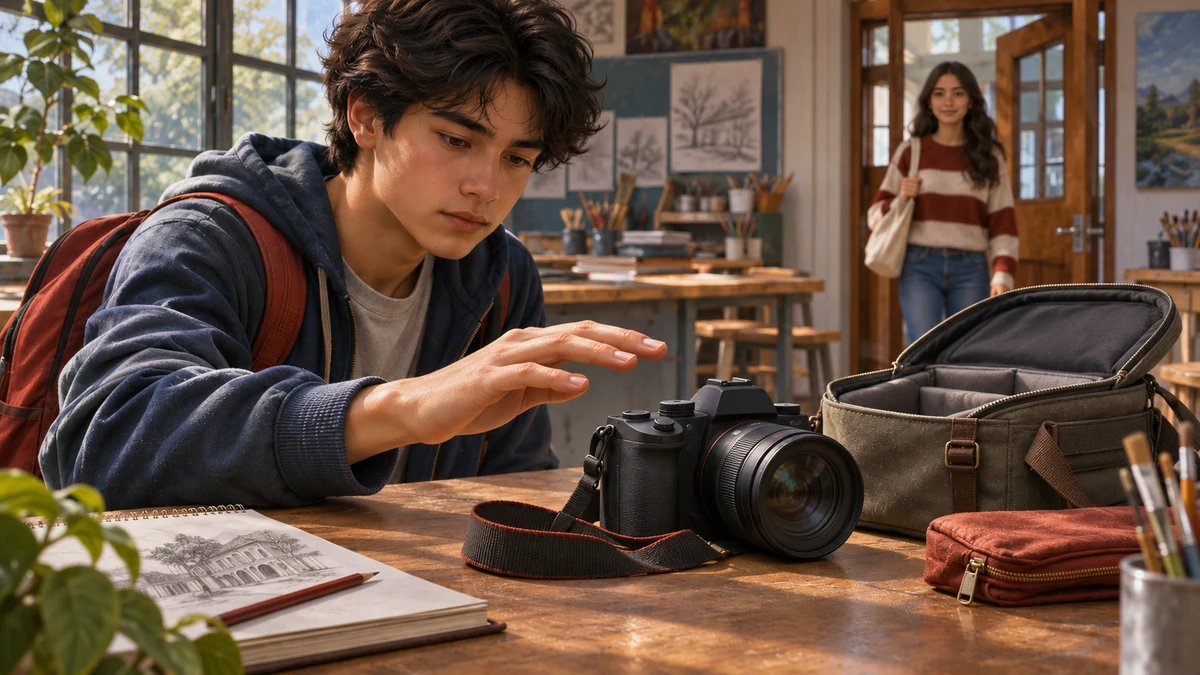
A small microphone is lying on a table at a youth centre. Tim wants to take it with him: he and Maja need to record an interview for a group documentary that very day. Ema often uses the microphone, but she isn't there. “She brings it here all the time,” Tim says. “I'll just take it for an hour and bring it back. If we wait, we'll never get anything finished.”
Maja doesn't know whether the microphone belongs to Ema or the group, or whether it's on loan from someone else. She does know that Ema might need it. “Maybe we're allowed to use it,” she says. “But we haven't checked.” Tim looks at her. “We're friends. She wouldn't say no over just an hour, would she?”
To Tim, Maja seems to be making a fuss over nothing. After all, they're working on the same project. Surely a good reason and a promise to return the microphone should be enough?
Here's the short answer: as a rule, don't take or use something that belongs to someone else without permission or a reasonable agreement. When something is shared, respect the rules for using it. When you borrow something, stay within the agreed limits and return it as promised. And when you find something, don't assume it's yours. But it makes little sense to ask permission every time you use a charger the whole family already shares. What matters is what people have actually agreed, who has the right to decide, and how your actions affect others.
All scenes and conversations in this article are fictional. They are intended to help readers think through real-life questions, not to describe actual people.
“I'd Only Take It for an Hour”
Suppose Tim takes the microphone, handles it carefully and returns it without a scratch. Is there really a problem? At first, you might think not. But Ema might have needed it during that very hour. Perhaps she saved up to buy it. Perhaps she borrowed it herself and has to return it at a particular time. Tim doesn't know any of these things when he makes the decision for her.
The value of someone else's belongings isn't just what they cost. It also matters whether someone can count on having them when they're needed, and whether that person gets a say in how they're used. Even when an item comes back undamaged, taking it without permission may cause someone to miss an important commitment or undermine trust in the arrangements people rely on.
That doesn't make Tim a bad person. He has a genuine concern: the recording deadline. But a deadline doesn't turn someone else's property into shared equipment. Maja suggests something quite simple: “Send Ema a quick message. If she doesn't reply, we can ask to borrow another microphone, or record a part that doesn't need it first.”
Ema replies later. The microphone really is hers; she bought it for her performances and needs it again the next day. “You can use it here,” she writes, “but I'd rather you didn't take it out on location, where it could be dropped or get wet in the rain.” Tim isn't thrilled. Taking it with him would make recording easier. But now he knows what kind of use he has permission for. He can accept the limit and adjust the recording plan, or look for other equipment. And even if Ema had refused altogether, it wouldn't be fair to call her a bad friend for that. Asking gives someone a choice; it isn't a way of pressuring them into saying yes.
Three questions help reveal an important distinction: Who happens to have the item right now? Who owns it—or who is entitled to decide how it may be used? And what use, exactly, has been permitted? The answers aren't always the same. If a friend lends you a bicycle for a trip to the shop, that doesn't mean you may keep using it indefinitely or lend it to a third person without asking. The same applies when you borrow a camera and discover private photographs on it: permission to use the camera isn't permission to browse the owner's private photographs.
That distinction is more useful than a blanket prohibition. It helps you work out what you're actually asking. Instead of “Can I take it?” you could say, “Could we use your microphone here until six this evening? Where should we leave it afterwards?” A question like that isn't a sign of weakness. It makes an agreement possible—one both sides can rely on.
What If We Always Share Things at Home?
At home, the situation may be quite different. A charger stays in the kitchen, everyone uses it, and nobody asks before every charge. If that's an established arrangement everyone understands, there's no need to invent extra formalities. The same goes for shared utensils, household tools, or games with clear rules. Permission can be built into an ongoing agreement; it doesn't always need to be given again every day.
But sharing has limits, too. If you take that same charger to a friend's house for three days, no one at home can use it when they need it. If the games console belongs to the family, that doesn't give one person the right to decide who gets to play every evening. And a school computer doesn't become the personal property of whoever sits down at it first.
Disagreements are often easier to prevent when people settle the small questions in advance: Who can take an item out of the room? Who gets priority when several people need it? Where should it be returned? What happens if something stops working? These aren't pointless bureaucratic rules. They stop the quickest or loudest person from making every decision for everyone else.
Perhaps your grandfather, grandmother, or another experienced person at home always puts a tool back on the same shelf. Ask why that matters to them. When the tool is in its agreed place, the next person doesn't have to search for it, and it's easier to notice if it's been damaged. But an old custom is worth thinking about, too: Which rules genuinely helped your family? Which were simply habits? You can learn from experience without feeling obliged to adopt every tradition.
You may also face an uncomfortable double standard: adults insist that you ask before using their things but take yours without asking. You can raise that calmly: “I'd like us to be clear about which things we share and which things we ask before using—regardless of whose they are.”
Adults may have additional responsibilities for family life and safety, but that doesn't mean a young person's personal belongings have no value. Agreements are stronger when their reasons make sense to everyone, not only to the youngest family member.
There's another side to this. If something belongs to you, you generally have good reason to decide whom to lend it to. That doesn't mean every refusal is kind or reasonable; someone might deliberately withhold equipment the group needs simply to make things difficult. But an unkind refusal doesn't, by itself, give us permission to take the item.
If the equipment is supposed to be shared under an existing agreement, you can ask for clear rules and help from whoever is responsible. If it's a personal possession, try to understand the refusal or find another way. And if you're the one being asked to lend the same thing over and over, you can calmly say, “I can't lend it today.” Fairness doesn't mean everyone gets everything they want. It means decisions aren't made solely by whoever is stronger or louder.
I Found a Phone. Why Can't I Keep It?
After practice, someone leaves a phone on a bench. Nobody is nearby, and the screen is locked. Someone remarks, “If it really mattered to them, they wouldn't have forgotten it.” Another person suggests searching through the notifications or photos to find out who it belongs to.
But forgotten isn't the same as abandoned. A lost wallet, key, or phone can still have an owner, even when that person is nowhere in sight. And a phone is both a valuable object and a store of private information. Finding something doesn't automatically give you the right to use it.
What can you do? If you know who owns the item, try to arrange for it to be returned safely. If you find a phone at a sports centre or school, speak to someone responsible there, who can help arrange a safe handover and establish whether the find needs to be reported. Don't unlock the phone, browse the photos or messages, or post the owner's personal details on social media. Helping to return someone's property shouldn't mean searching through their private life.
In Slovenia, if you take possession of something you have found, you must notify its owner or another person entitled to it. If you don't know who that person is, or don't know their address, you generally need to report the find to the police. There is an exception to police reporting for items of negligible value, but that doesn't mean such an item automatically becomes yours. The details are set out in Slovenia's Property Code; check official guidance if you are dealing with an actual find. [1][2]
Here's another distinction. If you find an object behind an old armchair and it is clear someone has discarded it, that is not the same as finding a wallet on a bus seat. But the mere fact that an object is lying on the ground doesn't prove its owner deliberately gave it up. When you're unsure, checking is fairer than choosing whichever assumption suits you best.
Can We Take Credit That Belongs to Someone Else?
When a group prepares a presentation, there may be nothing on the table that anyone could quietly carry home. Yet someone can still take something valuable from the others: recognition for their work.
Suppose Sara prepares the questions and researches the material, Ajda selects the clips, Leon edits the sound, and Tim presents the project to an audience. Afterwards someone tells him, “You did a great job.” Tim could thank them and leave everyone else's contribution unmentioned. Or he could say, “Thanks. Sara did the questions and research, Ajda edited the footage, Leon handled the sound, and I gave the presentation.”
Not everyone has to contribute exactly the same amount, and nobody needs to divide every little task into percentages. But no one should be left out of the story of a group project simply because they weren't the one on stage. And if one person really did most of the work, it isn't honest to claim everyone contributed equally. Giving credit fairly means acknowledging who actually did what.
It's important, though, to distinguish everyday moral fairness from legal questions of authorship and copyright. Someone who suggests a good idea or organises the project deserves recognition, but that doesn't necessarily make them a legal co-author of every finished work. In everyday relationships, it's helpful for a group to agree how everyone's contribution will be described before the work is submitted or presented—not only after someone feels overlooked.
If It's Online, Why Can't I Just Post It?
Once Tim and Maja have finished recording, they need a cover image for the video. Tim finds a perfect photograph through a search engine and saves it. “It's right there for anyone to see,” he says. Maja asks a different question: “Do we know who made it—and what we're allowed to do with it?”
Being able to download something isn't the same as having permission to reuse it however you like. Many photographs, songs, texts and videos are protected by copyright. The rules depend on the type of work, the circumstances and what you plan to do with it. There are legal exceptions for some educational uses, too. But calling something a “school project” doesn't automatically mean you can publish someone else's work for the whole world to see without limits. [3][4]
Tim and Maja can start by finding the original photograph, its creator and the terms of use. Some photographs may be adapted and published, but the permission may require you to name the creator, link to the licence and say what you changed. [5] Other photographs have different terms, or no permission may be stated at all. Simply putting the photographer's name under an image doesn't give you permission to post it however you wish.
If they can't find clear terms, Tim and Maja still have plenty of choices. They can take their own photograph, choose a work with a clear licence, ask the creator for permission, or check whether their particular use falls within a legal exception. Sometimes sharing a link to an original work that's lawfully available online is more appropriate than uploading a copy to your own page; a link, however, doesn't resolve every question about permitted use. And if the photograph shows a person, their privacy matters as well: the photographer's permission doesn't automatically override everyone else's rights.
It is much like the microphone. Being allowed to use it in a room doesn't mean you're allowed to take it home. Similarly, being able to view a photograph tells you nothing, by itself, about whether you may republish or alter it. Permissions needn't stifle creativity. When you understand what they cover, it's easier to build on other people's work while respecting the people who created it.
What If I Really Need Something but Can't Afford It?
Sometimes the desire to take someone else's belongings comes from a much harder situation than Tim's recording deadline. Perhaps someone can't afford supplies for school, things at home keep breaking, or other people simply have more opportunities. Asking for help can be difficult, especially if you're afraid of being mocked or turned down. Having very little money doesn't make a person less honest or less worthy of respect. But it does mean “Just buy your own” isn't a good enough answer.
If you need equipment for school or work, consider speaking to a trusted adult, a school counsellor, a mentor or an organisation that could help you borrow what you need or find other support. Even if you've already taken something without permission, you don't have to stay trapped in hiding it. Stop using it without an agreement, try to return it, and seek help with the need that led to the situation. How to make amends and rebuild trust afterwards will be explored more fully in the next article in this series.
A genuine emergency is different from an ordinary disagreement over whether you can take someone's speaker without asking. If someone's life or health is in danger, getting help safely takes priority over following an abstract rule regardless of the consequences. That isn't a general licence to take other people's possessions; it's a reminder that sound moral judgement also depends on what is actually at stake. If violence or coercion is involved, seek safe help rather than risking a direct confrontation.
What Should You Do When Someone Else's Things Are Right There?
Tim could simply have taken the microphone. Perhaps nothing bad would have happened. But that wouldn't make his decision fair: he would have decided for Ema when and how her equipment would be used, and what risks to expose it to. Maja suggested a better way that required neither a long process nor giving up the recording—ask first, then adapt the plan.
When you're unsure whether you may use something, I recommend checking who has the right to decide and what any permission covers. Ask specifically: “Can I use this here until this evening? Where should I put it back?” If something is shared under a clear agreement, use it within those limits without asking the same question unnecessarily. If the owner says no, respect the answer and find another way. If you find lost property, help return it. If your group creates something, remember the people who contributed. And if you've already taken something without permission or an agreement, don't make another excuse: stop using it, return it and seek help putting things right.
Being able to share things is valuable. That's precisely why decisions about their use shouldn't always belong to whoever is quickest, loudest or most pressed for time. Respecting what's not yours helps build relationships in which people feel able to lend, ask—and politely say no.
Sources and Further Reading
Republic of Slovenia, Stvarnopravni zakonik (Property Code, SPZ), particularly Articles 50, 51 and 52 (ownerless property, duties of finders, and acquiring ownership by finding). Official text (Slovenian): https://pisrs.si/pregledPredpisa?id=ZAKO3242
Slovenian Police, Najdeni predmeti, javne dražbe (Lost Property and Public Auctions). https://www.policija.si/medijsko-sredisce/pogosta-vprasanja/vprasanja-najdeni-predmeti-javne-drazbe
GOV.SI, Avtorska in sorodne pravice (Copyright and Related Rights). https://www.gov.si/teme/avtorska-in-sorodne-pravice/
Republic of Slovenia, Zakon o avtorski in sorodnih pravicah (Copyright and Related Rights Act, ZASP), particularly statutory limitations and exceptions for specific uses. https://pisrs.si/pregledPredpisa?id=ZAKO403
Creative Commons, Attribution 4.0 International (CC BY 4.0). https://creativecommons.org/licenses/by/4.0/