Does the Brain Create Consciousness or Receive It?
Brain injury, anaesthesia and stimulation strongly show that human consciousness depends on the brain. But does that prove production, or leave room for transmission and filter models?
Read articleShorter entry points into the questions explored across THY-REALITY. Browse by field or search directly by title and description.
Brain injury, anaesthesia and stimulation strongly show that human consciousness depends on the brain. But does that prove production, or leave room for transmission and filter models?
Read article
Near-death experiences are a real subjective phenomenon. AWARE, EEG and neuroscience reveal important boundaries, but prove neither an afterlife nor a complete explanation of consciousness.
Read article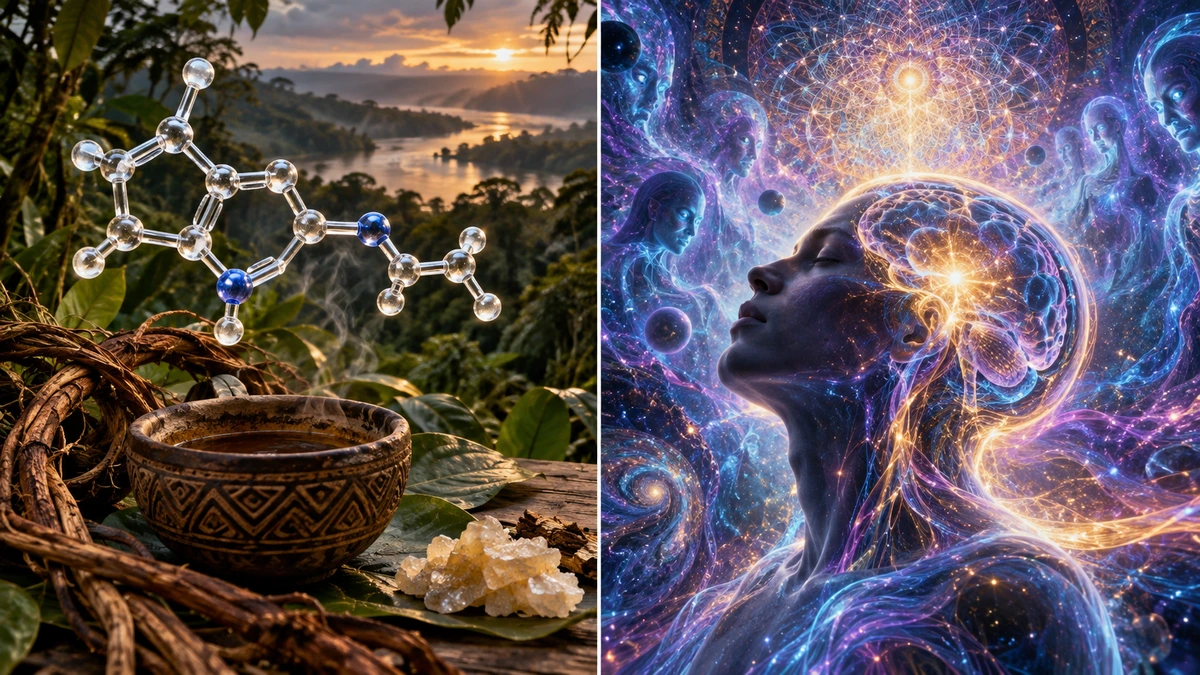
DMT is at once an endogenous molecule, an Amazonian plant alkaloid, a religious sacrament, a modern psychedelic, and a research tool for consciousness. How is it used around the world, what can neuroscience measure, and where do open questions begin?
Read article
Sleep is not the brain switching off. How consciousness, dreaming, memory, attention, and emotional regulation change across non-REM and REM—and why chronic sleep restriction can feel more adapted than performance actually is.
Read article
What can we actually measure about consciousness? This article separates robust neuroscientific findings, competing theories, clinical limits and the unresolved problem of subjective experience.
Read article
A definitional map of three terms often used as synonyms: the brain as a biological organ, mind as the level of mental functions, and consciousness as subjective experience—without prematurely choosing a single theory of consciousness.
Read article