Health Care Close to People: What Can Be Local and What Requires a Larger Scale?
A good health-care network is neither entirely local nor entirely centralized. This article shows which functions belong close to people, which require a larger professional scale, and how to connect them into a safe continuum of care.
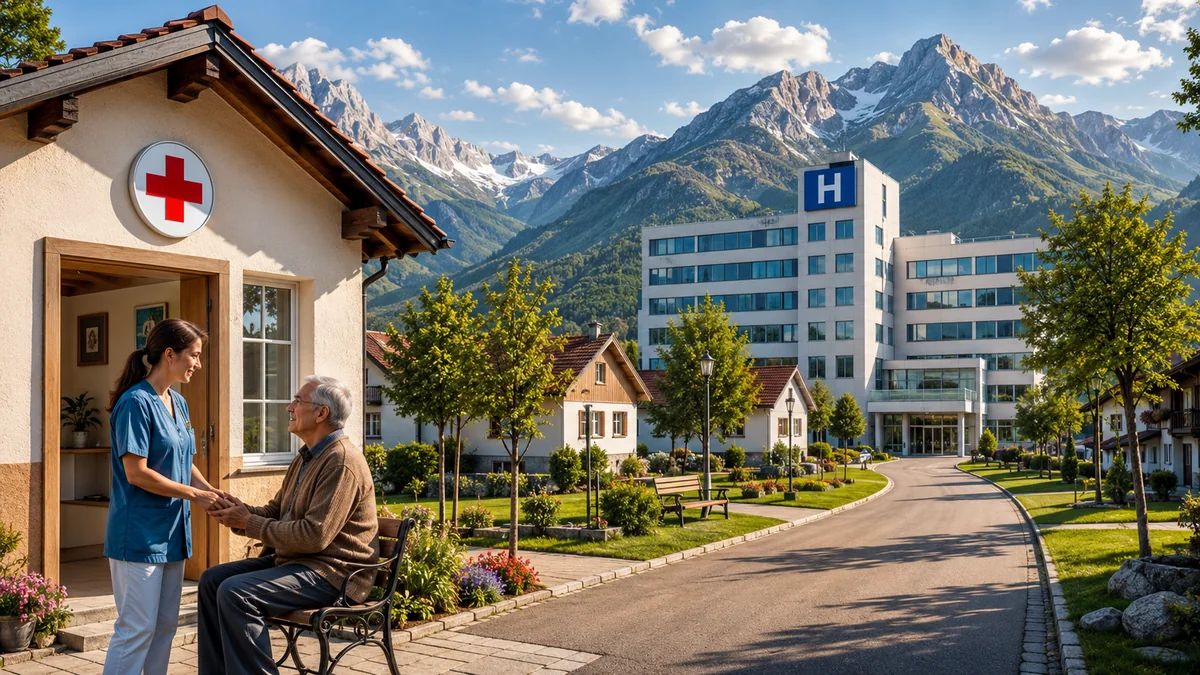
“Local Sovereignty: How to Build Resilience Without Isolation” introduced subsidiarity, while the articles from “From a Group of People to a Community: What Actually Connects Us?” through “How Does a Community Protect the Individual from the Community?” showed how a community forms, decides, resolves conflict, and protects the individual. Health care is the first major stress test of those principles, because the simple slogan “make everything local” quickly collides with the realities of expertise, equipment, rare diseases, emergencies, and patient safety.
People need proximity: someone who knows them, follows them over time, and is reachable before a small problem becomes a large one. At the same time, it makes little sense for every village to maintain its own intensive care unit, laboratory for every rare test, or team for every highly complex operation. Some health functions become safer and more reliable precisely because they are connected to a wider network.
The real question is therefore not “local or centralized?” but: what is the smallest level that can perform a particular function safely, competently, and reliably — and how do we connect it to the other levels without turning the person into a number in a distant system?
This article does not settle social-insurance design or general financing; those questions remain for “Mutual Aid, Insurance, and Social Security from the Bottom Up” and “How Do We Finance Shared Functions Without Automatic Centralization?”. Nor does it attempt the general theory of economies of scale reserved for “When is larger scale genuinely necessary?”. Its task is more basic: divide health functions by appropriate scale and show how local care networks can begin today while relying on larger professional centres where larger scale is genuinely necessary.
Health care, locality, and the smallest competent scale
Health care is a test against romantic localism With food, mutual aid, or shared spaces, bringing more functions close to people is intuitively attractive. In health care, however, proximity by itself does not guarantee quality. A wrong diagnosis can be dangerous, an inappropriate medicine can cause harm, and an unsterile procedure can be fatal. Local autonomy therefore cannot mean that competence, evidence, quality assurance, and the limits of knowledge suddenly stop mattering.
The opposite extreme is equally mistaken: good care is not automatically care that is more distant, larger, or more administratively centralized. WHO describes primary care as first-contact, accessible, continuous, comprehensive, coordinated, person-focused care close to where people live and work. A strong system therefore needs both poles: proximity for common needs and wider scale for rare or complex needs.
Subsidiarity in health care does not mean “make everything as small as possible.” It means “nothing larger than necessary — and nothing smaller than is safe.”
First separate health from the health-care institution Health is shaped long before a person enters a clinic. Clean water, nutritious food, movement, safe work, relationships, sleep, basic preventive knowledge, and early recognition of warning signs all contribute to community health resilience. Much of this can be strengthened locally without building another bureaucracy.
Clinical care, however, is a professional activity. When a community organizes transport to a doctor, visits an isolated person, or teaches first aid, it does not thereby become a hospital. This distinction matters: mutual aid can expand access and resilience, but it must not conceal a situation in which a person needs a qualified health professional or urgent referral.
The core rule: the smallest competent scale For every health function we can ask the same question: at what smallest level can it be performed often enough, with enough expertise, equipment, quality control, and backup capacity to be safe? That level may be the home, neighbourhood, local care team, regional centre, or in rare cases a national or international network.
- frequent, lower-complexity, time-sensitive needs should be as close to people as practical;
- rare, technically demanding, high-risk services may need a larger pool of patients, specialists, and equipment;
- the local level must be able to recognize its own limit and refer early;
- the higher level must return the person to local follow-up with usable information instead of losing them in the system.
A good network is not a hierarchy of authority. It is a flow of competence: a problem stays close to the person while it can be solved safely there, then moves to the level that can solve it better.
What naturally belongs close to the person
Primary care naturally belongs close to people WHO emphasizes the core functions of first-contact accessibility, continuity, coordination, comprehensiveness, and people-centredness in primary care. These are precisely the functions in which proximity and long-term relationships matter. A local team may know a person’s history, family circumstances, medicines, habits, and changes over time better than a distant episodic service.
Primary care can address many common acute problems, support chronic disease management, provide prevention, basic diagnostics, rehabilitation follow-up, and palliative support, and decide when specialist or hospital care is needed. OECD therefore also links high-quality primary care with fewer admissions for some conditions that can often be managed without hospitalization when timely outpatient care is available.
Community health workers are a bridge, not a substitute for every profession Community health workers, visiting nurses, and other field roles can reduce the distance between people and the health system. WHO supports such programmes when workers are appropriately trained, supervised, and integrated into interprofessional teams. The important word is integrated: a local helper should not be left alone with a case that exceeds their competence.
This also offers a useful model for voluntary communities. One person may have current first-aid training, another may handle logistics, another may support older residents, and another may help communicate with health services. Roles must remain clear and modest: the community strengthens access to professional care; it does not invent an unverified parallel medicine.
Chronic illness needs continuity above all With diabetes, heart failure, asthma, chronic obstructive pulmonary disease, and many other long-term conditions, much of the value lies in regular follow-up: does the person understand the plan, do they have their medicines, is the condition changing, are warning signs appearing, and are specialist recommendations actually being carried out?
This is a good example of a function that can be local in relationship and follow-up while selected tests and specialist decisions are networked. Instead of choosing between a “village doctor” and a “large clinic,” we get a continuum: the local team holds the whole picture, while the wider network contributes expertise that it would make little sense to duplicate everywhere.
Rehabilitation, palliative care, and part of the support can also come home After injury, stroke, major surgery, or with advanced illness, a person often does not need a high-technology hospital every day. They need a plan, monitoring, adaptations at home, help with daily tasks, support for relatives, and access to professionals when the condition changes. Part of this can be organized close to home or at home when providers are appropriately trained and connected to the responsible clinical team.
This is also where a community network can contribute greatly without crossing into clinical decision-making: transport, meals, companionship, respite for carers, communication support, home adaptations, and social presence. Sometimes the biggest barrier after discharge is not the absence of sophisticated technology but the fact that the person is left alone.
Diagnostics, emergency care, and the limits of decentralization
Diagnostics need several levels Some measurements and tests make sense at the point of care because they can quickly guide a decision. Others require expensive equipment, specialized maintenance, rare reagents, biosafety, or professionals who need enough sample volume to maintain expertise. Trying to duplicate every laboratory function in every community can therefore increase cost while reducing quality.
A more robust model is local sample collection and basic diagnostics + reliable logistics to specialized laboratories + a fast return flow of results. Scale is adapted to the function, while the person does not need to travel for every technical stage of the process.
Emergency response must be close — definitive care not always In cardiac arrest, severe bleeding, stroke, sepsis, or major trauma, time is critical. The local level therefore needs the ability to recognize danger quickly, provide basic immediate action, activate help, and organize transport. WHO’s work on emergency, critical, and operative care emphasizes links between communities, primary care, and higher levels through communication, transport, referral, and counter-referral.
This resolves the apparent paradox. Emergency response must be decentralized, while highly complex emergency care often needs concentration. A good network does not choose one or the other; it creates the shortest reliable path from first response to the right team.
A specialist does not have to be a building in every community Some specialist needs are common enough to organize regionally or through visiting specialist clinics. Others are so rare that a permanent local team would see too few cases to maintain experience. In those situations, access to the specialist matters more than having that specialist permanently located a few streets away.
Different models are possible: rotating clinics, shared regional specialists, provider-to-provider teleconsultation, local completion of part of the diagnostic work, and one coordinated follow-up plan. The goal is not to centralize the person but to move knowledge whenever knowledge can move, and move the patient only when the patient must physically be near the equipment or team.
Complex surgery and rare disease reveal the limit of decentralization For some demanding surgical procedures and other complex services, research finds associations between higher volume or specialization and better outcomes, although the effect is not the same for every procedure and much of the evidence is observational. A systematic review published in Annals of Surgery in 2026 therefore supports a selective, complexity-informed approach, not the transfer of all care into large centres.
The reason is not simply “a larger building.” A complex centre can maintain experienced surgeons, anaesthesia, intensive care, interventional radiology, laboratories, specialist nursing, and the ability to rescue complications in one place. For lower-complexity care, the same centralization may instead create unnecessary travel and poorer access.
Decentralize the relationship and everyday care. Centralize only the rare complexity for which concentrating expertise, equipment, and experience materially improves safety or reliability.
The hospital as a network hub and the role of technology
A hospital should be a node in the network, not the centre of all health care WHO describes hospitals as providers for acute and complex conditions that concentrate scarce resources within planned referral networks. This differs from a system in which the hospital becomes the default answer to almost every health problem. When primary care works well, the hospital can focus on what actually requires hospital capacity.
A good node must work in both directions. The local provider sends clear information and a reason for referral; after treatment, the hospital returns the diagnosis, plan, medicines, warning signs, and follow-up tasks. Without this return flow, the patient becomes the courier between disconnected systems.
Some support functions clearly benefit from wider scale Larger scale does not always have to be clinical. Medicine procurement, rare equipment, reserve stocks, laboratory quality control, blood components, and selected logistics can benefit from pooled demand and common standards. WHO, for example, notes that centralizing blood donation testing and processing can address weaknesses in highly fragmented blood systems and support more consistent quality and safety.
Pooled procurement can similarly increase purchasing power and reduce duplicated transaction costs. But this does not mean that every decision about every patient must be centralized. Procurement can be pooled while stock is distributed; a laboratory can be regional while sample collection is local; standards can be shared while service organizations remain plural.
Telemedicine can move knowledge, but it cannot replace the physical world Telemedicine can support remote consultation, second opinions, specialist advice to a local provider, or follow-up for selected chronic conditions. WHO treats it as a way to extend service coverage while also warning that digital interventions are not a substitute for functioning health systems.
A screen cannot palpate an abdomen, suture a wound, perform emergency surgery, or organize transport by itself. Digitalization also introduces questions of privacy, data security, identity, and interoperability. Its best use is therefore connecting levels, not building a new distant monopoly that knows the local person even less than the old one did.
Quality, safety, and patient autonomy
Quality and safety set a boundary on local improvisation WHO estimates that harm from unsafe care is a major global problem, with preventable harm occurring in primary and ambulatory settings as well as hospitals. This matters for any alternative model: goodwill cannot replace correct patient identification, safe medication practices, hygiene, documentation, checking contraindications, diagnostic caution, and clear escalation pathways.
A free community therefore does not need fewer quality standards but more understandable and auditable ones. The key distinction is that a standard is not the same thing as a monopoly provider. Multiple organizations can follow evidence-based safety requirements, compare outcomes, and preserve choice if minimum competence and transparency are genuine.
Patient autonomy remains central even in a networked system Within THY-REALITY, the natural-law framework places the individual’s body at the centre of decision-making. That means informed consent, the ability to ask questions, seek a second opinion, protect privacy, and refuse an intervention when the person understands the consequences. But autonomy does not create a right to force a professional to provide something that professional judges unsafe or outside competent practice; voluntariness applies to both sides.
A network can remain deeply human when it is clear who decides what. The patient decides about their body; the health professional is responsible for competent practice; the community can organize support and infrastructure; the wider network provides expertise that would be wasteful or unsafe to duplicate locally. None of these levels needs ownership over the person.
Start today: community health network v0.1
A community does not need to found a hospital or a new insurance system to begin. It can first build a navigation and support layer around the health options that already exist. Such a network is useful whether providers are public, private, cooperative, or mixed.
- map which health and social services are actually available nearby and at what times;
- maintain a voluntary list of people with current first-aid training and a plan for refreshing that training;
- organize transport for people who struggle to reach clinics, pharmacies, or specialist appointments;
- build a network for meals, companionship, and short-term respite for carers after illness or hospital discharge;
- agree on a clear boundary for when community support ends and professional or emergency services must be activated;
- identify appropriate options for teleconsultation, second opinions, and specialist support;
- for any voluntary information-sharing, use the minimum necessary data and explicit consent; do not create a local medical database “just in case”;
- every few months, review which cases revealed a gap: transport, information, isolation, availability, waiting, or poor handover between levels.
This is not yet an alternative health system. But it is its first real infrastructure: people stop being isolated users and become a network able to support, navigate, and connect local care with professional care.
What this article does not yet solve and how to choose the right scale
What this article deliberately does not solve yet Who pays for an expensive operation, long-term treatment, or care for a person with no income is too large a question to hide in one paragraph. Social Insurance and Shared Risk addresses shared protection against major life risks, How to Finance Shared Functions Without Centralization? addresses the broader logic of financing, and Economies of Scale later examines when a larger network actually creates an advantage.
This article therefore does not pretend that an organizational map is already a financing model. It makes a more basic claim: financing cannot fix the wrong scale of delivery. If everything is centralized, proximity disappears; if everything is fragmented, complexity is left without sufficient expertise and equipment. We first need to know what belongs where.
Seven questions for choosing the right scale Before a community or network moves a health function closer or farther away, it should answer seven questions:
- How often does this need occur, and how much case volume is required to maintain competence?
- How quickly must physical help be reachable?
- What equipment, laboratory support, medicines, or backup infrastructure are required?
- What happens if something goes wrong — is immediate support for complications available?
- Can expertise move to the person through an outreach team or telemedicine instead of moving the patient?
- Does shared provision genuinely improve quality, safety, or reliability — or merely increase administrative distance?
- After specialist or hospital care, how will information return safely and quickly to the local team and the patient?
The best health system is neither the most local nor the most centralized. It is local enough not to lose the person and connected enough not to turn complexity into improvisation.
Conclusion: a network instead of a monopoly of scale
Health care shows why a free society cannot be built around one organizational answer. Some functions work best in the home, others in the neighbourhood, others in a local health centre, others in a regional hospital, and some in a highly specialized centre. These levels are not enemies. The problem begins when one level tries to become the answer to everything.
An alternative system grounded in natural law therefore need not be a collection of isolated, self-sufficient communities. It can be a network of autonomous communities and professional nodes that cooperate voluntarily, share expertise and infrastructure, preserve choice, and perform each task at the smallest scale that remains safe and competent.
We can begin today: not by pretending that everyone can do everything, but by connecting proximity, responsibility, and real expertise into a network in which people know where to turn and are never merely a number moving between disconnected institutions.
Sources and further reading
- World Health Organization. Primary health care — Questions and answers. Definition of primary health care and referral to secondary/tertiary care. Source
- World Health Organization. Primary care. Core functions: first-contact accessibility, continuity, coordination, comprehensiveness and people-centredness. Source
- World Health Organization. UHC service planning & models of care. Integrated people-centred services, referral and counter-referral across levels. Source
- World Health Organization. Hospitals. Hospitals as providers for acute/complex conditions within planned referral networks. Source
- World Health Organization. Integrated emergency, critical and operative care. Communication, transport, referral and counter-referral linking communities and higher levels of care. Source
- World Health Organization (2018). WHO guideline on health policy and system support to optimize community health worker programmes. Source
- World Health Organization (2023). Patient safety. Overview of preventable harm and safety risks across health-care settings. Source
- World Health Organization (2022). Consolidated telemedicine implementation guide. Source
- World Health Organization (2020). Integrated, person-centred primary health care produces results: case study from Slovenia. Source
- OECD (2025). Health at a Glance 2025 — Avoidable hospital admissions. Primary care and avoidable admissions for selected chronic conditions. Source
- World Health Organization (2021). Guidance on centralization of blood donation testing and processing. Source
- World Health Organization/Europe. Supporting the development and strengthening of procurement and supply management systems. Economies of scale and pooled procurement. Source
- Johnson, Brett A., et al. (2026; Epub 2025). Effect of Centralized Surgical Care on Performance Outcomes Across Multi-hospital Systems: A Systematic Review. Annals of Surgery. Source