Should I Get a Piercing?
Appearance, tradition, health, and a decision worth making with your eyes open.
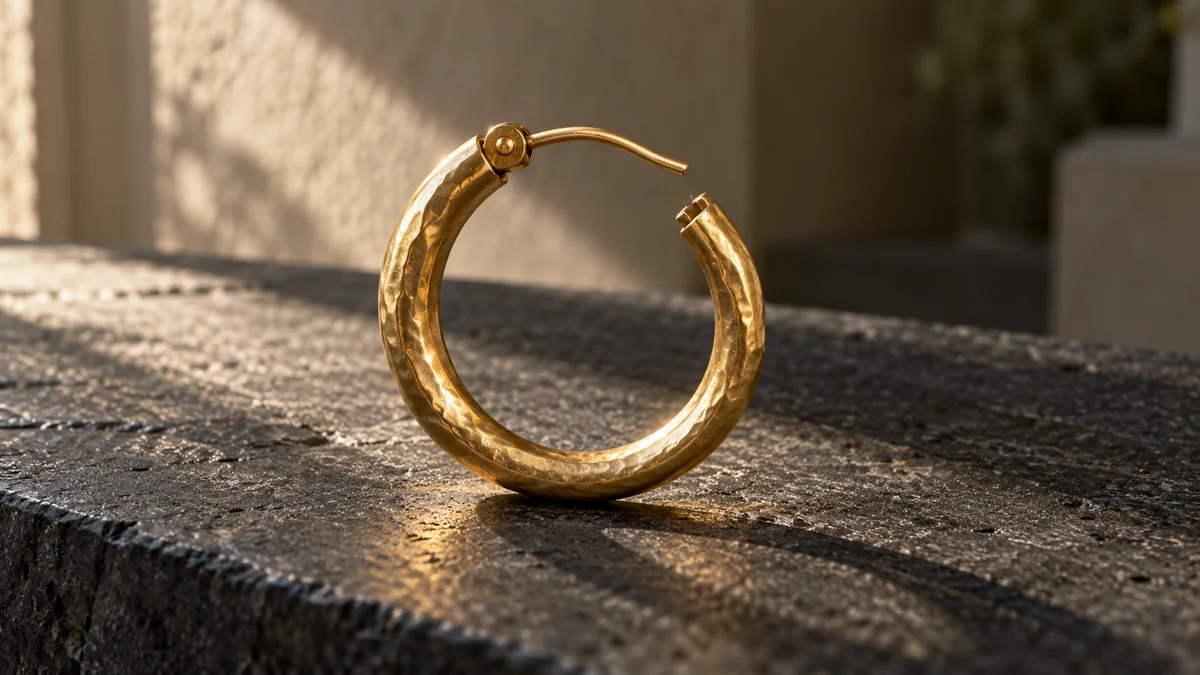
Appearance, tradition, health, and a decision worth making with your eyes open.
Perhaps you have been thinking about getting a small earring, a nose ring, or another piercing for months. You can already picture how it would look on you. Your friends love the idea. At home, though, someone asks, “Why put a hole in your body for no reason?” Your parents may explain that this kind of jewelry has traditionally been common for girls in your family, but not for boys. Or perhaps what worries them most is what could happen after the procedure. Sometimes even members of the same family disagree.
So whose concerns make sense? Is the real issue taste, tradition, health, or wanting to decide for yourself? And how much weight should other people’s opinions carry when it is your body?
The short answer: a piercing does not, by itself, define a person’s character, but it is more than a piece of jewelry. Getting one means having part of your body pierced. It may leave a mark, requires aftercare, and can mean different things to different families and cultures. So there is no need to rush. First, understand what appeals to you and why. Then find out what the procedure involves at the particular place you have in mind. If you are still unsure, waiting is a sensible choice too.
Why Do We Want Jewelry in the First Place?
Maybe you like a simple hoop. Maybe you want a different look. Maybe you see a photo of someone you admire and like the look. Perhaps you want to show that you are no longer a child. Sometimes being told you cannot do something makes it all the more tempting. But it would be unfair to assume that every earring is a sign of rebellion. People decorate their bodies for many different reasons. [1]
Things get interesting when you ask yourself a slightly different question: Would I still enjoy having this piercing if nobody noticed it? If your answer is yes, it may truly reflect your own taste. If the answer is less clear, that does not mean your wish is bad. It is a chance to see how much other people’s approval matters to you.
How we look sends signals. Clothes, hairstyles, and jewelry can show our taste, a sense of belonging, respect for an occasion, or consideration for the people around us. So it is hardly surprising that someone chooses a different look for a family celebration than for a concert. Adapting your appearance to the occasion does not necessarily mean giving up your independence. It may mean the opposite: that you have thought about what you want your appearance to say, and to whom.
Earrings Are Older Than Today’s Fashion
If piercings were just a modern way to rebel, they would not have much history. But in many communities jewelry has carried other meanings. Beauty was one of them, but not the only one. Jewelry could mark status, belonging, wealth, or a new stage of life.
In the Korean kingdoms of Silla and Gaya, members of the elite of both sexes wore gold earrings in the fifth and sixth centuries. The surviving pieces show remarkable craftsmanship. Elsewhere, including certain Indian traditions, distinctive nose jewelry has been associated with marriage and family life. [2][3][4]
That does not mean people everywhere decorated themselves in the same way, or that every modern piercing has the same meaning. It points to something more interesting: before deciding that a particular piece of jewelry is inappropriate, ask whose tradition you are judging it by—and when that tradition took shape.
Girls and Boys: The Same Jewelry, Different Expectations?
Why does a small earring seem ordinary in one family but start an argument in another? Jewelry can express beauty, but it can also carry family traditions, mark an important event in life, or reflect ideas about suitable appearance.
For girls. In many families, earrings are an established part of how girls and women adorn themselves. In certain Indian traditions, the nose ring known as a nath is also associated with marriage. A museum describes that connection, but it does not apply to every girl in India. [4] Your mother or grandmother may therefore consider one piece of jewelry perfectly ordinary and another something quite new. Ask what their first earrings meant to them, what they considered a neat appearance, and why they advised against some kinds of piercing. The answer is not always just “because that’s proper.” It may involve experience, taste, health, and family values.
For boys. In many families, boys were traditionally expected to have a more restrained appearance, so an earring may still meet with resistance. In other places, men wore earrings long ago. Gold jewelry worn by the elites of Silla and Gaya provides a concrete historical example. [2][3] If your father or grandfather says, “Boys in our family never wore those,” ask what that custom meant to him and what purpose it served. It could become a valuable conversation about belonging and respect, not proof that an earring determines a boy’s courage or sense of responsibility.
What matters to both girls and boys is more than a quick judgment about appearance. Traditional expectations vary. A piercing does not automatically make a girl look well-groomed—or make a boy look less so. Both can consider what suits the occasion, aesthetic restraint, health risks, and their reasons for the choice. A person’s character, however, is shown chiefly through their actions.
When Is a Piercing Tasteful—and When Is It Too Much?
Two people can disagree in good faith: one loves a small earring; the other does not like it at all. Someone enjoys wearing several bold pieces of jewelry, while someone else prefers simplicity. There is no fair rule saying that two earrings are tasteful but three are not. Culture, the occasion, and personal style all shape how an ornament looks to others.
That does not mean taste is beyond thoughtful judgment. Ask yourself whether the ornament works with your overall appearance, whether it suits the occasion, whether it is practical for school, sport, or work, and whether you feel comfortable wearing it even when you are not the center of attention. Sometimes less really is more. That is useful advice about moderation, not a law about how many earrings you may wear.
It can become too much when the urge to make a stronger impression matters more than your health, money, comfort, or longer-term wishes. Yet an eye-catching appearance should not automatically be confused with irresponsibility. What matters is how thoughtfully the person has chosen and how they behave.
You might discover that you want a piercing because you find it attractive, but that a more demanding procedure would bring more inconvenience than you are willing to accept. Or perhaps a clip-on ornament looks just as good to you. Choosing that instead does not make your style any less your own.
What Happens When Your Skin Is Pierced?
This is where looks meet reality. The earring you admire in a photograph looks like an ornament. But putting it there means puncturing skin—or, in some cases, cartilage or a mucous membrane. The area then has to heal around the jewelry. Every procedure therefore carries some risk of infection, bleeding, an allergic reaction, or scarring. Some people develop particularly prominent scars. Do not assume that removing the jewelry will always leave your skin exactly as it was before. [5]
Not all piercings carry the same risks.
The earlobe is different from the cartilage higher up on the ear. Cartilage infections can be harder to treat and sometimes cause more serious consequences. The nose, navel, and other areas bring different concerns: jewelry may snag, rub against clothing, or complicate healing. Healing times and the care required are not the same everywhere. [5][6]
Take particular care when considering tongue or lip piercings. Jewelry in the mouth can damage teeth and gums, cause swelling, bleeding, or infection, and interfere with speaking and eating. In severe cases, swelling may threaten breathing. Because of these risks, dental professionals advise against cosmetic piercings in or around the mouth. This is not simply a question of whether someone finds them attractive. [7]
If you have a medical condition, take medication that affects healing, or have had problems with unusual scarring before, it is particularly sensible to consult a health professional before having anything pierced. Do not rely on a friend’s claim that nothing went wrong for them. What happened to them does not tell you what will happen to you.
What Does a Safer Piercing Involve?
If you decide to go ahead after thinking it through, choosing the practitioner matters. Do not pierce yourself or let a friend improvise the procedure at home. The practitioner should be able to explain how they work, what sterile equipment they use, what jewelry material they recommend, and what care the particular piercing needs. A new, sterile, single-use needle and suitable, high-quality jewelry are important; nickel-containing alloys may cause allergic reactions. If someone is unwilling to explain the procedure, you have a good reason to leave. [5][8]
Even a skilled practitioner cannot remove every risk. Do not touch a fresh piercing with dirty hands or fiddle with the jewelry. Aftercare depends on where the piercing is: what is appropriate for an earlobe may not be right for your tongue or navel. Published guidance sometimes differs even on whether jewelry should be moved during cleaning. If instructions conflict, check with a properly trained practitioner and a healthcare professional rather than testing different methods yourself. [9][10]
If pain, heat, or swelling gets worse, if you notice pus, or if you develop a fever or feel unwell, seek medical advice promptly. If you suspect an infection, do not remove the jewelry on your own unless a doctor advises you to. Difficulty breathing after an oral piercing is a medical emergency. [7][9]
That is no reason to panic over every pierced earlobe. It is, however, a reason not to treat a piercing as something whose consequences you need not understand.
“My Body, My Choice”—But What About My Parents?
Wanting to make responsible choices about your own body is understandable. But if you are making this decision before adulthood, it also affects family relationships and may be subject to the rules that apply where the procedure is performed. Check the requirements where you live and with the practitioner you are considering. Do not assume that the same age limit applies everywhere. More importantly, learn to talk about what you want without secrecy or arguments.
Fictional scenario 1—a girl, her mom, and her grandmother. A seventeen-year-old girl wants a small nose ring. Her mom says, “I always understood why you wanted earrings, but this feels different to me.” At first the girl feels misunderstood. Then she asks why this particular piece of jewelry bothers her mom. Her grandmother shares stories about how jewelry meant different things in her youth and how families thought about the impression they made. The girl explains that she simply likes the way the ring looks. Together they read about the healing and care it would involve, and they agree to put the decision off for a while. Their views have not become identical, but the conversation has helped them understand one another.
A boy who wants an earring but hears that it does not fit his family’s idea of a neat appearance for boys could have a similar conversation. The question is not just who gets the final say, but what reasons lie behind the objections, and how those reasons can be respectfully weighed against your own wishes. Grandparents may see things from a perspective that parents and teenagers have not yet considered.
Tradition can preserve lessons from experiences you have not had yourself. Older people may have witnessed problems we overlook today; other customs developed in circumstances that have since changed. It makes sense to ask what a custom was meant to protect, rather than automatically dismissing every objection or accepting it without thought. Respect is not blind obedience, and independence is not opposition at any cost.
If your parents object to a piercing, ask whether they are worried about health, your age, the cost, appearance, or an experience from their own youth. Suggest looking into the options together and returning to the conversation after some time. Waiting is not necessarily giving in. It may build trust and lead to a better decision.
When Your Friends Have Tongue Piercings
Fictional scenario 2—a boy and his friends. A sixteen-year-old boy notices that two of his friends have tongue piercings. He likes the unusual look, and they make the procedure sound easy. Since neither friend mentions any complications, he assumes the risks must be small.
Then he learns what jewelry in the mouth can do to teeth and gums. Now his question is no longer just, “Would it look good on me?” but also, “Is the appearance worth consequences I might not notice right away?” He talks to a dentist and tells his family what appealed to him. He may choose an entirely different kind of ornament or decide against a tongue piercing. That choice takes no less courage than following his friends.
Thinking things through in this way is not just for boys or just for girls. Peer pressure and health risks can affect both. Sometimes courage means disagreeing with your friends, taking your time, and listening to well-founded advice.
What Choices Do You Really Have?
Your choices are not limited to “I want it now” or “I can never have it.” You can decide against a piercing; that avoids the procedure, though you give up a particular look. You can wait and see whether it still matters to you a few months from now. You can try non-piercing jewelry, if it is safe and suitable for you. After careful consideration, you might choose a less demanding procedure, while taking its cost, aftercare, and health risks seriously. For more demanding sites, especially in the mouth, you have a very concrete reason not to proceed.
Before deciding, try to answer these questions honestly:
What exactly appeals to me about a piercing? Would I still want it without other people’s admiration or criticism? What do I know about the location and the procedure, rather than just the photograph? Can I accept the possibility of a permanent mark? How would I manage aftercare during school, sports, or work? What reasons do my parents have? What would I advise a younger brother or sister?
Asking these questions does not mean you are not allowed to want something beautiful. It means you want to make up your own mind. A wish can start the decision-making process; it does not have to finish it.
So What Is the Wise Thing to Do?
If you want a piercing, put thoughtfulness ahead of haste. Listen to your reasons, but compare them with consequences you may not yet see. Explain what appeals to you and ask your parents what really worries them. Do not dismiss a family custom as foolish; ask what it was meant to protect. But do not assume that every old prohibition must apply in exactly the same way for all time, either.
When it comes to appearance, my advice is moderation and a sense of what fits the occasion. You do not have to prove courage, individuality, or maturity with every choice. When it comes to health, be more demanding. Never improvise a piercing, never underestimate aftercare, and do not choose a riskier site merely for a passing impression. There are strong health reasons to advise against oral piercings. If you are unsure, wait. If you decide on a less risky procedure after careful consideration, make sure it is performed under suitable conditions and allow for the possibility of complications.
Above all, make sure you learn more from this than a few things about jewelry. Learn something about yourself, too. Maturity does not mean immediately acting on every wish, nor does it mean giving up every wish. Maturity means understanding what you want, listening to experience, checking the facts, and making a decision you can take responsibility for.
Sources and Further Reading
Wohlrab, Stahl, and Kappeler (2007), Modifying the body: motivations for getting tattooed and pierced — scientific review abstract.
The Metropolitan Museum of Art, Earring (one of a pair), Korea, Silla, fifth century — museum catalog.
National Museum of Korea / Smarthistory, Gold Earrings from the Double Burial in Bomun-dong — museum interpretation.
The Metropolitan Museum of Art, Rites of Passage in the Indian Jewelry Tradition — account of jewelry traditions.
Mayo Clinic (2024), Piercings: How to prevent complications — health overview.
Kim et al. (2022), Ear-piercing complications in children and adolescents, Canadian Family Physician — literature review.
American Dental Association, Oral Piercing/Jewelry — risks and professional position.
Association of Professional Piercers, Piercing Guns and Know Your Rights — equipment · questions for the practitioner.
NHS, Infected piercings — signs of infection and medical help.
Association of Professional Piercers, Suggested Aftercare for Body Piercings — practitioner guidance; some details differ from the guidance in [9].