LSD: From Laboratory and Psychiatry to MKULTRA, Prohibition, and Renaissance
LSD has been an investigational medicine, a psychiatric tool, a subject of secret CIA experiments, a countercultural symbol, and a prohibited substance; today it is back in late-stage clinical trials. What is documented in that history, and where does speculation begin?
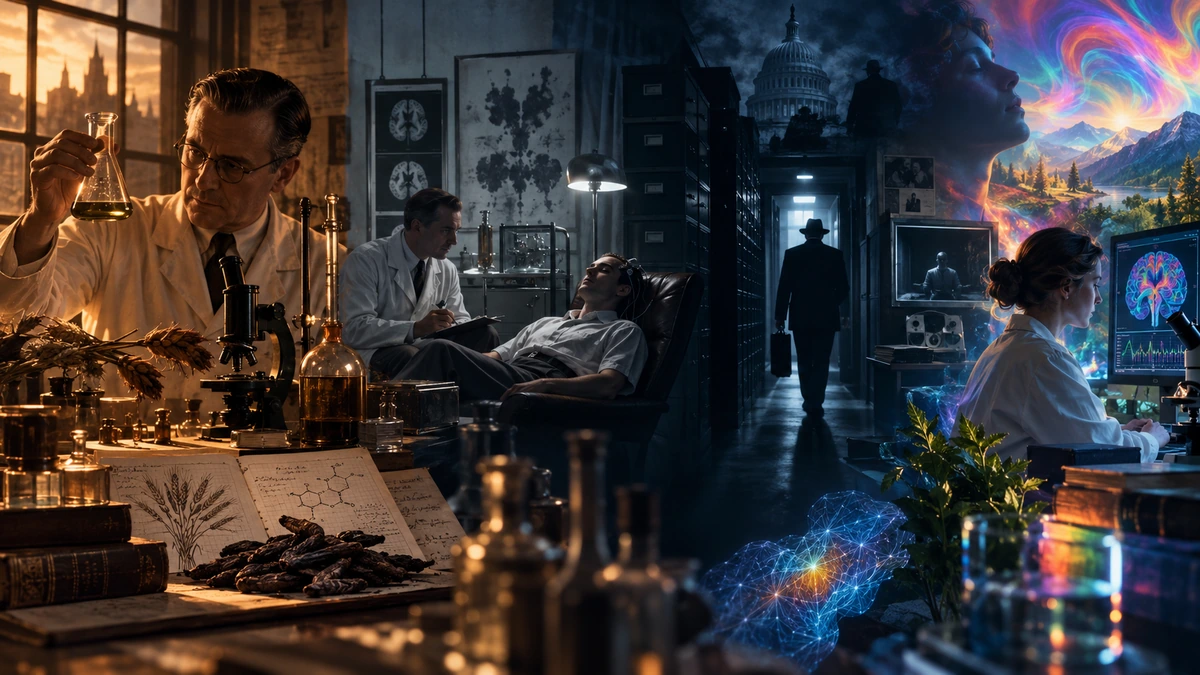
LSD is one of the few twentieth-century molecules that moved through almost every imaginable social role within a few decades: it emerged from a pharmaceutical laboratory, became a tool of psychiatry, entered secret intelligence experiments, became an emblem of the counterculture, was placed under strict drug control, and later returned as a serious candidate for clinical research.
That is precisely why its history is so vulnerable to simplification. If we begin with MKULTRA, we miss legitimate medical research in the 1950s. If we begin with hippies and Timothy Leary, we miss the fact that Sandoz had been supplying LSD to physicians and researchers years earlier. And if today’s renewed clinical work is treated as proof that every old therapeutic claim was correct, the same mistake is simply repeated in reverse.
This article therefore follows the documented chain: from Hofmann’s synthesis of LSD-25 and Sandoz’s Delysid, through the model-psychosis paradigm and psycholytic or psychedelic therapy, to the CIA’s MKULTRA program, prohibition, and the reopening of research. At each step it separates what is directly documented, what is historical interpretation, and where claims begin for which the evidentiary chain is not complete.
The question of power and consent is especially important. The same molecule was used in one setting within voluntary psychotherapy and in another without people’s knowledge. The history of LSD is therefore not only a history of pharmacology; it is also a history of what happens when scientific curiosity, institutional secrecy, political fear, and cultural enthusiasm use the same technology for very different ends.
LSD-25: a molecule synthesized in 1938 — and recognized only in 1943
Albert Hofmann synthesized lysergic acid diethylamide in Sandoz laboratories in Basel in 1938 as the twenty-fifth compound in a series of ergot-alkaloid derivatives, hence the designation LSD-25. The original goal was not to create a psychedelic but to explore pharmacologically active derivatives of lysergic acid. Initial testing did not provide a reason for immediate further development.
In April 1943 Hofmann returned to the compound and experienced unusual psychological effects while working in the laboratory; several days later he conducted an intentional self-experiment. The event later entered popular mythology as “Bicycle Day,” but the historically more important point is that Sandoz soon recognized that the compound had an extraordinarily potent and unusual effect on perception, thought, and the sense of self.
Modern pharmacology does not treat this effect as a mysterious property of ergot. LSD acts at several receptor systems, but the serotonin 5-HT2A receptor is central to its classic psychedelic effects. Controlled studies with ketanserin show that blocking this receptor strongly reduces or abolishes much of LSD’s acute subjective and neural effect.
Delysid: before LSD became a countercultural symbol, it was an investigational medicine
By the late 1940s Sandoz was making LSD available to the research and medical community under the name Delysid. Early material pointed mainly toward two uses: as an adjunct to psychotherapy and as an experimental means of studying states resembling psychosis. This corrects a later cultural image: LSD did not first enter Western society as a street drug but through psychiatric and pharmacological laboratories.
Researchers worked within several conceptual frameworks. The “model psychosis” approach assumed that a temporary altered state in a healthy person might illuminate some features of schizophrenia. Psycholytic therapy used less overwhelming altered states as an adjunct to longer psychotherapy. So-called psychedelic therapy, by contrast, often sought a rarer but more intense experience that might alter a patient’s relationship to self, illness, or addiction.
Humphry Osmond introduced the term psychedelic — “mind-manifesting” in this context. The term also marked a shift away from the language of merely imitating psychosis toward the possibility that these states revealed a wider range of human experience. That conceptual change later influenced both therapy and popular culture.
International psychiatry: Canada, Europe, and treatment that was both promising and methodologically uneven
In the 1950s and early 1960s LSD was not a fringe subject. It was studied in Canada, the United States, and several European countries. In Saskatchewan, Humphry Osmond and Abram Hoffer investigated its use in alcoholism and as a model for psychiatric states; in Britain Ronald Sandison developed psycholytic approaches, and related programs operated elsewhere in Europe.
A later meta-analysis of six randomized trials in alcoholism, including 536 participants, found a statistically detectable signal for reduced alcohol misuse. Historical reviews nevertheless stress that many older studies did not meet today’s standards: samples were small, diagnostic categories differed, therapeutic protocols varied widely, and blinding is especially difficult with a strongly psychoactive drug.
The early period is therefore not fairly described either as a lost miracle therapy or as complete pseudoscience. It contained genuine clinical signals, serious scientific curiosity, and serious methodological limitations. That mixture matters for understanding why some of the old questions have returned in modern controlled trials.
MKULTRA: here no theory is required — the program is documented
The CIA formally opened Project MKULTRA in 1953 as a broad program involving behavioral modification, drugs, hypnosis, and related techniques. The 1977 Senate hearing, drawing on rediscovered financial files, identified 149 MKULTRA subprojects; these included behavioral-drug testing, studies in volunteers, and documented cases of testing in people who did not know they were subjects.
The same hearing stated that at least 86 universities or other institutions had been involved, while researchers and institutions were not always told who the true sponsor was. The CIA used intermediary organizations and funding mechanisms to conceal sponsorship. Much of the documentation had been destroyed in 1973, which means the historical record is incomplete by the nature of the surviving sources.
Crucially, LSD was not only observed in laboratory settings. Documents and congressional testimony confirm that LSD was also given to people without their knowledge in social situations. The aims included studying behavioral effects, interrogation, weakening resistance, and methods of covert drug administration. This history is directly documented; no additional speculation is needed to make it ethically disturbing.
Frank Olson and Ewen Cameron: when the question stops being the molecule and becomes consent
The best-known case of nonconsensual exposure is Frank Olson, a civilian U.S. Army employee. Senate records and the Rockefeller Commission confirm that in November 1953 he received LSD without his knowledge at a meeting involving CIA-linked personnel. After a severe psychological deterioration, he fell from a New York hotel window several days later and died. Later debate about every circumstance of his death is broader, but the unwitting administration of LSD and its direct connection to the program are officially documented.
Another case is MKULTRA Subproject 68 at Montreal’s Allan Memorial Institute under psychiatrist Ewen Cameron. A declassified CIA document describes LSD-25 and related agents combined with prolonged sleep, sensory isolation, and repeated verbal messages. An important detail is that CIA sponsorship was concealed through the Society for the Investigation of Human Ecology; an internal record even describes Cameron as “unwitting” with respect to the true sponsor.
That distinction does not remove the ethical problem. Patients came for treatment, not to participate in a secret intelligence program. Cameron’s history therefore illustrates something central to modern bioethics: even when a researcher does not know the entire institutional background, questions of informed consent, proportionality, risk, and the patient’s right to decide remain.
Did the CIA “create” the psychedelic counterculture? The documented trail becomes thinner here
Because the CIA genuinely bought, funded, and tested LSD, a broader claim later developed that the intelligence apparatus intentionally created or steered the psychedelic counterculture of the 1960s. Some contacts between the research world, government programs, and later cultural figures are historically real. But that does not automatically establish a single operational plan responsible for the emergence of an entire social movement.
The documented chain reliably shows that the CIA researched LSD; some tests were secret and unethical; during the same period Sandoz widely supplied LSD to legitimate researchers; psychiatrists and academics studied it for independent scientific reasons; and the drug later moved into wider artistic, student, and countercultural use. Moving from those facts to “the CIA created the counterculture” requires additional operational documents, orders, or funding trails linking those separate steps.
This is a useful example of the THY-REALITY method: the absence of a public admission is not proof that something did not happen, but the existence of a secret program is also not permission to fill missing links automatically with the broadest possible explanation. The evidence should be followed to its boundary and the remaining question left open.
From the laboratory to Haight-Ashbury: the cultural explosion changed science as well
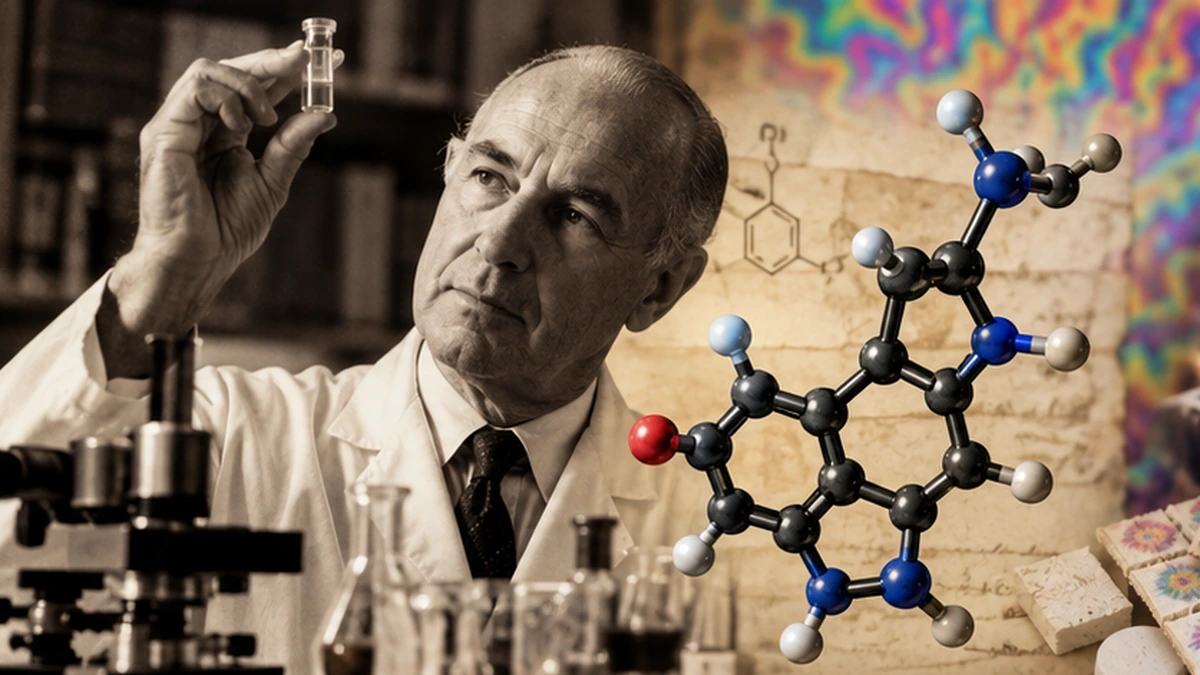
By the mid-1960s LSD had escaped the boundaries of controlled research institutions and become part of a wider culture. Timothy Leary and others popularized ideas of personal and spiritual transformation, while LSD became associated with music, art, antiwar activism, and generational rebellion. Media attention amplified both enthusiasm and stories of psychological breakdown, accidents, and social danger.
Sandoz stopped its ordinary production and distribution of Delysid in 1965. This made access more difficult for researchers, but historical reviews emphasize that the collapse of the research field had no single cause. After the thalidomide crisis, standards for clinical trials tightened, regulators demanded stronger evidence of efficacy, industry had less incentive to fund work, and the strong psychoactive effect made blinding difficult.
Political and cultural reaction nevertheless mattered greatly. LSD changed from an investigational object into a symbol of a wider social conflict, making it increasingly difficult to separate controlled medical use from uncontrolled nonmedical use. Science and the public image of the substance began to shape one another.
Prohibition: 1968, 1970, 1971 — and why “politics banned it” is only part of the story
In the United States, Public Law 90-639 in October 1968 increased penalties for unlawful possession and trafficking involving LSD and other hallucinogens. The federal framework was then reorganized under the Controlled Substances Act of 1970, in which LSD is placed in Schedule I. Internationally, LSD was included in Schedule I of the 1971 UN Convention on Psychotropic Substances.
These legal changes greatly increased the administrative barriers to research and symbolically fixed LSD as a dangerous prohibited drug. Yet historical analyses of early therapeutic research show a broader picture: besides prohibition, the field was affected by new regulatory standards, weaknesses in older trials, difficulties with active placebo and blinding, and declining pharmaceutical-industry interest.
The opposite simplification — that an effective therapy was simply politically suppressed — also goes beyond the evidence. A more accurate description is that a promising but methodologically immature field collided with social panic, legislation, scientific criticism, and a new regime of clinical proof. The result was a research interruption lasting decades.
What neuroscience can measure now: 5-HT2A, connectivity, and the sense of meaning
Modern controlled studies provide a much more precise view of LSD than was possible in the 1950s. Pharmacological experiments demonstrate the central role of the 5-HT2A receptor, while neuroimaging shows changes in connectivity between brain networks. A 2016 study linked characteristic changes in visual processing, parahippocampal connectivity, and network integration with the intensity of subjective effects.
Later studies found that LSD can increase the attribution of personal relevance to previously neutral stimuli and alter global and thalamic connectivity; the 5-HT2A antagonist ketanserin strongly blocks these effects. This matters because the research is not merely measuring “hallucinations” but a change in how the brain organizes salience, self-boundaries, and the relation between perception and inner meaning.
Neuroscience therefore increasingly describes mechanism, but it does not automatically deliver a philosophical verdict on the content of the experience. An intense sense of insight is a real psychological event, but the reality of the feeling is not identical to the truth of every conclusion drawn from it. The same caution applies to therapeutic interpretation.
Clinical return: from twelve patients to phase 3
The modern return of LSD to clinical research began very slowly. In 2014 a small randomized pilot trial in patients with anxiety associated with life-threatening illness found promising signals and, importantly, demonstrated that such work could again be conducted within a modern regulatory framework. A larger 2022 trial in patients with anxiety reported statistically significant reductions, and longer-term follow-up found sustained effects in some participants.
In 2025 JAMA published a phase 2b randomized, double-blind, placebo-controlled trial of lysergide in 198 adults with generalized anxiety disorder. The study found a statistically significant dose-response relationship and supported progression to pivotal trials. This represents a much stronger evidentiary level than the small early revival studies, although it is still not the same thing as regulatory approval.
By September 2026, the DT120 development program had announced positive topline results from two phase 3 trials in generalized anxiety disorder and planned an approval submission in 2027. Because these are currently company-reported results rather than a fully peer-reviewed public data package, this article treats them as an important but intermediate evidentiary step. The FDA, meanwhile, finalized general guidance for psychedelic drug development in 2026. LSD remains a U.S. Schedule I controlled substance and, in the reviewed sources, has not yet received general FDA approval as a treatment.
| Period or trail | What is directly documented | What does not follow from it alone |
|---|---|---|
| 1938–1947: Hofmann / Sandoz | Synthesis of LSD-25, discovery of psychoactive effects, Delysid as an investigational medicine | That therapeutic efficacy had already been established by modern standards |
| 1950s–1960s psychiatry | International research in alcoholism, anxiety, and psychotherapy | That all early findings were methodologically robust or reproducible |
| MKULTRA | 149 subprojects, concealed funding, LSD and other behavioral experiments, including on unwitting people | That every researcher knew about the CIA or that the CIA created the entire counterculture |
| Frank Olson / Subproject 68 | Documented unwitting LSD exposure and CIA funding of Cameron-related research | That every circumstance of every case is known; much documentation was destroyed |
| 1968–1971 prohibition | U.S. and international legal controls on LSD | That prohibition was the only reason research ended |
| Modern neuroscience | 5-HT2A mechanism, fMRI/EEG changes, connectivity and salience | That a neural correlate by itself determines the personal or metaphysical meaning of an experience |
| 2014–2025 clinical trials | Renewed randomized research in anxiety and other indications | That LSD is already a standard approved treatment |
| 2026 phase 3 topline | Two company-reported positive late-stage GAD trials | Final regulatory decisions or independent verification of the full data package |
Safety, microdosing, and the historical lesson: the same finding can become medicine, weapon, or ideology
Modern systematic reviews suggest that classic psychedelics are generally well tolerated in carefully selected and monitored research populations, but serious adverse events do occur, especially in people with neuropsychiatric vulnerabilities. Acute anxiety, elevated blood pressure, disorientation, and rare longer-lasting psychiatric complications are reasons modern protocols use screening, supervision, and follow-up.
The picture is even less settled for microdosing. Controlled studies confirm that small amounts of LSD can produce measurable physiological or subjective changes, but evidence for stable improvements in mood, creativity, or cognition remains inconsistent. Reviews emphasize expectancy, blinding problems, and the difference between observational reports and randomized trials.
The largest historical lesson of LSD is therefore broader than whether the molecule is “good” or “bad.” The same substance has been used to model psychosis, assist psychotherapy, conduct secret experiments in behavioral control, symbolize cultural rebellion, and support modern pharmaceutical trials. The molecule does not determine the ethics of its use; purpose, consent, transparency, standards of evidence, and the power relationship between the person administering an intervention and the person receiving it do.
The open question is therefore not only whether LSD will return to medicine. The more revealing question may be: what does its history tell us about a society that can call the same experience a research tool in one decade, a weapon in another, a threat in the next, and a medicine once again?
Sources and further reading
- Passie et al., CNS Neuroscience & Therapeutics (2008), ‘The Pharmacology of Lysergic Acid Diethylamide: A Review’ — Hofmann, Sandoz, pharmacology and early psychiatric use.
- Ban, Dialogues in Clinical Neuroscience (2006/2011 PMC), ‘The role of serendipity in drug discovery’ — LSD-25 synthesis in 1938 and Hofmann’s 1943 rediscovery.
- Psychedelic Commercialization review (2023/2024 PMC) — Sandoz, Delysid commercialization from 1947 and withdrawal in the mid-1960s.
- Humphry Osmond, Annals of the New York Academy of Sciences (1957), ‘A Review of the Clinical Effects of Psychotomimetic Agents’ — primary source for the term psychedelic.
- Nichols & Walter, Pharmacopsychiatry (2021), ‘The History of Psychedelics in Psychiatry’ — overview of model-psychosis and psychotherapy research.
- Dyck, Canadian Journal of Psychiatry (2005), ‘Flashback: psychiatric experimentation with LSD in historical perspective’ — Saskatchewan research and historical context.
- Krebs & Johansen, Journal of Psychopharmacology (2012), meta-analysis of randomized LSD trials for alcoholism — six trials, 536 participants.
- Hall, Addiction (2022), ‘Why was early therapeutic research on psychedelic drugs abandoned?’ — prohibition, regulatory change, methodology and industry withdrawal.
- Oram, History of Psychiatry (2016), ‘Prohibited or regulated? LSD psychotherapy and the United States Food and Drug Administration’ — U.S. regulatory history.
- U.S. Senate Select Committee on Intelligence / Subcommittee on Health and Scientific Research, Joint Hearing on Project MKULTRA (3 Aug 1977) — 149 subprojects, institutions, unwitting tests and destroyed records.
- CIA, statement of Director Stansfield Turner before the Subcommittee on Health and Scientific Research (21 Sep 1977) — drugs, hypnosis, volunteers and unwitting subjects.
- Rockefeller Commission Report (1975), section on CIA drug testing — official account of the unwitting LSD exposure associated with Frank Olson’s death.
- CIA declassified record on MKULTRA Subproject 68 — Cameron, LSD-25, prolonged sleep, sensory isolation and covert sponsorship mechanism.
- Madness and the Mind: The work of Donald Ewen Cameron, PMC (2023) — historical review of psychic driving, Cameron and MKUltra Subproject 68.
- U.S. Public Law 90-639 (24 Oct 1968) — federal penalties involving unlawful LSD possession and traffic.
- U.S. Drug Enforcement Administration — current Controlled Substances Act scheduling; LSD listed in Schedule I.
- United Nations Convention on Psychotropic Substances (1971) — LSD/lysergide listed in Schedule I.
- Carhart-Harris et al., PNAS (2016), ‘Neural correlates of the LSD experience revealed by multimodal neuroimaging.’
- Preller et al., Current Biology (2017), ‘The Fabric of Meaning and Subjective Effects in LSD-Induced States Depend on Serotonin 2A Receptor Activation.’
- Preller et al., eLife (2018), LSD-induced global and thalamic connectivity changes attributable to the 5-HT2A receptor.
- Gasser et al., Journal of Nervous and Mental Disease (2014), randomized pilot trial of LSD-assisted psychotherapy for anxiety associated with life-threatening disease.
- Holze et al., Biological Psychiatry (2023; trial reported 2022), randomized phase II LSD-assisted therapy for anxiety with and without life-threatening illness.
- Holze et al., BJPsych Open (2024), prospective long-term follow-up of LSD-assisted therapy in anxiety.
- Robison et al., JAMA (2025), phase 2b randomized trial of MM120/lysergide in generalized anxiety disorder, 198 participants.
- Definium Therapeutics (14 Sep 2026), company-reported positive phase 3 Panorama topline results for DT120 in generalized anxiety disorder; pre-NDA meeting planned.
- Reuters (14 Sep 2026), independent contemporaneous report on Definium’s second positive late-stage GAD trial and planned U.S. filing.
- FDA (July 2026), final guidance ‘Psychedelic Drugs: Considerations for Clinical Investigations’ — current regulatory framework for psychedelic drug development.
- Müller et al./JAMA Psychiatry systematic review and meta-analysis (2024), adverse events in studies of classic psychedelics — safety signals and limitations in monitoring.
- Polito & Liknaitzky, Journal of Psychopharmacology (2024), rapid review of placebo-controlled psychedelic microdosing research — mixed evidence and expectancy/blinding limits.
- de Wit et al., Addiction Biology (2022), repeated low-dose LSD in healthy adults — modest acute effects but no durable mood or cognitive improvement in the controlled study.