Anthony Fauci and the AIDS Epidemic: AZT, Activists, Contested Messaging, and Accountability
A critical review of Fauci's AIDS-era role: the early household-transmission error, AZT toxicity and dosing, conflict with ACT UP, the real 1987 Times headline, and the boundary between documented controversy and viral claims.

Anthony Fauci is one of the most polarising figures in modern American public health. Decades before COVID-19, he was already at the centre of another catastrophe: the HIV/AIDS epidemic. From 1984 he led the U.S. NIAID, served as an NIH AIDS coordinator and had direct influence over research priorities, clinical networks and public communication. It is therefore legitimate to ask not only what he did well, but also where errors occurred, whom they harmed, how quickly they were corrected and who accepted responsibility.
This review begins neither with a presumption of Fauci's innocence nor with a presumption that every allegation in viral collages is true. Criticism has to be specific. AZT really was highly toxic at early high doses. Fauci really was the target of fierce protests by people with AIDS. In 1983 he really did publicly entertain the possibility of transmission through routine close contact. Those facts, however, do not by themselves show that he created HIV, intentionally poisoned patients, or that the WHO smallpox campaign caused the AIDS epidemic.
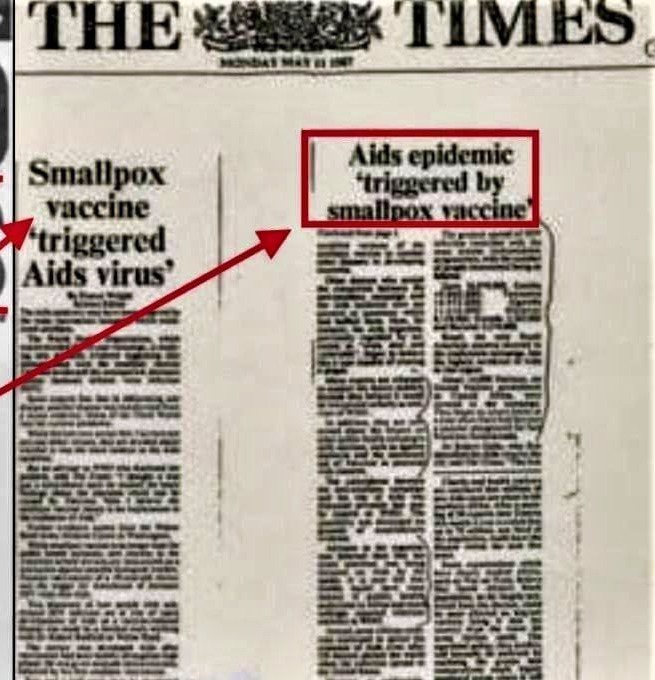
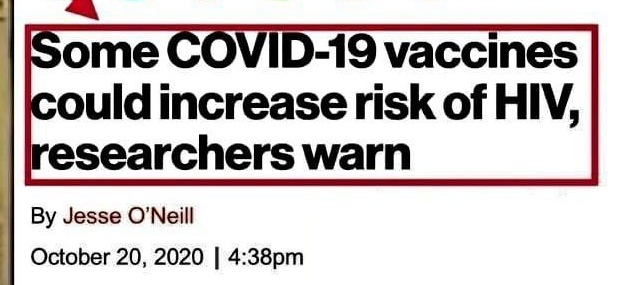
The useful starting point is the original newspaper coverage, not the later viral collage that connected separate items with arrows and a Fauci portrait. The Times really did publish a May 11, 1987 headline about a proposed smallpox-vaccine/AIDS link, and in 2020 media really did report a scientific warning concerning some experimental Ad5-vectored vaccines. This article therefore presents the individual source items separately and checks what each actually claimed.
The article therefore uses a strict test. For every claim we separate documented fact, institutional decision, scientific uncertainty, later correction, criticism and allegations for which evidence is missing. The word “lie” should be reserved for cases where evidence shows that a person knew the truth and intentionally said the opposite. A wrong prediction, changing guidance or strategic communication should be described more precisely.
From researcher to a centre of institutional power
Fauci did not personally run the entire American AIDS response, but from November 1984 through 2022 he directed NIAID, a key NIH infectious-disease institute, while also serving in NIH AIDS coordination roles. His influence therefore extended beyond laboratory work into research networks, priorities, institutional responses and public explanation.
That matters for accountability. It is unfair to attribute every systemic error to one person, but it is equally unreasonable to remove a senior leader from scrutiny because he did not personally sign every protocol. AZT involved NCI, Burroughs Wellcome, FDA, independent investigators and later NIAID's ACTG network. Fauci was an institutional leader of one major part of that system, not its sole author.
Critical boundary: leadership responsibility is real; personal causal responsibility for each decision must be demonstrated separately.
1983: the warning about ‘routine close contact’ and the cost of an early hypothesis
In May 1983, before the cause of AIDS had been firmly identified, Fauci discussed new paediatric cases in a JAMA editorial and entertained the possibility of transmission through routine close household contact. Contemporary reporting rapidly turned this into a frightening public frame about possible household spread.
Later epidemiology did not support that possibility. A 1986 study of 101 nonsexual household contacts found minimal or no risk without sexual exposure, blood exposure or perinatal transmission. HIV is not spread through ordinary social contact.
The criticism does not require a larger conspiracy. A highly influential public-health voice amplified a consequential possibility on thin evidence in an atmosphere already saturated with stigma against gay men and people with AIDS. The uncertainty was real, but uncertainty does not erase the consequences of how authority communicates it.
Documented: the early hypothesis was wrong. Not documented: that it was advanced with the intention of creating panic.
AZT: why ‘toxic’ is both true and incomplete
The strongest historical controversy concerns AZT, or zidovudine. The initial regimen used roughly 1500 mg per day. The 1987 toxicity study documented severe bone-marrow suppression, including substantially more severe anaemia, transfusions and neutropenia among AZT recipients. Describing early high-dose AZT as highly toxic is accurate.
The same initial randomised study also reported clinical benefit in a very ill population: 19 placebo recipients and 1 AZT recipient died during the short trial, and opportunistic infections were more frequent in the placebo group. The claim that AZT was merely poison with no benefit is therefore inconsistent with the early controlled-trial record.
The dose criticism strengthened in 1990. ACTG compared the standard high dose with a lower regimen and reported better 18-month survival in the lower-dose group. The early dose was therefore higher than necessary and carried greater toxicity.
| Claim | What the record shows | Status |
|---|---|---|
| AZT had serious adverse effects. | Severe anaemia, neutropenia and transfusion requirements were documented. | SUPPORTED |
| The initial dose was too high. | A later ACTG trial favoured a lower regimen. | SUPPORTED |
| AZT had no clinical benefit at all. | The initial controlled trial reported lower short-term mortality and fewer opportunistic infections. | CONTRADICTED BY EARLY RCT |
| Fauci intentionally poisoned AIDS patients. | The reviewed record does not establish an intent to poison or personal control over all AZT decisions. | NOT ESTABLISHED |
ACT UP versus NIH: when patients forced the system to change
People with AIDS and groups such as ACT UP fiercely criticised slow drug access, rigid clinical-trial criteria, exclusion of women and minorities, and rules that left dying patients without access to experimental therapies. Fauci was personally one of their principal targets.
The historical record also shows what a simple villain narrative misses: after conflict, Fauci accepted important activist demands. He became a major advocate of the parallel track model for access outside conventional trials and supported activist representation within the AIDS Clinical Trials Group.
That does not erase the original conflict. It shows that reform was not simply gifted from above; it was substantially forced by people living with the consequences of the rules. The strongest criticism is therefore about how long the system took to listen to patients, rather than attributing unsupported events to Fauci personally.
The Times, 11 May 1987: a real headline and a hypothesis that did not hold up
The London Times really did publish a 1987 story linking the WHO smallpox campaign to the African AIDS epidemic. It quoted HIV co-discoverer Robert Gallo treating the idea as an interesting hypothesis, not as a proven conclusion. WHO and other scientists publicly challenged the theory almost immediately.
The evidentiary picture is much stronger today. Phylogenetic work shows HIV-1 arose through multiple cross-species transmissions of related SIV viruses from African primates, and pandemic group M had been circulating in humans for decades before the late smallpox-eradication campaigns. That conflicts directly with the claim that 1970s smallpox vaccination created HIV or initiated the epidemic.
Two claims must be separated: reuse of contaminated needles can transmit blood-borne infections — a general fact — and the smallpox vaccine caused AIDS — for which the reviewed evidence does not exist. Viral collages often use the first mechanism to support the second, much larger conclusion.
What the original newspaper headlines actually show
Once the individual publications are separated from the later collage, the record becomes more useful. The Times really did publish ‘Smallpox vaccine ‘triggered Aids virus’’ on 11 May 1987. It reported a hypothesis then being discussed by some researchers and advisers; other scientists publicly rejected it the following day, and later HIV phylogenetics places the origins of the epidemic decades before the vaccination campaigns in question.
The 20 October 2020 headline warning that some COVID-19 vaccine candidates could increase HIV risk also had a real scientific basis: it concerned adenovirus type 5 (Ad5) vectors and drew on earlier HIV-vaccine trials. The warning did not apply to all COVID vaccines and did not say that vaccines contained HIV or caused AIDS.
The 1987 New York Post headline ‘THE MAN WHO GAVE US AIDS’ was also real, but it was not about Fauci. It referred to Gaëtan Dugas, then labelled ‘Patient Zero’; later genetic and historical work overturned that origin story. Viral versions that place Fauci's photograph beneath the headline therefore combine two unrelated items.
Method rule: verify the original headline, date and subject first. Only then ask whether a later connection between separate publications exists in the sources or was added afterward.
“Turbo cancer” and COVID: an open question, not established causation
The phrase “turbo cancer” is not an established oncology diagnosis. It is nevertheless legitimate, after mass vaccination and the pandemic itself, to examine whether incidence, age at diagnosis, aggressiveness or clinical timing changed for particular cancers. The question does not need to be closed in advance; it requires high-quality comparative data.
Recent years have produced some observational signals that should not simply be ignored. A large South Korean cohort study published in 2025 reported statistical associations between vaccination and one-year risks for several cancers. However, the journal later posted an editorial notice that concerns had been raised about the article, so the finding is not presently robust enough to establish causation.
An Italian population cohort likewise reported a modestly higher likelihood of cancer hospitalization among vaccinated people, but the association changed or reversed when a longer lag between vaccination and hospitalization was imposed. Such sensitivity illustrates how age, prior illness, infection, diagnostic delays, screening disruption and modelling choices can materially alter the result.
At the same time, the U.S. National Cancer Institute continues to state that there is no evidence that COVID-19 vaccines cause cancer, recurrence or disease progression. That is an important current assessment, but it is not a ban on further research. The fairest status is therefore: possible changes in cancer incidence or clinical course after the pandemic and vaccination remain worth monitoring, while a causal link to vaccination has not been established.
Evidence status: a signal or temporal sequence ≠ causation. But absence of established causation today ≠ a reason not to investigate reproducible population-level signals further.
COVID reopened the trust question — but ‘wrong’ is not always the same as ‘lying’
In March 2020 Fauci told CBS that people in the United States should not then be walking around in masks and emphasised the danger of shortages for health-care workers. Public guidance changed in April. The reversal is real and understandably damaged trust, especially because later explanations emphasised both supply shortages and evolving knowledge about transmission.
Whether this was a “lie” requires an additional evidentiary question: what did Fauci know at the time and what was his intention? The recording proves a change in public messaging; it does not by itself prove deliberate deception. Criticism can still be sharp: public health loses trust when a strategic objective — such as preserving respirators for hospitals — becomes blurred with claims about how much protection a measure actually provides.
This is why the Fauci era deserves historical scrutiny. Across AIDS and COVID the recurring question is how much uncertainty the public is told, how much messaging is shaped toward desired behaviour, and how clearly errors or reversals are later acknowledged. That is a testable accountability question and does not require personal demonisation.
| Question | Current evidentiary status |
|---|---|
| Did Fauci create or ‘give us’ AIDS? | No evidence; HIV's origin is phylogenetically linked to multiple SIV zoonoses. |
| Was early AZT highly toxic? | Yes, especially at the initial high doses. |
| Did Fauci lead an institution with major power over the research response? | Yes; he directed NIAID from 1984 to 2022 and held major AIDS-program roles. |
| Was he fiercely criticised by people with AIDS? | Yes; ACT UP and others attacked research rigidity, drug access and institutional priorities. |
| Did he later accept some activist demands? | Yes; parallel track and formal activist participation are documented. |
| Did WHO smallpox vaccination cause AIDS? | No supporting evidence; the 1987 hypothesis did not withstand later testing. |
| Was the 2020 Ad5/HIV warning fabricated? | No; it was real and specific to Ad5-vector platforms. |
| Does that prove COVID vaccines caused HIV or ‘turbo cancer’? | No. |
| Did Fauci's COVID messaging remain perfectly consistent? | No; mask guidance is one documented reversal. |
| Does every reversal prove a deliberate lie? | No; intent requires additional evidence. |
The strongest criticism does not need the claim that Fauci ‘gave the world AIDS’. It is enough to document where he held power, where public statements were wrong, where treatment was dangerous, who warned about it, and how long correction took.
Sources and further reading
- Fauci, A. S. (1983). The Acquired Immune Deficiency Syndrome: The Ever-Broadening Clinical Spectrum. JAMA 249(17), 2375–2376. Contemporary editorial showing the uncertainty and household-contact speculation that helped shape early public messaging.
- UPI Archives (5 May 1983), ‘Household contact may transmit AIDS.’ Contemporary reporting of the JAMA issue and Fauci's warning about possible household transmission.
- Friedland, G. H., et al. (1986). Lack of Transmission of HTLV-III/LAV Infection to Household Contacts of Patients with AIDS or AIDS-Related Complex with Oral Candidiasis. New England Journal of Medicine 314, 344–349.
- NIAID. Anthony S. Fauci, M.D. — official biography. Fauci served as NIAID Director from 1984 through 2022 and oversaw a broad HIV/AIDS research portfolio.
- NIH Office of AIDS Research. Anthony S. Fauci, M.D. — historical director profile, including his role as NIH AIDS Coordinator and first OAR director.
- Fischl, M. A., et al. (1987). The Efficacy of Azidothymidine (AZT) in the Treatment of Patients with AIDS and AIDS-Related Complex. New England Journal of Medicine 317, 185–191.
- Richman, D. D., et al. (1987). The Toxicity of Azidothymidine (AZT) in the Treatment of Patients with AIDS and AIDS-Related Complex. New England Journal of Medicine 317, 192–197.
- Fischl, M. A., et al. / AIDS Clinical Trials Group (1990). A Randomized Controlled Trial of a Reduced Daily Dose of Zidovudine in Patients with AIDS. New England Journal of Medicine 323, 1009–1014.
- NIAID. Antiretroviral Drug Discovery and Development — historical summary of AZT, the ACTG and subsequent antiretroviral development.
- National Academies / NCBI Bookshelf. Clinical Research and Drug Regulation, in The Social Impact of AIDS in the United States — detailed history of ACT UP criticism, trial-design disputes and the parallel-track reform.
- National Library of Medicine. Surviving and Thriving: AIDS, Politics and Culture — archival account of AIDS activism, the 1990 Storm the NIH protest and later activist participation in research planning.
- HIV.gov. A Timeline of HIV and AIDS — chronology noting Fauci's 1989 endorsement of experimental-treatment access for people unable to enter conventional trials.
- Full Fact (2022). No evidence for link between AIDS epidemic and smallpox vaccine — verifies the existence of the 11 May 1987 Times article while reviewing the lack of evidence for its hypothesis.
- AFP Factuel (2022). Review of the 1987 Times smallpox-vaccine/AIDS claim, including Robert Gallo's later statement that his remarks were taken out of context and that he knew of no evidence that a vaccine stimulated HIV.
- Sharp, P. M., & Hahn, B. H. (2011). Origins of HIV and the AIDS Pandemic. Cold Spring Harbor Perspectives in Medicine — phylogenetic evidence for multiple cross-species transmissions of SIV into humans.
- Buchbinder, S. P., McElrath, M. J., Dieffenbach, C., & Corey, L. (2020). Use of adenovirus type-5 vectored vaccines: a cautionary tale. The Lancet 396, e68–e69.
- Duerr, A., et al. (2012). Extended follow-up confirms early vaccine-enhanced risk of HIV acquisition in the Step Study. Journal of Infectious Diseases 206, 258–266.
- WHO. Coronavirus disease (COVID-19) and people living with HIV — explains the specific historical concern around Ad5-vectored HIV vaccines and cautions against generalising it to all vaccine platforms.
- Ruiz-Palacios, G. M., et al. (2026). Adenovirus type 5 vector-based COVID-19 vaccine does not increase the likelihood of HIV infection. Vaccine 78:128378 — Phase III follow-up of Ad5-nCoV recipients.
- National Cancer Institute. COVID-19 Vaccines and People with Cancer — states that there is no evidence COVID-19 vaccines cause cancer, recurrence or disease progression.
- CBS News / 60 Minutes (8 March 2020). Preventing coronavirus: Should you wear a face mask? — primary record of Fauci's early-pandemic statement and the later April 2020 update in public guidance.
- Kim, H. J., et al. (2025). 1-year risks of cancers associated with COVID-19 vaccination: a large population-based cohort study in South Korea. Biomarker Research 13, 114 — observational associations; journal subsequently posted an editorial notice that concerns had been raised.
- COVID-19 vaccination, all-cause mortality, and hospitalization for cancer: 30-month cohort study in an Italian province (2025) — population cohort reporting a modest association for cancer hospitalization that was sensitive to lag-time analysis.
- New York Magazine (2016), reproduction and historical discussion of the New York Post 6 October 1987 ‘THE MAN WHO GAVE US AIDS’ front page — confirms the headline concerned Gaëtan Dugas, not Anthony Fauci.